
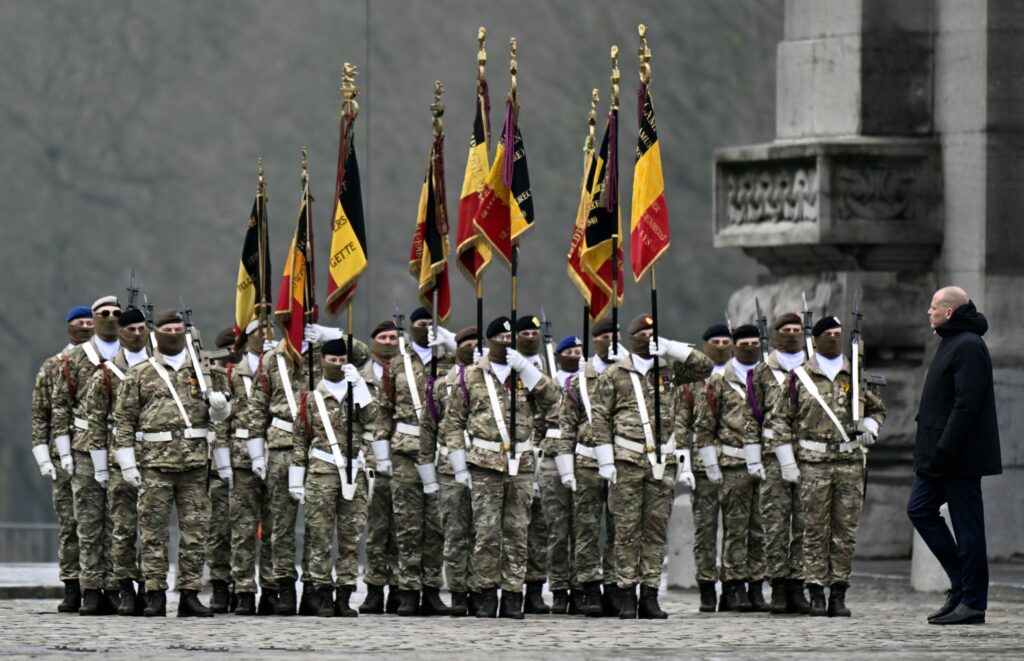
Amid Russia's war against Ukraine and the US pivot away from Europe, European countries, including Belgium, are preparing to assume a greater role within the region's defence.
As part of Belgium's efforts to increase efficiency in the armed forces, the Belgian Army has reactivated two linguistically divided brigades: the 1st Brigade, which is Dutch-speaking and the 7th Brigade, which is French-speaking. The brigades will replace the single, dual-language, motorised brigade.
The 1st Brigade was built on the legacy of the Piron Brigade, which was formed in the UK in 1943 and took part in the liberation of Belgium. The 7th Brigade, meanwhile, dates back to the Battle of the Yser during the First World War.
Linguistic split
According to the Ministry of Defence, the decision to restructure along linguistic lines was made for practical reasons. As the motorised brigade integrated both Dutch‑speaking and French‑speaking personnel under the same command structure, it was “too absorbed in administrative tasks," a ministry spokesperson told The Brussels Times.
"In practical terms, the new organisation will enable faster decision‑making and reduce administrative workload at both operational and training levels," the ministry said.
Based in Bourg-Léopold in Limburg province, the 1st Brigade now hosts Dutch-speaking personnel and the bilingual Jagers Te Paard/Chasseurs à Cheval battalion. The 7th Brigade, meanwhile, hosts French-speaking personnel and resides in the former motorised brigade’s base in Marche-en-Famenne in Wallonia.
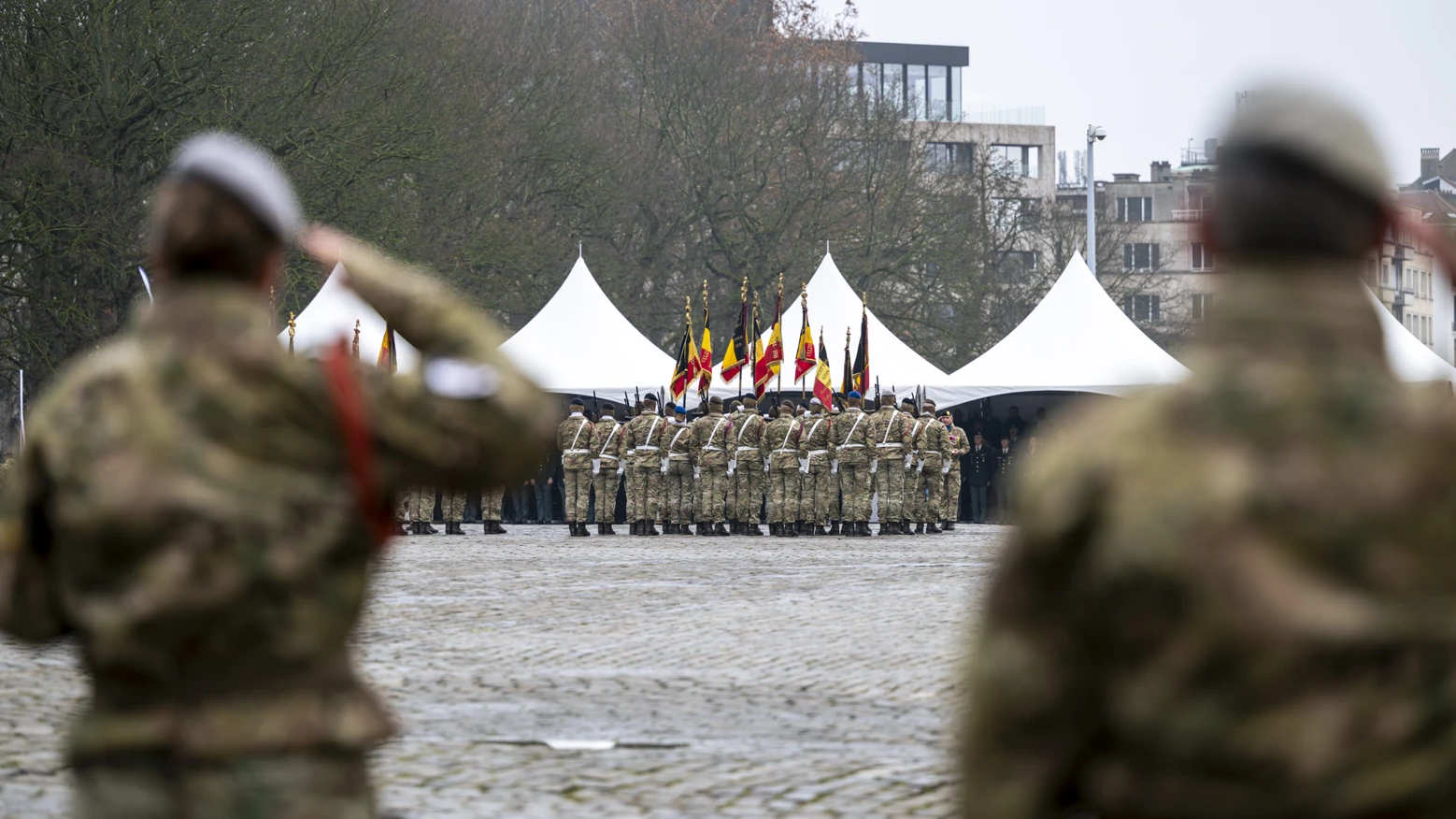
The ceremony for the re-establishment of the 1st and 7th Brigades of the Army, Tuesday, 03 February 2026, in Brussels. Credit: Eric Lalmand/Belga
"For our Francophone units, daily consultations are becoming much simpler. Our proximity to the reality in the field allows for a faster reaction and better quality support," 7th Brigade commander, Colonel Lathuy, said in a press statement.
According to the Ministry of Defence, the two brigades will work closely together during exercises, operations and certification processes. Both commanders emphasised that cooperation remains essential and that the brigades will "work side by side".
In practice, "reactivating" two brigades does not mean doubling personnel overnight, but rather reforming the command structure to restore "a necessary span of control to train at brigade level", the Ministry of Defence told The Brussels Times.
Preparing for future conflict
The Belgian Army is presenting the changes as a way of ensuring Belgium is prepared for a different kind of conflict. "With this recovery, we show that Belgium is ready to fulfil its obligations and is preparing for possible high-intensity conflicts," Major General Baugnée, Commander of the Land Force, said.
"We are evolving from a large structure to two normal brigades. This allows for more direct contact between the general staff and subordinate units, which strengthens cooperation and operational capacity,” Colonel Madile, 1st Brigade commander, added.
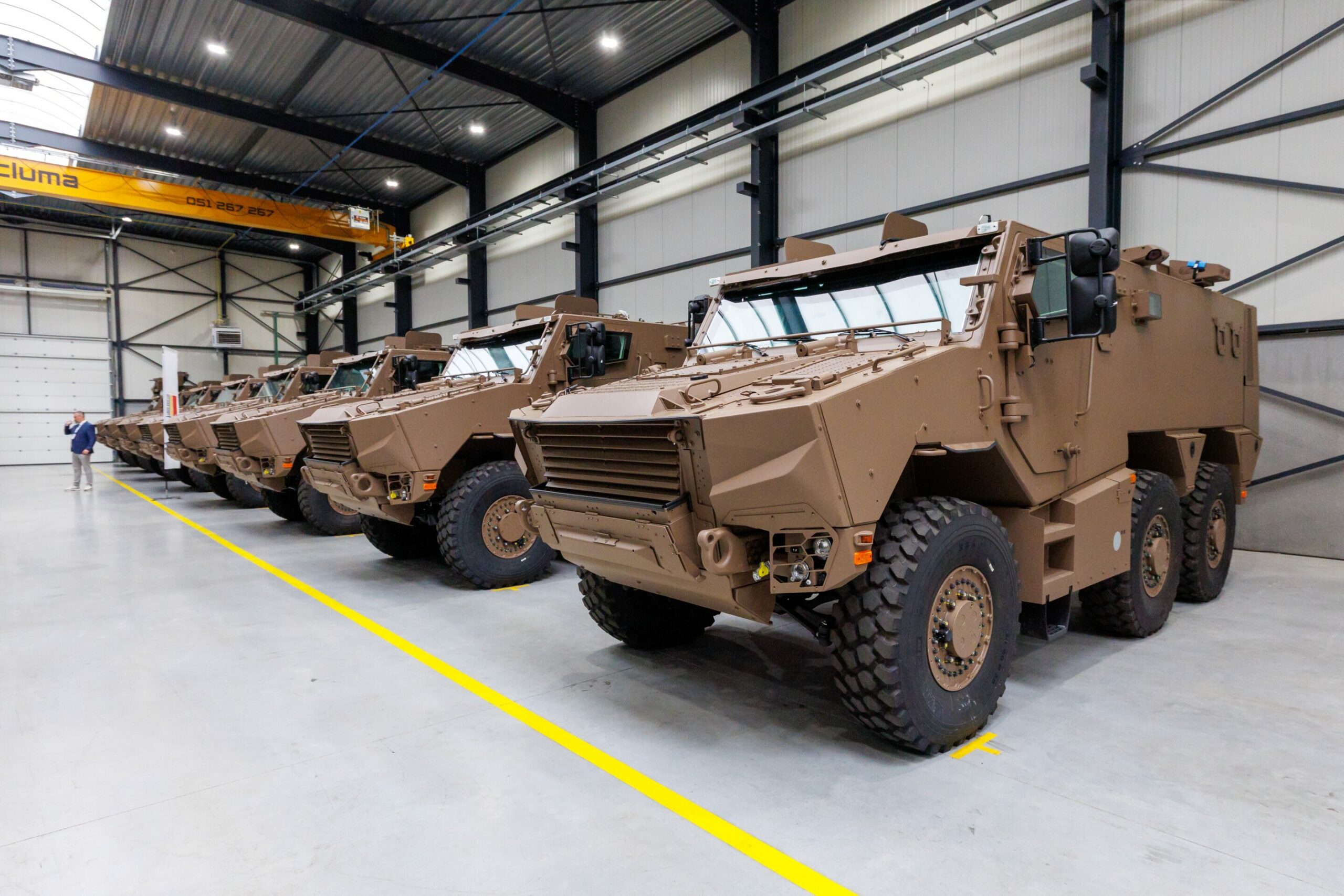 The first Griffons, multi-purpose armoured vehicles assembled in Belgium, are presented on Tuesday, 15 July 2025, in Staden. Credit: Belga
Integrating in European defence structure
The restructuring comes as Belgium receives a number of new Griffon six-wheel armoured personnel carriers and Jaguar armoured reconnaissance and combat vehicles through the Capacité Motorisée (CaMo) programme – a French-Belgian strategic partnership.
Launched in 2018, the CaMo programme aims at modernising the Belgian Land Component with French vehicles, doctrine alignment and joint training, to allow French and Belgian units to deploy together seamlessly.
The Ministry of Defence did not respond to the question of whether linguistic separation would affect the CaMo programme by the time of publication. However, it has previously stressed that the initial composition of brigades may still change in the future.
