
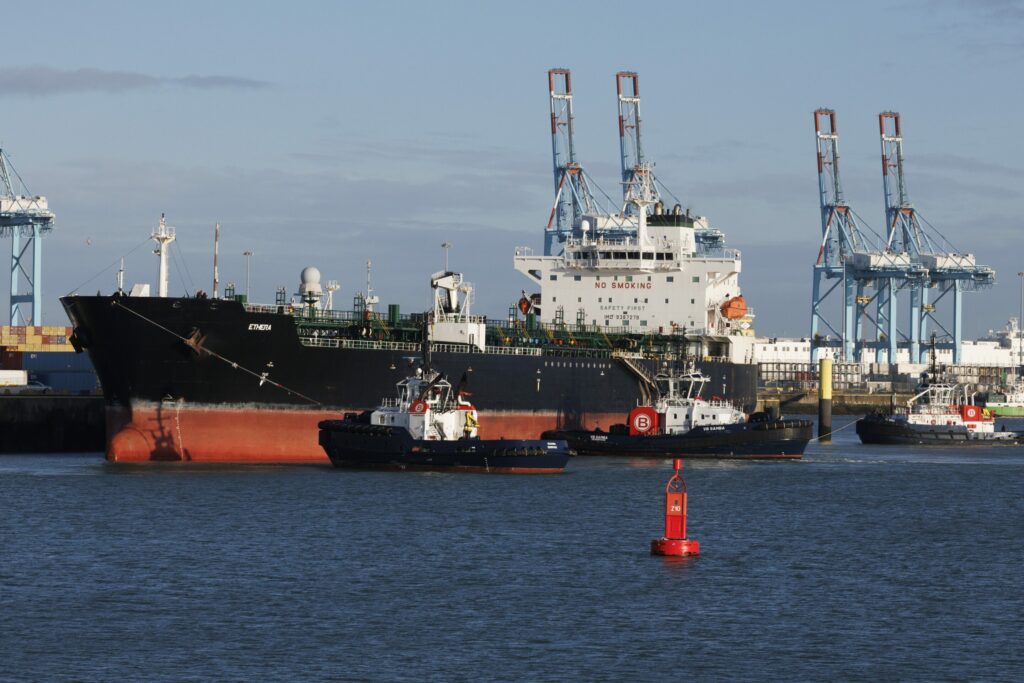
Sailing through the dark, cold waters of the English Channel, a 180-metre-long oil tanker lumbered into Belgian waters late at night on Saturday, 1 March. Having left Morocco on Tuesday, the blue-and-red Ethera was heading back to Russia.
As Ethera entered the Belgian Exclusive Economic Zone (EEZ) off the coast of Ostend, two helicopters and several naval boats encircled the ship, which was suspected of sailing under a false Guinean flag.
In an overnight operation named 'Blue Intruder', the Belgian and French navies seized Ethera, along with its crew and Russian-national captain. The ship has been linked to the Russian shadow fleet – a network of about 1,300 near-retirement age tankers, used to ship crude in breach of the G7 price cap, circumventing western sanctions imposed over Moscow's 2022 full-scale invasion of Ukraine.
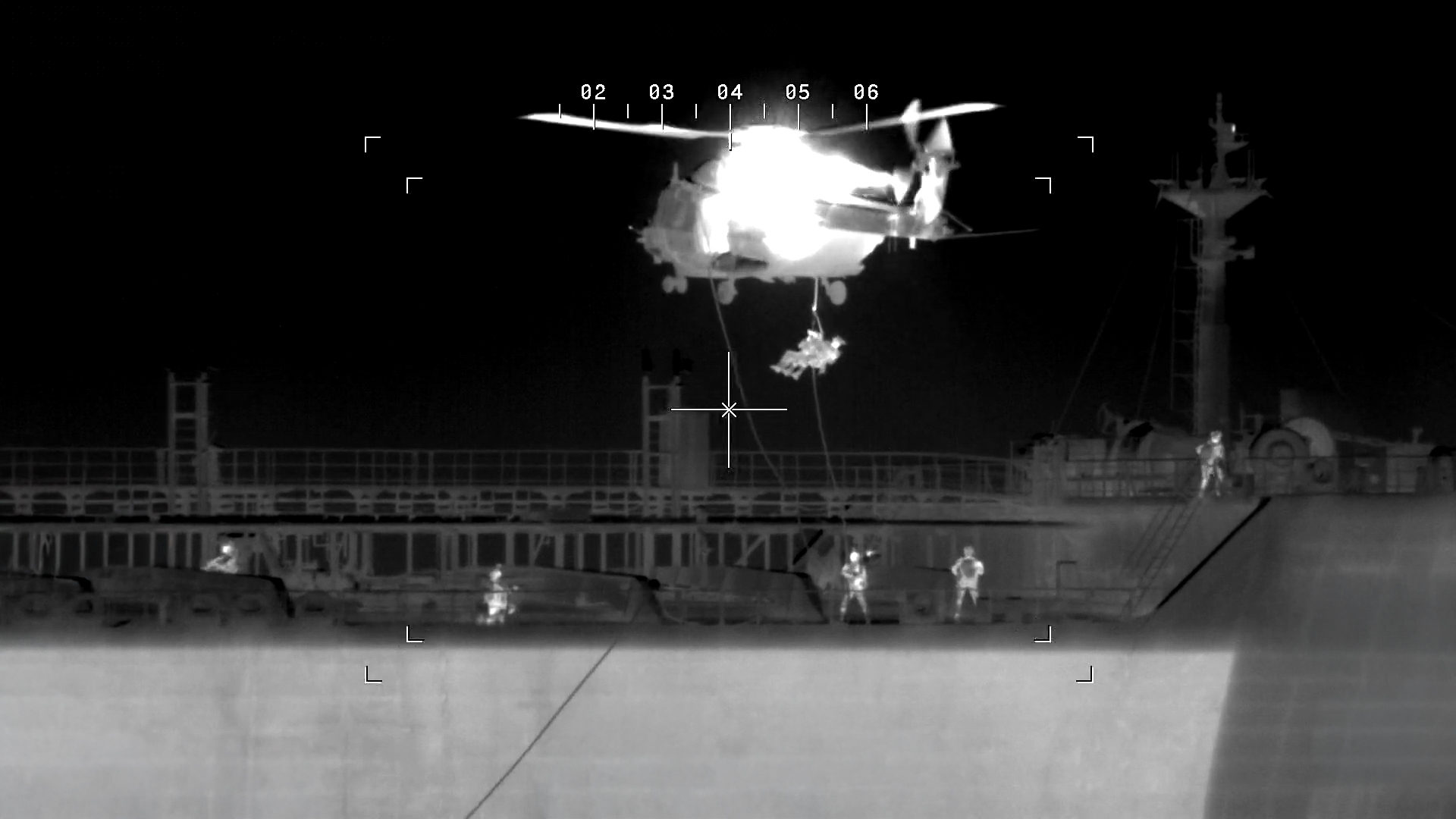
Belgian Military personnel boarding a sanctioned oil tanker 'Ethera', supposedly belonging to Russia's 'shadow fleet,' sailing under false flag, as part of the 'Blue Intruder' operation. Credit: The Belgian Air Force / X
Docked at Zeebrugge, Ethera was detained by Belgian authorities as the Federal Prosecutor's Office launched a criminal investigation into suspected false documents. "Belgium will not allow its maritime space to be used to undermine international law," Defence Minister Theo Francken (N-VA) said on Tuesday.
On 3 March, Justice Minister Annelies Verlinden (CD&V) and Mobility Minister Jean-Luc Crucke (Les Engagés) told the press that the Directorate-General for Shipping has identified 45 infringements, most of which were related to false certificates. Inspectors also reported technical defects, the ministers confirmed.
The ship will be permitted to sail again after a deposit of more than €10 million has been paid, and a new inspection confirms that it complies with all applicable regulations. Ethera's crew was banned from disembarking or entering Belgian territory.
"Excellent to see Belgium and France stopping these ships passing through the [English Channel]," Michelle Wiese Bockmann, a maritime intelligence analyst from Windward, a open-source maritime intelligence platform, told The Brussels Times.
"Guinea does not have an international ship registry, hence the ship was falsely flagged," Bockmann said. She explained that such a ship is considered to be 'stateless,' and can therefore be boarded and inspected under Article 110 of the United Nations Convention on the Law of the Sea (UNCLOS).
Built in 2008, Ethera has mainly transported Russian crude oil and petroleum products from ports in the Baltic and Black seas. After the EU imposed sanctions on the tanker in October 2025, its flag was changed from Panama to Guinea. To avoid sanctions, those ships often switch off automatic identification systems (AIS), or sail under false flag or frequently change registries, so-called "flag-hopping."
A Belgian leap forward?
By using national regulations to get tough on ships suspected to belong to Russia's shadow fleet, Belgium has set an important legal precedent. While international law states that a ship may not sail without a flag, doing so is not a criminal offence in Belgium. However, sailing under a false flag crosses the line into active deceit that involves fraud and forgery.
"A ship without a flag, it almost automatically breaches general rules on safety, on environmental protection and so on, for which Belgium has a lot of provisions," Dr Ralph De Wit, Law Faculty Professor at VUB and invited professor at Antwerp Maritime Academy and University of Ghent, told The Brussels Times.
The US sanctioned Ethera in June 2025 over its connection to an Iranian trading network. In October 2022, Ethera was sold to a UAE-based company associated with 'Hector', an Iranian dark fleet trader, linked to Hossein Shamkhani, the son of Ali Shamkhani, secretary of Iran's Supreme National Security Council. Ukraine's Main Intelligence Directorate’s War and Sanctions portal lists Ethera with a Marshall Islands-based owner.
The tanker has sailed close to Belgium in recent months. AIS data reported by Global Fishing Watch shows that Ethera sailed through the English Channel on 16 December and docked at Vysotsk, Russia, on 28 December. It then sailed to Morocco, before entering the English Channel again on 8 January.
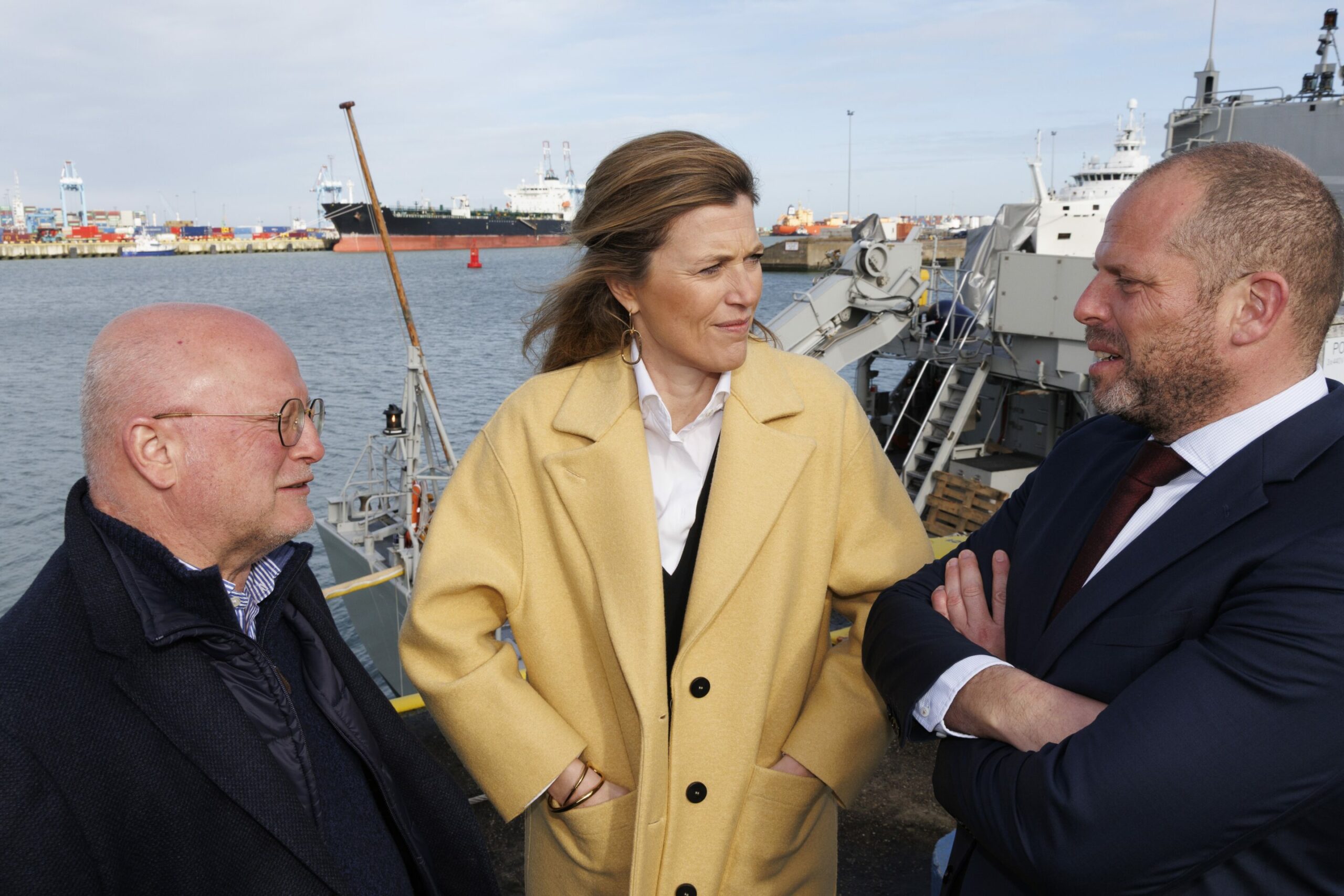
Minister of Climate and Mobility Jean-Luc Crucke, Minister of Justice Annelies Verlinden and Minister of Defence and Foreign Trade Theo Francken at a press conference of Belgian Defence in light of Operation 'Blue Intruder', at the naval base in Zeebrugge, Sunday 01 March 2026. Credit: Belga / Nicolas Maeterlinck
Shift from diplomacy to defence matters
Russia's 'shadow fleet' has become a serious threat in the context of European security. The Royal United Services Institute (RUSI) estimates that 65-70% of Russia's seaborne oil exports rely on the shadow fleet, with profits fuelling Moscow's war economy.
The 7 January US interception of the Russian-flagged oil tanker Marinera with support from the UK was a watershed moment, according to Tom Keatinge, Director at the Centre for Finance & Security (CFS) at RUSI.
"That is the point where – certainly in the UK – the decision-making power shifted from the lawyers in the Foreign Office to the Ministry of Defence," Keatinge told The Brussels Times. "It went from being a diplomatic topic to a defence and security topic ... I think probably the Belgian government, the French government, the British government [and] others are now feeling a bit tougher and a bit more confident [about taking such action]."
In January, French authorities intercepted the suspected Russian 'shadow' oil tanker Grinch in the Mediterranean under UNCLOS's Article 110. The ship was later released after the owner reportedly paid a penalty worth several million euros.
Moscow condemned the US and French interventions, accusing them of "piracy", and threatening retaliation.
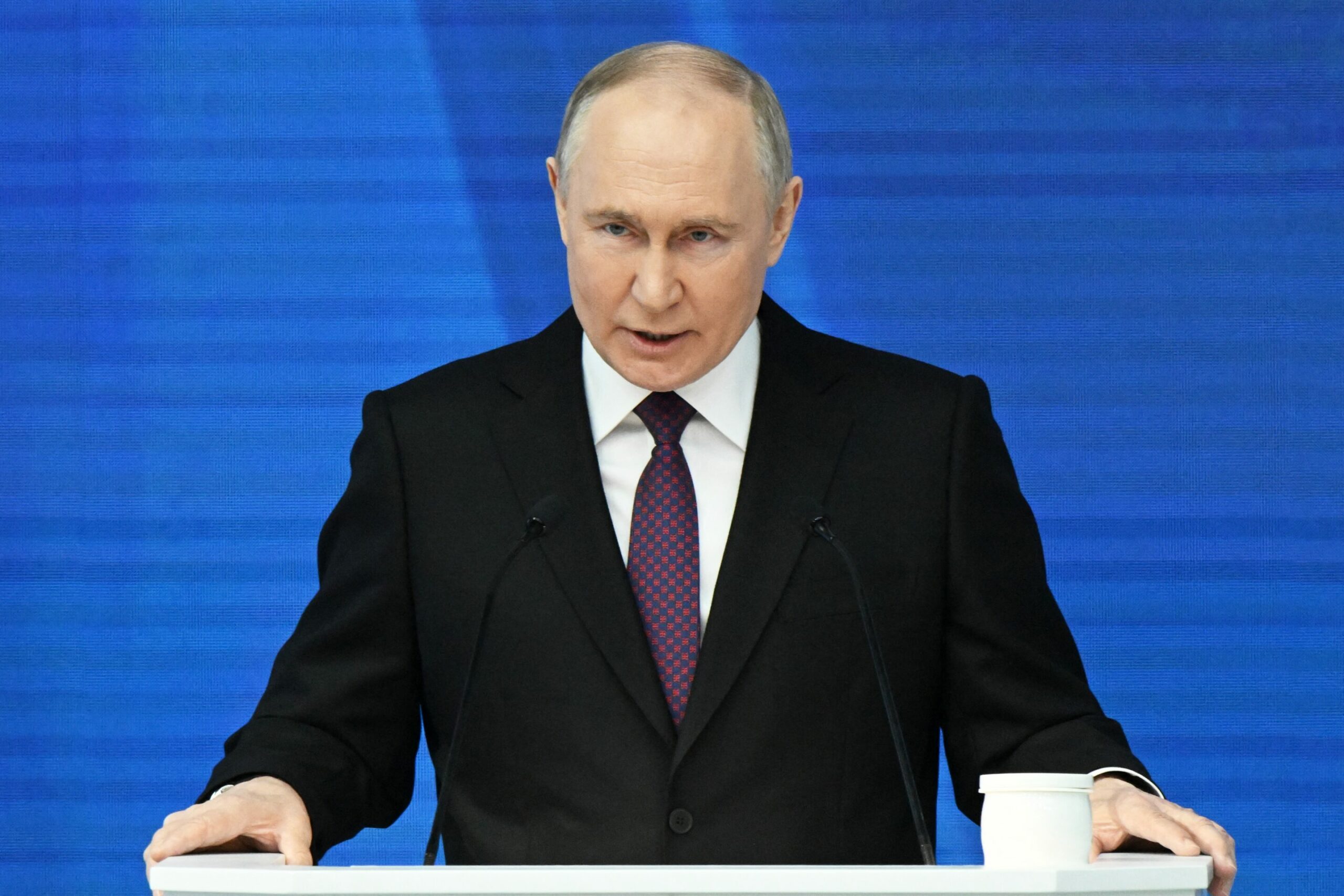
Russia's President Vladimir Putin in February 2024. Credit: Belga
However, Keatinge believes such threats can be taken with a degree of scepticism. "While the Kremlin is good at threatening reprisals, there have been no reprisals as a result of taking seized Russian ships," he said. "Governments are now feeling tougher and more confident that the backfire will be limited, if any."
The Declaration of the European Union and its Member States, adopted at the EU Foreign Affairs Council in December 2025, has asked Member States to make "full use of the international law of the sea framework" to counter the shadow fleet and protect critical undersea infrastructure.
Most EU coastal states, such as Finland, Estonia, and Denmark, had stopped suspicious tankers before. However, according to Keatinge, they often struggle to seize them under their national laws. "Now that another EU member state has arrested such a ship, it is time for a clear, EU-wide policy," he added.
