
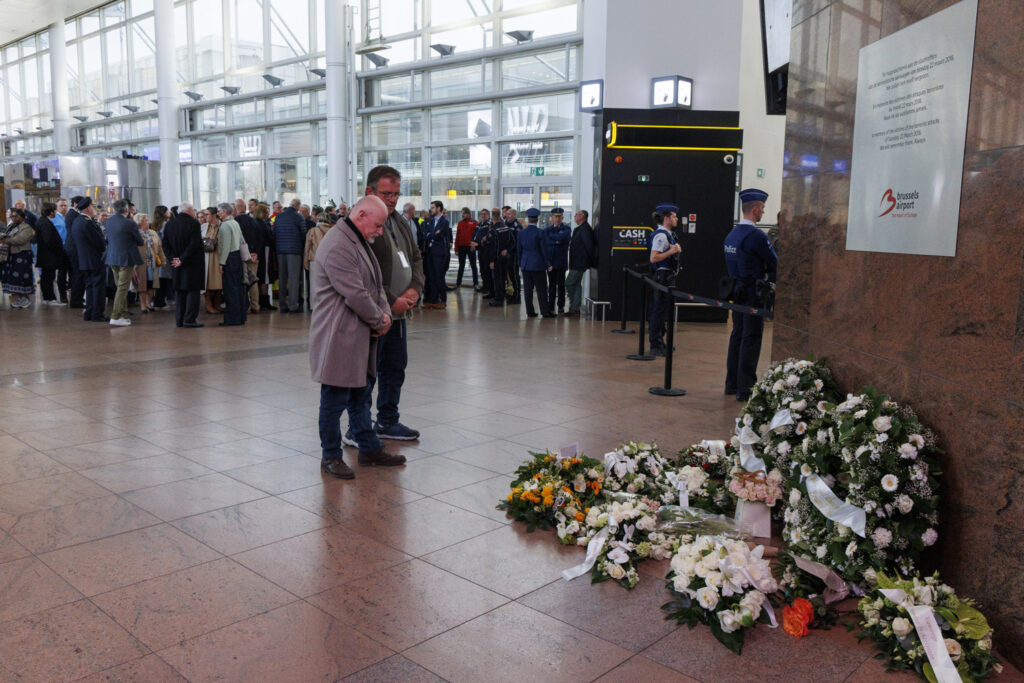
A decade after Belgium was shaken by the deadliest terror attacks in its history, the landscape of radicalisation in the country and across Europe has profoundly changed.
On 22 March 2016, three explosions occurred: two at Zaventem Airport and one at Maalbeek Metro Station in Brussels. These attacks left 32 people dead and 340 injured. In the years following, three more victims succumbed to injuries, raising the official death toll to 35. Belgium’s Court of Assizes officially recognised 691 victims.
The primary threat remains jihadist-Islamist extremism, but experts and Belgian security services report an increasingly fragmented picture. Annelies Pauwels, a terrorism and radicalisation expert at the Flemish Peace Institute, explains that the nature of recruitment has shifted significantly.
Pauwels notes that ten years ago, the “crime-terror nexus” was dominant, with individuals, often with petty criminal backgrounds, being drawn to the narrative of groups like ISIS promising transformation from "zero to hero." Recruitment today is broader and predominantly online, making the radicalisation process more individualised.
Social media plays a significant role. Instead of actively seeking extremist propaganda, users now encounter it via algorithms, which feed this content based on online activity. Pauwels describes the current trend as "salad bar extremism," where individuals pick and choose elements from various ideologies, leading to fewer unified ideological or religious foundations.
The rise of "lone actors" is another marked change. In digital environments, individuals—aided by the accessibility of extremist material—are increasingly encouraged to commit violence, often independently of organised networks. This is paired with a greater involvement of people with psychological vulnerabilities. Unlike physical networks from a decade ago, today’s online platforms do not filter out such individuals, allowing anyone to become an active participant in radical activities.
There has also been a troubling trend of younger individuals engaging in extremist behaviour. Whereas youth involvement ten years ago typically involved young adults, today it sometimes includes adolescents. In one case, a suspect arrested in 2024 was just 13 years old. Social media’s low entry barriers are seen as a contributing factor to this shift.
Since the 2016 attacks, Belgium has mostly contended with isolated incidents involving lone actors. However, Pauwels says there are signs of a cautious revival of extremist networks in recent years.
Official figures underline this complex picture. In March 2025, the Coordination Body for Threat Analysis (OCAD) reported monitoring 555 individuals involved in extremist activities. Of these, 83% are linked to Islamist extremism, 8% to right-wing extremism, and 3% to left-wing extremism. The remainder are tracked for particular concerns such as anti-establishment sentiments, state-sponsored terrorism, nihilistic extremism, and the incel phenomenon, the misogynistic ideology characterised by hostility toward women.
Although the total number of individuals on the Common Database of Terrorism and Extremism has been declining in recent years, it largely consists of "foreign terrorist fighters." These are individuals who travelled to conflict zones to join terrorist organisations, or were prevented from leaving, or expressed intent to do so.
Extremism, once concentrated in urban centres like Antwerp and Brussels, has now expanded to rural areas. For example, right-wing extremism is no longer limited to cities and can be found in small towns and villages.
Both right-wing and left-wing extremist groups appear fragmented. Right-wing extremism saw a surge in Europe around 2015 and 2016, but soon fractured due to personal rivalries and a lack of coherent strategy. On the left, the scene remains relatively small, characterised by loose connections across diverse ideological divides.
Belgium has taken measures since the 2016 attacks, such as establishing Local Task Forces that involve local and federal police, intelligence agencies, migration services, and prosecutors working together. Attempts are being made to solidify these structures, although authorities face challenges vastly different from those ten years ago.
One critical lapse has been the delay in responding to social media’s role in radicalisation. “In terms of prevention, we still struggle to gain control over the online world,” Pauwels concludes.
