
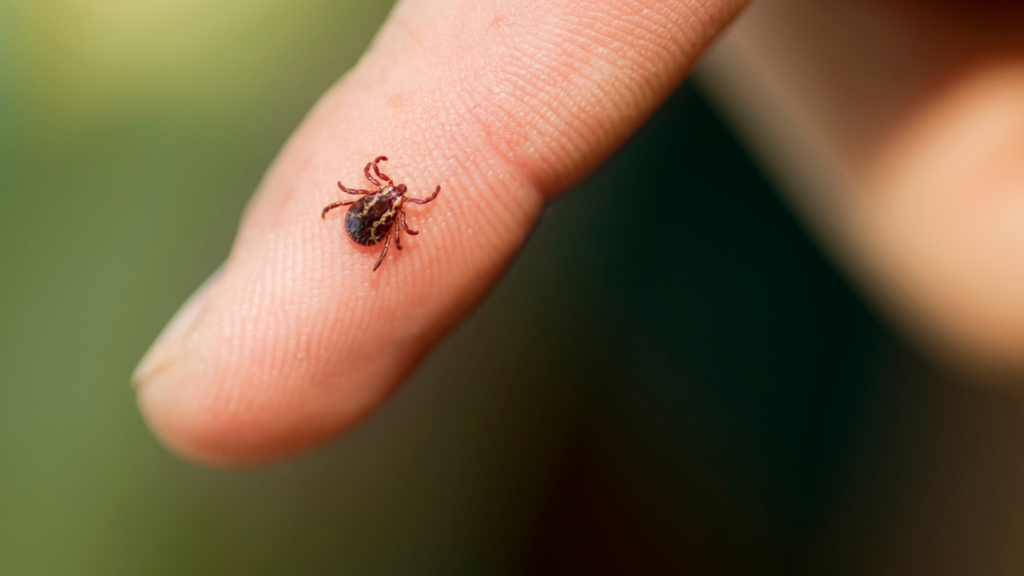
Health authorities in Belgium are calling for extra caution when going outdoors amid the increasing risk of exposure to ticks.
Ticks are very small spider-like parasites that live by feeding on the blood of mammals, birds, and sometimes reptiles and amphibians. They do this through their bites, which allow them to attach themselves to their victim. They are typically a brownish-black colour and range in size from a few millimetres to 1.5 centimetres.
Although tick bites are typically harmless, some ticks can transmit harmful bacteria and viruses that can cause diseases. A common example is Lyme disease, a bacterial infection with symptoms ranging from muscle pain to heart problems.
The creatures are typically found in shaded areas, on ferns, tall grass, and dead leaves in gardens and forests.
Belgium's health institute Sciensano issued a reminder last week of the protocol to follow during tick season, as spring weather conditions and seasonal outdoor activities increase the risk of tick bites.
How to prevent being exposed to ticks?
When walking in nature, it's advised to remain on footpaths and avoid contact with bushes and long grass.
Additionally, it's recommended to wear clothing that covers arms and legs, tuck trousers into socks and wear closed-toe shoes. Children are advised to wear hats. Wearing light-coloured clothing is also recommended as it can make it easier to spot ticks.
Using insect repellent on exposed skin can help prevent ticks as well, particularly if it is reapplied every two to three hours.
According to Sciensano, the most effective repellents contain DEET, Picaridin/Icaridin and IR3535. Notably, not all repellents are safe for children or pregnant women.
What to know when checking for ticks?
A “tick bite check” should be done after every gardening session or outdoor trip. When camping, it's recommended to check for ticks at least once a day.
You should systematically check your entire body for ticks, including your scalp, skin folds, the back of your knees and between your toes.
Clothing, hats, and shoes should also be closely inspected.
What to do if you have a tick bite?
It is recommended to remove a tick as soon as possible, following the appropriate methods.
The bite should not be cleaned with any form of alcohol, iodine, oil or similar substances before removing the tick.
The best tools to remove ticks are fine-tipped tweezers or special tick removal cards, which can be found in pharmacies. If you use a tick removal card, you should always read the product's instructions.
It is recommended to grasp the tick as closely as possible to the skin and remove it by pulling in a single smooth and gentle motion. It is important not to crush or twist the tick during this process.
Once the tick is removed, the affected area should be disinfected.
Sciensano advises monitoring the tick bite site closely for at least 30 days. It is recommended to consult a general practitioner (GP) if the skin turns red, if you experience flu-like symptoms or a fever.
Tick bites should be reported to Sciensano to help authorities implement more targeted prevention measures. This can be done on TiquesNet/TekenNet on Scieano's website or on the TiquesNet app for IOS or Android systems.
Tick bite trends across Belgium
Last year, an estimated 9,216 tick bites were reported in Belgium via TiquesNet. While the number was significantly higher than the estimated average of 5,969 reported bites between 2022 and 2024, Sciesano noted that the 2025 figures are comparable to previous years.
“The total number of reported bites can vary significantly from one year to the next,” said Sciensano's researcher, Tinne Lernout. “Annual fluctuations are linked, among other things, to weather conditions and the population’s exposure to ticks.”
In line with data from previous years, the highest number of tick bites in 2025 was reported in Flanders (59%), followed by Wallonia (39%), and Brussels (2%). Notably, Wallonia had the highest number of reported tick bites per 100,000 inhabitants.
Related News
- Parkinson's disease on the rise in Belgium, with over 65,000 patients
- Dodging rubbish bags and broken paving slabs: The daily struggle of getting round Brussels in a wheelchair
- Tuberculosis cases in Brussels three times higher than Belgian average
- Belgians warned to be vigilant over 'forever chemicals' in clothing, bags and mattress protectors
This article was updated with a correct illustrative image of a tick at 14:32.
