
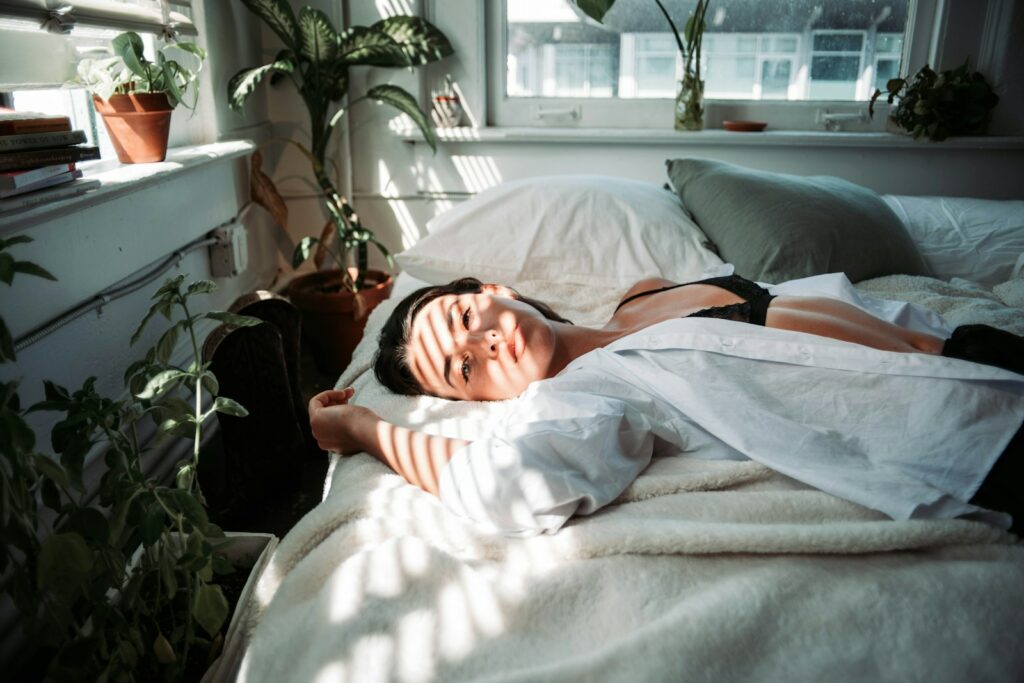
Getting by on very little sleep used to be like a badge of honour. Now, it seems we're all under pressure to sleep perfectly for eight hours straight, no less, and the irony is that the more I hear about it, the worse I sleep. I've started to dread going to bed, never quite sure how the night will unfold: will I lie awake for hours? Will I wake at 03:00 and stare at the ceiling until dawn? With all this pressure around sleep, I'm starting to feel lost about what I should be doing to get a proper night's rest.
Kristina Chetcuti, Registered Health Coach (UKIHCA) specialising in behaviour change and lifestyle medicine (ELMO), answers your lifestyle dilemmas.
Up until a century ago, if you wanted to ward off sleepless nights, you would put a bulb of garlic under your pillow and a bunch of onions on top of the bed. Lucky for us, in the 1930s, someone close to home, a certain Frédéric Bremer, a Belgian neurophysiologist from Arlon, suspected there might be more to sleep than vegetable night watch. He spent many a night and day experimenting on cat brains to uncover how the brain is linked to our shut-eye. His work was the start of the modern science of sleep, and the end of garlic and onions breathing down our necks at bedtime.
Still, it took almost a century of scientific research for sleep to make the leap to a health pillar. When 'Why We Sleep', a book by sleep scientist Matthew Walker, hit the shelves in 2017, sleep went from being something that "wimps" do to something we're expected to perfect. This coincided with data that, on average, we're sleeping about two hours less than people did 60 years ago. Which is odd when you think about it.
In the 1960s, in Brussels and much of the rest of Europe, basic modern conveniences were still lacking: no central heating, very few appliances (laundry was still mostly hand-washed!), fewer cars, and certainly no internet. Everything was more time-consuming and physically demanding, and yet…we slept more. This is a clear indication that something in our lifestyles has shifted, and it's leaving an impact.
While we are sleeping
Lots of things are going on in our body while we sleep – it isn't one long, linear stretch of time; it happens in cycles, each lasting about 90 min to two hours, and repeated four or five times a night. A full sleep cycle has four stages. It starts with dozing off, as the body drifts into relaxation and the muscles loosen (this is when you get that sudden "falling" sensation).
Next comes light sleep, when the body slows down and temperature drops. Then comes deep sleep, the brain's super power-wash, crucial for tissue repair, immune function, and memory consolidation. Finally, the cycle ends with REM sleep, when the brain is highly active, most dreaming happens, and the body's muscles are temporarily paralysed. Then it starts all over again.
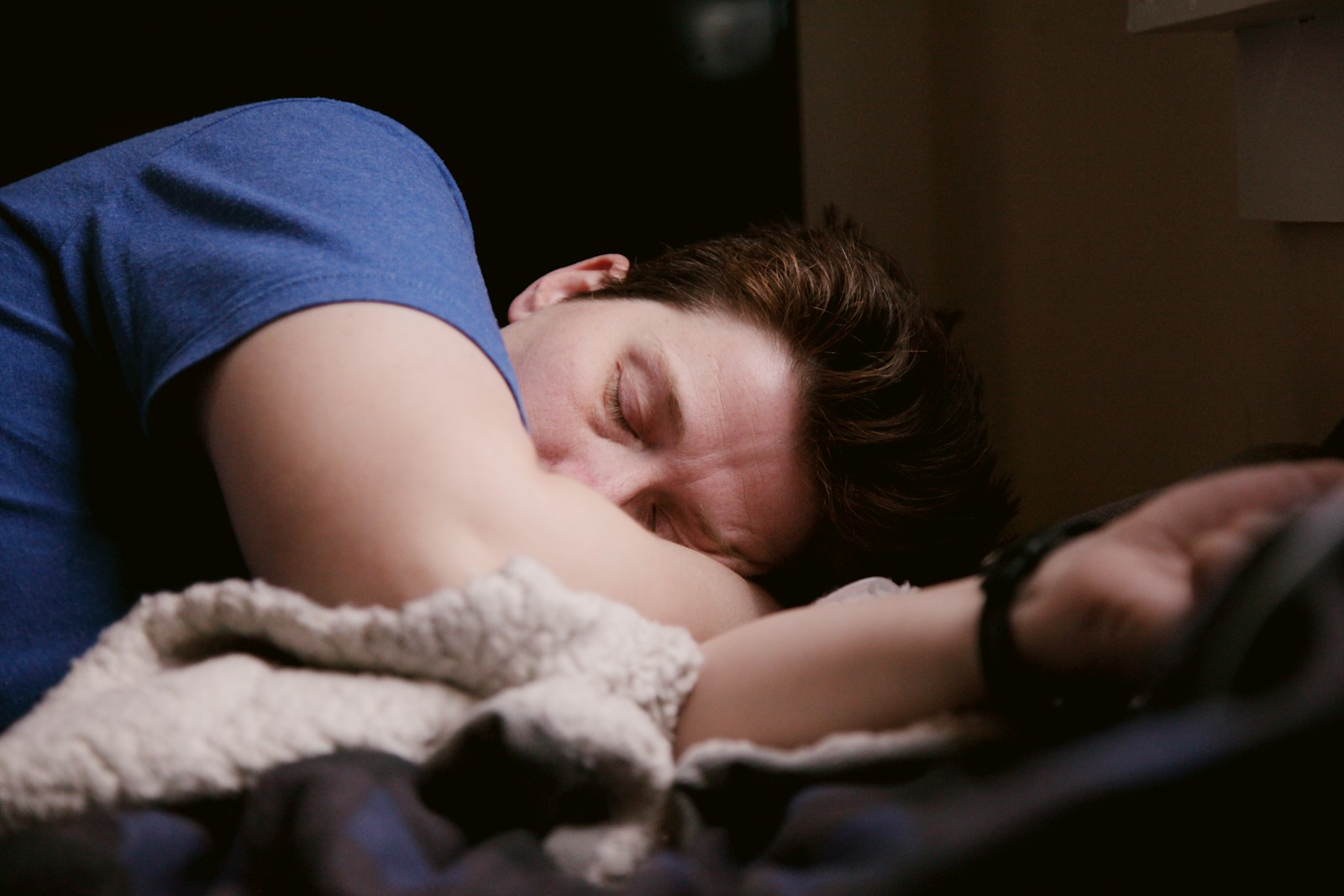
As we get closer to waking up, there's no deep sleep stage, but there's more REM, which is crucial for emotional processing. On the contrary, deep sleep happens in the first part of the night, and it's quite time-bound. As I keep telling my 19+ kids (yes, that's you Pip and Zak), when we go to bed at 02:00, we tend to miss the deep sleep boat and only get the other parts of the cycle.
Credit: Unsplash / Shane
All of this is rooted in biological evolution. Back in prehistoric times, we'd be asleep by nightfall – you wouldn't go partying and return to the cave at 04:00 because you'd be a lion's breakfast. Sleep cycles, too, are rooted in evolution: our ancestors didn't sleep straight through the night; they needed to get up to stoke the fire to prevent said lion from lurking close with funny ideas.
This pattern persisted through history: the Romans practised biphasic sleep – night sleep and a daytime nap; and in the Middle Ages people had their 'first sleep', then pottered about for a while until their 'second sleep'. Which means, it's absolutely fine if you wake up, read a bit, and then drift back off to sleep.
Related News
- Health habits for women in their 30s, 40s and beyond
- The little things that make you happy in Brussels
In short, a good night's sleep lets you complete at least four full sleep cycles, moving smoothly through light, deep, and REM sleep. You then wake up feeling rested because your energy is boosted, your memory is sharpened, your immune system strengthened, your stress has lowered, and your brain and body have had a thorough spring clean. All of which adds more healthy years to your life.
Par contre, a bad night's sleep can leave you more emotional the following day. Among other things (including a higher risk of Alzheimer's), sleep deprivation lowers levels of leptin, the hormone that helps us feel full after eating, and increases ghrelin, which stimulates hunger. Research shows that if you sleep five hours instead of eight, you may eat up to 25% more.
How can we improve sleep?
To get a good night's rest, we need to start prepping from the minute we wake up.
- Embrace the sun
I can almost hear the cackling laughter as you look out the window and see nothing but a vast expanse of grey, but for the sake of sleep, it's natural light that counts, not the ever-elusive Brussels sun. Open the window and let the light hit your face! Have your tea on the terrace! Go for a morning walk (tactfully ignore dog poo or uncollected rubbish bags)!
- Recreate campfire time
Throughout our evolutionary history, we finished daily tasks at dusk and spent the evenings around a campfire staring into the flames, telling stories, and singing. This helped lull the brain toward sleep. Our biology hasn’t changed in thousands of years, so we need to recreate that 'campfire' vibe. Here are some ideas:
- Dim the lights all around the house
- Read a bedtime story
- Play a board game
- Listen to music
- Take time to sit and stare and just breathe
- The 3-2-1 rule
Three hours before sleep: no large meals or alcohol.
Two hours before sleep: stop work, focus on relaxation, and dim the lights.
One hour before sleep: no screens (charge your phone outside the bedroom; invest in a good old-fashioned analogue alarm clock)
Ultimately, sleep is a very personal and unique thing, and this is only a glimpse of what can help you drift off more easily. Not everyone is the same, and each of us needs different rituals to improve sleep, depending on our lifestyle, stage of life, and character. What matters is that, if you're not sleeping well, you take action – even if it's just one small change to your routine for better nights. Only, please let that be something a little less whiffy than garlic under the pillow.
Got a lifestyle question that keeps you awake at night? Struggling to eat well, sleep better, or find time to move? Send your dilemmas to k.westwood@brusselstimes.com, and we'll tackle them confidentially right here.
