
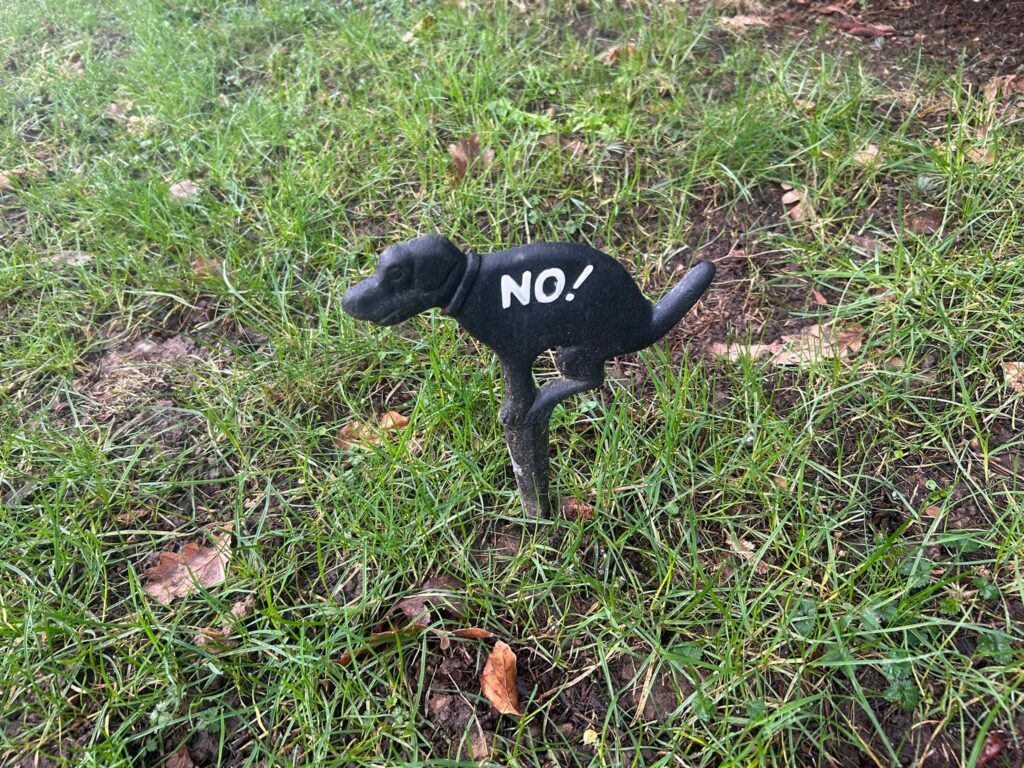
From politics to pay gaps, there are many topics on which to tread carefully in Brussels. But one which requires particular caution is dog turds. Residents have found this a source of immense frustration for decades, but despite countless campaigns, the problem persists. Whose responsibility is it, and what's being done to solve the issue?
Walking through the streets of the Belgian capital, it quickly becomes apparent that public cleanliness is an issue. Despite the regional agency Brussels Cleanliness' valiant efforts, bin strikes and illegal dumping are commonplace, and there is a severe shortage of public toilets in the city. But the issue that riles residents up the most is that of dog excrement on the streets.
For retired British bureaucrat, Andrew Wright, 69, it's not only a social and environmental nuisance, but a public health issue as well.
"I have a Labrador, and I'm absolutely religious about clearing up, because I just think it's very unfair on everybody else, young children, and so on. It's not difficult: you just take some bags with you and clear up," Wright told The Brussels Times.
'Totally irresponsible'
When he arrived in Brussels in the 1980s, he thought the situation was "terrible". It has marginally improved since then, he says, but it still makes him angry.
He says he recently found a "bloody great package" next to his elderly neighbour's door, as well as a "big pile in front of a crèche" which was "inexcusable". He has sometimes resorted to picking up dog poo that wasn't his own just to avoid other people stepping in it.
"You have a dog, so you have a responsibility, not just to the dog and yourself, but to other people as well. And it seems to me that that's sometimes forgotten here. It's just totally irresponsible," he said.
"I don't enjoy walking my dog in the neighbourhood, because my head's constantly down looking at the pavement."
Wright believes that it's only a small percentage of dog owners who are "too lazy or too selfish to pick up the poo", but that this creates a bad image of dog owners everywhere.
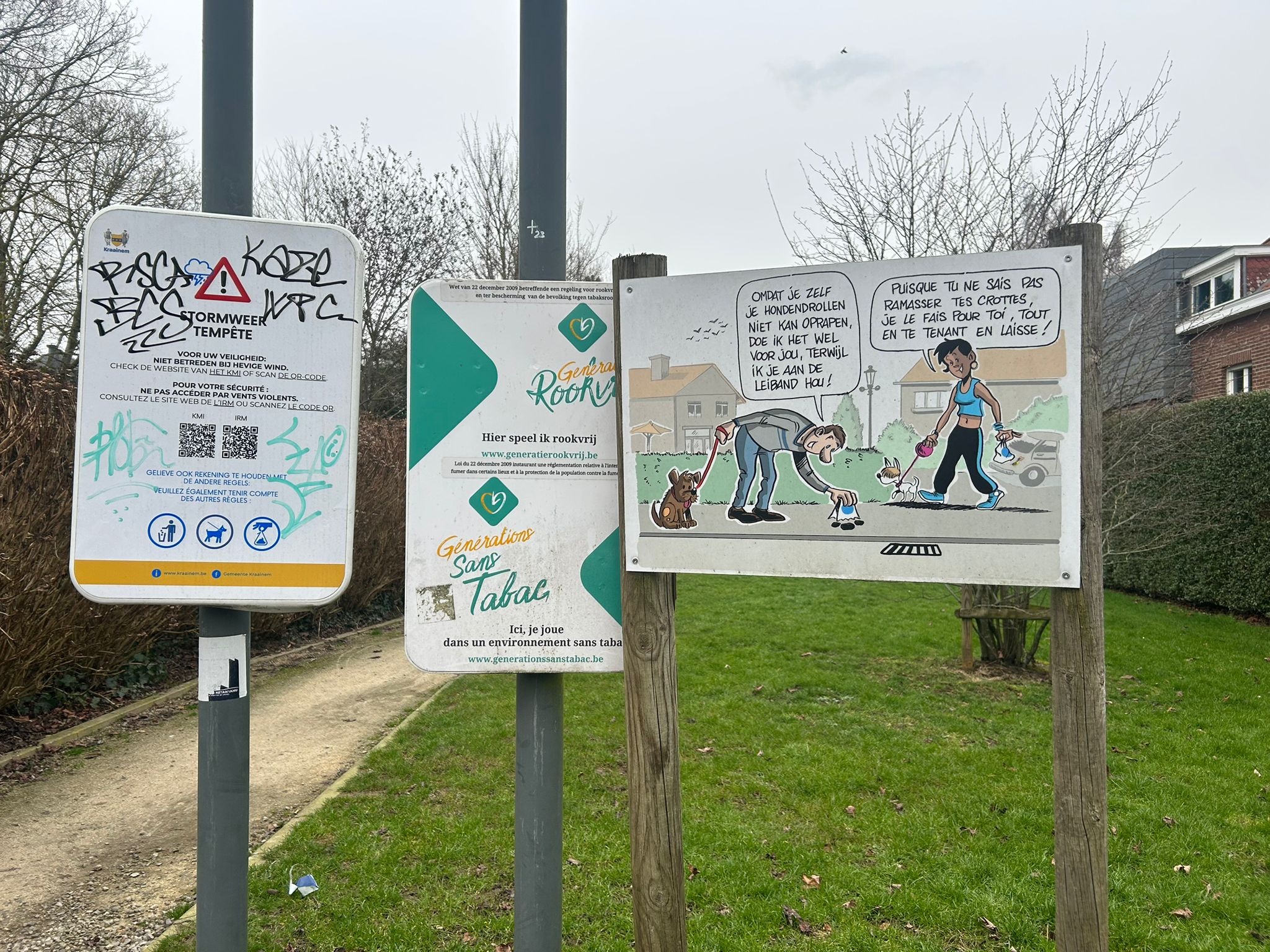
Signs to encourage picking up dog waste in Stockel. Credit: Katie Westwood / The Brussels Times
Belgian-American writer and consultant, Patricia Finn, 61, believes it is "irresponsible" and a health hazard, which is only getting worse.
"Dog poo is a health hazard for children, who are very low to the ground, touch everything and put their hands in their mouths all the time," Finn, who has a Havanese, told The Brussels Times.
She says she is always "stunned" to see so many droppings around where she lives, on Avenue Louise. Like Wright, she has also picked up other dogs' dung to avoid other people from stepping in it.
Both Wright and Finn have confronted fellow dog owners who turn a blind eye. Finn says she has called many people out who "pretend they don't see it and walk away", while Wright always carries a few extra bags to hand out on occasion.
A Brussels problem?
Finn lived in Bruges for 11 years before Brussels, and says she didn't notice dog poo to be an issue there. She also doesn't recall it being as prevalent in the many places she has lived in the United States.
Wright, likewise, does not remember it being as big an issue when he lived in London either.
Both suggest it is a seasonal issue, as they have observed more dog droppings in the colder months of the year.
"It seems to be particularly bad in the first few months of every year," Wright said. "I've seen all sorts of mess in the middle of streets, on zebra crossings, outside of crèches, and particularly in the parks."
Finn says owners pay more attention in the summertime when it's light outside. "But in the winter, when it's dark at 18:00, people just let their dogs run around."
Brussels Cleanliness spokesperson Adel Lassouli, however, told The Brussels Times that in winter, there are "undoubtedly fewer problems because dogs are walked less often," but that field agents have not reported any significant difference in cleanliness according to the seasons.
Trottoir, pas crottoir
The dog days are clearly not over, so what's the solution? Over the years, there have been many awareness campaigns – but to little avail. The municipality of Etterbeek, for instance, organised an innovative plan of action in March 2016, in which dung was sprayed with fluorescent orange paint to, quite literally, highlight the problem.
Graffiti slogans such as Trottoir, pas crottoir (Pavement, not 'poovement') have also popped up in neighbourhoods, but residents have remarked they do little to curb the turd.
One Auderghem resident, Quentin Thonet, wrote on his local community Facebook group on 29 January: "I never used to have dog mess on my pavement. Since the council workers tagged my pavement [...] I now have dog poo every day, and what's more, it's on top of the graffiti! (Today, the dog missed the target)."
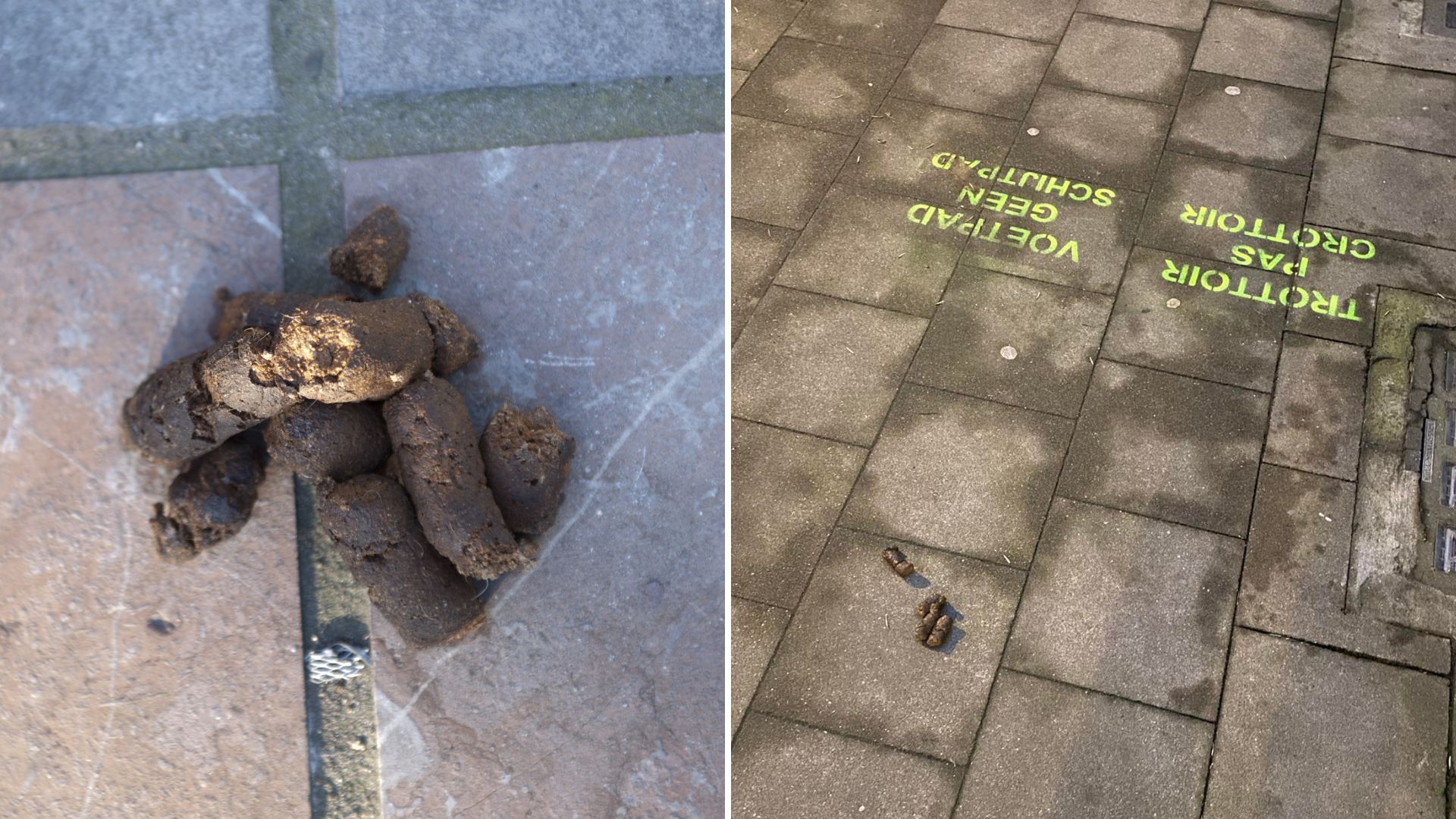
'Trottoir pas crottoir' graffiti in Auderghem. Credit: Quentin Thonet / Belga
Wright says he has discussed the issue with his local mayor in Woluwe-Saint-Lambert and that communal authorities are very aware of it. He also plans to write to his commune with some suggestions, such as doubling fines for each infringement and obliging offenders to go to their commune with their dog passports and get them stamped.
He also thinks purple-uniformed community support officers, known as peacekeepers or gardiens de la paix, should have the power to impose fines.
"If people aren't going to be socially responsible, then there should be measures in place to make sure they conform."
Finn, meanwhile, believes that warnings of €500 fines are seen as empty threats by owners and that it would be much more effective for authorities to lower it to €25, for example. "No one believes they're going to be given a €500 ticket. But if you threaten someone with a €25 fine, people would have to pay it. And that would change behaviour."
She also believes that talking to offenders is highly effective. "I have seen that people, after I've talked to them, go and pick up their dog's poos. So there is something about shaming people into it that does seem to work, but you have to be willing to do that."
Related News
- Dodging rubbish bags and broken paving slabs: The daily struggle of getting round Brussels in a wheelchair
- 'Bad for the city's reputation': Brussels named European city with dirtiest public toilets
- It’s reigning cats and dogs: The politics of pet passports after Brexit
- An uphill struggle: Why are Brussels' escalators always broken?
Both Wright and Finn say that it is a civic responsibility, which lies primarily with owners, but that enforcing fines is also appropriate.
Brussels Cleanliness' Lassouli also agrees that dog owners must ensure that their animals do not soil public spaces when out walking, as there is only so much the regional agency can do. "We deal with a huge number of public cleanliness issues, including illegal dumping, cigarette butt litter, illegal dumping and poorly sorted rubbish bags, which means we have little time to focus on this issue separately," he said.
"However, our street cleaners pick up and clean dog waste when they come across it. Some municipalities are undoubtedly working harder on these issues because they are often asked about this problem by their residents."
Lassouli believes the situation has improved somewhat thanks to increased awareness of cleanliness, better signposting and bags being made available. However, it varies greatly between neighbourhoods and depends on residents' behaviour.
So, maybe it's time for Brussels to get its shit together once and for all.
