
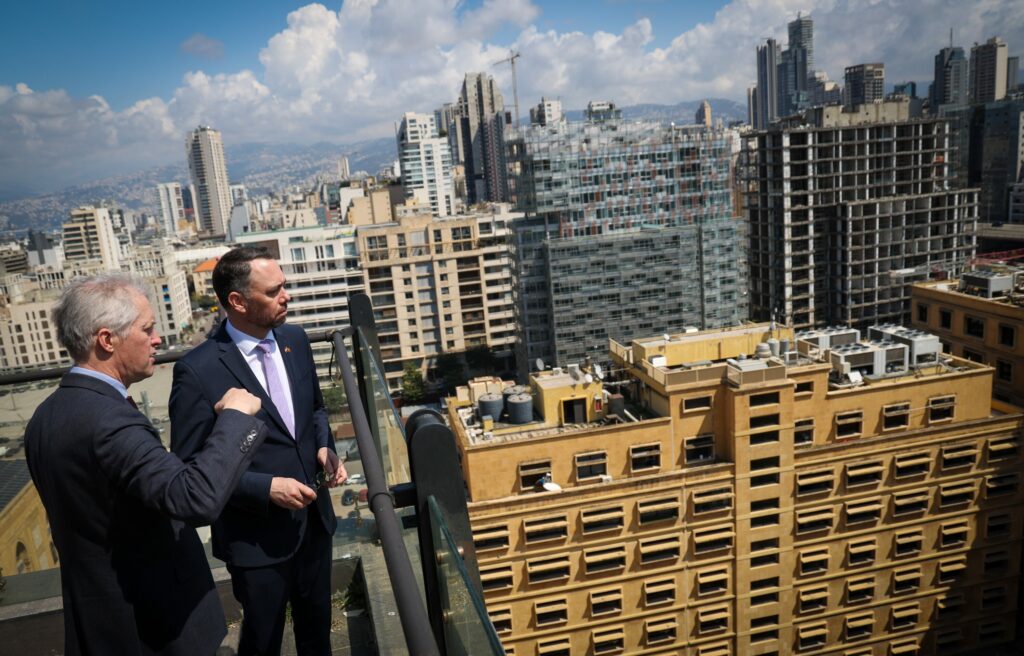
Having come to Beirut to "personally deliver" Belgium’s message of support to the Lebanese authorities, Foreign Minister Maxime Prévot witnessed firsthand the gravity of the situation during a day that turned into a nightmare in a matter of minutes, Belga News Agency reports.
Despite the overall context, the day had started off rather well on Wednesday. Maxime Prévot set foot on Lebanese soil under a bright sun and just hours after the conclusion of a ceasefire that brought some hope to the region.
He came with the announcement of the release of significant additional resources for aid to Lebanon, both in the short and medium term.
The minister began his itinerary with a visit to Camille Chamoun Stadium, which the Red Cross has converted into a shelter for more than 1,100 displaced people, mainly from the south.
The NGO provides them with shelter under the stadium stands, food, hygiene supplies, medical care, and attempts to alleviate their immense psychological suffering.
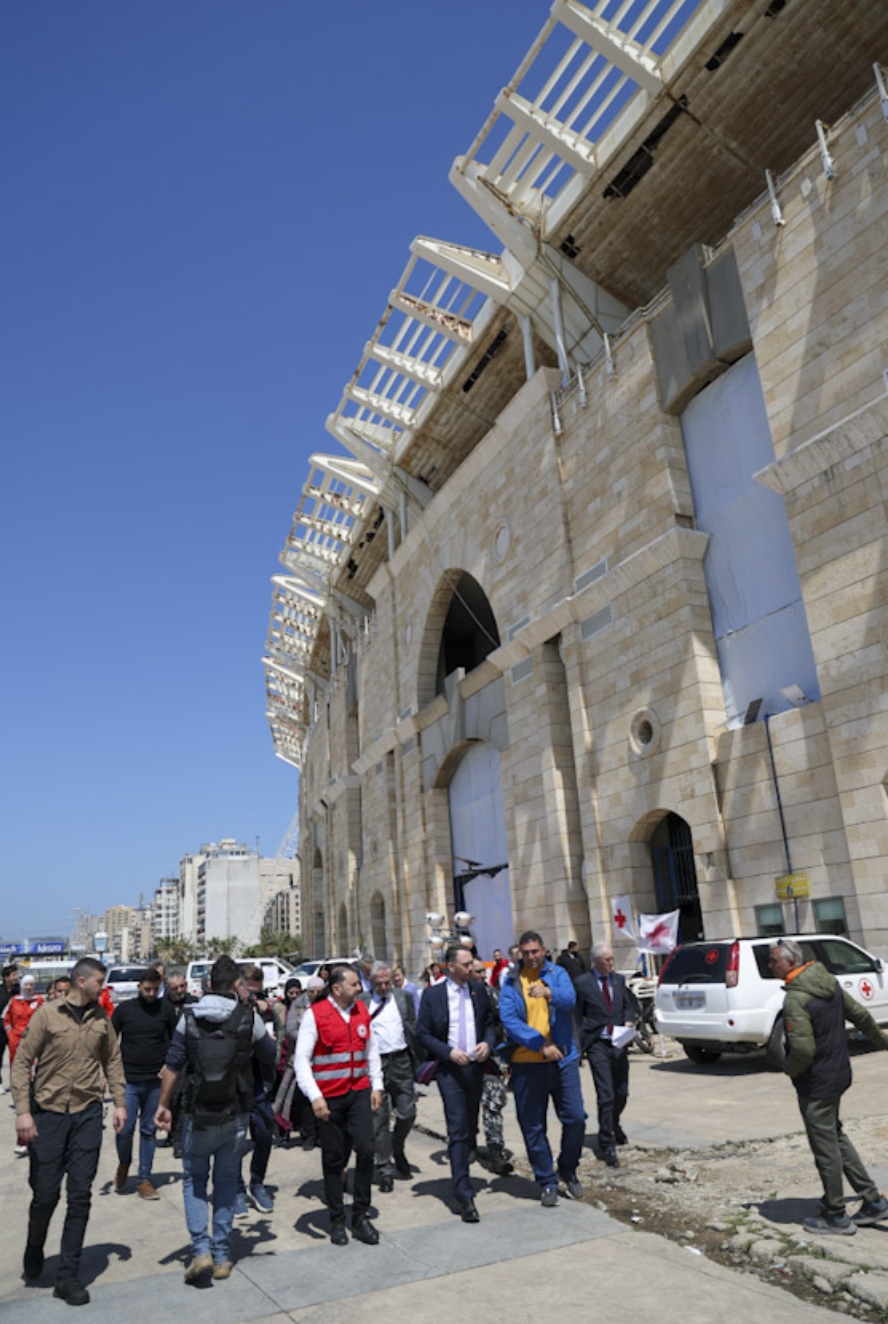
Belgian Foreign Minister Maxime Prevot (C) visits the Red Cross shelter in the Camille Chamoun sports city stadium, in South Beirut, Lebanon, Wednesday 08 April 2026. Credit: Belga / Virginie Lefour
"With more than a million displaced people—one-fifth of the population—the humanitarian needs are enormous. We lack everything," summarizes Dr. Antoine Zoghbi, president of the Lebanese Red Cross.
Before embarking on his diplomatic marathon to reaffirm Belgium’s support to Lebanon’s highest authorities, the minister made a traditional stop at the embassy to greet the staff.
Shortly after 1:00 p.m., while Mr. Prévot was inside the building, five massive explosions were heard. The worried looks and palpable tension among the security agents outside left little room for doubt: the targets struck were not far away.
From the convoy that sped off toward the presidential palace, the minister could assess the damage. A massive plume of black smoke rose above the city. One of the shells—among the hundred or so that struck Lebanese territory in a matter of minutes—landed just a few hundred meters from the Belgian embassy.
Any doubts regarding Lebanon’s inclusion in the ceasefire thus quickly evaporated. Following his meeting with President Joseph Aoun, Prévot condemned Israel’s "unacceptable" attitude, "which only strengthens Hezbollah," and called for "increased political pressure" against it.
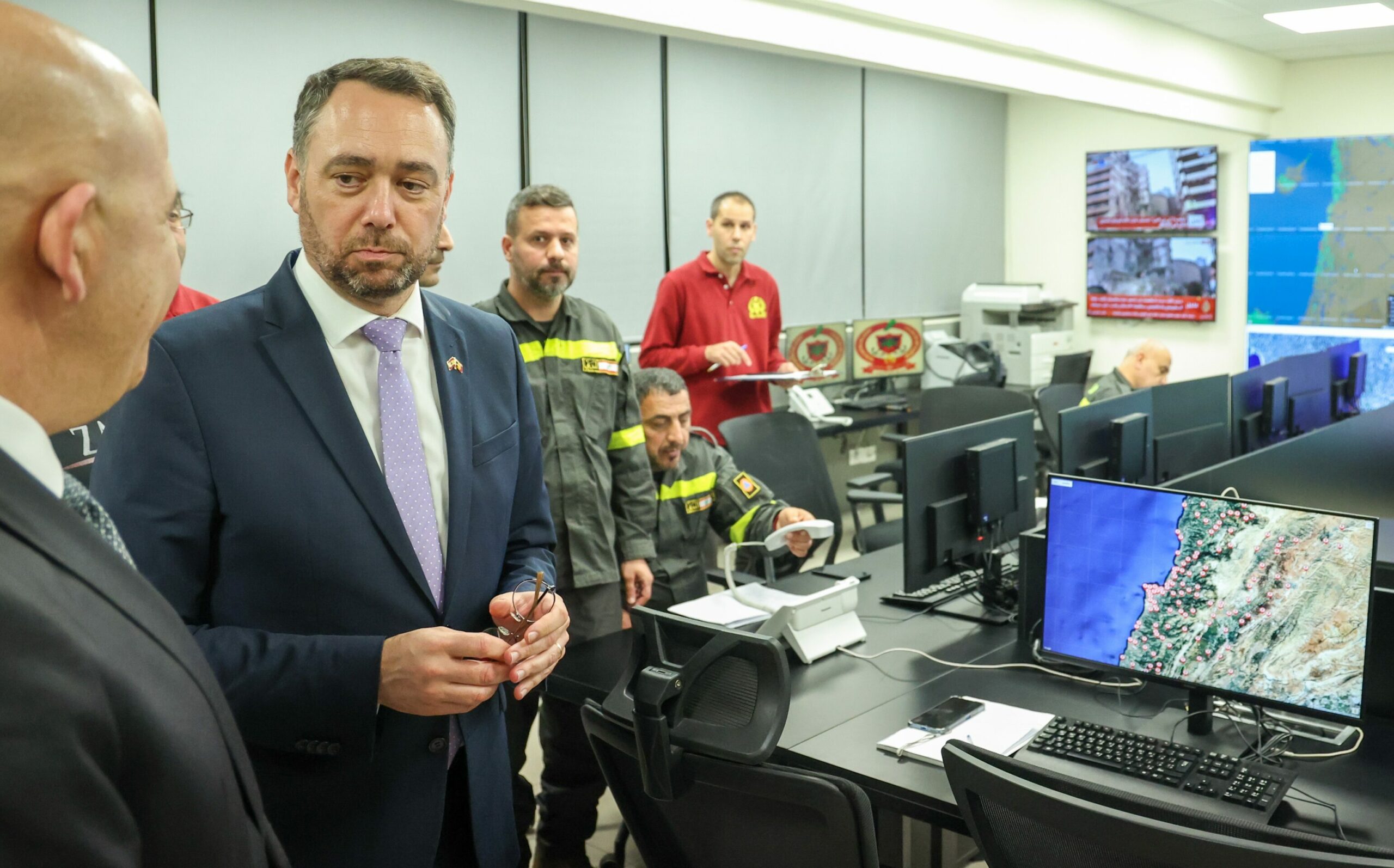
Director general of the Lebanese Civil Defense' Imad Khreich and Belgian Foreign Minister Maxime Prevot visit the Lebanon Mine Action Center in Beyrouth, Lebanon Wednesday 08 April 2026. Credit: Belga / Virginie Lefour
The minister continued his schedule, encountering here and there the scars of the airstrikes in a city where passersby—increasingly rare—regularly looked up at the sky. "One cannot help but be deeply moved and share with even greater intensity the Kingdom of Belgium’s concern for this civilian population," stated Prévot after his meeting with Prime Minister Nawaf Salam.
A second field visit related to humanitarian aid was planned, but it was scaled back to the bare minimum, as most of the staff from the NGO Amel had left the area to go into lockdown.
At the end of the day, the Belgian foreign minister made another stop at the Civil Defence Operations Center, where he was briefed on the latest toll: at least 250 dead and 1,150 injured. It was the bloodiest day for Lebanon since the start of the war, leading to a national day of mourning this Thursday.
The spokesperson for UN Secretary-General Antonio Guterres on Wednesday said that the Israeli airstrikes on Lebanon threaten the fragile two-week ceasefire between the United States and Iran.
In a statement, the spokesperson expressed concerns over ongoing military activity in Lebanon, saying it poses a significant risk to peace efforts in the region.
He reiterated calls for an immediate end to hostilities to avoid further destabilisation.
