
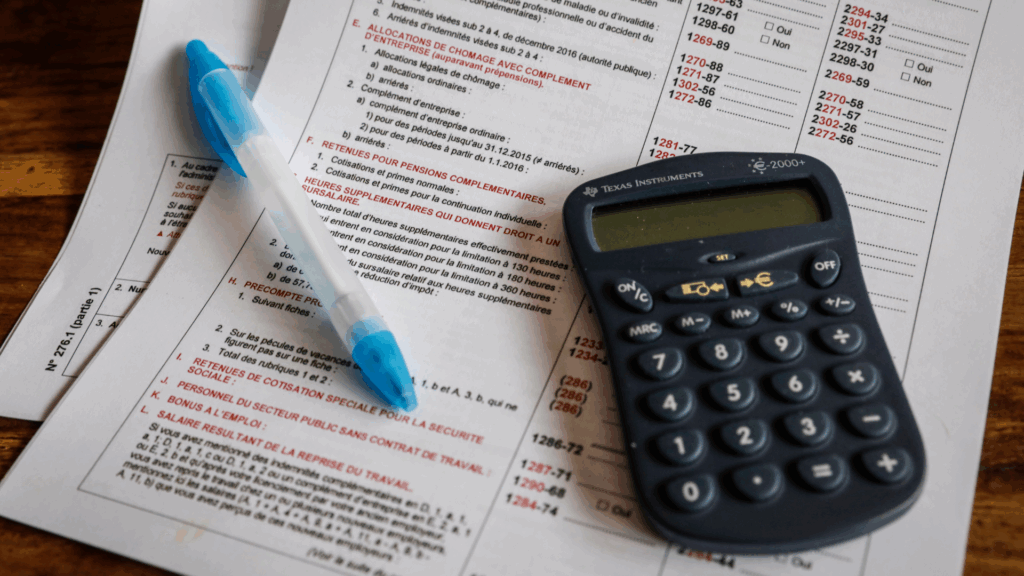
When I teach civic integration courses, I am often asked why such a large share of people's salaries in Belgium goes to taxes and how they are calculated.
These questions partly stem from the fact that what people call “taxes” actually combines several distinct mechanisms.
To understand this, it is useful to break down Belgium’s taxation system, understand its rates and consider why they are often seen as relatively high compared to other countries.
Income tax vs. social security contributions
Income tax and social security contributions are both largely organised at the federal level, but serve different purposes.
Income tax finances general public spending such as defence, justice, and public administration, while social security contributions are specifically used to fund various programmes, including pensions, healthcare, unemployment benefits and family allowances. This system is also partly financed through general tax revenues.
This becomes clearer when looking at how income is taxed.
Belgium applies a progressive income tax system. Different portions of income are taxed at increasing rates: 25%, 40%, 45% and up to 50%.
The first portion of income – around €11,000 (indexed annually, and varying depending on personal circumstances) — is tax-free, meaning no income tax is paid on that amount. There have been discussions at the federal level about raising this tax-free threshold.
The system also includes a number of adjustments. Certain income or allowances – such as social benefits or employer-provided meal vouchers – may be exempt from taxation or treated more favourably, while some expenses may qualify for tax advantages that reduce the overall tax burden.
Much of this tax is not paid in one go. Withholding tax is deducted at source, especially for employees (i.e. salaried workers, as opposed to the self-employed). It is possible to voluntarily increase withholding tax (known as volontariat fiscal/fiscaal voluntariaat).
Income tax is also levied at municipal level as a percentage of the federal tax due. In Brussels, municipal surcharges typically range between roughly 5% and 7.5%, depending on the municipality.
Social security contributions form the second major component of labour costs, with employees contributing around 13.07% of their gross salary, while employers pay an additional 25% to 32% on top of wages, depending on the sector and reductions.
However, certain types of employment arrangements, such as student jobs, benefit from reduced social security contributions, making them significantly less costly for employers.
For self-employed workers, the system operates differently: contributions are paid quarterly, initially based on estimated income and later adjusted, with a base rate of 20.5%.
Taken together, these mechanisms explain why salary deductions can appear high.
Beyond income: VAT and other taxes
Belgium also relies heavily on indirect taxes, notably value-added tax (VAT), which is included in the price of most goods and services, alongside excise duties on products such as alcohol and tobacco.
The standard VAT rate is 21%, although reduced rates of 12% and 6% apply to certain goods and services such as food or energy. This broadens the tax base beyond income, so that everyone contributes.
Recent reforms have also adjusted VAT rates in certain sectors, for example by increasing the rate on hotel accommodation from 6% to 12%.
Belgium also levies regional and local taxes. A property tax known as the précompte immobilier/onroerende voorheffing is set at the regional level, with additional surcharges at the local level. Taxes also apply in other situations, such as purchasing property, transferring wealth through inheritance or donations, or owning and using vehicles.
Why are taxes so high in Belgium?
Belgium is often considered a high-tax country, and this perception is not unfounded.
According to the OECD, Belgium's tax-to-GDP ratio stood at around 42.6% in 2024, compared to an OECD average of 34.1%. It also has the highest tax wedge on labour in the OECD — the difference between what an employer pays and what an employee takes home — at around 52.6% for a single worker, compared to an OECD average of 34.9%.
One of the main reasons lies in the scope of public spending. Belgium finances a broad range of public services and social protection, where many risks, such as illness, unemployment or old age, are collectively covered.
This system is funded through a combination of social security contributions and general tax revenues, within a complex institutional structure that can also increase public spending.
Demographic pressures also play a role. An ageing population increases the cost of pensions and healthcare, placing additional pressure on public finances.
At the same time, a significant share of public revenue is drawn from labour. This makes taxation particularly visible on salaries and contributes to the perception of a heavy tax burden.
Taken together, these factors help explain why taxation levels are relatively high in Belgium. They do not exhaust the debate, which also extends to how different types of income are taxed, how efficiently public spending is managed, and how the tax burden is shared.
These questions underpin ongoing discussions about how to balance taxation, public spending and the overall distribution of taxes.
