
If you are searching for Georgian restaurants in Brussels, you won’t find many. In fact, a few years back, you may have found none.
But while the Georgian community in Belgium is smaller than those of other Caucasus countries, the country's celebrated cuisine is beginning to make its mark. In recent years, a number of Georgian restaurants have opened, including in Brussels.
Georgian cuisine
Georgian dining tables are always full. The culture is rooted in community and hospitality, and its people remember the scarcity of the past, much like in other parts of the Caucasus.
Georgian cuisine stands out for the way it balances meat and dairy with herbs and sharp acidity. The flavour palette combines rich elements – cheese, walnuts, meat, fermented bread – and sour bases such as wine vinegar, pomegranate molasses, plum sauces and baked vegetables.
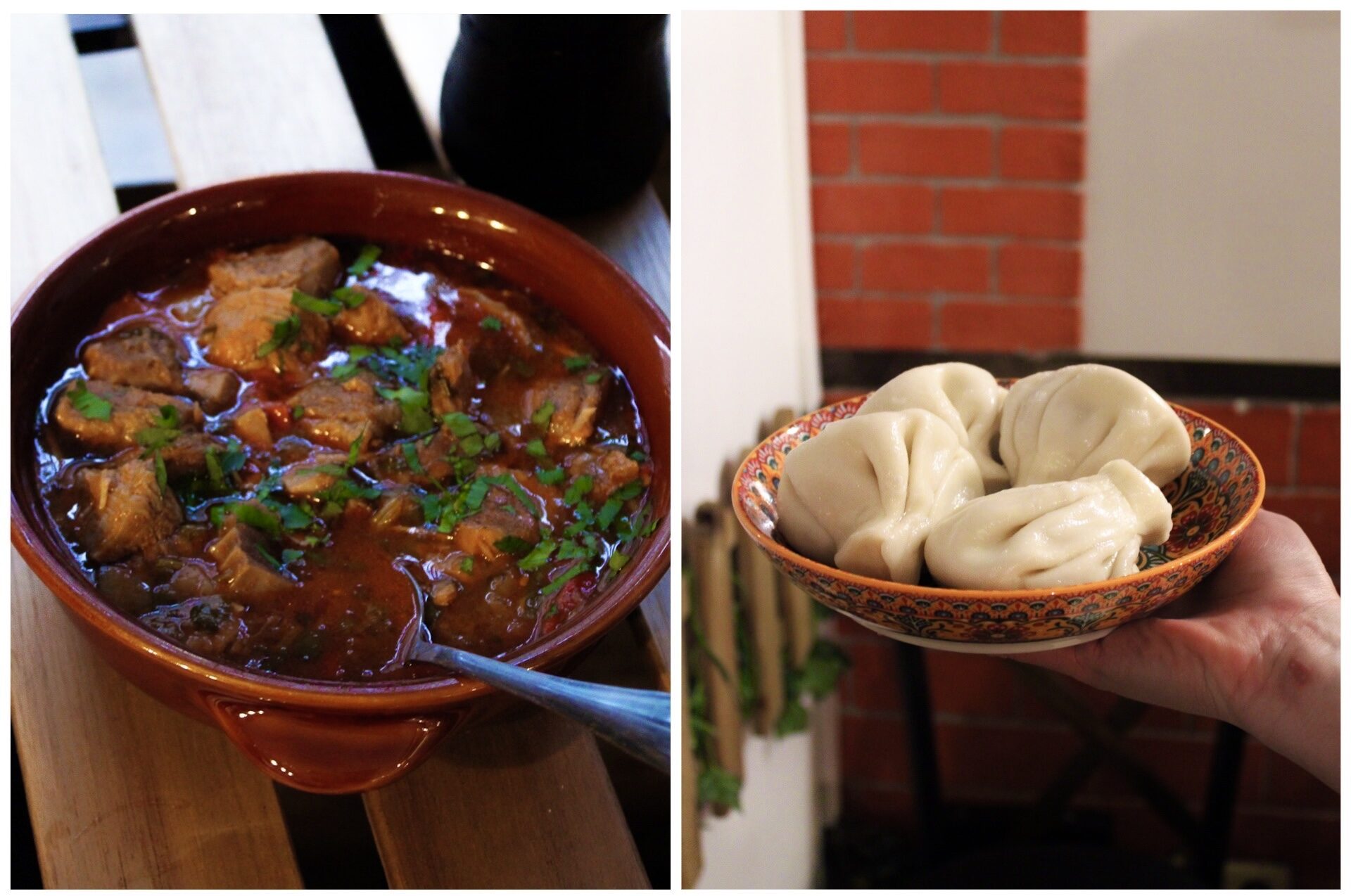
Ostri, a spicy Georgian beef stew with tomato-based sauce, (left) and traditional Georgian soup dumplings called Khinkali (right). Credit: The Brussels Times
Georgians also produce traditional brined cheeses, such as sulguni and imeruli, which are moderately salty with an elastic texture, as well as crumbly imeretian cheese, pungent gouda and smoked mountain cheeses.
These rarely take a side role in a dish. Instead, cheeses are baked into a dough, roasted in clay pots, folded into hot grains or flavoured with oil and spices.
And of course, no meal is possible without wine. Georgia is famous for its Qvevri method, an 8,000-year-old tradition of fermenting wine in giant clay jars buried underground.
Georgia is also known for its 'amber wines,' such as Rkatsiteli, sometimes referred to as orange wine or skin-contact wine, as grapes are fermented with their skins. The most well-known Georgian reds are Saperavi and Mukuzani.
Where to taste it?
There aren't many Georgian restaurants in Brussels – only three, according to our research. Maison De Khinkali, in a residential neighbourhood in Ganshoren, is often cited as the go-to place and is said to provide the most authentic tasting experience.
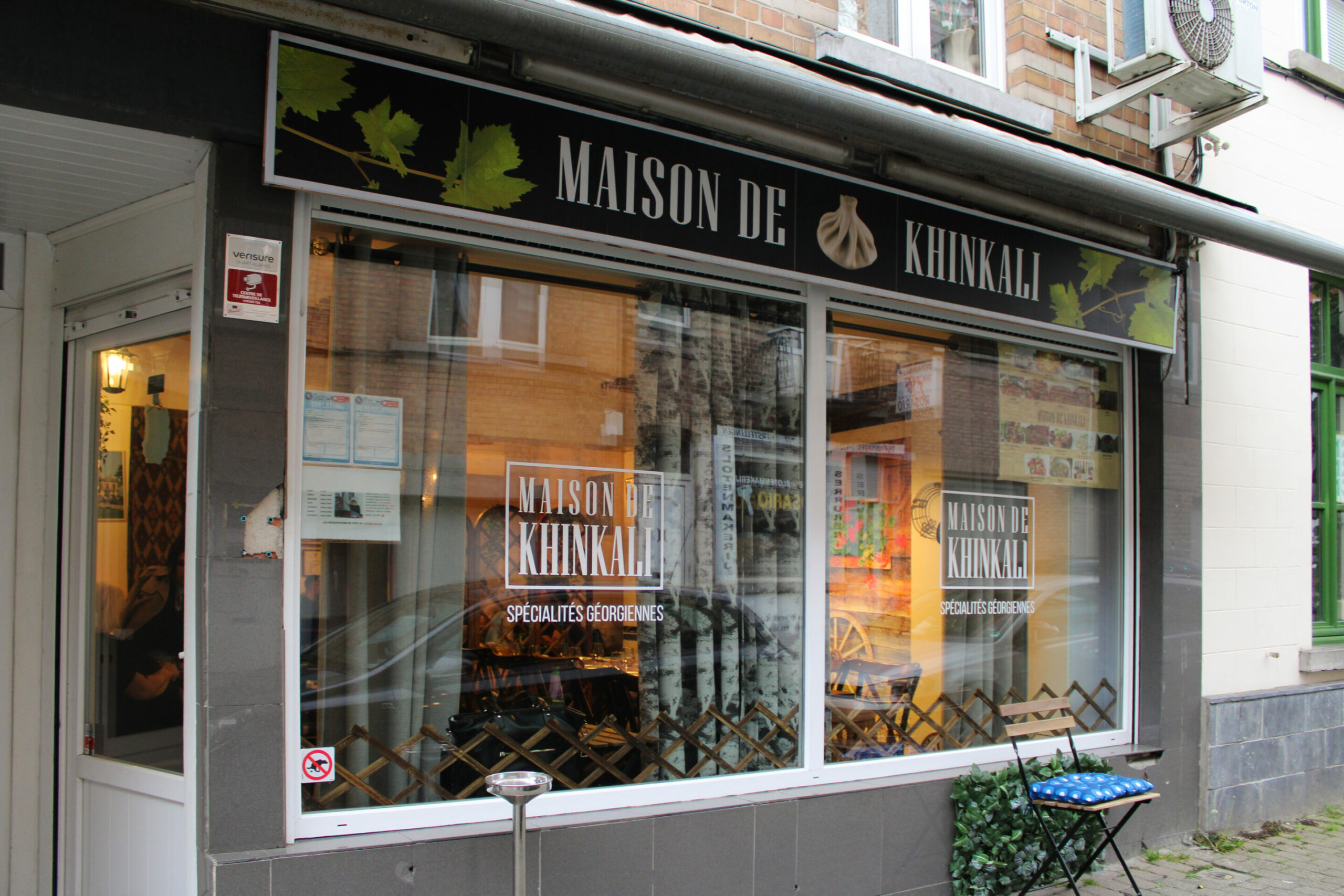
Maison De Khinkali in Ganshoren, Brussels. Credit: The Brussels Times
When we paid a visit at around 20:00 on a Tuesday evening, the restaurant was full. At a long table, a group of Georgians, clearly regulars, had gathered for a feast.
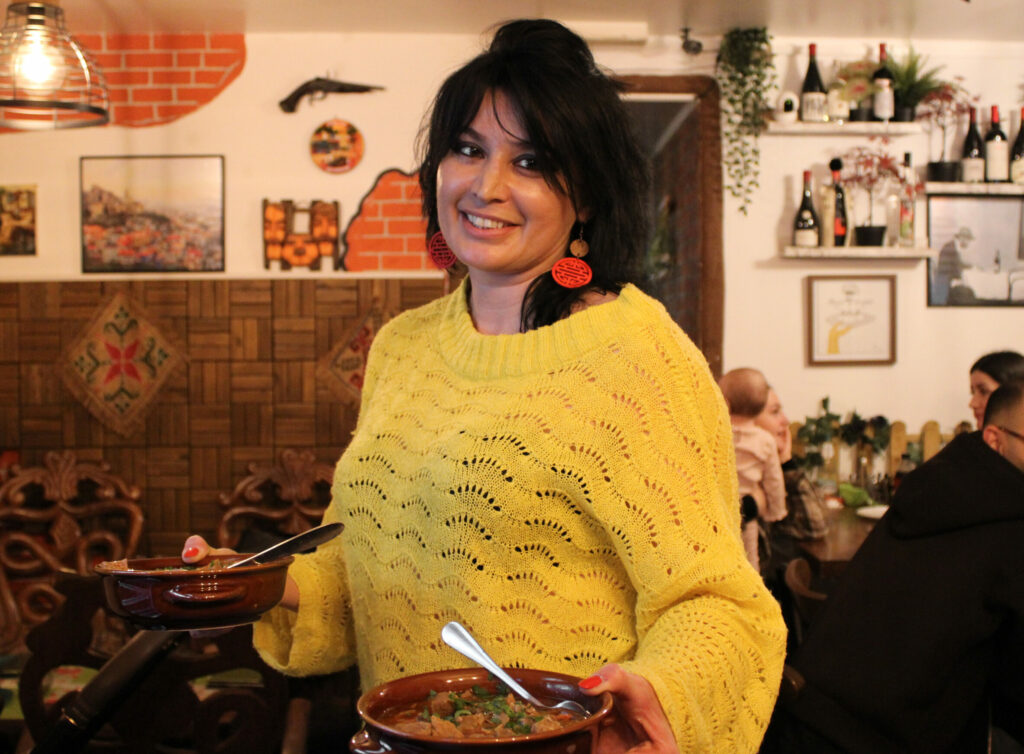
Maison de Khinkali has the appeal of a family-owned Eastern European eatery, with a modest, but warm interior. Georgian music plays, and the scent of coriander, melting cheese and bread baking in the stove are fill the dining room, wafting in from the kitchen at the back.
The restaurant has been around for about five years. Nino, the owner, has been living in Brussels for 19 years and used to have a snack shop, selling Georgian specialities. After closing the shop, she told The Brussels Times, regulars kept asking her to return to business. Then she opened Maison de Khinkali.
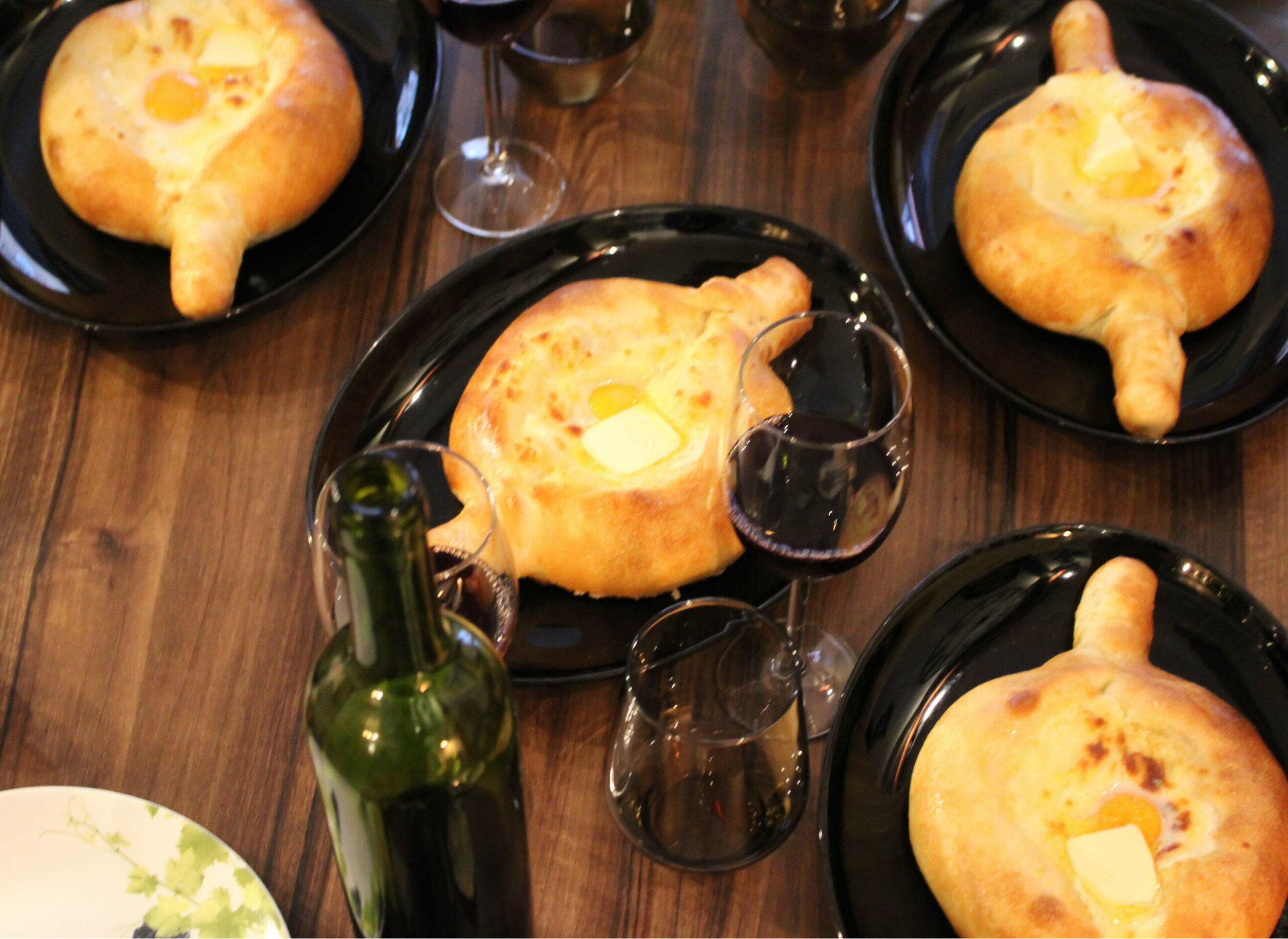
Georgian cheese-filled bread (Adjarian Khachapuri). Credit: The Brussels Times
Nino serves customers alone, and most seemed to know her. As she was putting more dishes on the ’feasting table’, a man said, “Nino, will you sing for us tonight? The food is delicious!" Judging by social media posts, diners often burst into festive dancing and singing in the restaurant.
The menu consists of well-loved classics of Georgian cuisine, starting with Khinkali – traditional soup dumplings with pork and a generous amount of coriander – and then on to several versions of cheese-filled bread Khachapuri, with meat and vegetables.
Georgian wines can also be found here. For those with a taste for something clearer and stronger, Nino offers Chacha, a traditional Georgian pomace brandy, often referred to as grape vodka.
As they say in Georgia, Gaumarjos!
