
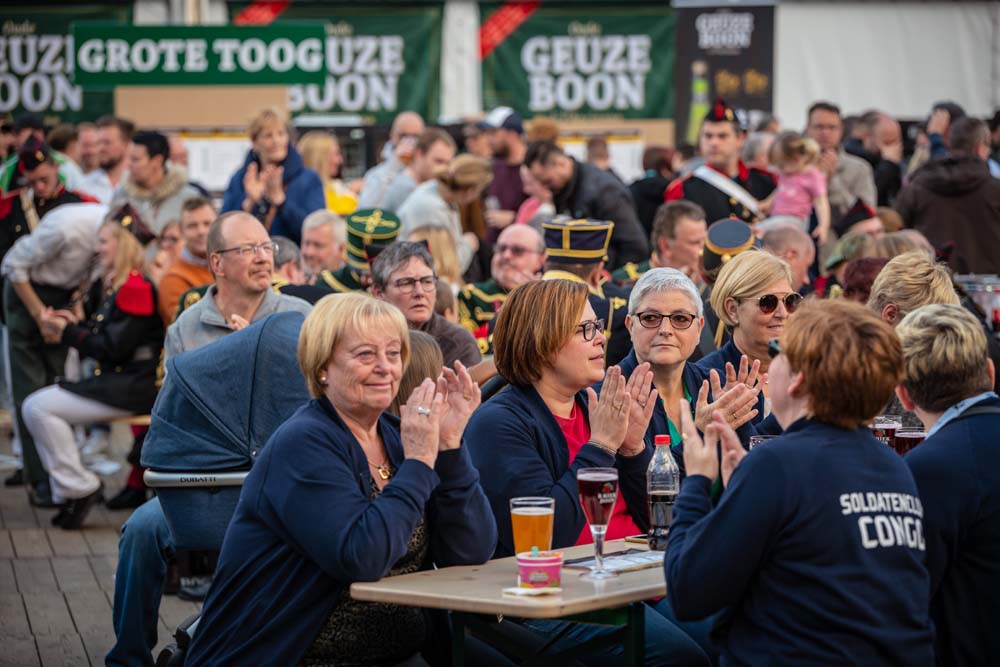
Beer lovers will once again be able to step inside some of Belgium’s most iconic lambic breweries this weekend as the Toer de Geuze returns on 9 and 10 May.
Held every two years, the event allows the public to visit breweries and gueuze blenders across the Pajottenland and the Senne valley, southwest of Brussels, where the centuries-old tradition of spontaneous fermentation still survives.
Fourteen lambic brewers and blenders are taking part this year, including historic names such as Boon, Lindemans, Brasserie Timmermans and Brasserie Mort Subite. Newer producers such as Kestemont, Sako and Den Herberg will also open their doors.
The only Walloon participant is Gueuzerie Tilquin. Founded 15 years ago by Pierre Tilquin, the blending house recently reached a milestone. Until recently, Tilquin focused exclusively on blending lambics sourced from other regional producers.
In 2022, however, the brewery began producing its own organic lambic wort. Three years later, it is now unveiling its own traditional oude gueuze, blended from one, two and three-year-old lambics and bottle-conditioned for more than a year.
A beer born from Brussels’ air
Lambic is unlike almost any other beer in the world. Instead of using cultivated yeast strains, brewers rely on wild yeasts and bacteria naturally present in the air of the Senne valley.
After boiling, the wort is left to cool overnight in large open vessels called coolships, allowing spontaneous fermentation to begin naturally. The beer is then aged in oak barrels for one, two or even three years.
The Brussels Champagne
Gueuze, often nicknamed the “Brussels champagne”. is made by blending young and old lambics. Once bottled, the beer undergoes a second fermentation, creating its characteristic sparkling acidity.
The tradition dates back several centuries and was once deeply rooted in Brussels’ working-class culture. In the 19th and early 20th centuries, the capital and surrounding areas were home to dozens of lambic breweries and gueuze blenders.
The arrival of pils
But after the Second World War, industrial lagers gradually replaced traditional sour beers, pushing many producers out of business. Only a handful of breweries continued preserving the method, among them Brasserie Cantillon, which became one of the main guardians of traditional lambic brewing.
In recent years, however, lambic and gueuze have experienced a major international revival as craft beer enthusiasts rediscovered spontaneous fermentation and barrel-aged sour beers.
As with every edition of the Toer de Geuze, all participating brewers and blenders have also collaborated on a special limited-edition beer called the “Megablend”, created using lambics from each of the fourteen producers.
Practical information
Visitors can tour the breweries by car, bike or train, but special shuttle buses organised by HORAL will also connect the participating breweries throughout the weekend. The buses will depart from Halle and Denderleeuw railway stations, allowing visitors to sample different lambics and gueuzes without needing to drive.
On Saturday, buses leave at 10:30, while Sunday departures begin at 09:30. Several routes are available, each stopping at a different combination of breweries and gueuze blenders.
More information and tickets are available on the official Toer de Geuze website.
