
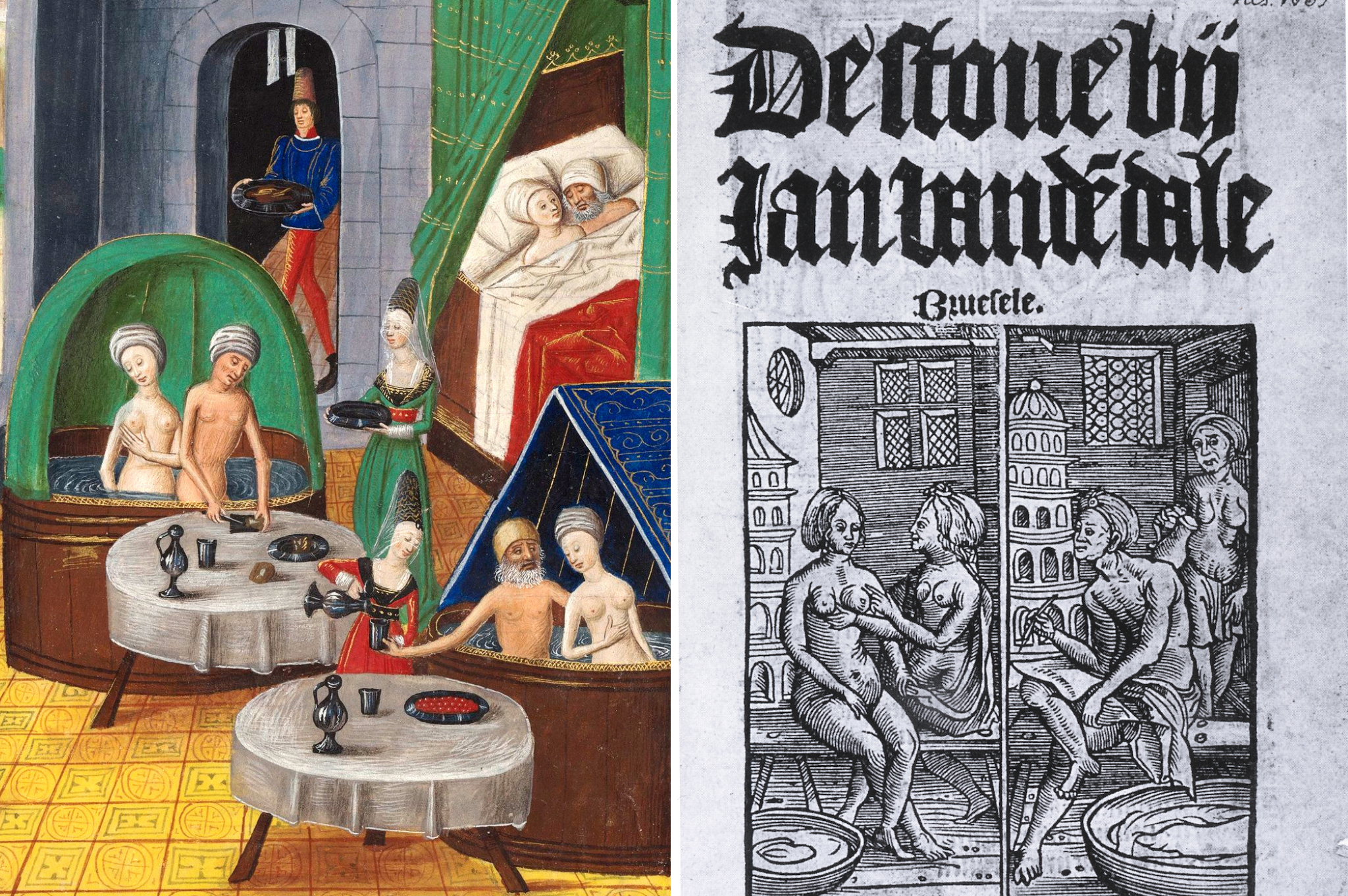
You never forget your first stew. That, at least, is how late medieval travellers to the Low Countries described brothels.
Bruges was particularly renowned for its establishments, which were named stews after the stove that heated the building. These ‘houses of low repute’ provided visitors with food, drink and sometimes a bit more.
Merchants, soldiers, diplomats and other travellers wrote enthusiastically about the stews. One German visitor noted in 1495 that Flemish women were the “real daughters of Venus”. In London, a brothel advertised the presence of frows from Flanders, after the Dutch word for women, vrouwen. Flemish sex workers and brothels were perceived as particularly desirable all over Europe.
This suggests an open and positive attitude towards commercial sex in the late medieval Low Countries. Bathhouse culture flourished, and some women built their fortunes with commercial sex. But attitudes were deeply ambivalent. Religious figures like St Augustine and Thomas Aquinas contended that commercial sex was sinful yet still preached tolerance to prevent “greater evil”, such as rape.
The ambiguity was underlined by the treatment of the women and men who earned money through sex work, widely seen as dishonourable. In some cities, they had to wear a piece of yellow or green cloth to mark them out. At the same time, they were also part of local religious communities and gave alms to the poor.
Or take an even more striking example: in some cities, such as Bruges, stew keepers were officially forbidden to employ sex workers. However, if they paid a fine, they were left alone. We know of more than 34 stews who paid this fine. In effect, the fine was a tax on brothels.
Sex workers had to navigate these challenges. They were not powerless: there are records of sex workers and brothel keepers who took legal action if they felt they had been treated unfairly. But there were also great disparities among them. While some managed to amass considerable wealth, others mainly accumulated debts. The frows of Flanders may have been daughters of Venus, but they were not all endowed with divine riches.
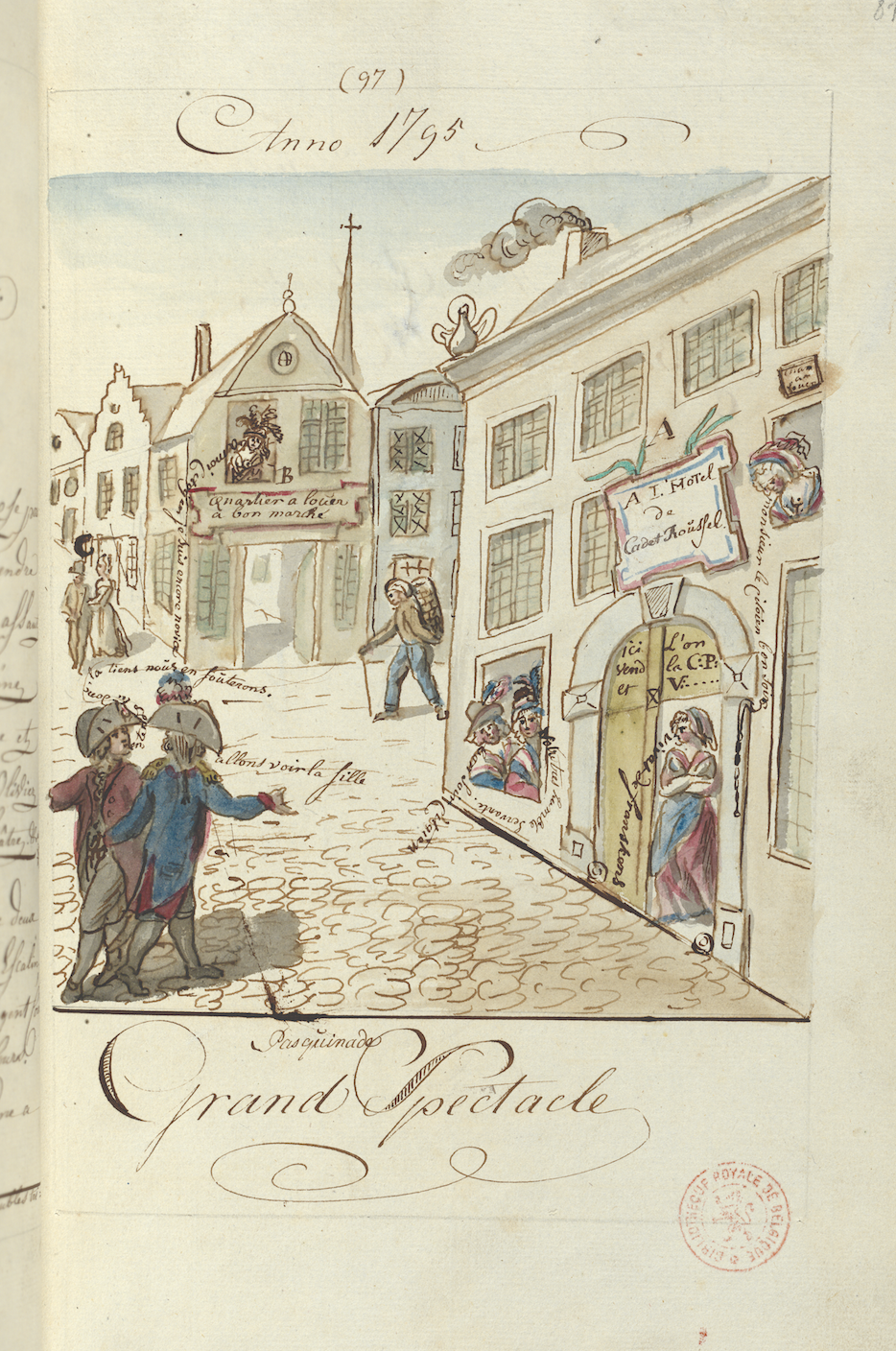
Antwerp sex workers welcoming eager French soldiers, by Pierre Goetsbloets
Delightful and renowned
Let us leave the Middle Ages behind. Stews are closing, travellers are becoming more discreet. The notoriety of Low Countries sex workers faded. The 16th century was an age of greater moral clarity. In the age of the Protestant Reformation and the Catholic reforms, sexual morality became stricter. “If I were a judge,” wrote Martin Luther around 1540, “I would torture and mangle that poisonous corrupt whore and have her veins lacerated.” Commercial sex went underground in the face of tougher laws and increasing stigma.
Local governments issued a flurry of new rules and punishments. Sometimes, they were ridiculously cruel. In Mechelen, a 1736 law determined that convicted sex workers should be displayed publicly for an hour while sitting backwards on a large wooden horse with a sharp seat. In Brussels, a 1732 proposal would have had indecent women displayed in a revolving cage (the proposal failed, for fear that the spinning would lead to too much vomiting).
Nevertheless, some of the medieval ambiguity surrounding paid sex persisted between the 16th and 18th centuries. Despite the stricter laws, the authorities were reluctant to crack down on commercial sex. As long as sex workers remained discreet, they were usually left alone.
Paid sex flourished in some neighbourhoods, such as the Lepelstraat in Antwerp (now the Willem Lepelstraat) and Bovendael in Brussels (now a part of the Marolles). The Antwerp playwright Willem Ogier wrote about these neighbourhoods in a 1646 play, describing Bovendael as “delightful and renowned” for its commercial sex.
However, in deference to 17th-century sensibilities, the play ends in misery: a client contracts syphilis, a pregnant “lewd woman” attempts to commit suicide, and another sex worker is murdered by her own father. The dangers of the sex trade were not to be underestimated.
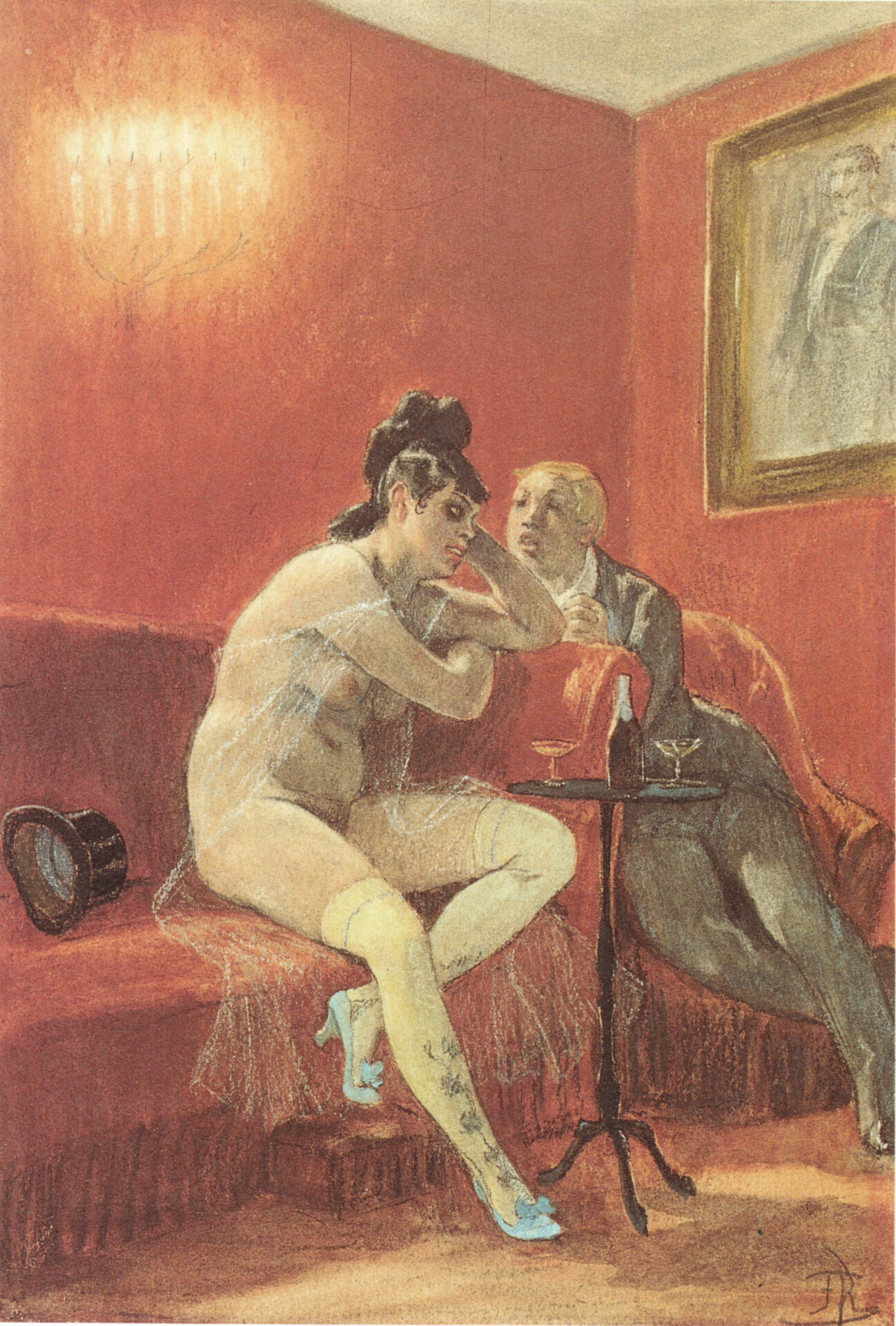
For women selling sex, this moral climate required constant vigilance, because the government would not protect them. Many had unpleasant encounters with the authorities. The records resulting from these encounters – interrogations and witness statements – show us a world of solidarities, occasional conflicts, but also a strong sense of morality.
Sex workers, too, had clear opinions about which kinds of transactional sex were allowed and which were not. One 18th-century sex worker hit a client on the head with a stove lid after he had tried to have sex “in an unnatural way”. Abuse was rife in early modern sex work, but sellers of sex did sometimes set clear boundaries and defended one another.
White slavery
In 1880, the Brussels sex trade caught the international eye again. Newspapers across the Anglophone world, from the Daily News to the New York Times, reported on a “diabolical slave traffic.” English girls under 21 were being misled, trafficked to Brussels and forced to work in Belgian brothels.
The scandal centred on Ellen Newland, a 20-year-old from London, who met a businessman who had promised to marry her and asked her to accompany him to Brussels. However, after they had crossed the Channel, he had to return to London on “urgent business,” entrusted Newland to a friend and told her to wait for him in Brussels.
The following day, the so-called friend registered her as a ‘public woman’ with the vice police. She was confined to a brothel and forced to sell sex. After contracting a venereal disease and being admitted to a hospital, she was able to get in touch with her parents and escape this hellish nightmare.
Newland’s story is one of hundreds like it. These stories were part of what has been called the white slavery panic of the late 19th century. Article after article suggested that sex workers were naïve young women who had fallen victim to devious pimps and traffickers.
Sex work had changed in the 19th century, with the previous hypocrisy replaced by new attitudes. Regulation rather than prohibition became the order of the day. Proponents hoped that it would prevent both abuse and the spread of venereal diseases. Women who sold sex had to register and undergo regular medical examinations, often multiple times a week.
Unfortunately, it didn’t work. The mandatory medical examinations were invasive and humiliating. Many women worked outside the regulated system and tried to avoid the police. Those caught up in the system found it difficult to leave. Some brothel keepers exploited them by taking advantage of their limited alternatives.
To make matters worse, corruption was rife. Police officers and government officials turned a blind eye to violations of the rules if a brothel keeper or pimp paid them off. They sometimes registered women under false names and birth years.
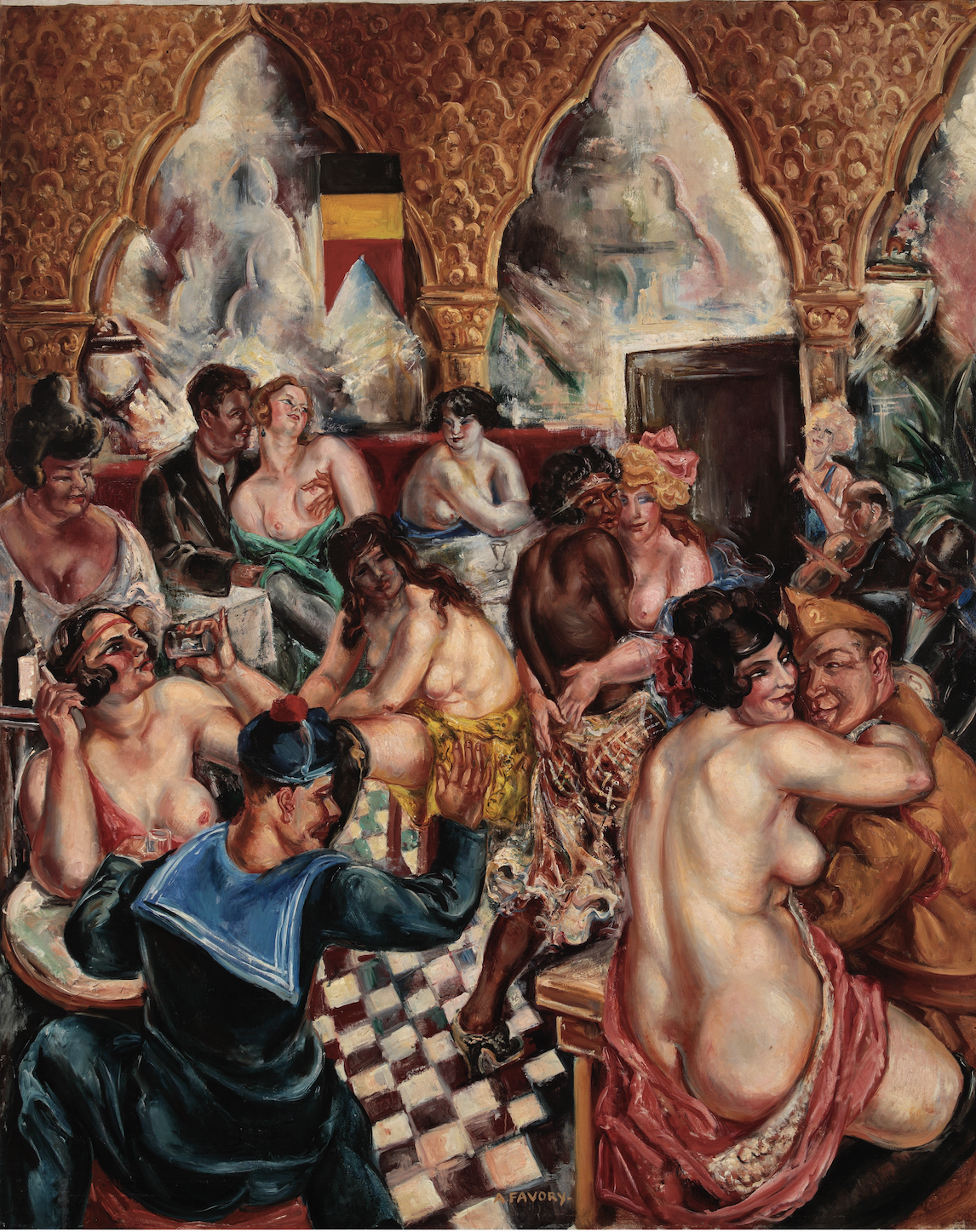
André Favory, 'Le Cristal Palace à Anvers', 1922
The Newland scandal in 1880 exposed many of these abuses. The head of the Brussels vice police was forced to resign after it emerged that he was a regular client of a brothel himself. The Brussels mayor was similarly ousted after the press discovered that he had sold his parents’ tavern to a brothel keeper.
And yet again, for all the white slavery scandals, the reality of the sex trade was more complex. Forced prostitution and trafficking were real issues, but women were not always naïve about what they were getting into. Some of those described as “trafficked” had worked in the sex industry before. For poorer women, sex work could be an attractive option. It could offer an escape from the demanding work as a servant, an opportunity to earn much more money, or a chance to have an adventure abroad.
This partly explains why so many cases of white slavery were uncovered: it was a clever escape strategy for the women. By playing into the stereotypes about innocent young women, sex workers who got into trouble could find a way out. If they insisted that they had been deceived, they were much more likely to receive support.
Of course, 19th-century sex workers did not always know what they were getting into: the risks, the hardships, the abusive men. But to portray them only as naïve victims would do them an injustice.
Sex work is work
Let us fast-forward one last time. The scandals surrounding the regulatory system eventually led to its abolition in 1948. Henceforth, local governments and police forces were not to interfere with the sex trade, except to punish “scandalous” behaviour. Sex work itself was not made illegal, but facilitating, advertising or encouraging commercial sex was.
After 1948, Belgian sex work largely stayed off the international radar – until the remarkable legal reforms of the 2020s. This legislation was built on urban renewal initiatives launched by local governments to clean up city centres by reducing the visibility of commercial sex. They introduced new regulatory initiatives to prevent “nuisances” in gentrifying neighbourhoods.
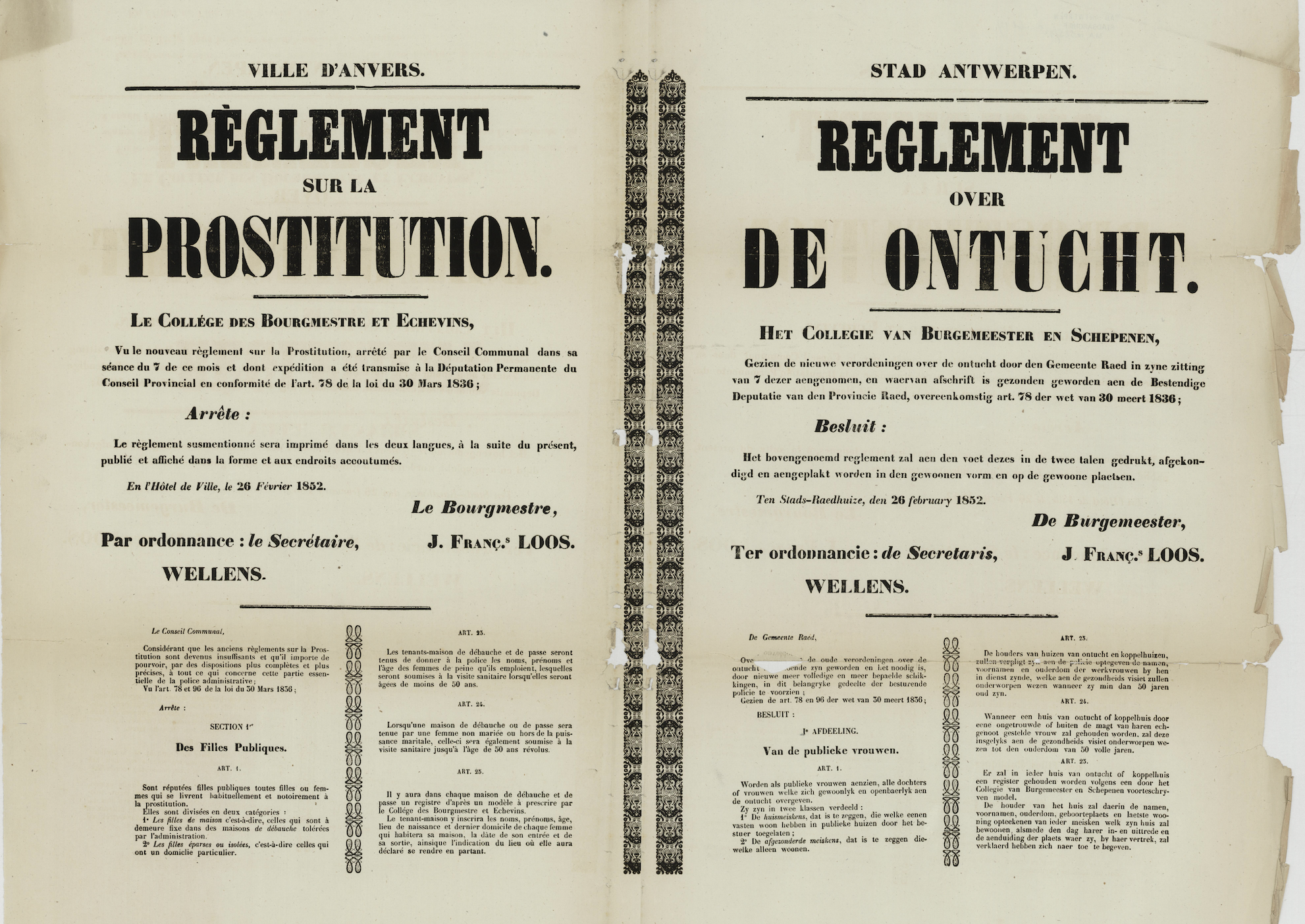
Antwerp’s 1852 prostitution regulation
At the same time, following international examples, Belgian sex workers began to organise and demand rights. Sex work, they insisted, is work – and requires labour rights, not compassion or stigmatisation. Their most prominent organisation, UTSOPI, was founded in 2015. It quickly became a point of contact for social workers and public authorities.
In light of these developments, the existing legislation that abolished the regulation of sex work needed to change. However, Belgian legislators remained passive amid institutional fragmentation and ideological divisions. It took the acute problem of the lack of support for sex workers during the Covid-19 lockdowns to bring about change.
In 2022, the government decriminalised sex work, ending the ban on providing services such as renting out rooms or accounting for sex workers. This was followed in 2024 with a labour law specifically for sex workers. The protections afforded to sex workers were agreed upon after consultation with sex worker organisations. These innovations, including parental leave and the right to refuse any client, were among the most comprehensive in the world.
And yet, as the history of sex work shows, international perception and reality are rarely neatly aligned. Whether the new laws will improve the lives of sex workers remains to be seen. The new legislation alone does not end the stigmatisation of commercial sex.
One thing is clear: sex workers are not just titillating “frows” or naïve “white slaves”. For 700 years, they have navigated ambiguous attitudes towards sex work – and they continue to do so.
