
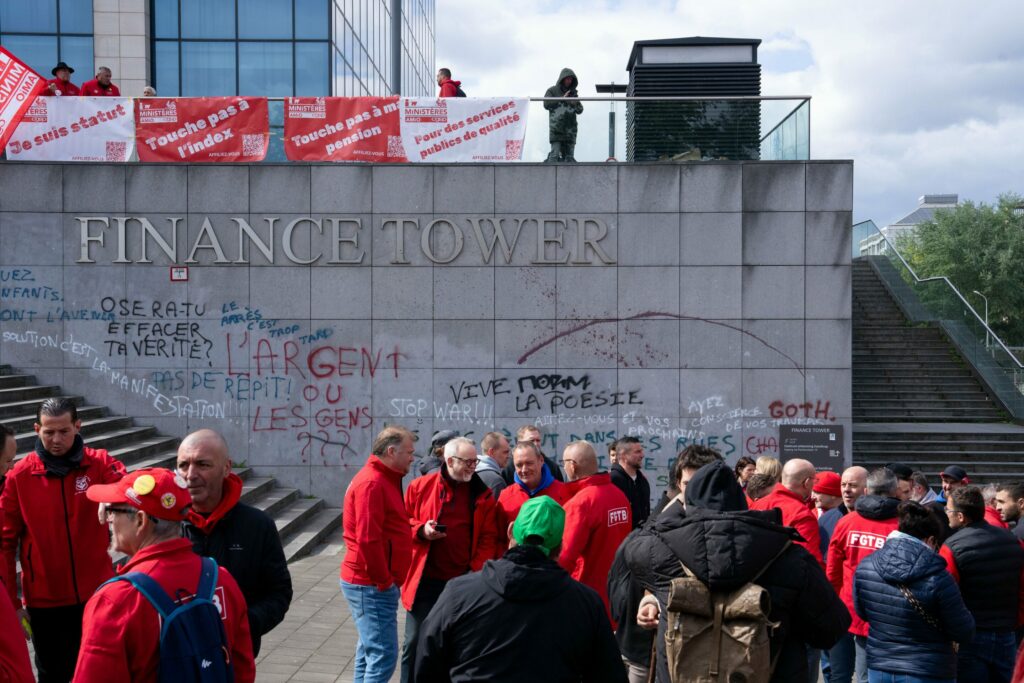
For the tenth time since 2025, tens of thousands of people took to the streets of Brussels on Tuesday to denounce the Federal Government's austerity measures and budget cuts.
The sun did not come out on Tuesday, but that did not stop numerous demonstrators – 40,000 according to the police, 75,000 according to the trade unions – from waving banners, chanting, dancing and making their voices heard.
"We will keep trying to make it clear to the Federal Government that it is time to listen and consider how we are actually supposed to cope with all these cuts," Renie Cocquyt of the Hart boven Hard citizens' movement told The Brussels Times.
The turnout was still very high, but it was somewhat lower than for previous demonstrations. In March, for example, between 80,000 and 100,000 people took part.
'Hijacking security'
Cocquyt and several fellow protestors stressed that the Federal Government, led by Prime Minister Bart De Wever (N-VA), should also look towards the wealthiest in their attempt to get Belgium's budget back on track.
"Life is being made increasingly difficult: we have to work longer for a smaller pension. Paid work is seemingly the only thing that counts," she said. "This way, it only gets harder for people to look after themselves. They are pitted against each other, and we lose our community."
By focusing their efforts on security, Cocquyt feels like the government has "hijacked" the word security to mean something it does not.
"Real security is a society in which basic necessities are guaranteed, and where you know: if things go badly for me, I will be looked after. And if things go badly for you, I will look after you," she said.
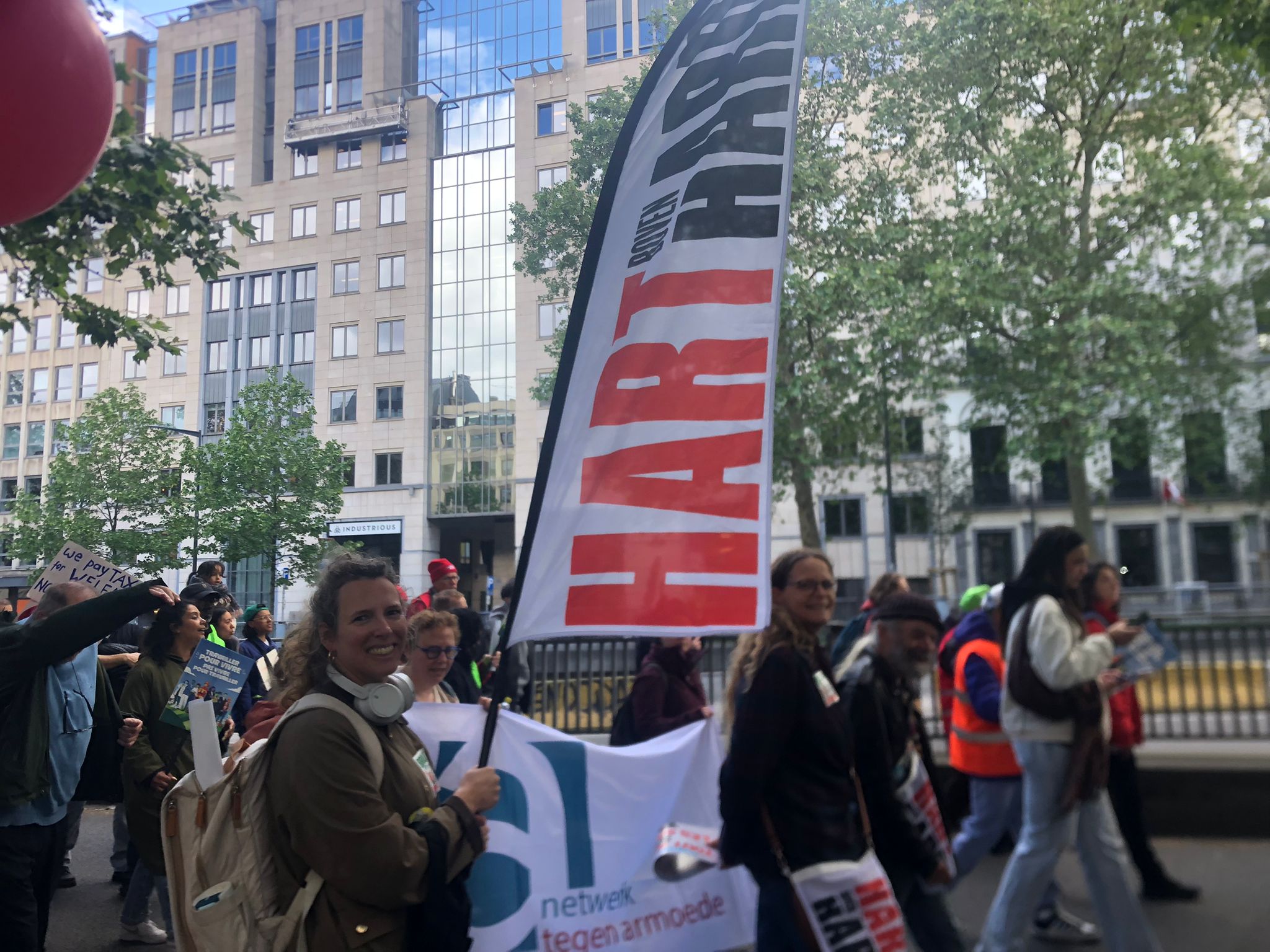
Renie Cocquyt of Hart Boven Hard. Credit: The Brussels Times
Before the demonstration began, leaders of the three major trade unions gave speeches. All three criticised the Federal Government's "disregard" for social dialogue. In addition to trade union members, many organisations took part in the protest.
While it was previously assumed that the Federal Government would need nearly €5 billion by the end of 2029, it was announced earlier this week that the number would be closer to €7 billion.
The previous figures were based on information from the Monitoring Committee from before the US-Iran war and consequent surge in inflation, Federal Budget Minister Vincent Van Peteghem (CD&V) said.
"There is no single solution; it will always be a combination of various measures, in healthcare, business subsidies, increased allowances and fossil fuel subsidies," Van Peteghem said.
'Poverty is expensive'
The Federal Government has limited the scope of unemployment benefits, established strict reforms for the Social Welfare Centres (CPAS/OCMW), and scrapped much of the funding to support homeless people – something which has particularly serious consequences in Brussels.
The Belgian Anti-Poverty Network (BAPN) took part in the demonstration precisely because of this broad range of measures.
"We are deeply concerned about these decisions, which primarily affect or have affected people on low incomes and those living in poverty," BAPN's Caroline Van der Hoeven told The Brussels Times.
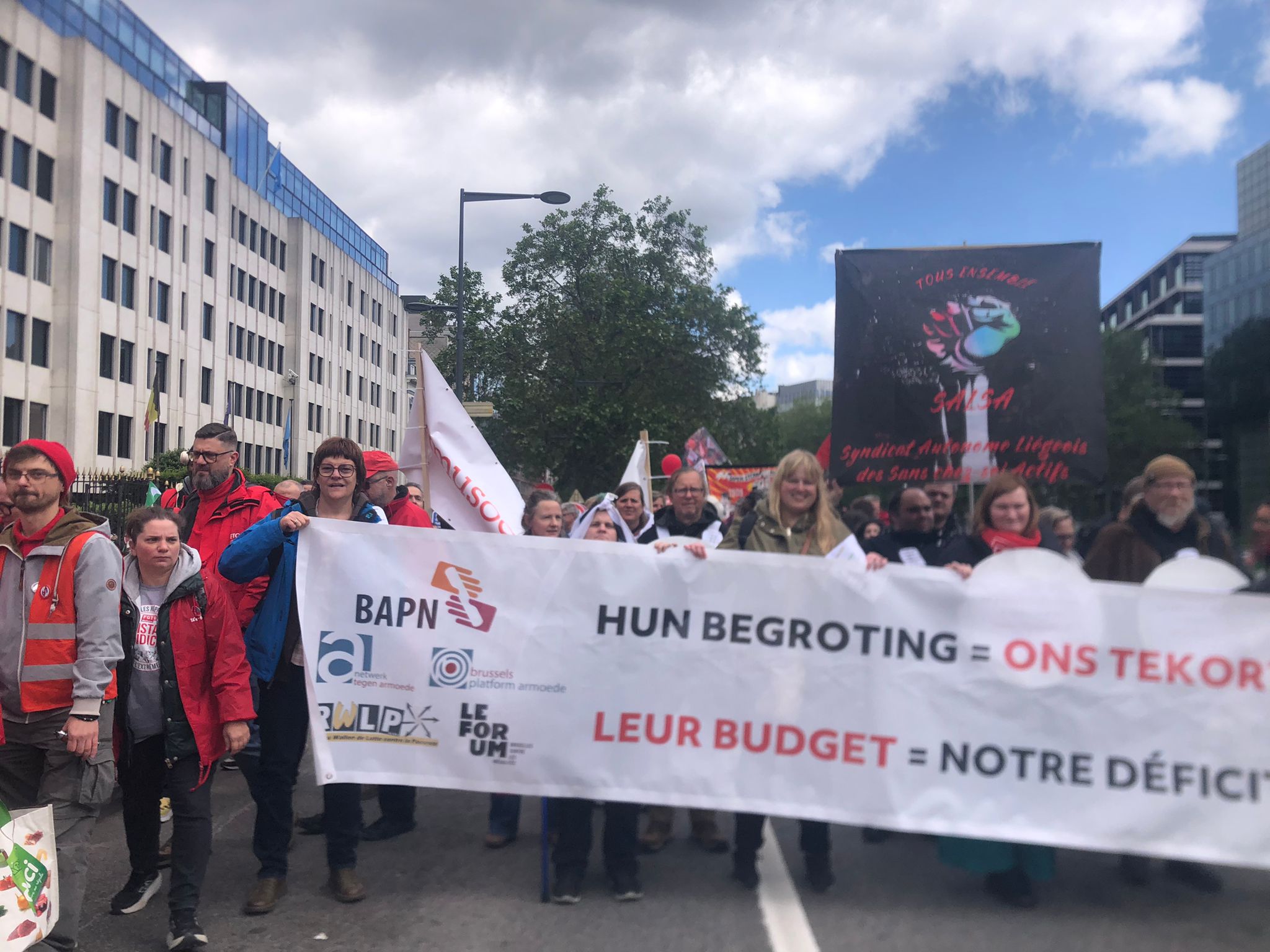
Caroline Van der Hoeven of the Belgian Anti-Poverty Network holding the middle of a banner during the demonstration in Brussels on 12 May 2026. Credit: Maïthé Chini
As the De Wever government starts looking for those extra €2 billion, the network is "very concerned" that the most vulnerable will be left to foot the bill "once again".
"Poverty itself entails high costs, not only for the people in the precarious situations themselves, but also for society as a whole," Van der Hoeven said. "Poverty is very expensive in the long term, and, regrettably, the government is thinking in the short term, and failing to take sufficient account of signals from the field or scientific research."
"We believe that things can and must be done differently," she stressed.
'Tax the rich'
The Oxfam Belgium NGO, meanwhile, set up a stand with an inflatable aeroplane with the message 'Tax the rich'.
"We want to show that there are alternatives to the dismantling of social security, education systems and healthcare," said Oxfam Belgium expert Sarah Van Acker. "Namely: a wealth tax."
She stressed that there is an "accumulation of wealth among a small group of people in Belgium", while "the rest of us today have to fight for the few rights we still have".
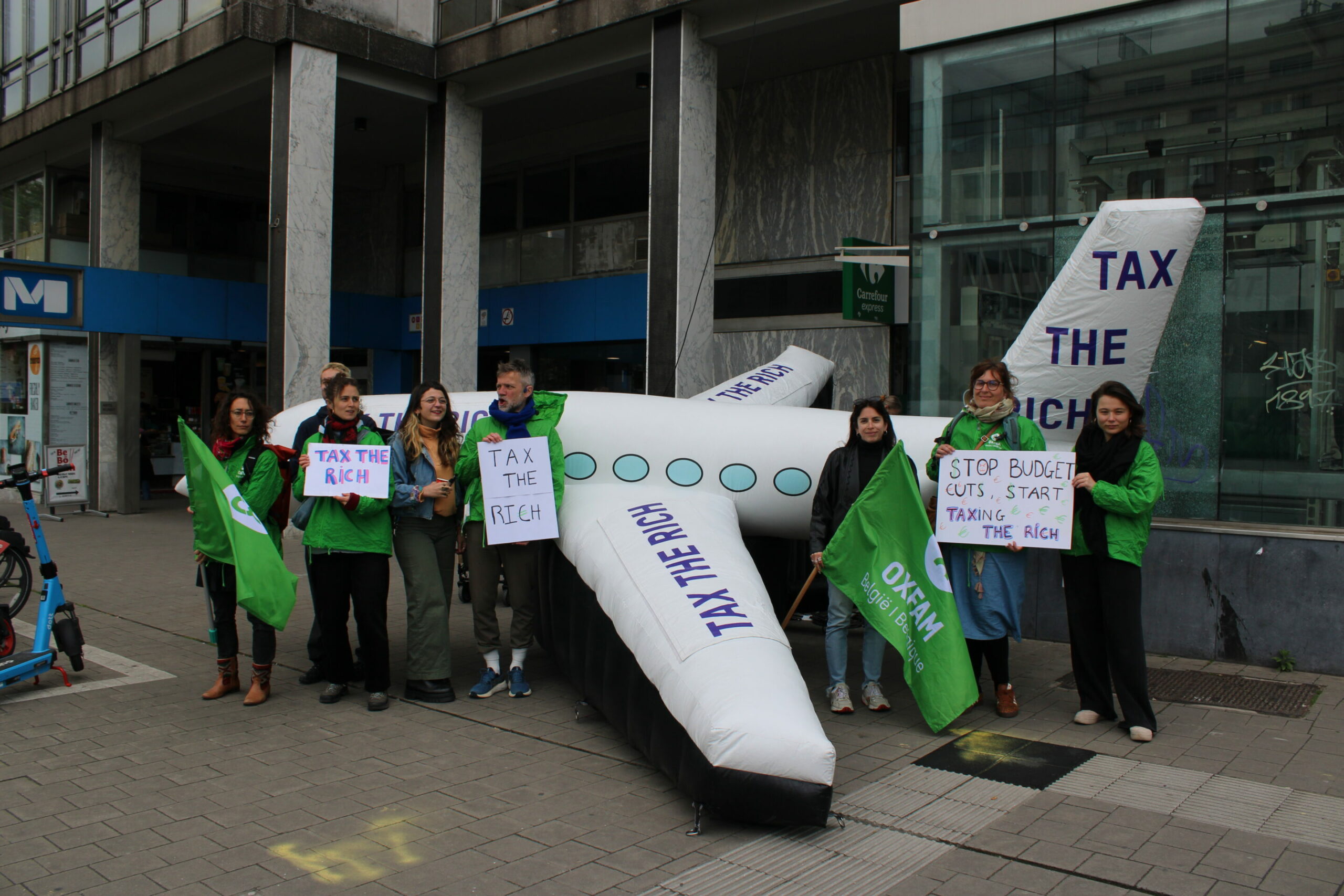
Oxfam Belgium's 'Tax the rich' aeroplane. Credit: The Brussels Times
Additionally, ACLVB chair Gert Truyens strongly criticised the Federal Government for implementing reforms without social consultation.
"You can't just reform on the basis of budget tables. There are people behind those figures. We want to give those people a voice through social consultation," he said, adding that the government is "completely disregarding" that social consultation.
Therefore, Truyens stressed, it is important to continue campaigning: the pension reform, for example, has undergone a number of changes following pressure from these campaigns.
"Little by little, it is starting to sink in with politicians," he said. Truyens also wants to use a petition to force the government to listen to them in Parliament.
During the demonstration on Tuesday, one person was arrested and questioned. Apart from this arrest, the day of action passed without any major incidents.
