
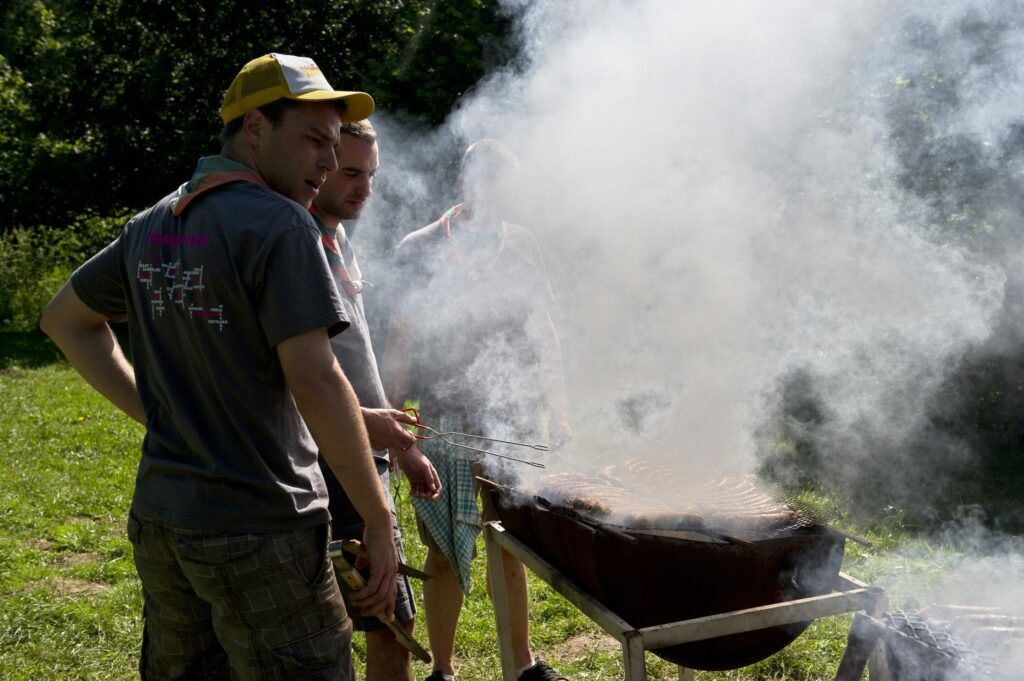
As temperatures soar to 30°C across the capital, parks begin filling with sunseekers, and barbecue season officially makes a comeback. Enjoying the summer-like vibes must be done with caution, Brussels Fire Brigade warns.
Enjoying a barbecue in a Brussels park may look harmless, but it is strictly prohibited almost everywhere in the capital.
Public drinking rules, on the other hand, can vary by municipality and city, while grilling on a balcony may land residents in trouble if neighbours complain.
Barbecues in parks are banned
Public barbecues are prohibited throughout Brussels parks and public spaces, according to the Brussels General Police Regulations.
The ban was introduced largely due to fire risks, particularly during periods of high temperatures and drought. Police also point to concerns surrounding public safety, smoke nuisance and damage to green spaces.
According to Article 33, Section 7 of the General Police Regulations, barbecues are forbidden in public areas unless specific authorisation has been granted by the municipality.
That means Brussels residents and internationals cannot legally install a grill in parks, on pavements, public squares or along canals without permission.
Violators risk fines of up to €250, while individual municipalities can also impose additional local administrative sanctions, known as GAS fines.
Balcony barbecues can quickly turn nasty
Walter Derieuw, spokesperson for the Brussels Fire Brigade, regularly warns against barbecues during warm, dry weather.
"In hot and tropical temperatures, we strongly advise against barbecues in green spaces," he told The Brussels Times.
"The main risk remains fire, particularly when a barbecue is installed too close to combustible materials, vegetation or façades," Derieuw explained.
Firefighters are particularly concerned about disposable barbecues, improperly extinguished charcoal, and gatherings near dry vegetation.
"They generate intense heat underneath and remain hot for a long time after use," Derieuw warned.
Even small flames can rapidly spread during heatwaves, especially in wooded areas surrounding Brussels.
"Placed on dry grass, wood, a bench or even a rubbish bin, they can trigger a fire several hours later."
'People clearly underestimate the risks'
Barbecues remain allowed in private gardens and on terraces, but Brussels Fire Brigade warn that balconies are another story altogether.
"People clearly underestimate the risks," Derieuw said.
"A balcony is a particularly sensitive space: façades, furniture, blinds, plants, gas bottles… A simple gust of wind can quickly turn a friendly gathering into a house fire."
Brussels firefighters say they regularly intervene in fires linked to badly controlled barbecues, including incidents on terraces and in green spaces.
"Fortunately, most incidents remain limited, but some situations could have had much more serious consequences," he added.
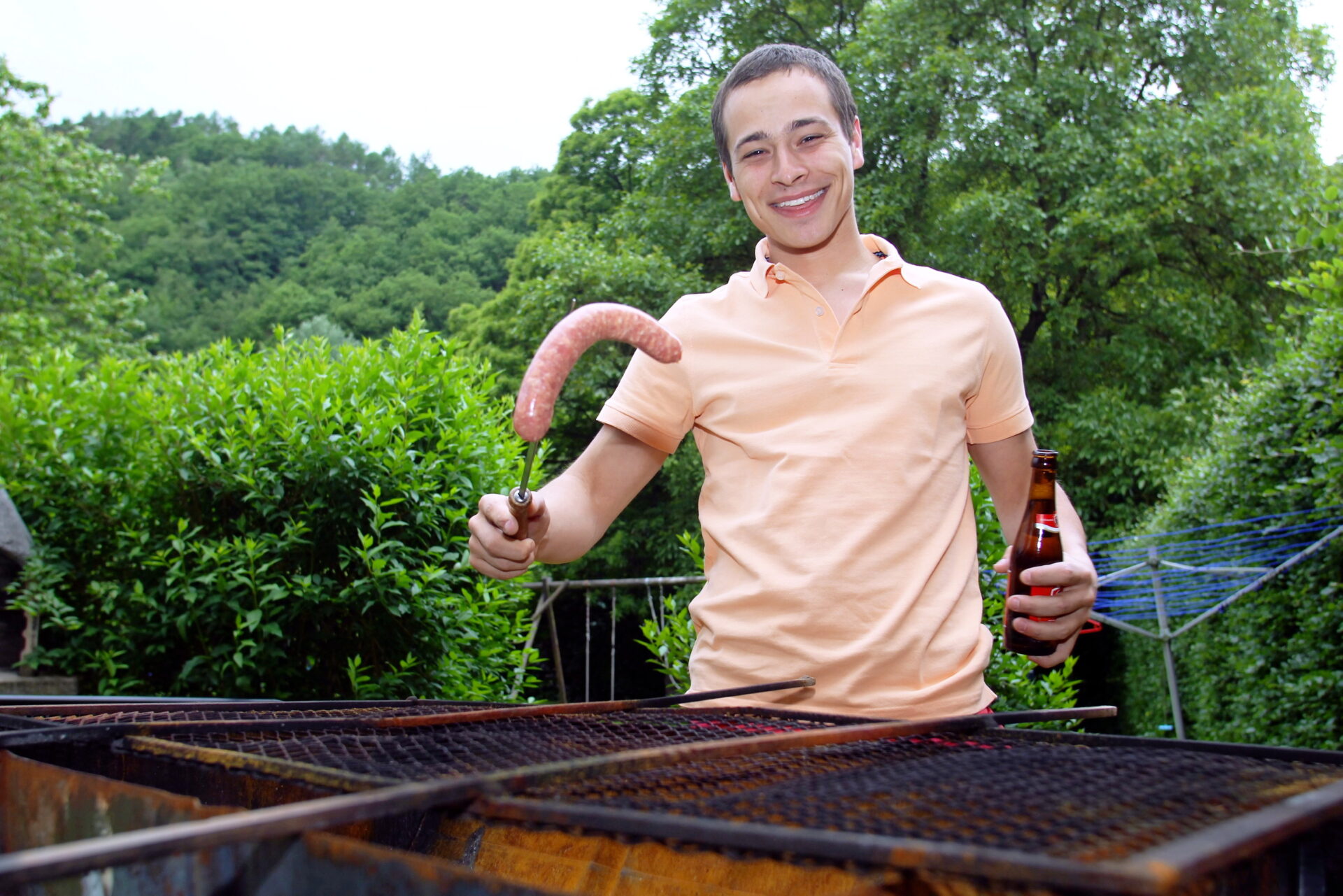
Student Laurent Terrijn poses for a portrait with his barbecue in his garden in Stavelot, Wallonia, which has different rules to Brussels. Friday 18 June 2010. Credit: Belga / Michel Krakowski
Do not leave the grill unattended
Firefighters are also warning residents against some of the most common mistakes made during summer grilling sessions.
Among the biggest issues are leaving barbecues unattended, using flammable liquids such as alcohol or petrol to light fires, and placing grills too close to buildings.
"A barbecue continues to present dangers even after eating: residual heat, embers and carbon monoxide can remain hazardous for several hours," Derieuw said.
Brussels residents and internationals are also reminded never to use barbecues indoors, inside garages, tents or enclosed spaces due to the risk of carbon monoxide poisoning.
Can you drink alcohol in public spaces in Belgium?
Unlike barbecue rules, public drinking laws in Belgium vary and usually depend on the city or municipality you are in.
In parts of Brussels and other Belgian cities, local councils can ban alcohol consumption in public spaces outside authorised café terraces. The idea is mainly to stop late-night chaos, noise, litter, smashed bottles and drunken groups kicking off in residential areas.
Credit: Unsplash
Municipalities such as Ixelles in Brussels and cities such as Namur in Wallonia have already brought in restrictions targeting street drinking in certain hotspots.
The rules also change depending on where you are.
In places like libraries, museums, swimming pools or sports centres, alcohol is often banned under internal house rules. In many cases, you cannot wander around with drinks outside designated areas like cafés or cafeterias.
Being drunk in public can get you arrested
Belgian law does not just target drinking itself, but also being visibly under the influence in public.
Under a law dating back to 1939, anyone found blatantly drunk in a public place can face fines. If the person starts causing trouble, disturbing the peace or becoming a danger to themselves or others, police can even carry out an administrative arrest.
And "public place" is broader than many people think. It also covers bars, restaurants, train stations and public transport.
Drinking on the metro or train?
That mostly comes down to the transport operator's own rules. For instance, in Brussels and Wallonia, the respective public transport operators all have their own codes of conduct.
If someone is drunk, rowdy or making other passengers uncomfortable, they can be fined and ejected from the service.
