
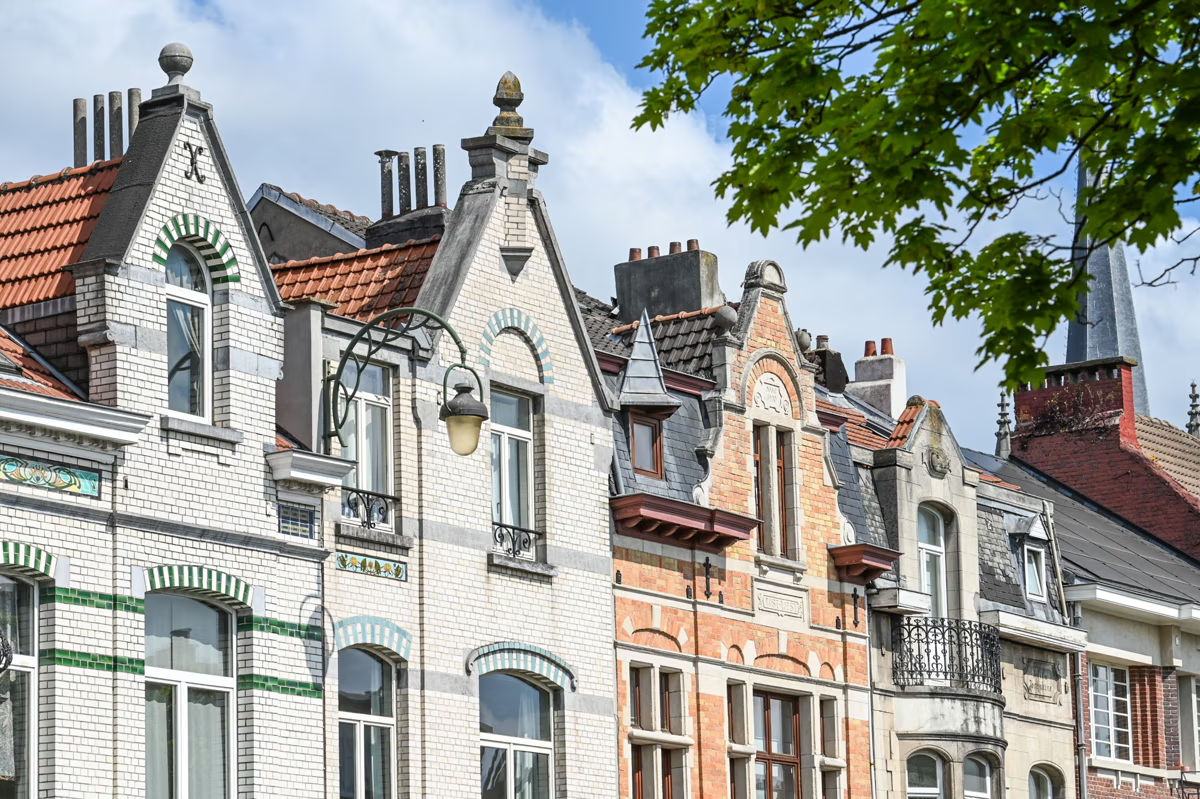
Multiple municipalities in Belgium have been increasing property tax rates in 2026, according to a report by financial consultancy firm Ayming Belgium, which maps real estate taxes for non-residential buildings.
Property tax, paid by both individuals and businesses for real estate ownership, is calculated based on the cadastral income (CI). The region applies a base levy, while provinces and municipalities add local surcharges through assessed percentages.
In 2026, 88 Belgian municipalities increased the surcharges, a notable jump from just six municipalities last year.
"Rising costs for pensions, police, fire services, and social services are putting municipal finances under pressure everywhere," said Dorian Clément, Finance & Tax Manager at Ayming.
"The property tax is the most direct lever municipalities have for this, and it is now being seized. That is not so innocent, because for companies investing or planning an establishment, the property tax is not a trivial matter."
Due to the higher property tax, the tax burden—property tax divided by the CI – in Belgium rises from 50.58% to 51.29%. With an average of 47.22%, Flanders remains the most fiscally attractive region.
Nevertheless, 56 Flemish municipalities increased their base rate. Moreover, 24 municipalities are imposing higher rates specifically for companies and offices, while the rate for private individuals remains unchanged.
In Brussels, owners of office spaces contend with three separate taxes: the property tax itself, a distinct regional levy on non-residential buildings, and additional municipal office taxes in almost all boroughs.
Brussels already has the highest average property tax rate of the three regions at 58.48%, excluding these extra charges.
Tax pressure in 14 of Brussels' 19 municipalities now exceeds 70%, compared to nine the previous year. Schaarbeek has reached 81.58%, while Sint-Joost-ten-Node stands at 80.02%, surpassing the 80% threshold.
Clément highlighted the growing impact of these tax policies on the office real estate market in Brussels: "The vacancy rate is now 8.7% and has been climbing since 2018," he said.
"Many companies are relocating to the Flemish outskirts. The newly formed regional government in Brussels has tools to address this trend, but attracting real estate investment will be a key challenge."
Wallonia applies an average rate of 55.22%. 24 municipalities increased their rates, with Wavre seeing the strongest rise (+31%). 48 municipalities exceed the 60% mark, primarily municipalities in Hainaut.
