
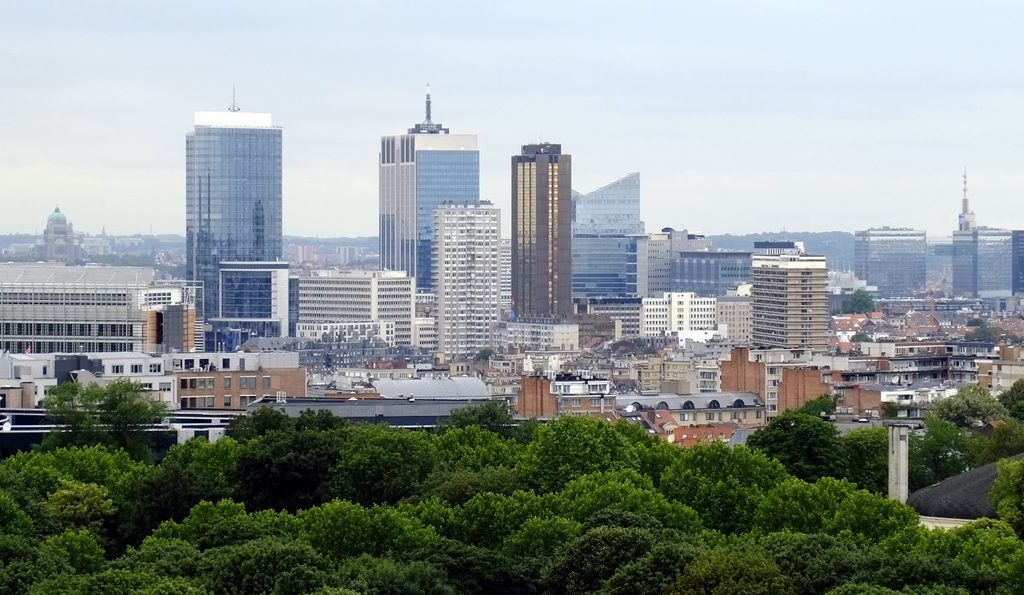
According to newly released figures by Statbel, Belgium's statistics agency, the population of Brussels is "stagnating". In 2025, it increased by only 39 people to reach 1,255,834 inhabitants.
In preceding years, the population of Brussels increased, based on a number of different factors. The high number of people moving to Flanders and Wallonia was offset by positive net migration, as well as the number of births being higher than deaths.
In 2025, however, the scales were flat. This is because the number of people moving to Brussels from outside Belgium, while still being positive, fell compared to the previous year, continuing a trend of annual falls since 2022.
The start of a trend?
Bruno Schoumaker, a professor of demography at UC Louvain told The Brussels Times that the results for 2025 are "unusual", given the trend seen over the last 30 years of stable population growth, noting that "it is difficult to say if this is the start of a trend".
According to Schoumaker, part of the change may be attributed to the decline in asylum seekers receiving recognised immigration status.
Brussels continues to have a positive 'natural replacement rate' at 5,103 more births than deaths, and net migration is still positive with 13,988.
However, falling inbound migration compared to previous years (down 35% compared to 2024) alongside static emigration, could only just make up the gap of those leaving for Flanders or Wallonia (-18,533).
Statbel notes that across Belgium, the largest share of people who immigrated in 2025 were Belgians, followed by Romanians and French. The organisation also notes that the impact of the war in Ukraine continues to wane.
Belgium's population growth dependent on migration
Statbel's figures show that overall, the population of Belgium grew by 42,083 to 11,867,634 in 2025, with international migration serving as the "sole driver of growth". However, just like in Brussels, this figure has declined compared to previous years.
Net migration in Belgium has fallen from a high of 116,544 in 2022 following the end of the Covid-19 pandemic and the war in Ukraine, to 47,562 last year. The last time net migration was around these levels was 2017 when it was 44,536.
However, back in 2017, Belgium still had more births than deaths, a situation that has reversed in the last four years, with Belgians now not replacing themselves.
While Brussels has a positive net replacement rate, Flanders and Wallonia do not. Both regions outside Brussels grew because of net migration and internal moves within Belgium. Flanders saw the fastest growth across all three regions.
Brussels is becoming younger
Statbel's release also shows that Brussels has the youngest population in Belgium, and it is getting younger.
In 2025, 13.4% of the region's population will be 65 or older, compared to 20.7% for the Belgian population as a whole.
According to Statbel, "this unique characteristic can be explained by Brussels' attractiveness to working and young people, particularly through international immigration and the presence of European institutions".
Flanders and Wallonia have older populations, with around 1 in 5 of their population aged over 65.
