
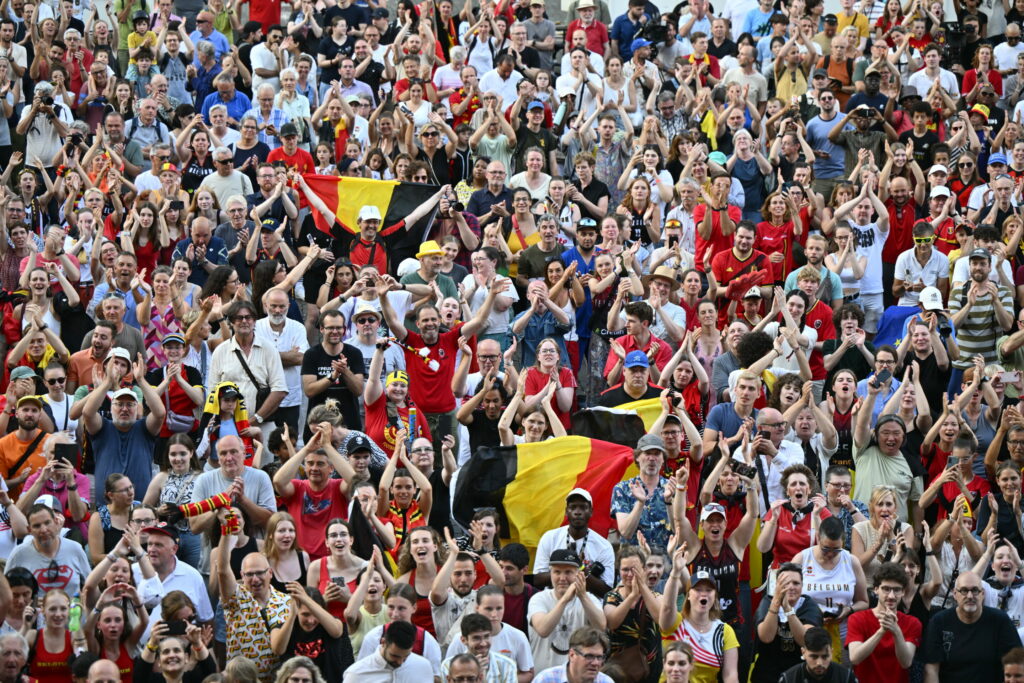
A record 69,017 people acquired Belgian nationality in 2025, according to Statbel, Belgium's statistics agency. Changes to registration rules for acquiring Belgian citizenship, combined with higher asylum and immigration in preceding years, drove the increase.
Aside from a blip in 2020, the number of people becoming Belgian nationals has steadily climbed each year since 2014 to reach last year's record of 69,017. The last time figures were this high was 2001, shortly after Belgium drastically simplified the requirements for citizenship. In that year, 62,994 people became Belgian.
The rise in naturalisations in 2025, up 13% year on year, was mainly due to Asylum and Migration minister Anneleen Van Bossuyt (N-VA) announcing last year that, from 2026, there would be a steep increase in the registration fee to obtain Belgian citizenship, from €150 to €1,000.
Van Bossuyt's announcement led to a rush in applications before the start of 2026, ahead of the new fees kicking in. At the time of the announcement, Belga reported that applications were up around 20–25% across several municipalities as applicants sought to get ahead of the increased fees. This included Italians who have lived in Belgium for decades but chose not to acquire Belgian nationality.
The hike in fees came as part of a wider package of reforms, which saw new rules on language requirements and civic integration. From January this year, new citizens need a B1 level of language proficiency, up from the previous requirement of A2.
"Belgian nationality, and therefore EU citizenship, opens many doors," Van Bossuyt told Het Laatste Nieuws at the time. "This is precisely why this step cannot be simply administrative or automatic. It must be accompanied by a sense of responsibility, particularly financial."
The main nationalities acquiring Belgian citizenship in 2025 were Moroccans, Romanians, Syrians, Poles and Italians. These nationalities have remained fairly consistent in annual figures for several years.
In Brussels, Moroccans, Syrians, French, Romanians and Italians made up the top five nationalities becoming Belgian nationals.
The earliest that most non-Belgians can apply for citizenship is after five years of legal residency and economic activity, requirements that also apply to asylum seekers. A share of those acquiring Belgian nationality will therefore also represent a lag from those who arrived in Belgium at least five years prior and want to acquire citizenship.
In 2024, migration experts explained the increase in those being granted Belgian nationality as a lag effect from the 2015–2016 asylum and migration crisis that saw many Syrians seek asylum across the EU. The long-term trend among Syrians is particularly striking, Belga noted. In 2015, only 185 Syrians were granted Belgian nationality, compared to 1,556 in 2025.
Cosmopolitan Brussels
Looking beyond nationality to inhabitants, Brussels has a "cosmopolitan" population, according to Statbel.
Figures for 2025 continue to show that the share of Brussels' population with a non-Belgian background sits at 79%. These are people who are either completely non-Belgian, have acquired Belgian citizenship, or are Belgian but with one or more parents having a foreign background.
With the city playing host to international organisations such as the EU and NATO, this is unsurprising. In total, 37% of Brussels inhabitants are non-Belgian, compared to 11% in Flanders and Wallonia.
Overall in Belgium, 63.4% of the population are Belgian with a Belgian background, 22.8% Belgian with a foreign background, and 13.8% are non-Belgian. Compared to 2024, there has been little change.
Statbel notes that just over half (50.5%) of Brussels inhabitants were born in Belgium, a figure that has slowly reduced each year. In Flanders and Wallonia, this proportion still exceeds 83%.
Related News
- A 'Belgian ICE'? Belgium strongly criticised for controversial 'home entry' bill
- The population of Brussels grew by only 39 people last year – here's why
- Mapped: Where are new Belgians choosing to live?
- Belgian citizenship: How you get it, what it costs, and how long it takes
- Record number of EU citizens left Belgium in 2024
