
More than four years after the European Union began imposing sanctions on Russia following its full-scale invasion of Ukraine, Belgium continues to import significant quantities of Russian steel through a sanctions exemption that remains in force until 2028, according to an investigation published by the Kyiv Independent.
Russian steel still flows into Belgium
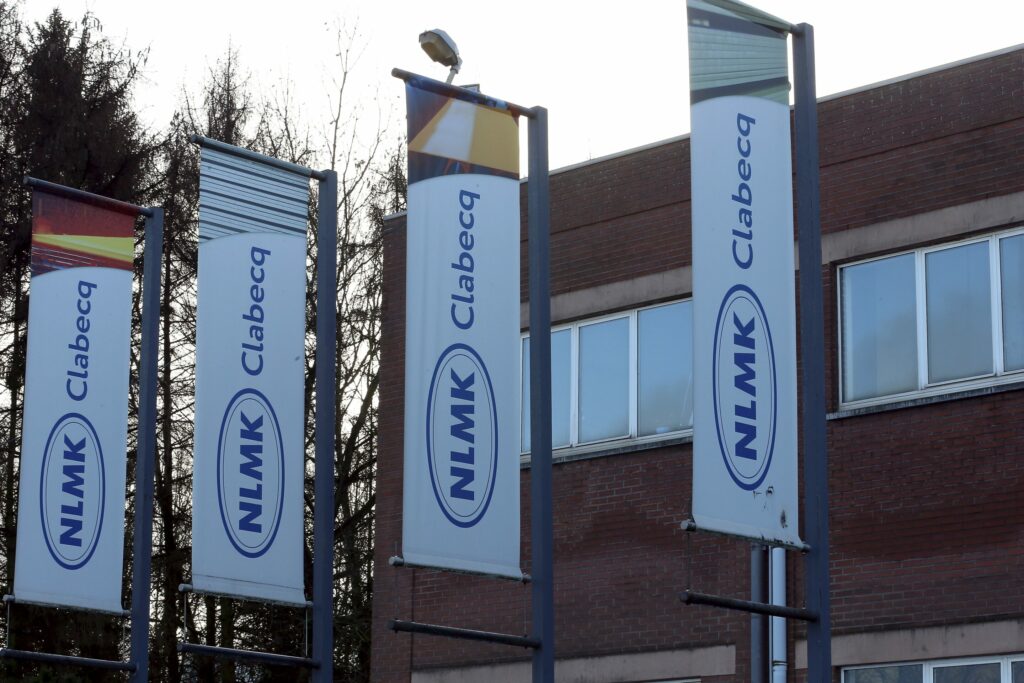
The report highlights the role of Russian steel producer NLMK, one of Russia’s largest steel companies, which continues to supply semi-finished steel slabs from Russia to its European facilities, including two plants in Belgium. While most Russian steel products were sanctioned shortly after the invasion, semi-finished steel slabs were granted a transitional exemption. The EU agreed in 2023 to phase out these imports by September 2028.
According to figures cited by the Kyiv Independent, Russia currently accounts for 58% of the EU’s slab imports from non-EU countries. Belgium alone receives roughly one-third of those imports, making it the largest importer of Russian slabs.
Critics over the exemption
The issue has sparked criticism from Ukrainian officials and several European politicians, who argue that the continued trade provides revenue to Russia while the war in Ukraine continues. Ukrainian MP Oleksiy Honcharenko told the Kyiv Independent that Russian billionaire Vladimir Lisin, the owner of NLMK, appears to have benefited from the company’s industrial presence within the EU.
NLMK Belgium is jointly owned by the Russian steel group and Wallonie Entreprendre, the Walloon Region’s investment vehicle.
A Belgian Foreign Ministry spokesperson told the Kyiv Independent that "sanctions must hurt the Russian war machine more than they hurt our own economies," and argued that sanctioning Lisin "would have direct and disproportionate consequences for industrial sites and jobs in Belgium — workers and supply chains that have nothing to do with the Russian state."
Calls for a faster phase-out
The debate comes as some European lawmakers question whether the EU is moving quickly enough to reduce its dependence on Russian raw materials. Dutch MEP Thijs Reuten recently criticised the continued imports, while German MEP Michael Gahler voiced support for initiatives seeking a faster end to Russian steel imports.
Belgium has stated that it will respect the EU timetable and fully phase out Russian slabs imports by 2028. Critics, however, argue that alternative suppliers already exist and that the transition could be accelerated.
The report also notes that NLMK is exploring a major investment in Belgium to produce steel slabs locally, a project that would require significant financial support from Belgian and European authorities.
