
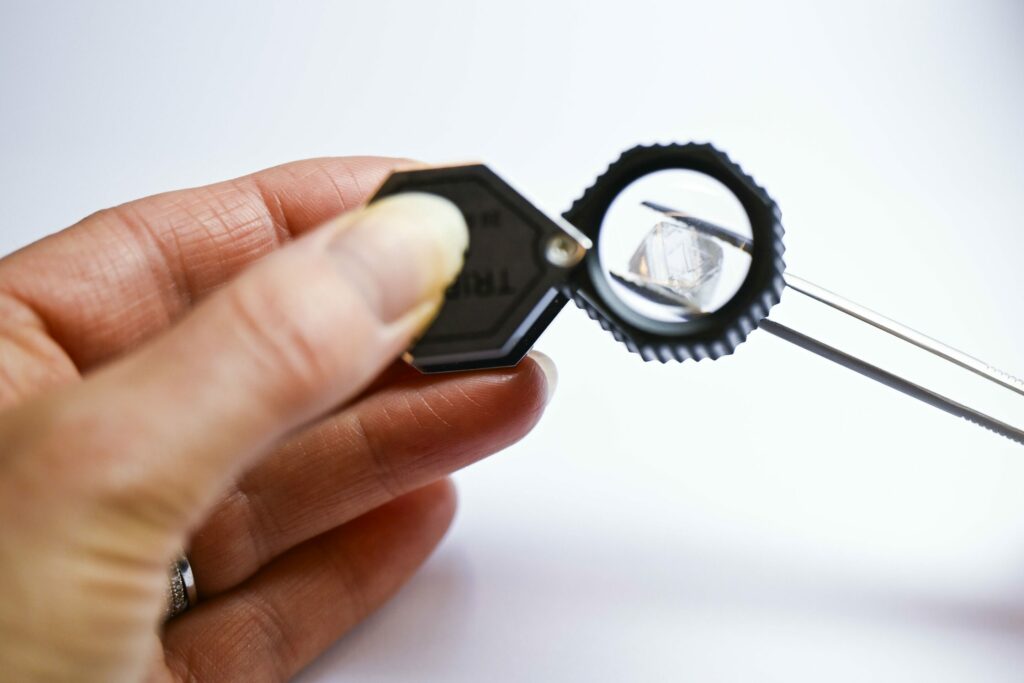
In Antwerp, fully traceable, artisanal diamonds from the Democratic Republic of the Congo (DRC) were sold on the international market for the first time on Thursday.
According to the diamond umbrella organisation AWDC, this is a first that should give small-scale miners in the DRC direct access to international buyers and fairer prices.
During an initial sales round, 103.77 carats of rough diamonds from the Congolese Kasaï region were offered on the Antwerp market.
The sale took place as part of OrigemA, a Belgian-Congolese project run by the AWDC, the Congolese government, the NGO Resolve and technology partner Everledger, with financial support from the Federal Public Service Foreign Affairs.
The project breaks with the traditional system in which artisanal miners are often dependent on a limited number of buyers, according to AWDC. A digital tracking system records every step in the chain, from extraction in Congo to sale in Antwerp.
Fair prices
"With OrigemA, our main aim was to provide a solution to the challenges faced by artisanal miners in Congo," said AWDC CEO Karen Rentmeesters.
"First and foremost, their diamonds cannot access international markets, which means that many cooperatives do not receive the fair price they deserve," she said.
The first diamonds sold came from the Kamana Ndeke mine near Tshikapa and were mined by the COMIDIANZ cooperative. The sale took place via a public tender organised by the diamond company Bonas-Couzyn in Antwerp.
According to the AWDC, the DRC accounts for almost 70% of global artisanal diamond production, which in turn represents 5% of total diamond production.
By reducing the number of intermediaries in the supply chain, more revenue should flow to local communities, which can then invest these funds in areas such as infrastructure, education and healthcare.
