
Reforms to unemployment benefits, the scrapping of rules on who can start a business and a shifting mindset on the role of the private sector are all playing a role in driving new business growth in Wallonia.
Having once been the industrial powerhouse of Belgium, today the region is often seen as an economic liability. But Belgium's French-speaking region's economic outlook could be about to turn.
In 2025, Wallonia saw 12.1% growth in new firms ahead of Flanders and Brussels, with Hainaut province recording an increase of almost 20%, according to new figures from the Federation of Notaries (Fednot).
According to Fednot's data, Hainaut's growth in new businesses – up 19.2% on the previous year – is a result of the province catching up and shaking off its industrial past.
"There is a strong desire among local entrepreneurs and stakeholders to reinvent the region and close the gap with more prosperous parts of Belgium," Sylvain Bavier, notary and spokesperson for Fednot, told The Brussels Times.
Unemployment support
In addition, changes limiting the duration of unemployment benefits may also be playing a role as "some people who might otherwise have remained unemployed are choosing to start their own businesses, creating their own jobs and opportunities," said Bavier.
The role of unemployment benefit reforms was echoed by Jean-Christophe Dehalu, from Wallonia's private employers organisation AKT, as a contributor to the positive growth in start-ups.
"At the federal level, the reform that the government is implementing in the labour market, getting more people into the active population, is also one of the explanations," Dehalu stated. "People in the prospect of losing their unemployment benefits allocation are considering opening businesses more today, as an opportunity, than they were yesterday, so that's also contributing to the trend."
These claims from both Bavier and Dehalu were not presented with hard evidence, but the proof will be in how the region's unemployment figures change over the course of this year.
New business owners
In 2025, Wallonia also adapted its rules on who could start a business. Previously, new business owners had to demonstrate basic management knowledge to start a new company, through either a diploma, demonstrating previous professional experience, or passing an official exam.
Dehalu sees this as having a clear effect on the growth in new businesses: "Flanders and Brussels cancelled that requirement a few years ago, and had similar trends afterwards, so doing that in Wallonia had the same effect, so that's clearly a reform contributing positively to the trend."
The rule aimed to minimise the number of bankruptcies, but critics highlighted that the evidence was weak. Data from Belgium's statistics agency, Statbel, showed that since 2021, business bankruptcies increased each year in Wallonia before falling slightly in 2025. Walloon Minister for the Economy Pierre-Yves Jeholet (MR) removed the requirement in October, bringing it in line with Flanders and Brussels.
The consequence of this, according to Bavier, is that "young entrepreneurs are now more likely to set up their businesses in their home region rather than looking to establish them elsewhere in Belgium".

Vice-President and Walloon Minister in charge of the Economy, Employment, Industry and Training Pierre-Yves Jeholet pictured during a plenary session of the Walloon Parliament in Namur, Wednesday 19 March 2025. BELGA PHOTO BRUNO FAHY
While important, the rule change is not the only reason for Wallonia's growth in new businesses.
"The removal, on 1 October 2025, of the obligation to demonstrate basic management knowledge to start a commercial or craft activity certainly played an important role," argued Bavier. "Wallonia has also benefited for several years from the development of more mature entrepreneurial ecosystems, particularly around Charleroi, Mons and Liège. Support structures, incubators and collaborations with universities contribute to the emergence of more projects."
This ecosystem is having an effect in places such as Mons, where the University of Mons is closely connected to the INITIALIS science park. One well-known example is the collaboration with I-Care, a company specialising in predictive maintenance technologies.
In Charleroi, the Université Libre de Bruxelles (ULB) also has a campus and works with companies in the biotech sector. These ecosystems create fertile ground for innovation and the development of new businesses, Bayer further explained.
The results can be seen in the numbers. In 2025 a 12.1% growth in new business registration in Wallonia, compared to 4.6% in Brussels and 1.6% in Flanders.
Wallons-y!
"The trend is objectively positive, but we also feel it subjectively in the field, when we speak with entrepreneurs, when we talk to companies, when we meet people in Wallonia, we see that the mood is clearly changing," Dehalu said.
He points to the success of the recent launch event for the Wallons-y citizen-led business movement, which has set an objective to make Wallonia the most enterprising region in Europe by 2040.
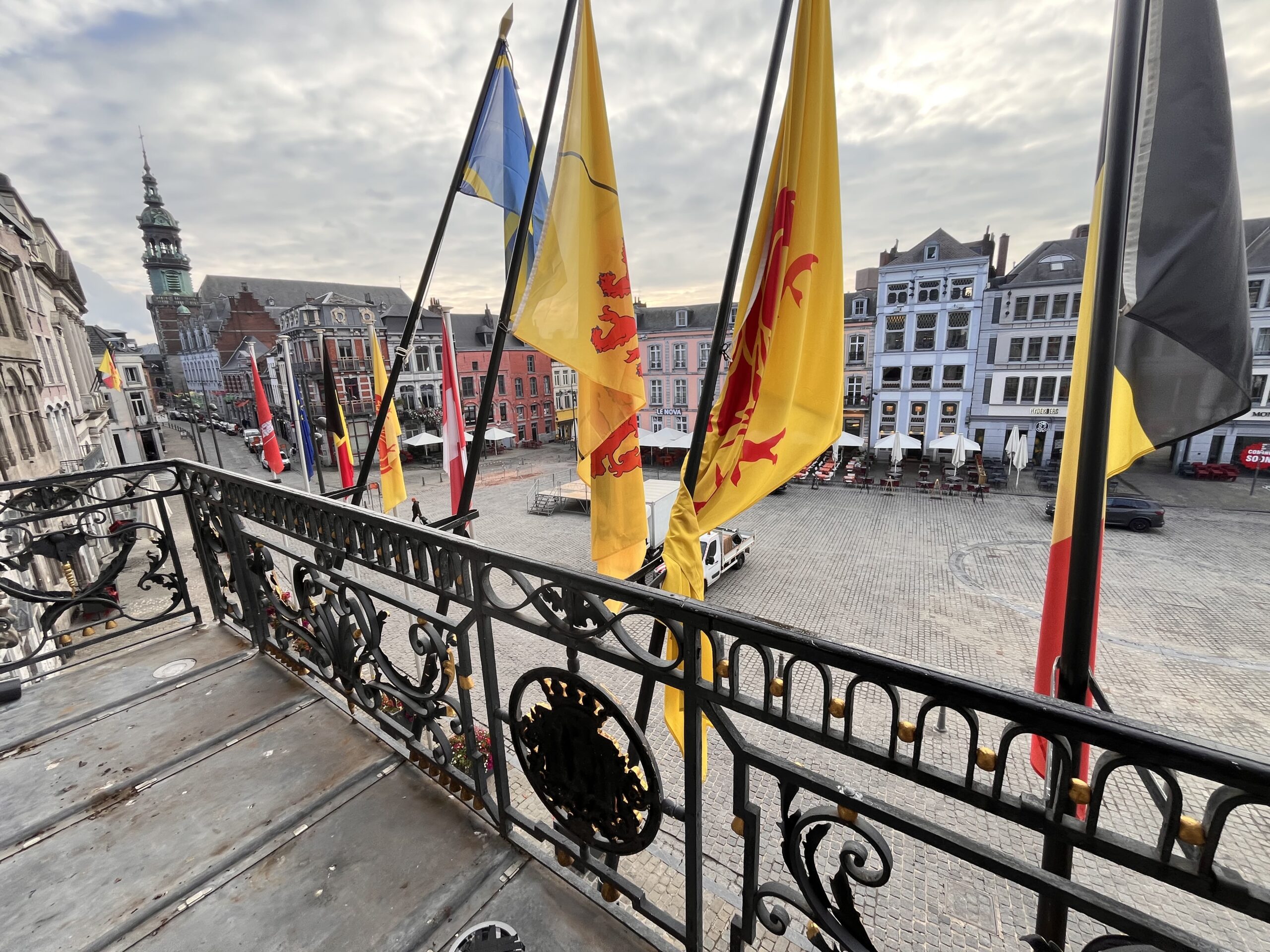
The recently renovated city hall of Mons is pictured on Friday, 26 September 2025. Credit: Belga / Eric Cornu
"The mood was clearly positive, the entrepreneurial mindset was clearly there, I've been working in this job for more than 10 years, and that is the first time I've seen something so quite clearly well-oriented toward entrepreneurship, so the mood is clearly changing," he continued.
Bavier reinforced that fightback spirit, particularly in Charleroi, where public authorities have developed a strategy focused on getting young people to remain in the city after graduating.
"The idea is that young people come to Charleroi to study, find employment in the growing businesses and innovation hubs around the city, and eventually choose to settle in the region. This approach helps attract and retain talent while supporting the area's economic redevelopment," Bavier said.
Private sector push
Part of Wallonia's success is a result of this improved relationship between the public and private sectors, a change in the mindset of public authorities.
"In Wallonia, we have a system where the public actors played a role that is quite large, and the trend at the moment is to involve the private actors more to make these new projects, those new businesses more resilient," Delahu conitnued. "The private actors have a practical knowledge of entrepreneurship and are ready to get more involved in those missions, and the government and the public actors understand this."
Dehalu explained that part of these steps includes having entrepreneurs sit on the boards of new companies to provide mentorship and external advice, "the goal is to improve the governance of our companies with independent administrators that are willing to give time to follow new businesses."
Alongside Hainaut's growth of 19.2%, other provinces of Wallonia saw growth figures above the national average of 4.5%. Liège recorded an increase of 10.7%, Namur 9.6% and Walloon Brabant 8.6%. However, areas such as Luxembourg saw no growth.
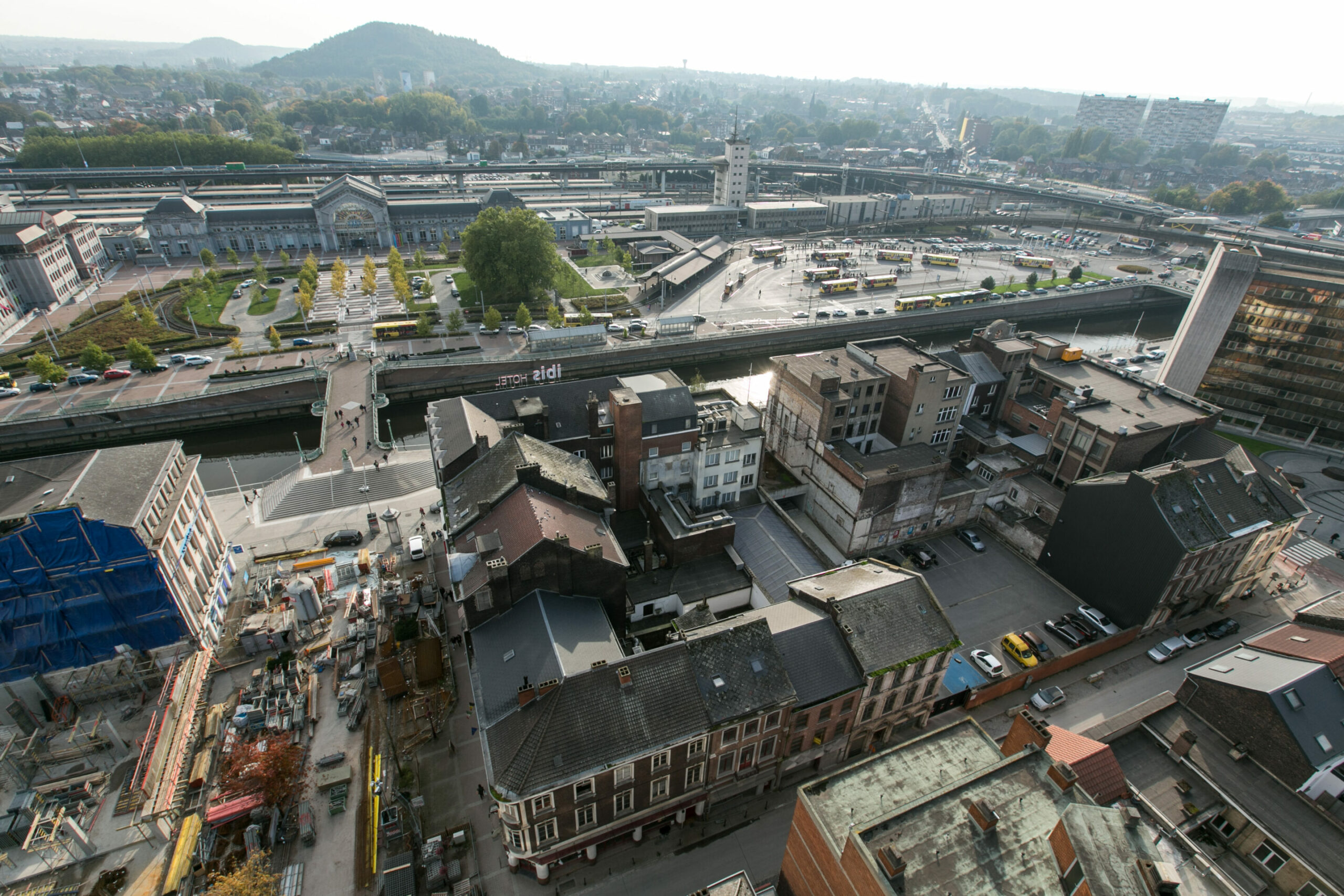
An aerial view of the centre of Charleroi, near the river Sambre. Credit: Belga / Denis Vasilov
Fednot's figures show that overall, from May 2025 to April 2026, 43,963 new companies were created in Belgium. Around 60% of these new businesses were headquartered in Flanders, 24.7% in Wallonia and 15.6% in Brussels.
Recent data reported by AKT show that the strong growth in new businesses in Wallonia has continued into 2026. The business organisation notes that "Wallonia recorded +28% of business creations in the first quarter of 2026, with 7430 new companies created. A trend that is also confirmed for the second quarter."
However, Dehalu shares a note of caution that things were too early to fully celebrate, "so far, so good, but we still need to be careful, because the trend is fragile, and it's quite early to be fully reassured."
Overall, the aim is to focus on the long-term, with a goal to create businesses that are resilient, sustainable, and will be there in five years and not go bankrupt after a few months. "So the role of the public actors and the private actors in accompanying those companies, those new companies at every stage of their life, the beginning, of course, but also the first step in the first month and years, is crucial."
