
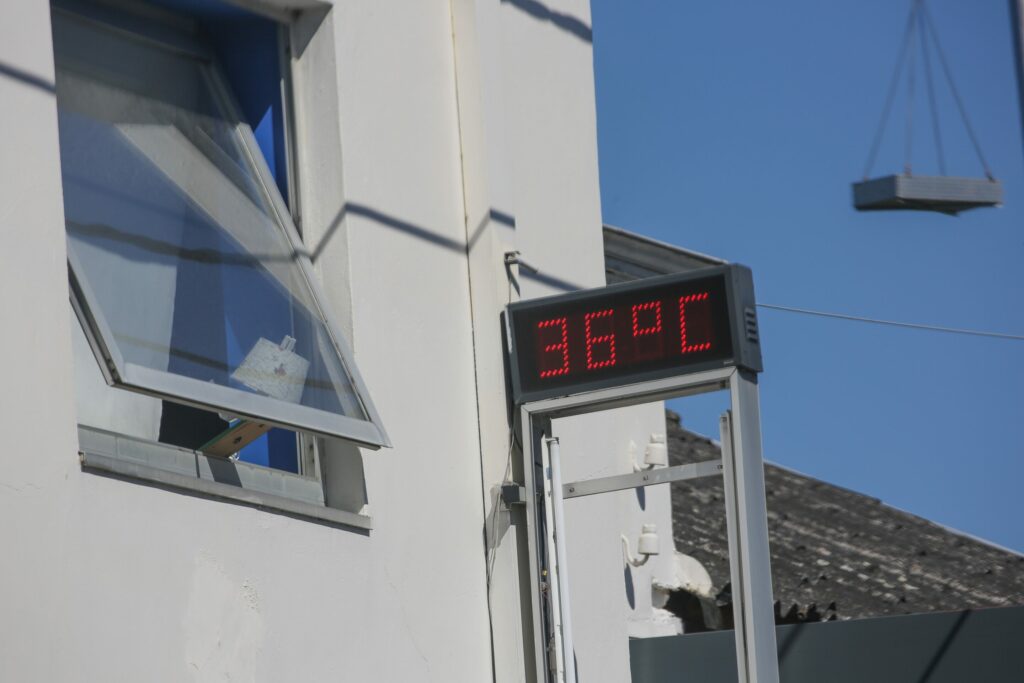
The World Health Organisation (WHO) will hold a crisis meeting on 6 July in response to the extreme heatwave affecting Europe, its regional director Hans Kluge has announced.
The aim is to learn lessons from the heatwave and put measures in place to better prepare Europe. The WHO also wants to assess the level of preparedness in different countries and encourage them to work together.
The heatwave, which is still affecting some countries in southern Europe, has put emergency services under pressure.
In some French towns, calls for medical emergencies have risen by 50%, whilst London’s emergency services recorded their highest ever number of life-threatening calls in a single day last week.
In Spain, more than 300 additional heat-related deaths were recorded in the space of a few days. In Italy, this figure was reached in a single day.
The WHO believes that heatwaves should no longer be regarded as exceptional events but rather as recurring crises that are becoming increasingly frequent, intense and prolonged.
"Europe is warming more than twice as fast as the global average. Every summer that we fail to prepare for this warming is a summer in which lives will be lost," warns the WHO.
The UN organisation emphasises the need for prevention through the implementation of heatwave plans, early warnings and shelters. “Estimates show that the number of heat-related deaths in Europe in 2023 would have been 80 per cent higher without the measures put in place.”
However, “more than half of European countries still do not have a comprehensive health and heatwave action plan,” laments the WHO.
