
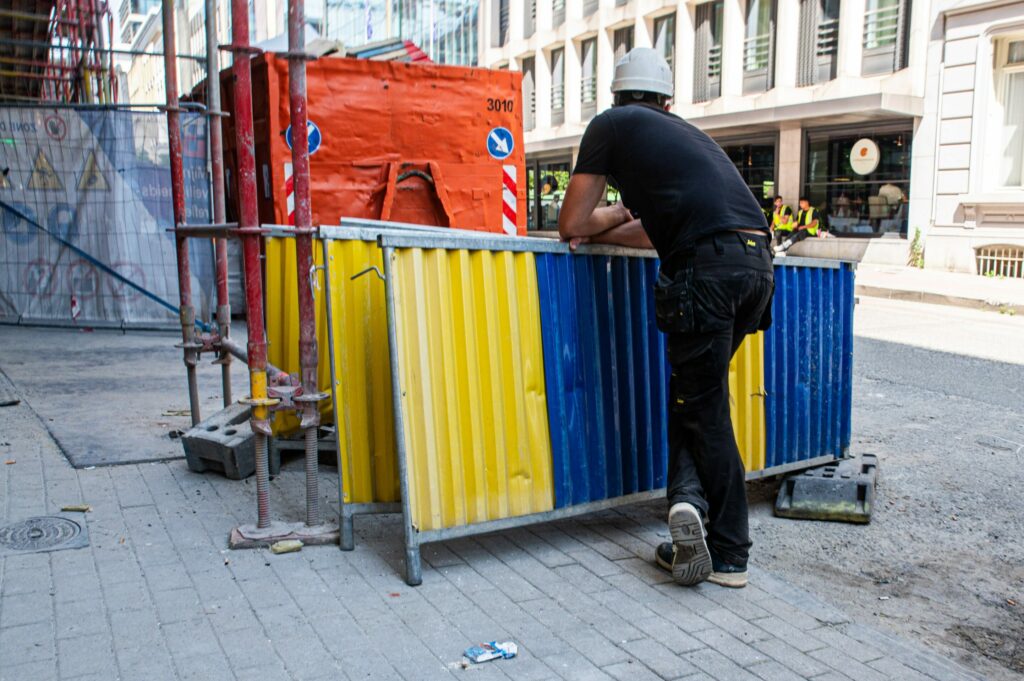
As Europe endures another heatwave, trade union federations are calling for binding EU rules on workplace heat to protect workers.
In this area, Belgium is fairly well-covered – even if some believe the rules do not go far enough.
Each year, an estimated 230 deaths at work occur due to hot conditions, according to research led by the European Trade Union Institute (ETUI) released on Thursday.
Heat exposure is not currently confined to the summer, with eight in 10 heat-related workplace injuries happening on "ordinary hot working days" rather than during official heatwaves.
With climate change, the risk to workers will only increase, notes the Secretary General of the European Federation of Building and Woodworkers, Tom Deleu. "Extreme weather is now a workplace reality across Europe," he said. "Heatwaves, cold spells and storms are not inconveniences for workers, but occupational hazards."
According to the research, the risk of hot working conditions also affects those working indoors without proper ventilation. Care workers and staff working in warehouses and hospitality are identified as being particularly at risk.
Some countries in southern Europe have taken action to help workers exposed to climate risks, but this has created a patchwork across Europe. Spain's 'climate leave' law, passed in 2024 in response to the Valencia floods, is one example.
Under the law, workers can take up to four paid days off if extreme weather makes it challenging to travel to work. Employers can also rely on public funding and support if the extreme weather lasts beyond four days.
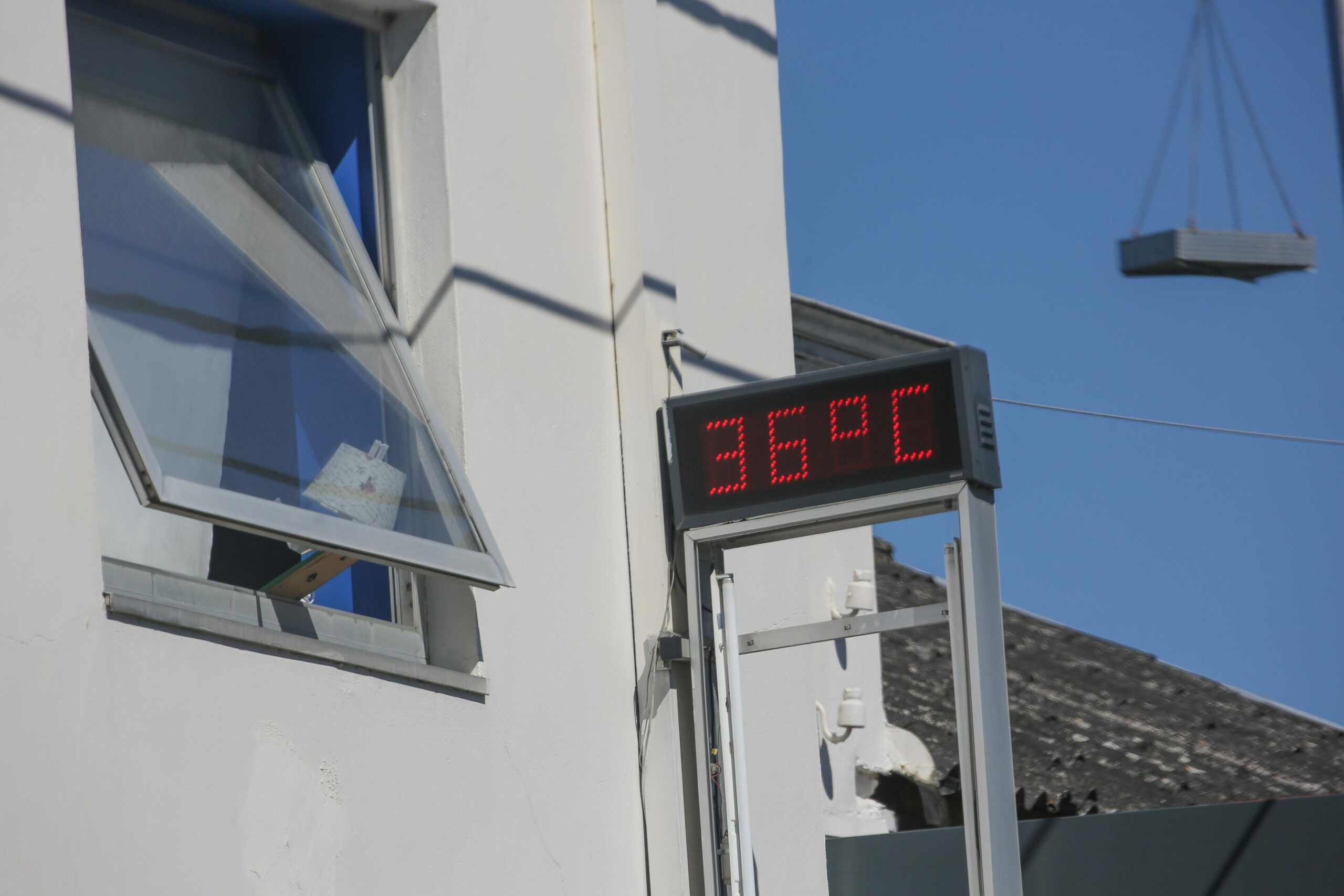
A board giving a 36 degrees of temperature on the first day of a heatwave in Belgium. Credit: Belga
Regular extreme weather is no longer limited to southern Europe, with ETUI's research warning that "heat-related dangers are increasing in Central and Northern Europe, where workplaces and labour laws were not originally designed to handle prolonged periods of high temperatures."
Pointing to the growing risk across the continent and the inconsistency of national rules, some major European trade unions, including those for public sector workers, builders or workers in the food or tourism industries, have collectively renewed calls for an EU directive on heat at work.
Their proposal would include minimum standards on working temperatures, heat breaks or adjusted working hours, and specific protections for the most at-risk workers.
Without clear rules, the federations argue, both workers and the economy will be affected.
For Belgian trade union ABVV-FGTB, while they welcome the initiative by the federations, any new directive should be seen as the minimum across Europe.
"What is negotiated at the European level should represent the minimum standard, and countries should be able to go further should the European rules prove to be inadequate at the national level," Bert Engelaar, president of ABVV-FGTB, told The Brussels Times on Thursday.
What are the rules in Belgium on working in the heat?
When it gets too hot, there are legally binding rules that employers in Belgium must follow. However, not everyone benefits, and there are certain factors that make triggering the response difficult.
Belgian workers need to consider three factors: what the temperature is, how much physical exertion is required to do their job, and the definition of a 'workplace'.
The first thing to do is ignore the temperature on your phone, which shows the temperature of the air in the shade.
Belgium's rules are based on a wet bulb globe temperature (WBGT), which more accurately takes into account heat stress on the human body, and includes factors such as humidity, and for outdoor work, the wind speed, angle of the sun and if it is cloudy.
Calculations are difficult, and workers don't often know when the rules have been triggered without specialist measuring tools.
However, humidity plays an important part, and calculation tables exist to work out the equivalent figure. As Christophe Delmarcelle, a partner with Del-Law, explains: "When humidity is extremely high (e.g., 95%), the WBGT temperature approximates the reading of a standard thermometer. Lower humidity produces different results."
For physical exertion, the defined levels differ, ranging from very heavy work (such as outdoor construction) to very light (i.e. office work). Each category comes with a different minimum temperature for work. For office work, this is 29°C and for very heavy work, 18°C.
These temperatures serve as trigger points for various employer actions, which include breaks, providing drinks, protective clothing and installing fans within at least 48 hours.
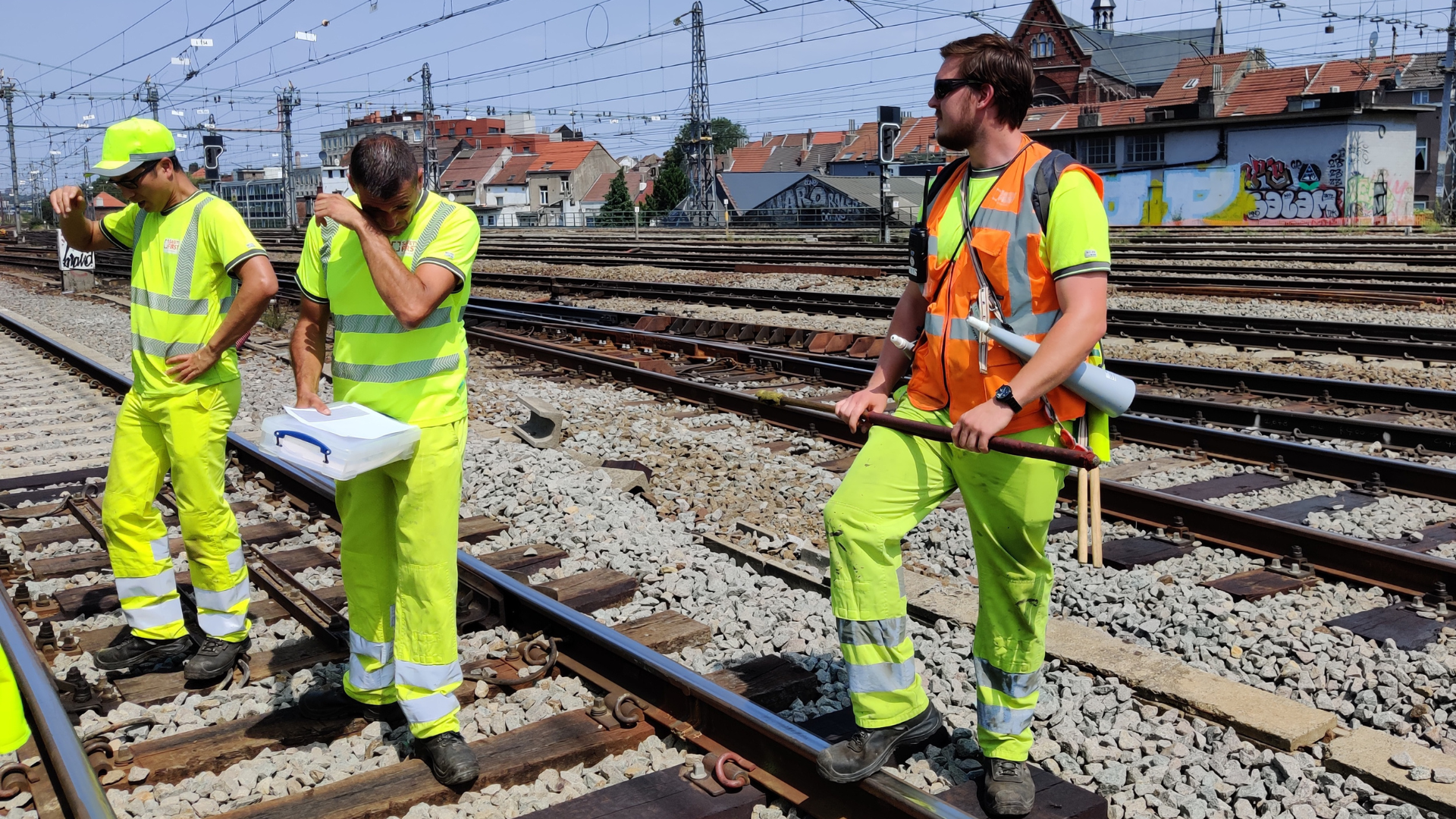
Workers controlling the impact that the heat wave has on the railways, in Brussels on 25 July 2019. Credit: Belga/Ruben Haels
However, ABVV-FGTB's president made the case that the existing rules do not go far enough.
"The rules on well-being at work contain provisions on extreme temperatures – including those caused by climate change – but they are not suited to the heatwaves we are experiencing today, which last for several days or even several weeks," Engelaar explained to The Brussels Times.
"We cannot be content with measures such as providing drinks and breaks – measures which, in practice, depend on the goodwill of employers. An entire chapter of the Code on Well-being at Work should be devoted to the consequences of climate change."
Self-employed also covered
Most workers are covered by the existing rules, and Delmarcelle flags the important consideration of self-employed workers who are also covered. "Companies are also responsible for the well-being of workers from other firms engaged on their premises, as well as self-employed individuals."
Belgium's 1996 law on well-being at work and its code, which the rules are based on, applies to all workplace scenarios, including those who work from home.
So employers have an obligation, if they require you to work from home, to ensure home working conditions fit within the rules. If working from home is not an option, employers can make workers temporarily unemployed in the event of a heatwave, with workers receiving unemployment benefits.
Credit: Unsplash
For Engelaar, monitoring is an important consideration, as rules do exist, but the question is whether they are always enforced.
"In large companies, our worker delegates/representatives can oversee this and prevention plans are drawn up; in smaller companies or specific jobs, there is no follow-up. And the well-being of employees should not depend on the goodwill of an employer or client."
ABVV-FGTB is also calling for a new inter-federal National Climate Adaptation Plan, which would set out how families can be protected from the economic impacts of extreme weather.
Engelaar further explained that Belgium needs to look to other countries to consider the world beyond work.
"Employees are also affected outside of work, as parents, when childcare facilities or schools are forced to close. We must be mindful of this too; we want to give social dialogue on this issue a fresh impetus," the Belgian union leader explained.
"The approach of special leave, as currently practised in Spain, is an interesting one, as it gives employees the chance to keep their lives on track in extreme circumstances."
Related News
- Parks, swimming pools and drinking fountains: here’s where to cool off in the capital
- Belgian health authorities warn of heat-related risks at events this weekend
- Five things you're probably doing wrong to stay cool in the heat
- Brussels residents swim in park spring over lack of open-air bathing spots
