
Belgium's railway enters its second century facing a paradox. It is indispensable, heavily used, generously subsidised and central to any credible climate strategy. Yet for many passengers it still feels outdated, untidy and less reliable than a country at the heart of Europe should expect.
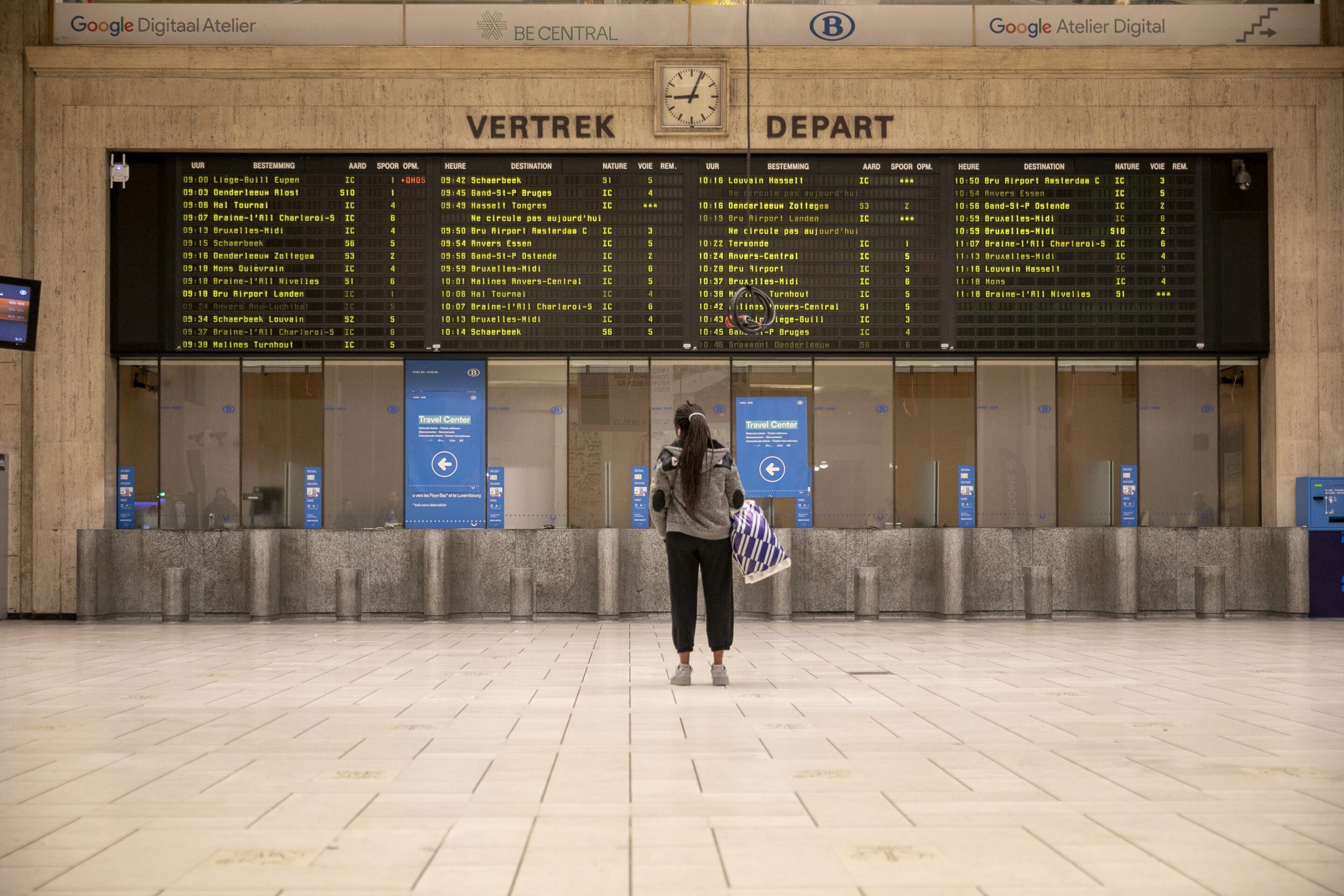
Few places express this contradiction better than Brussels-Midi. Arriving from London, Paris or Amsterdam, passengers step off sleek high-speed trains into a station that can feel confusing, shabby and oddly disconnected from the city beyond its doors. The first impression is of a public service that has endured rather than evolved.
That impression is powerful, but it can also mislead. Belgium is not a country that has abandoned its railway. Nor is it a country that refuses to subsidise rail. On the contrary, recent international comparisons by IRG suggest that Belgium's average subsidy per passenger-kilometre is relatively high: around €0.112, above France, Germany and the Netherlands, though not by an enormous margin. Fares, at around €0.106 per passenger-km, are broadly comparable to France and Germany.
The question is not how much Belgium spends on rail, but what it gets in return. Allianz pro Schiene estimates Belgian rail investment at just €117 per inhabitant. By comparison, the Netherlands and Germany spend 70% more per head. Much of the difference is explained by the pure cost of maintaining and operating the network, which is about 77% of the infrastructure manager's €1.71 billion expenditure.
Part of the problem is structural. For a small country, Belgium has a surprisingly dense rail network. With 3,602km of tracks – including 261km of high-speed rail – it ranks second among EU countries in network density, behind only the Czech Republic. Switzerland, though outside the EU, surpasses both.
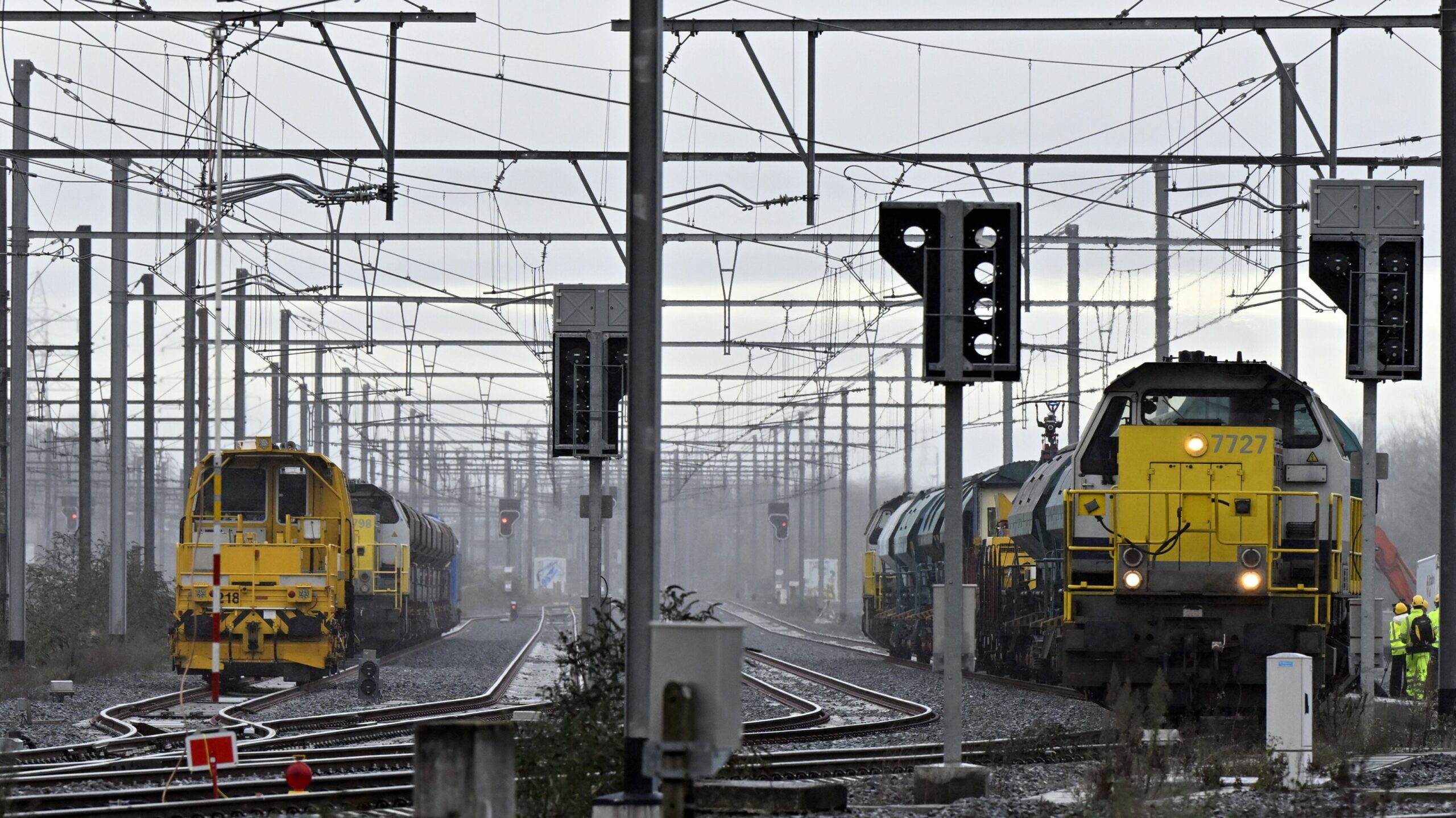
Illustration picture shows the presentation of 'Rijmtrein' of railway infrastructure firm Infrabel, on Tuesday, 12 December 2023, in Leuven. Credit: Belga / Eric Lalmand
That density matters. It keeps rail a realistic option for many towns and commuters, not just a handful of major intercity routes. Yet density comes at a price. Tracks, bridges, signalling systems, stations and junctions must be maintained whether trains are full or half-empty. A large share of Infrabel's expenditure, therefore, goes to maintaining and operating the existing network rather than to visible new investment.
The problem is that Belgium does not always use this dense network as intensively as it could. Compared with Switzerland, Belgium produces far fewer passenger-kilometres per inhabitant.
Freight tells a similar story. With ports, industry, logistics corridors and short distances to neighbouring markets, the country ought to be a natural rail-freight platform. Instead, rail's freight share remains modest compared with several European peers. Belgium thus bears much of the cost of a dense network without fully capturing the benefits.
This matters for pricing. Since Belgium has no general system of road pricing or congestion charging, car and truck users do not fully pay for the congestion, emissions, noise, safety risks and land use they impose on others.
In that context, rail should not be assessed only as a commercial product. Economic theory suggests that on congested corridors, rail fares should be low and frequencies high, especially at peak times.
Work by Guillaume Monchambert and Stef Proost, comparing a Belgian and a French intercity corridor, supports the idea that fares and frequencies should reflect not only railway costs but also road congestion, crowding and time of day.
The implication is not that Belgium should simply make all rail cheaper. It is that pricing should become smarter: lower where rail produces large social benefits, more differentiated where crowding is severe, and better aligned with the real cost of alternative road travel.
Better service
This raises a more important question. Given that political support exists, how can Belgium get more value from that investment? Put simply, how do we get more reliability, accessibility and station quality per euro?
The answer lies, in part, in management culture. Public rail operators and infrastructure managers are often seen as poor innovators. The debate needs to move beyond the tired public-versus-private argument.
Britain's experience with rail privatisation offers a useful lesson. While it increased passenger numbers, the overall experience has been mostly negative – and, most importantly, it did not consistently reduce public subsidies and improve quality of service. Subsidies often shifted through infrastructure funding, access charges and government risk-bearing rather than disappearing.
The lesson for Belgium is not that public ownership is automatically superior. It is that rail is a system. Fragmented responsibilities can obscure costs and weaken accountability.
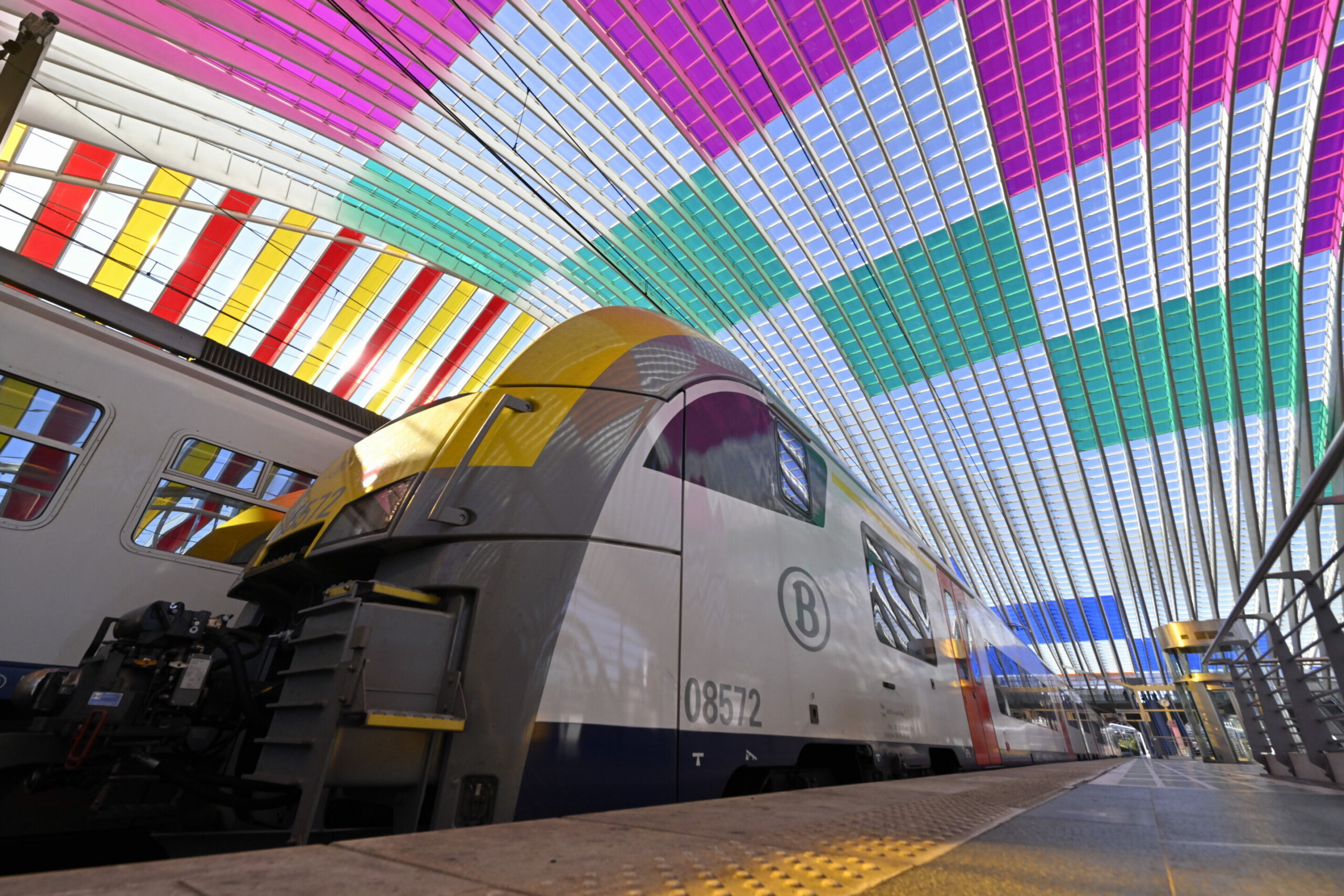
Liege-Guillemins railway station, in Liege, Thursday 06 October 2022. Credit: Belga / Eric Lalmand
Economist Mariana Mazzucato has challenged the assumption that innovation is primarily the preserve of the private sector. She argues that governments can be highly innovative when they adopt a mission-driven approach and judge success by more than narrow financial metrics. Examples of innovative practices in public transport are there for the taking.
In this sense, the NMBS/SNCB may be moving in the right direction. It has important strengths: relatively high and increasing passenger demand (245 million passengers in 2024), improved punctuality (reaching 89.7%), and an app that integrates real-time travel information with connections to other operators such as De Lijn, STIB/MIVB and TEC.
Its 2023–2032 public service contract also provides a clearer long-term framework and room for investment in rolling stock, accessibility, stations and multimodal hubs. Several technological upgrades are already being rolled out. One is the purchase of new trains equipped with batteries.
In the already heavily electrified Belgian network – 88% electrified, among the highest in Europe – this will make it possible to retire the last remaining diesel trains and provide a useful fallback when overhead power lines fail.
But the innovation remains too incremental and too invisible to passengers. A genuinely mission-driven NMBS/SNCB would organise itself around the passenger journey. The real measure of success is not simply whether a train departs on time. It is whether passengers can reach the station safely, find their platform, make their connection and complete their journey without unnecessary frustration.
That requires better station management, clearer information, reliable lifts and escalators, high-quality bicycle parking, simpler multimodal ticketing and a stronger link between rail timetables and regional public transport.
Upgrades and innovation
There is also scope for practical, low-cost innovation. Stations can be redesigned to improve boarding flows. Crowding information can guide passengers to less busy carriages. Real-time disruption tools can suggest credible alternatives instead of merely announcing delays. Open data can help universities, start-ups and local authorities build useful mobility services around the rail network.
Procurement can be used to set public-value challenges: reduce dwell times, improve lift reliability, shorten disruption recovery, or make small stations feel safer after dark. None of these ideas is glamorous. Yet they are precisely the kinds of improvements that persuade passengers that railways belong in the 21st century.
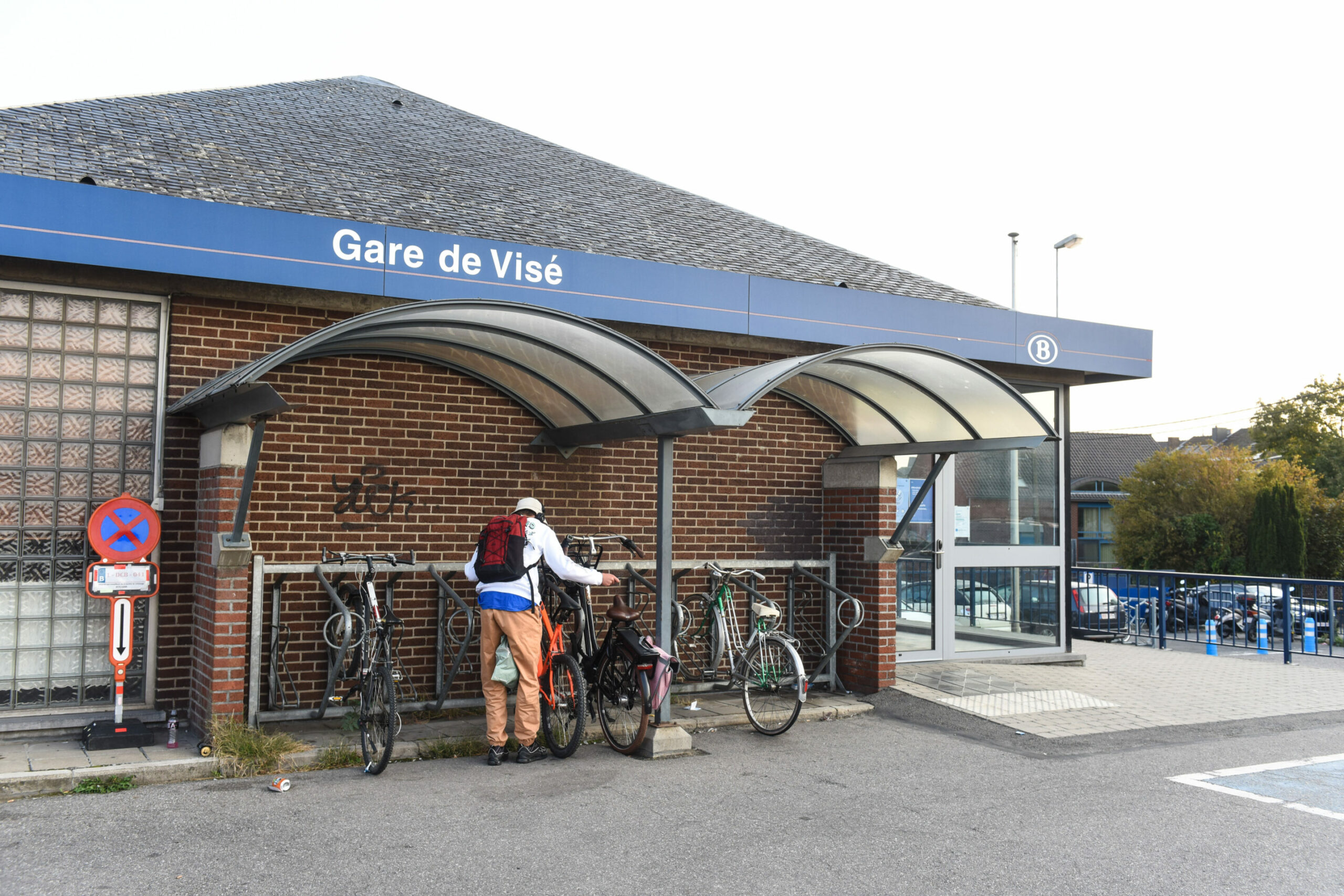
Visé train station in the province of Liège, September 2020. Credit: Belga / Jean-Luc Flemal
Another opportunity lies in more flexible pricing, differentiated by peak and off-peak hours and by region. While the NMBS/SNCB has introduced such a system, there is still room for improvement, as the current Train+ system carries some unnecessary complexity.
Belgium's complicated federal structure makes this harder. NMBS/SNCB is one of the few public companies operating across all three regions, while buses, trams, local mobility policy and urban planning are largely regional or local. Infrabel manages the infrastructure. The passenger, however, does not experience these divisions. A broken lift, missed connection or badly designed interchange is simply a failure of the railway system.
Better rail policy, therefore, requires better governance: shared targets between NMBS/SNCB, Infrabel and the regions, public reporting on passenger outcomes, and a stronger focus on the door-to-door journey.
The lesson is not that Belgium should privatise its railways or spend dramatically more. It is that a modern public railway should think and behave like an innovator. Belgium already has the network, the demand and the public support. The challenge is to turn those assets into a service that feels as modern as the ambitions attached to it.
