
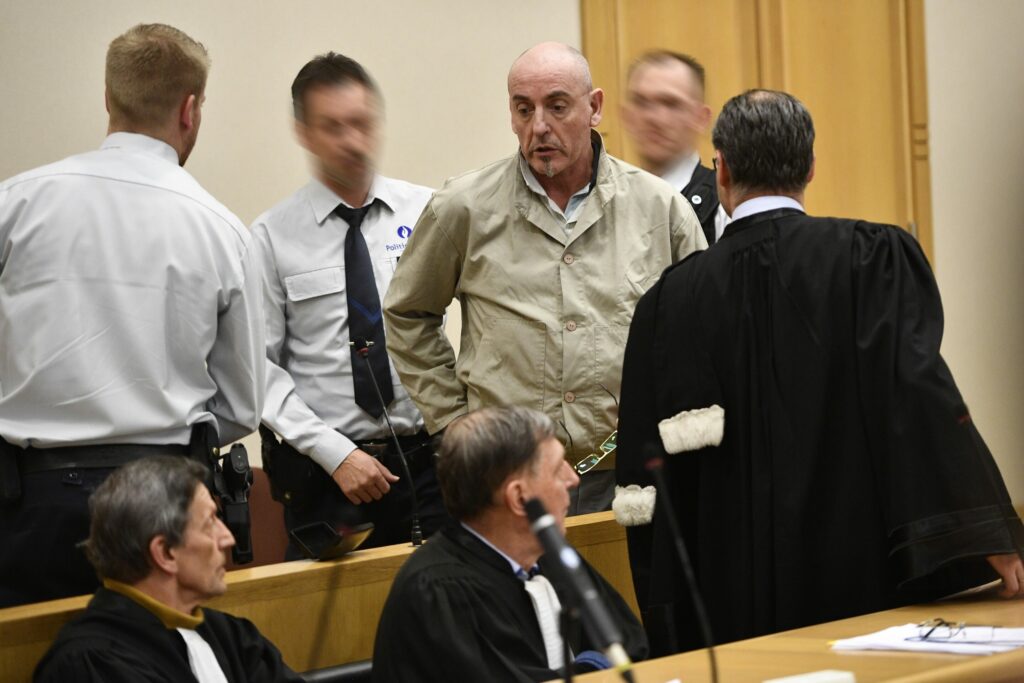
Renaud Hardy, the notorious Belgian serial killer, died on Thursday at the age of 64 in the sick bay of Bruges prison, the Prison Service has confirmed.
Hardy's violent spree began in May 2014 when he strangled 82-year-old Maria Walschaerts with a bicycle lock in Leest.
Months later, the Mechelen native shot a passing female cyclist in the back with an airgun, but the woman survived. He later admitted to having a sudden "urge" to attack her. Another attempted murder followed in Bonheiden.
By February 2015, Hardy targeted Belgian actress Veerle Eyckermans, who happened to be his neighbour at the time. He ambushed her with a wooden stick, leaving her severely injured before she managed a narrow escape.
The violence reached its peak in September 2015 when Hardy tortured, raped, and murdered his 52-year-old former girlfriend Linda Doms in Zemst. He recorded it all on a personal camera.
Investigators discovered the graphic footage on a memory card days later, prompting his immediate arrest. Subsequent DNA analysis linked him to the earlier unsolved attacks.
In 2018, Hardy was found guilty by a jury at Tongeren Criminal Court and handed a life sentence. His defence heavily relied on his medical history.
Parkinson's diagnosis
Doctors diagnosed Hardy with Parkinson's disease in 2006, eight years before his string of violent attacks began. Medical intervention began four years later through dopamine-replacement therapy.
The medication he took as part of the treatment – specifically dopamine agonists – carry severe psychiatric risks. They frequently disrupt reward pathways and are known to trigger intense impulse control disorders.
They can cause uncontrollable urges, ranging from hypersexuality and pathological gambling to extreme aggression. During the trial, a prominent neurologist Chris Vander Linden assessed that Hardy's addictive prescription cocktail dismantled his impulse control, effectively transforming him into a killer. However, the jury rejected the plea for psychiatric internment.
Hardy was still medicated behind bars and remained violent. Prison authorities had to transfer him from Merksplas to Beveren in 2025 after he drove a ballpoint pen into another inmate's skull. He relocated to the Bruges medical unit just weeks before his death.
