
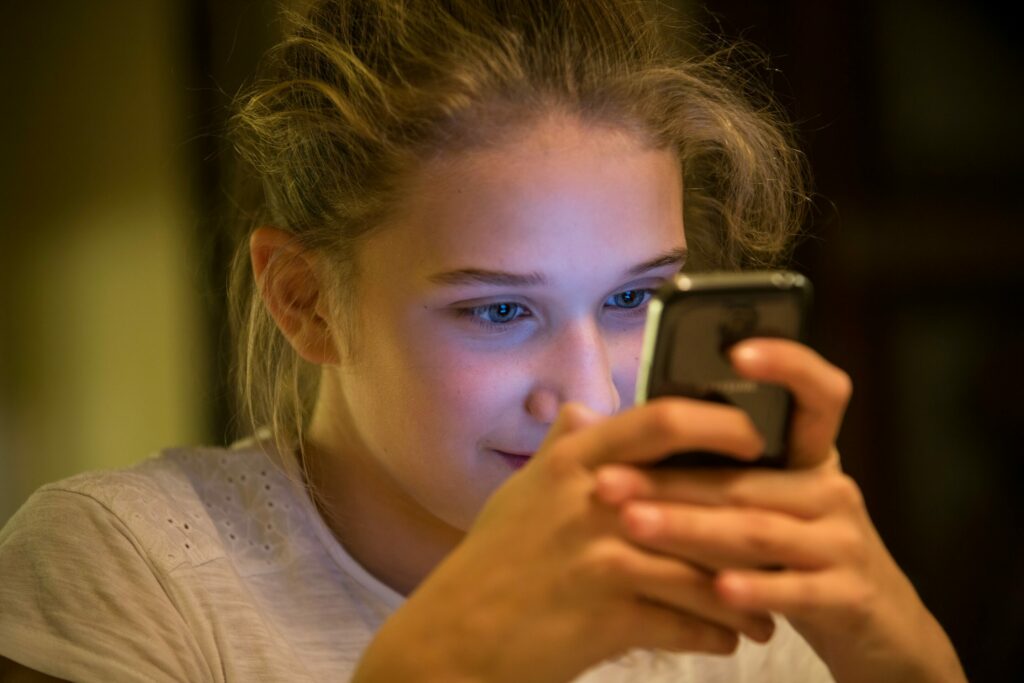
Following Australia, France's parliament recently ratified a bill banning social media for under-15s from January 2027. If Belgium were to follow suit, how would the ban actually be enforced?
The French system
In France, the ban will be phased in two stages. Starting in September, as pupils return to school, people under 15 will not be able to open new social media accounts, with age verification required.
A provision of the bill will also take effect at the beginning of the French school year. From September, there will be a blanket ban on mobile phones in high schools, as is already the case in primary and secondary schools.
The second phase will be rolled out in January 2027. From January, the age-verification rule will apply to all existing accounts, meaning everyone in France will have to prove they are old enough to keep using their social media.
TikTok, Snapchat, Facebook, Instagram and X are expected to be age-restricted. According to Franceinfo, however, access to YouTube will be allowed, but not to the comment section. On WhatsApp, messaging will remain available, but broadcast channels will not.
President Emmanuel Macron took to social media to hail the ban as a key reform of his final term in office, saying that France is leading Europe in protecting children and teenagers and calling it "a major step forward".
Credit: Unsplash
Putting the onus on tech companies and social media platforms
The Australian government pioneered the social media ban, which took effect on 10 December 2025 and is already blazing a trail for a host of countries which have drafted bills to rein in children's social media use.
The Australian government assesses potential platforms against three main criteria: whether their sole purpose is to enable online social interaction, whether they allow users to interact with other users, and whether they allow users to post content.
Platforms banned for under-16s on Australian territory include Facebook, Instagram, Snapchat, Threads, TikTok, X, YouTube, Reddit and streaming platforms Kick and Twitch.
If breached, the law does not punish young Australians or their families for infringing the ban. Rather, the responsibility falls on Big Tech. The Australian government stipulates that they must find a way to block under-16s from social media or face a fine of roughly €30.7 million if breaches are repeated.
To verify age, tech companies use multiple age assurance technologies, including government IDs, face or voice recognition, or so-called "age inference", which analyses online behaviour and interactions to estimate the user's age.
Platforms cannot rely on Australian users self-certifying or on children's parents vouching for them.

Credit: Unsplash
France has followed suit and called on the platforms to take responsibility for blocking under-15s. It will be incumbent upon tech firms to find a way to verify age without collecting additional personal data.
The French bill leaves it up to the platforms to choose the method, "provided it is sufficiently robust", French AI and Digital Affairs Minister Anne Le Hénanff explained to BFMTV.
"The responsibility lies with the social media platforms. It is up to them to develop the technical solutions needed to verify users' ages," she said, while noting that age verification systems are already in place to restrict access to pornographic websites.
Platforms will also be required to offer users several age verification options, allowing them to choose the method they prefer. "We do not want there to be just one age verification method," the minister added. "We want at least two."
The situation in Belgium
In Belgium, the jury is still out on the matter. On Wednesday, the Federal Minister in charge of digitisation, Vanessa Matz (Les Engagés), welcomed France's ban on children under 15 accessing social media. However, she was critical of the fact that Paris had put the onus on the platforms themselves.
Giving tech companies the responsibility to verify ages for the entire population does not sit well with Matz. "We want to introduce a system that provides stronger privacy protections," she told Belga. "Verification would be carried out by an independent, trusted third party, such as the digital wallet, which would simply confirm to the platform whether the user has reached the required age, without disclosing their identity or personal data."
The French Community's Media Minister, Jacqueline Galant (MR), has previously spoken in favour of restricting access until the age of 15.
Meanwhile, the Flemish government, spearheaded by the Flemish Community's Media Minister, Cieltje Van Achter (N-VA), wants to introduce an age limit of 13 for harmful social media. The platforms concerned would be expected to provide effective age verification.
There has been some pushback against the idea, however. An opinion article, published by Child Focus chief executive Nel Broothaerts, warned that banning minors from social media could create a "false sense of security". In June 2025, she wrote that if young people are blocked from mainstream platforms, they may retreat to unregulated spaces with no oversight or support.
The Belgian Higher Council for Media Education made a similar argument in a report published in July 2025. It called for genuine regulation of platforms so that they take responsibility for protecting minors.
It opposed a ban, citing concerns about the rights implications of age-verification systems and the lack of solid scientific evidence for a direct link between social media use and worsening mental health, a claim often raised in political debate.
The risk of circumvention
Besides privacy protection, other concerns have been raised over the efficacy of age-verification tools and the high probability of young people bypassing them.
According to the BBC, it is widely acknowledged that many Australian children continue to use the platforms. In March 2026, Australia's eSafety Commission announced seven out of 10 children aged under 16 who had a social media account before the ban still had "some access".
Google searches for the ban reportedly increased by 700% in Australia in the first two days after it came into effect, while searches for Virtual Privacy Networks (also known as VPNs) and for how to avoid age verification also reportedly spiked, though at a fraction of the volume.
The Australian eSafety Commissioner, Julie Inman Grant, said that ingenious ways teenagers use to bypass the restrictions will continue to fill newspaper pages, but the Australian government should not be deterred. "We are playing the long game", she added.
Twelve months on from its introduction, almost two-thirds of Australian voters are in favour of the policy.

Credit: Unsplash.
