
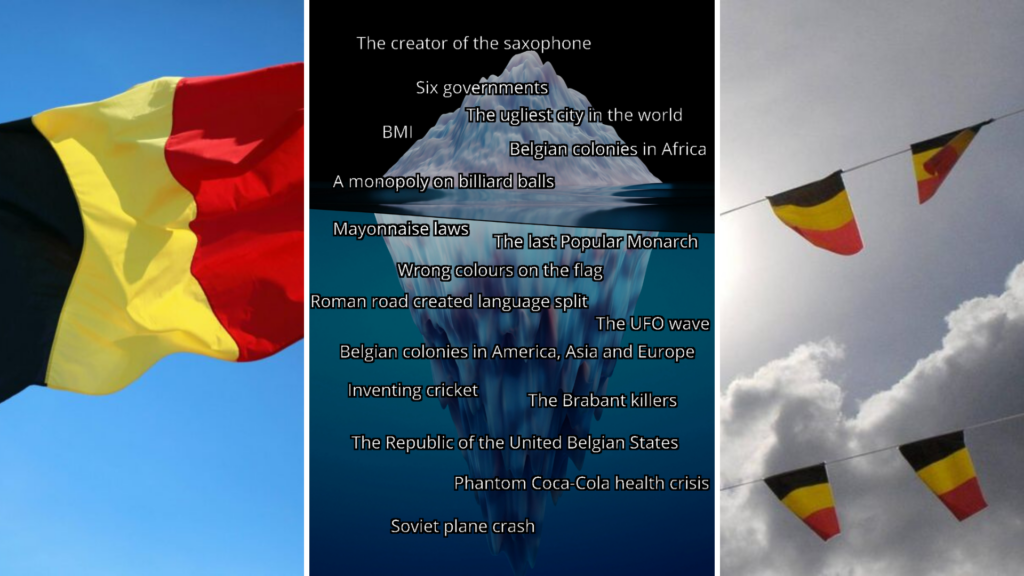
Belgium is a layered country. The more time you spend in it, the more nuggets of knowledge you learn about its history and culture, and the deeper you dive into its ocean of fascinating facts.
That's the idea behind an iceberg chart. The tip contains the things everyone knows, while each layer below the surface uncovers increasingly obscure facts and stories.
So, how deep does the Belgian iceberg go?
The tip of the iceberg
The creator of the saxophone
If you ever visit the city of Dinant, you will notice a lot of statues depicting musical instruments. Saxophones, to be more precise.
This is all courtesy of a man called Adolphe Sax.
He invented the instrument named after him in the 19th century, and presented a prototype at a fair in 1841. As he had not patented the saxophone yet, he played it from behind a curtain.
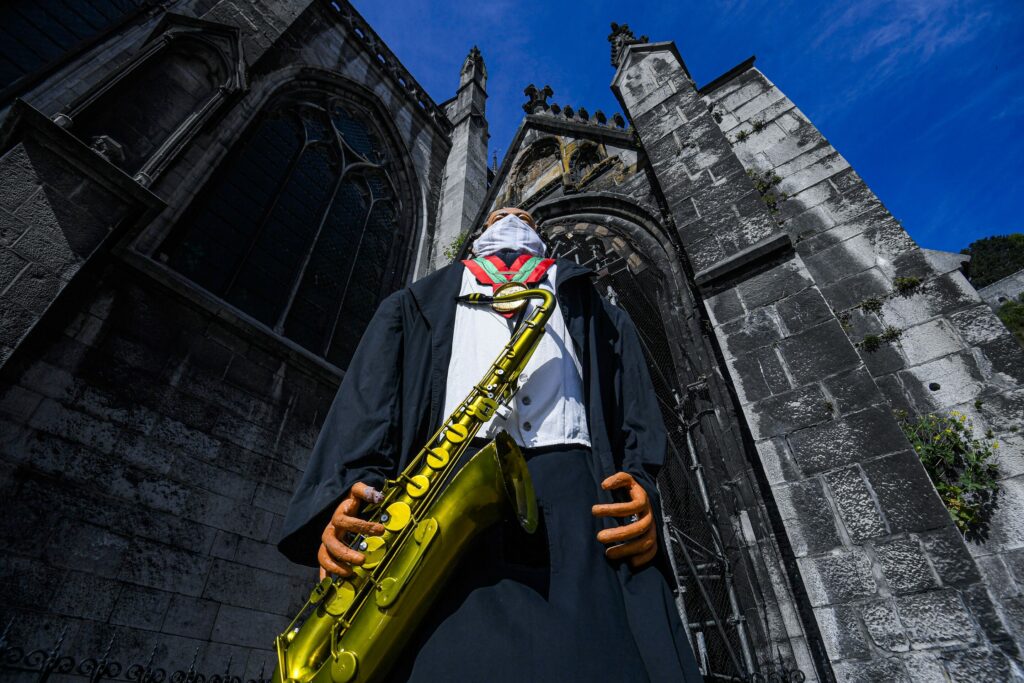
Illustration shows a statue of Adolphe Sax. Credit: Belga/Laurie Dieffembacq
Six governments
Every Belgian who's ever met people abroad has been asked, "So, how does your government work exactly? "
Yes, our beloved Frankenstein-country is not the easiest to explain.
Belgium has a whopping six governments. That means a government for roughly every two million people. There's the Federal Government, which runs the country. But you also have the Flemish Government, the Walloon Government, the French Community Government, the German-speaking Community Government, and finally the Brussels-Capital Region Government.
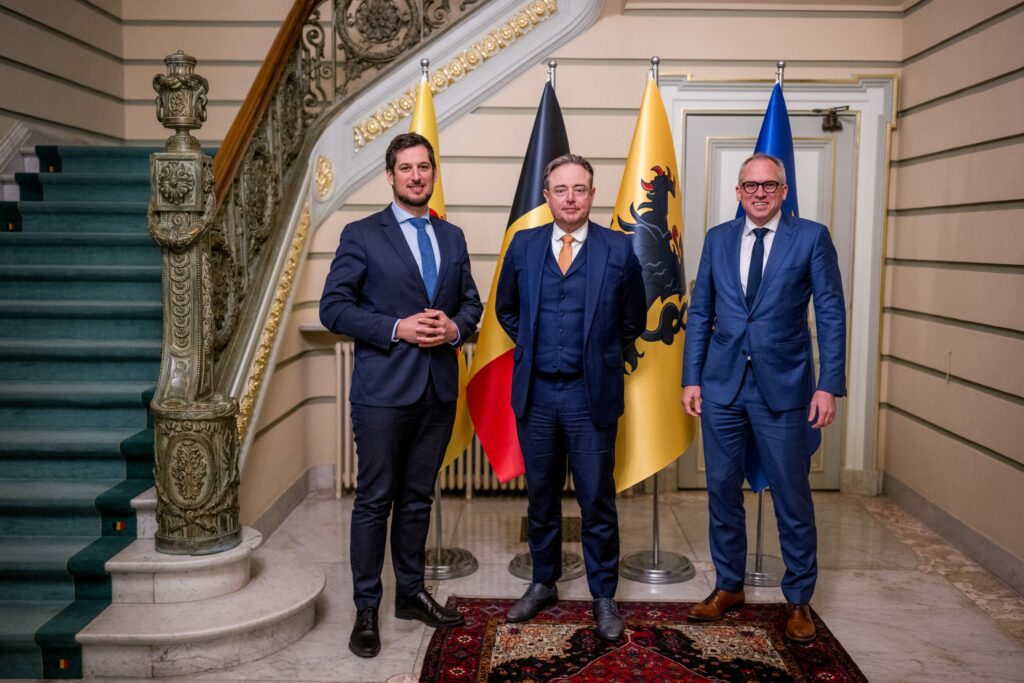
Walloon Minister President Adrien. Credit: Belga/Jasper Jacobs
Just below the surface
The Body Mass Index
The Body Mass Index (BMI) was invented by Belgian mathematician, astronomer and statistician Adolphe Quetelet in the 1830s.
But it was not Quetelet's lifelong ambition to force people on diets. He initially designed the BMI to describe the average man, believing that characteristics followed a statistical pattern.
More than a century later, scientists recycled his formula to calculate obesity, and thus the BMI was invented.
Belgian colonies in Africa
King Leopold II founded the colony Congo Free State in 1885. Backed by the majority of the European colonial powers, he subjugated the area around the basin of the Congo River to his personal rule, and exploited it for its natural resources. The land was divided into private concessions, where companies like the Abir Congo Company committed atrocities against the local population, killing millions in the process.
But Belgium, through King Leopold, owned several other colonies on the African continent. It traded a part of the Congo Free State for the Lado Enclave in modern-day South Sudan, and occupied the German colony of Ruanda-Urundi during and after the First World War.
Belgium briefly co-administered the Tangier administrative zone in modern-day Morocco.
The twilight zone
A monopoly on billiard balls
Belgium is the worldwide market leader in billiard ball production. Over 80% of players, federations and tournament organisers play with balls produced in Belgium.
Belgian balls have a reputation for being the most durable and high quality.
The Brussels Times is a serious publication and does not condone jokes about the size of Belgian balls.
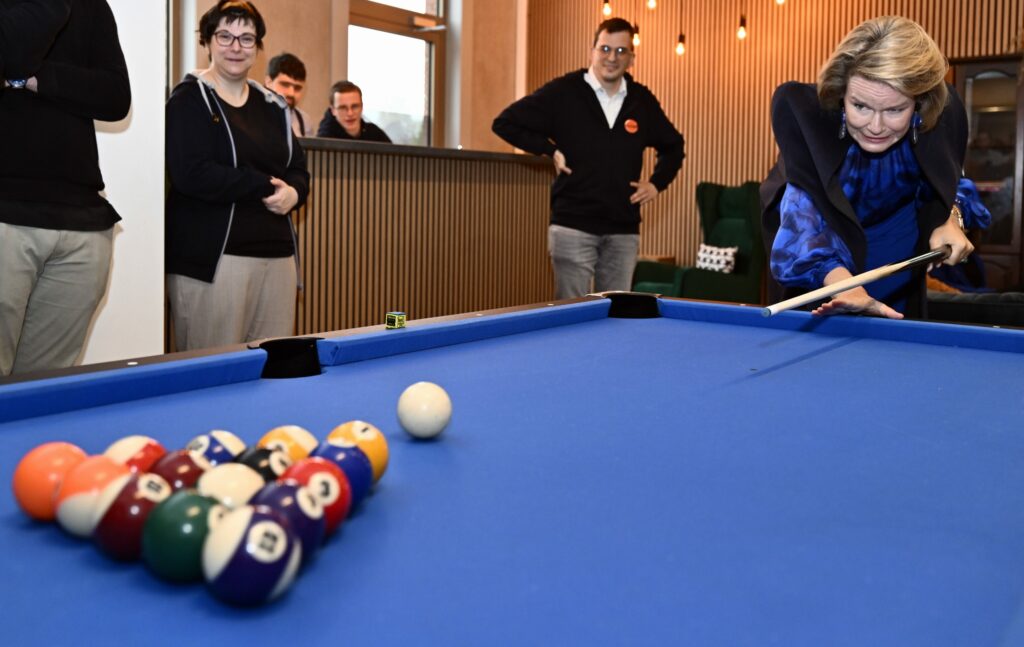
Queen Mathilde plays pool. Credit: Belga/Eric Lalmand
The last popular monarch
Belgium has the last remaining popular monarchy in the world. And we're not claiming that King Philip is the only king still loved by his people.
It means that the Belgian king does not swear allegiance to a country or constitution, but rather to his people. King Philippe's formal title is not King of Belgium, but rather King of the Belgians. He does not have a crown, and there is no coronation.
Historically, there are many examples of popular monarchies. The Byzantine Empire and the Holy Roman Empire used the system for at least parts of their history. The most famous popular monarch was Napoleon Bonaparte, who called himself Emperor of the French.
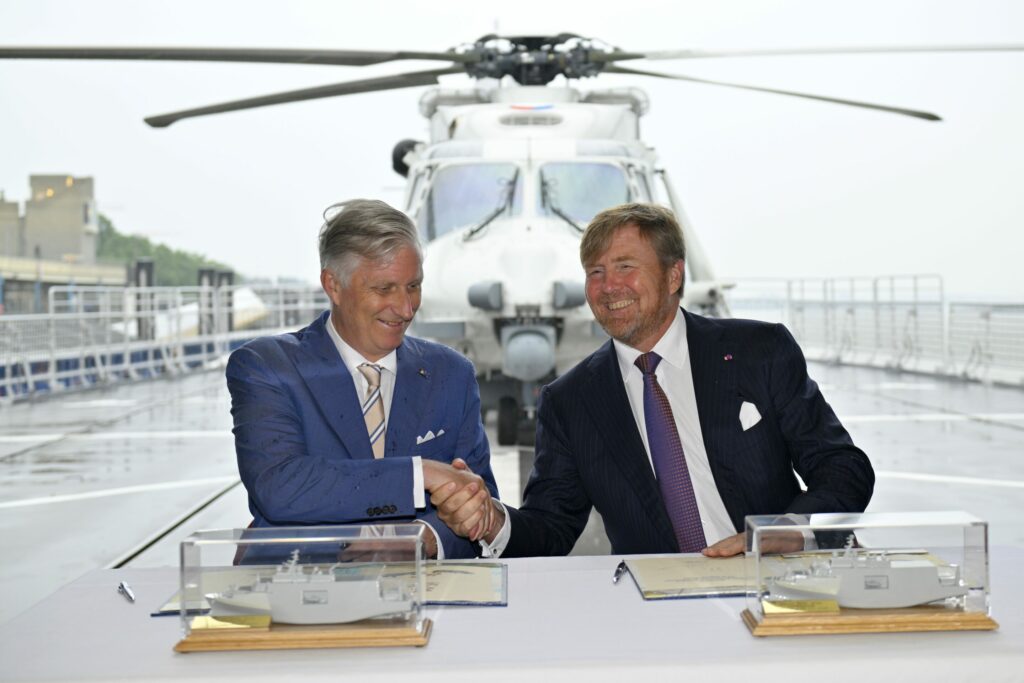
King Philippe of Belgium and Dutch King Willem-Alexander. Credit: Belga/Philip Reynaers
Mayonnaise laws
Belgium takes its snacks seriously. Its sauces even more.
On 12 April 1955, King Baudouin I signed a royal decree defining how mayonnaise had to be produced. By law, any sauce labelled mayonnaise had to contain 80% fat and 7,5% egg yolk. This made Belgian mayonnaise have more fat and egg yolk than other European versions.
While foreign mayonnaise could be sold in Belgium with lower, foreign standards, it couldn't use the name mayonnaise.
Deputy Prime Minister and Minister of Economic Affairs and Sauce Treachery Kris Peeters amended the decree in 2015, allowing Belgian producers to make mayonnaise with only 70% fat and 5% egg yolk, bringing Belgian mayonnaise in line with European standards.
The Deep
Wrong colours on the flag
If we look at the Belgian flag, we see vertical stripes in the colours black, yellow, and red, from left to right.
Well, this is not the constitutional flag. At least, it's a bit of a grey area.
After the outbreak of the Belgian revolution in 1830, the country flew the Brabant Revolt flag, with horizontal red, black and yellow stripes. It soon replaced this with the current flag, but defined it in the constitution as red, yellow and black. The colours are supposed to be placed in order from the flagpole, meaning the Belgian flag is flown the wrong way around.
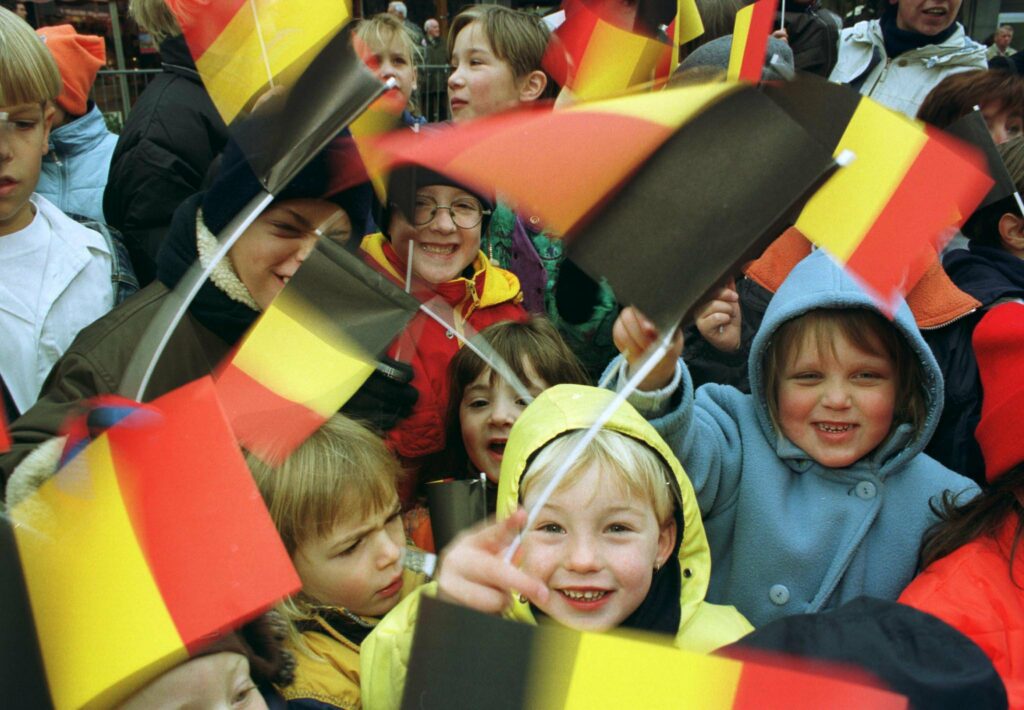
Illustrative image. Credit: Belga archive
The UFO wave
During the night of 30 March 1990, the Belgian air force received a request from the country's Control and Reporting Centre (CRC) to intercept multiple targets in the skies above Thorembais-Gembloux, just south of Brussels. Without knowing what the targets were, it sent two F-16 fighter jets to intercept them.
What follows is one of the most contested episodes of Belgian history.
Here's what we know: an estimated 13,500 people witnessed two sets of lights forming triangular and square formations in the sky. Police officers sent out to investigate back the witnesses' descriptions. The scrambled jets engaged the lights nine times in an attempt to intercept them. They locked the targets on their radars three times, but each attempt saw the lights suddenly accelerate and avoid staying locked.
After an hour, the jets returned to their base, and the lights faded into darkness.
The radar data was sent to the Massachusetts Institute of Technology (MIT), where researchers concluded that "The only reasonable hypothesis is that of UFOs, whose performance clearly points to a non-terrestrial origin."
Sceptics discard the events, saying that the lights can be identified as stars and planets and the radar locks were proven to be the two jets accidentally spotting each other on the radar.
The abyss
Belgian colonies in America, Asia and Europe
Belgium's colonies in sub-Saharan Africa are relatively well known. But the Belgian Colonial Empire included other, smaller colonies.
King Leopold I created a settlement in Guatemala in 1842 run by a private company under his control, the Compagnie belge de colonisation (Belgian Colonisation Company). The Guatemalan government gave the district of Santo Tomas de Castilla in perpetuity to the Belgian king. After a little over 10 years, the settlement was closed due to the high costs and mortality rate due to yellow fever.
Following the Boxer Rebellion in northern China, Belgium negotiated a concession in the city of Tianjin in exchange for private Belgian investments in the city. While Belgian companies invested in infrastructure in the city, the area given to Belgium never became active. After just 30 years, the Belgian state returned the concession to the Chinese government in 1930.
Belgium briefly controlled a part of Lake Como. The island of Comacina was given to King Albert I by the Italian government in 1919, shortly after the end of the First World War. It was returned after just one year.
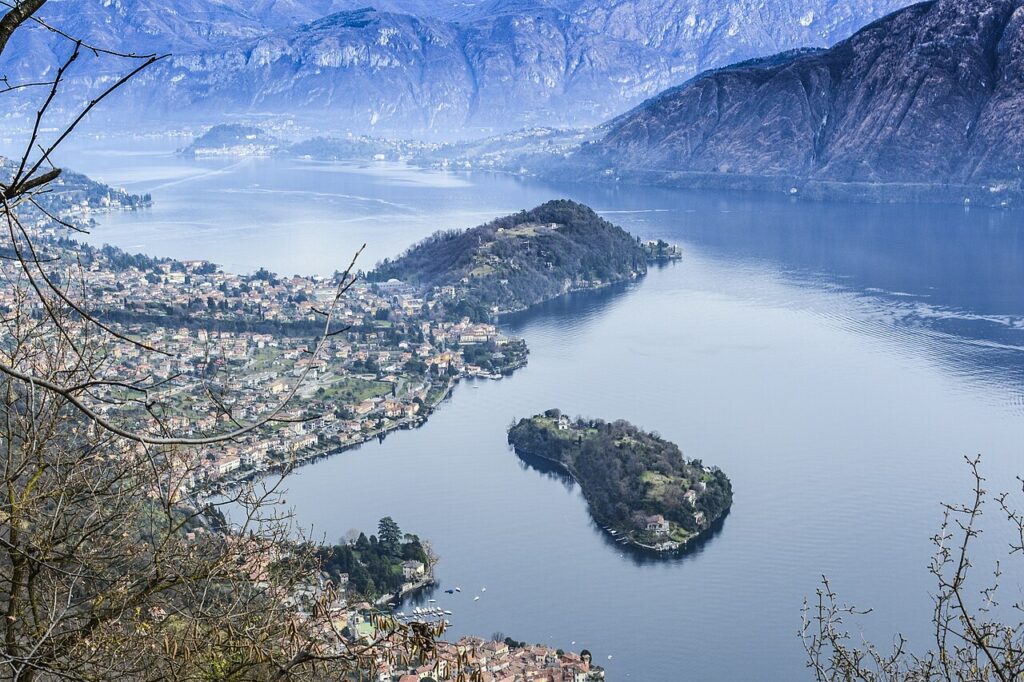
The Comacina island (bottom right). Credit: Wikimedia Commons
Inventing cricket
The Brussels Times published a piece back in 2024 titled "Did you know cricket was invented in Belgium?". As much as our British readers wish the facts had changed in the past two years, the answer to this question headline is not "No, it wasn't".
Flemish shepherds invented a form of primitive cricket back in the 12th century, using their shepherd's crooks as bats. Belgian migrants then exported the sport to Britain in the 16th century.
The depths of the ocean
The Confederal Republic of the United Belgian States
The Kingdom of Belgium was officially founded on 4 October 1830. It exists to this day as the constitutional monarchy we all have come to love.
But it wan't the first Belgium.
In 1790, a group of Southern-Netherlands provinces declared independence from the Austrian Empire during the Brabant revolution. Henri van der Noot, a leader of the revolution, raised an army and defeated the Austrians in the battle for Turnhout. When all provinces were liberated, the newly-formed country signed a declaration of independence.
The country functioned as a confederal republic, where each province governed itself under a so-called sovereign congress based in Brussels.
While the Austrians defeated the newly founded country a year later and brought it back under control of its empire, the short-lived experiment created a new political idea of Belgium as a state, which would inspire a revolution and the creation of the current Belgian state in 1830.
Phantom Coca-Cola health crisis
In 1999, a group of students at a school fell ill after drinking Coca-Cola.
It was the beginning of an epidemic, as hundreds of Belgians fell ill with symptoms similar to poisoning in the following weeks.
They contacted the national poison control centre with complaints of headaches, nausea and stomach pain. Coca-Cola immediately ordered a recall of all its sold products, and destroyed its stock in the country. The Belgian government went as far as banning the sale of Coca-Cola products.
After weeks of panic, it was revealed that a batch of Coca-Cola bottles had been contaminated with 'off-quality' carbon dioxide in Antwerp, while a batch of cans had been transported on a pallet that had been sprayed with a fungicide in northern France.
Neither contamination explained the mass poisoning, as the amount of contaminants found in the drink containers were not deemed sufficient to be poisonous.
But 'off-quality' carbon dioxide and the fungicide both create a rather unpleasant smell. This smell, in combination with extensive press coverage of the events, caused the 'poisonings'. According to most research, the mass poisoning turned out to be a Mass Sociogenic Illness, where mass hysteria caused people to suffer mild to severe poisoning symptoms without actually being ill.
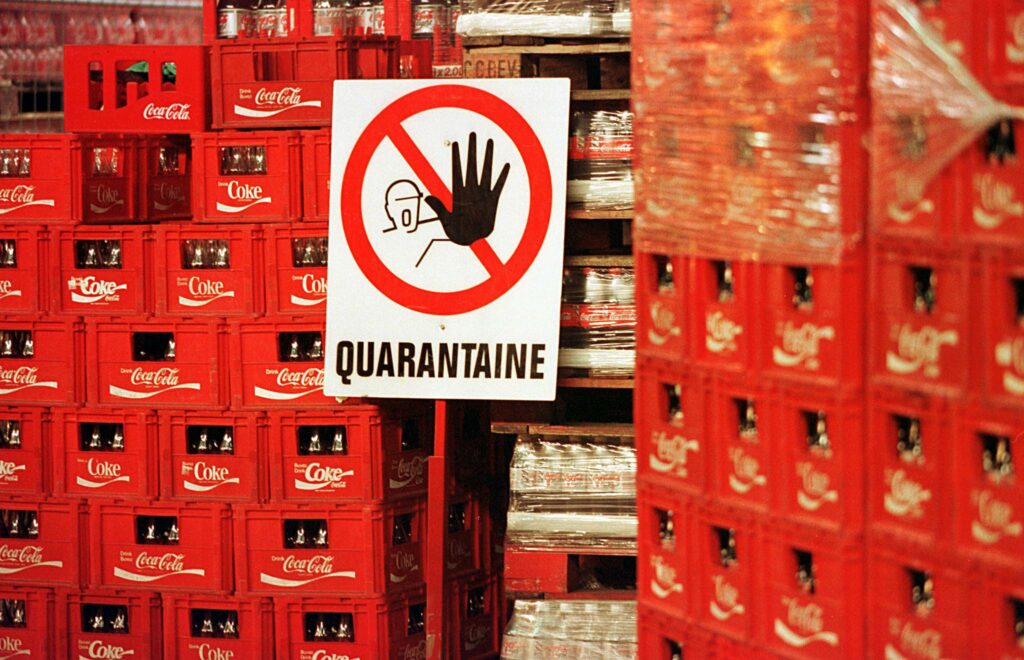
Coca-Cola products in quarantine during the crisis. Credit: Belga Archive
