
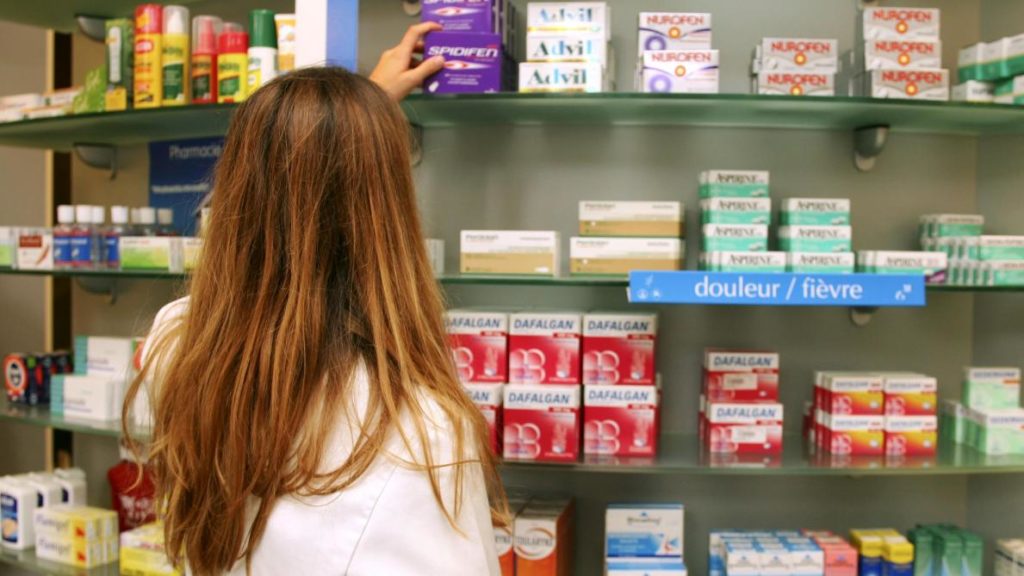
US President Donald Trump announced on Tuesday that generic medicines will be subject to 100% import duties from August 2028 – rising to as much as 200% a year later.
Such a move, which is designed in part to force companies to relocate their factories to the United States, may sound threatening to Belgium's large pharmaceutical sector, which exports around €17 billion worth of medicines and vaccines to the US per year.
Threatening access to medicines
Generic medicines are the low-cost copies of medicines whose patents have expired, and global production is mainly based in India and China. Until now, these had been exempt from the US import duties on pharmaceutical products, which were announced in April.
The tariffs will likely have little impact on Belgian businesses – but patients in Belgium may end up footing the bill if Trump's move makes generics scarcer or more expensive.
"The companies that market generics here have very little production in Belgium itself," Wim Vervaet from Medaxes umbrella organisation for generic medicines told De Morgen. "There are hardly any exports of generics from Belgium to the US."
While 90% of all medicines used by Belgian patients are essential medicines, generics and biosimilars, only about 40% of the National Institute for Health and Disability Insurance's (RIZIV) budget goes towards them.
"However, it is precisely this low cost that frees up the funds to pay for new, expensive therapies," Vervaet said. "The budget and access to medicines are interconnected: if essential medicines become more expensive, the budget for innovation comes under pressure."
As a result, the tariff on cheap medicines might threaten access to the expensive ones.
Credit: Belga/Herwig Vergult
Belgian Foreign Minister Maxime Prévot (Les Engagés) called on the EU to respond with one voice to Trump's announcement, pointing out that global supply chains for medicines are closely intertwined.
"Anyone who erects barriers risks higher costs and a less secure supply for patients here and elsewhere," he warned on social media. "Europe must respond to this with a united front, and protect both innovation and an open and secure supply, in the interests of everyone."
On Wednesday, Belgian MEP Kathleen Van Brempt (Vooruit) insisted that the announced tariffs must not apply to the European Union, Belga News Agency reports.
The US already concluded a deal a year ago, in which they agreed to a 15% tariff on imports of European products in exchange for a zero tariff on a large number of American products. That agreement also stipulates that only the standard Most-Favoured Nation (MFN) tariffs would apply to European generic medicines, their ingredients and raw materials.
"They must therefore remain exempt from the additional US tariffs that Trump is now announcing," said Van Brempt, who is also vice-chair of the Parliament’s Trade Committee.
"Should the new tariffs of 100% to 200% nevertheless be applied to European products, this would constitute a breach that would seriously jeopardise the implementation of the entire Turnberry Agreement,” she said, referring to a deal made last year at Trump's Turnberry golf course in Scotland, which set levies on most European goods at 15%.
Uncertainty
Under pressure from the European Parliament, the EU has added a series of safeguards to the trade agreement with the US, enabling it to intervene should the US fail to honour its commitments.
"We are seeing uncertainty, and that is never a good thing," David Gering of pharma.be, the umbrella organisation for the pharmaceutical industry told the newspaper.
"Investments in Belgium and Europe are being put on hold. They are not necessarily going away, but companies want stability first. Our sector invests more than €15 million a day in research. Once such an investment moves to another continent, it will not come back."
