
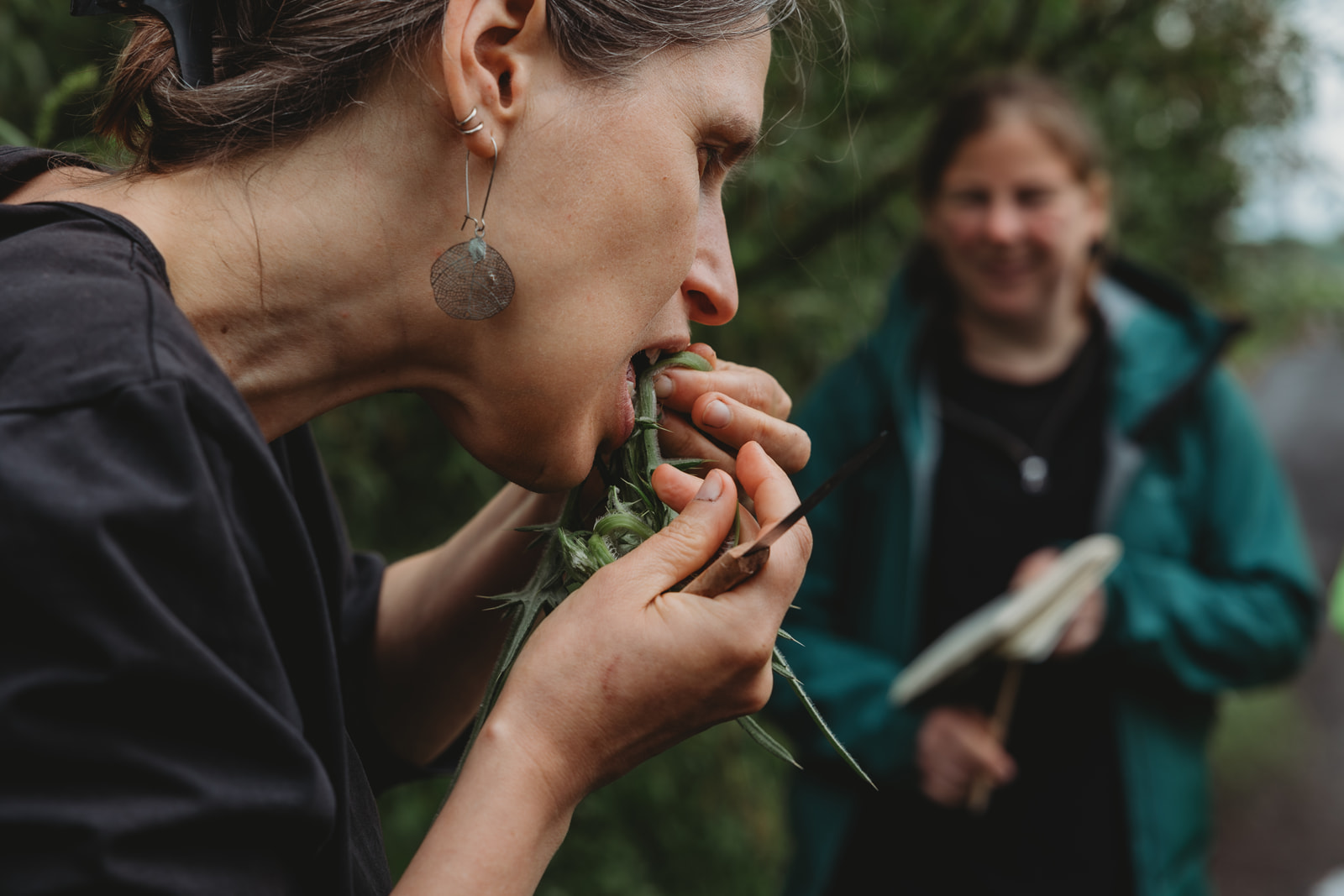
“I recently saw a documentary about the use of spices in the middle ages,” begins Lieve Galle. “It emphasised that the average person did not use spices because they were far too expensive. Spices were for the rich. And I thought, nonsense! There were so many native plants people used as spices. Of course it wasn’t cinnamon or cloves, but the seeds of the common hogweed, for instance. Now they are just seen as weeds instead of the spices that they are. And that is a shame.”
Galle grows and forages dandelions, wild garlic, chickweed, sorrel and dozens of other native “weeds” to use in soup, syrups, teas and all manner of culinary delights. As one of Belgium’s most famous herbalists, she also uses these plants medicinally – a practice that only fell out of favour in Belgium some 80 years ago.
A teacher, speaker and author of books about medicinal herbs, the 47-year-old Galle has made it her life’s work to educate Belgians about an ancient skill they have all but lost. “In Belgium, we call herbalism ‘alternative medicine,’ but it’s actually original medicine,” she says. “It’s the traditional way of practicing medicine.”
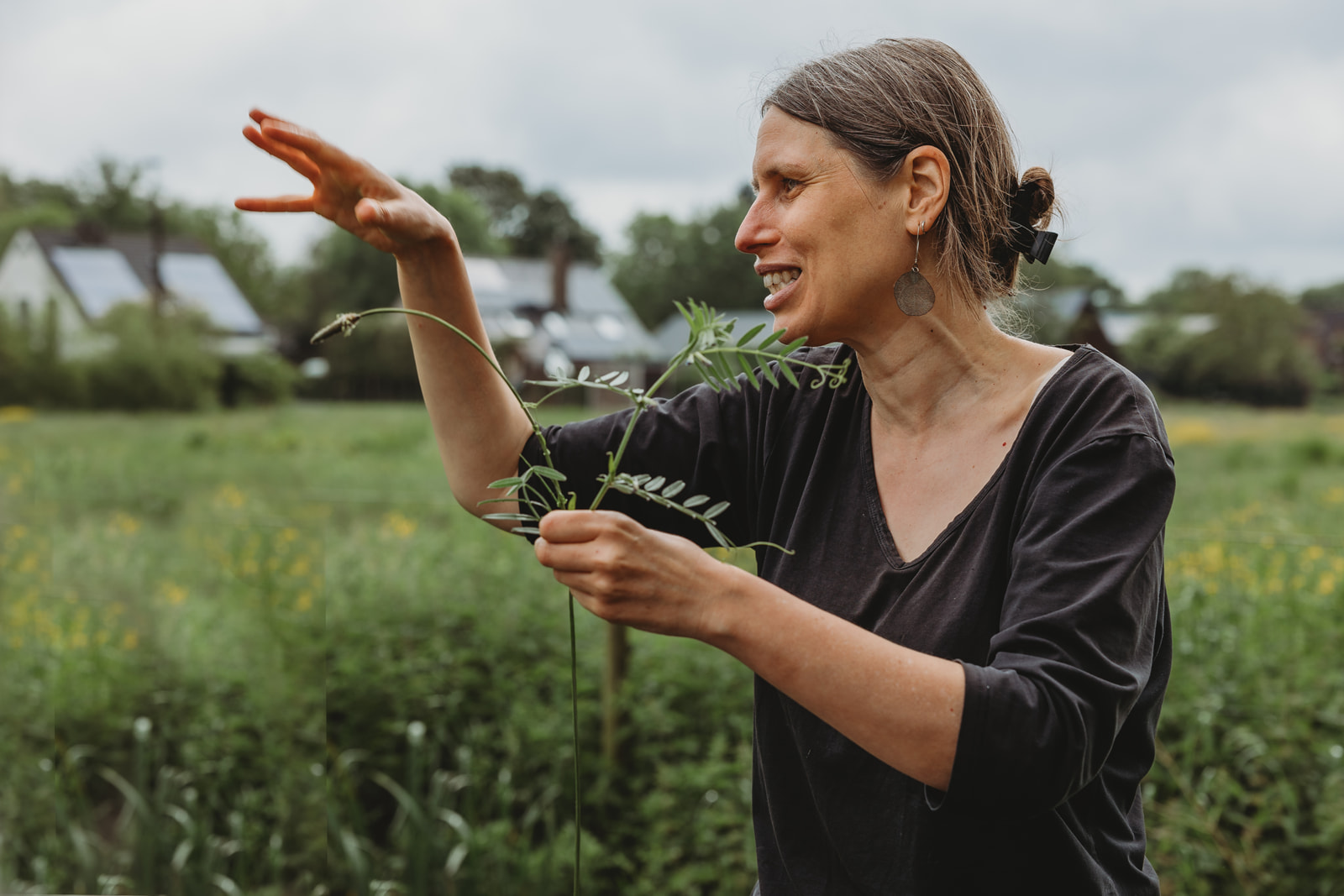
Lieve Galle
On a bright and chilly morning we leave her workshop to stroll along small lanes and channels that criss-cross the Assels nature preserve outside of Ghent. Everywhere we look are wild plants that can be put to good use. “Plants are connected to every aspect of our lives. The oxygen we breathe, the food we eat, the medicines we use. And we’ve just forgotten about it, and we just need, you know, some gentle reminders.”
She talks easily as we walk the well-worn route she’s established for her class on foraging wild plants for culinary and medicinal uses. She gathers the students together here once a month for 10 months. “The appearance of some plants changes a lot throughout the year, so it’s important to be able to identify them in every season,” she explains. “Also, we use different parts; like in the winter, we use the dandelion’s leaves, and in the spring their flowers. In the autumn, we’ll be using the roots.”
Use them for what? To toss into food and to make infusions and tinctures to use as herbal medicine. Sound complicated? An infusion is just a herbal tea, and a tincture is made with a glass jar and a healthy dose of 40-proof vodka. Once you learn it, it’s easy to do.
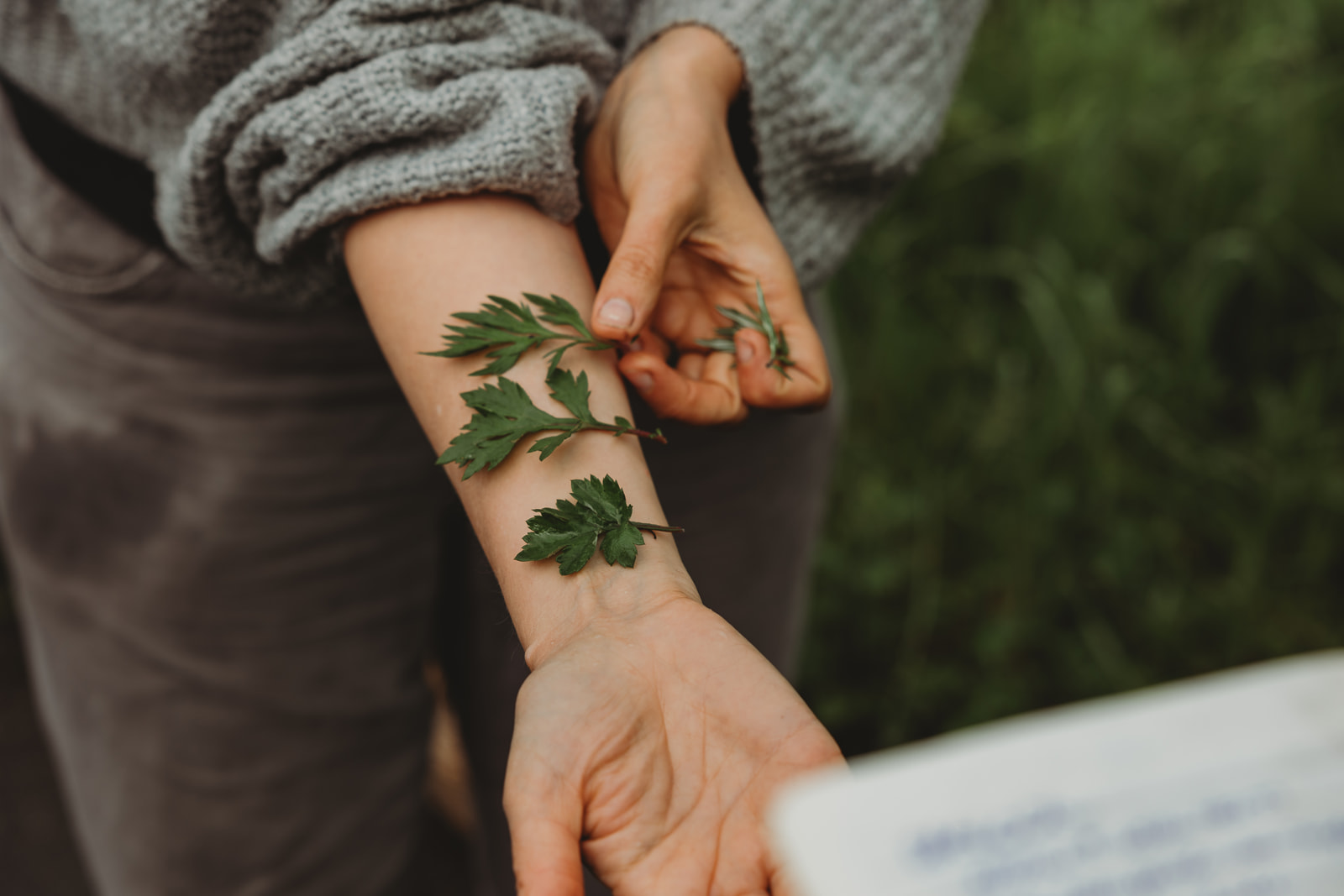
We stop in front of a batch of cleavers. “This one is easy to recognise, it cleaves,” she says as she tosses it onto her sweater where it promptly sticks. “You can’t confuse it with anything else! It works on the lymph system, so if you have swollen ankles or legs, it’s great to use.”
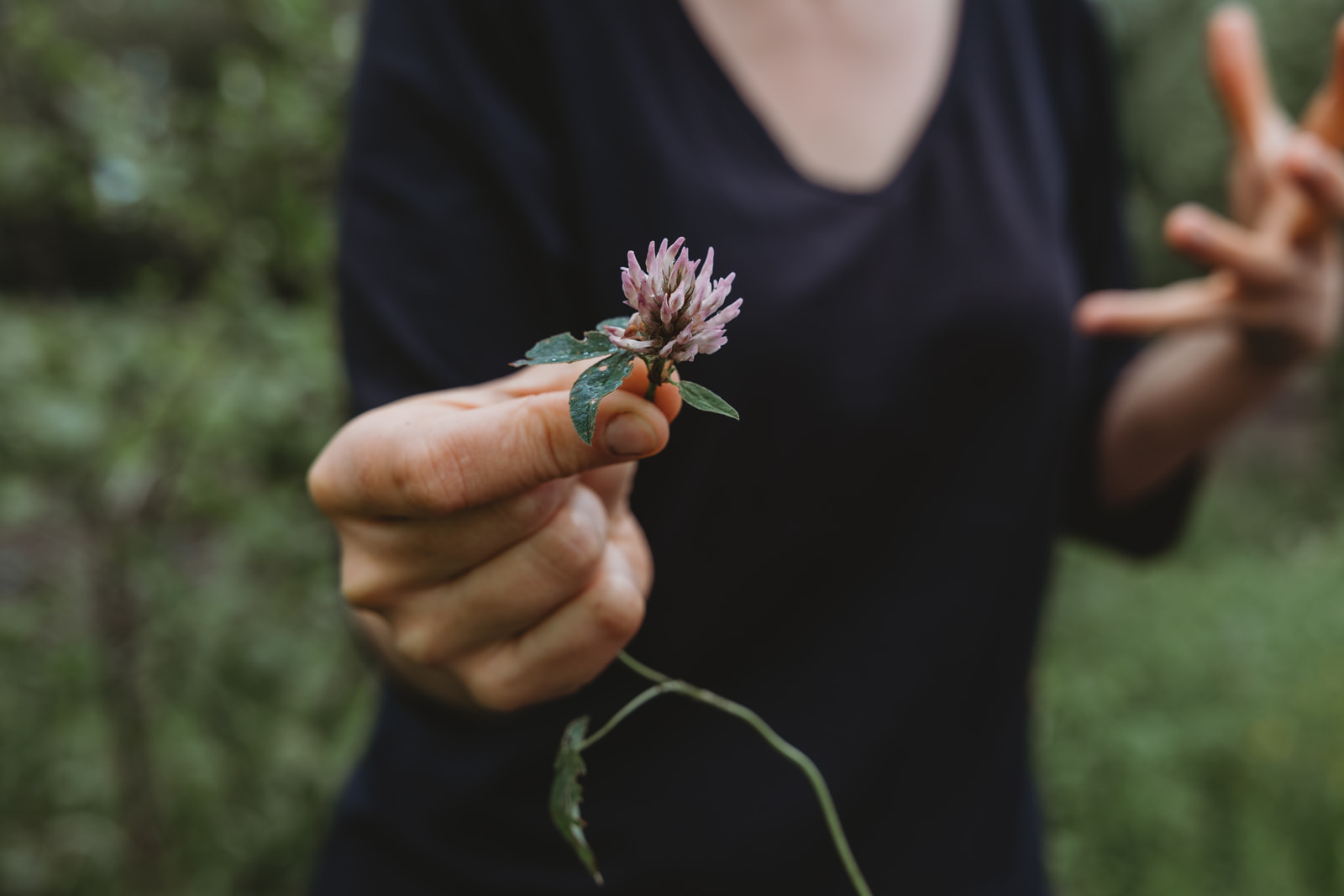
Further on, she points out a plant most of us know – stinging nettle. But it doesn’t sting Galle. “I’ve become immune because I pick it so much,” she says, smiling. “If you have hay fever, it’s a perfect tea. Calcium, magnesium. People often say that their allergies get worse when they are stressed out. That’s because our bodies use magnesium and B vitamins to fight stress. We can get these nutrients from nettle.”
Along with pearls of wisdom, she drops snacks: Chocolate containing creeping ivy, Japanese knotweed stems filled with hummus, juice made with apples, dandelions and lemon. Everything is not just good, it’s amazingly good. I peer into the Tupperware hoping for more.
She picks the leaf of a ribwort plantain and crushes it against her palm. Rub the resulting sap on a cut, bee sting, mosquito bite (or the prick left behind by a stinging nettle), and the pain or itch will disappear – almost immediately. She cracks a bit of branch from a white willow tree and peels off the bark. This is used to make a tincture that acts as a powerful painkiller – perfect against headaches.
It is the willow that offers us a striking example of the difference between herbal medicine and pharmaceuticals. Willows contain a powerful concentration of salicin, which in our bodies metabolises into salicylic acid. The synthetic derivative of salicylic acid is acetylsalicylic acid, otherwise known as aspirin. “Aspirin as a pain killer has a lot of side effects, including thinning the blood,” explains Galle. “But if you use willow bark, you get all the benefits of the pain relief without the blood thinner. That’s because the bark has a number of other compounds that neutralise the blood thinning effect.”
Pharmaceuticals developed from the use of medicinal plants – a healing practice that goes back tens of thousands of years. But it concentrated (and still does) on the one specific compound it was looking for, whether to kill pain, to manage heart failure (glycosides) or to treat leukaemia (alkaloids). “The whole product works much better,” says Galle. “It’s kind of the difference between the whole grain and the refined version.”
Which is not to say that Galle is suggesting we cure our cancer with the Madagascar periwinkle. “People think herbalists want to cure everything with a plant. That is not remotely true,” she assures. “You will never hear me say that someone with Type 1 diabetes doesn’t need insulin. If you have cancer, please go to the doctor. Herbalists are not against pharmaceuticals. What we do see, particularly in Belgium, is that the attitude towards herbs is very sceptical.”
My visit with Galle is on World Wildlife Day, a United Nations’ initiative to raise awareness of wild fauna and flora. The theme this year is Medicinal and Aromatic Plants. Galle couldn’t be more pleased with the recognition, especially as it comes on the heels of the World Health Organization’s designation of its first Collaborating Centre for Traditional, Integrative and Preventive Medicine, part of its Traditional Medicine Strategy 2025-2034.
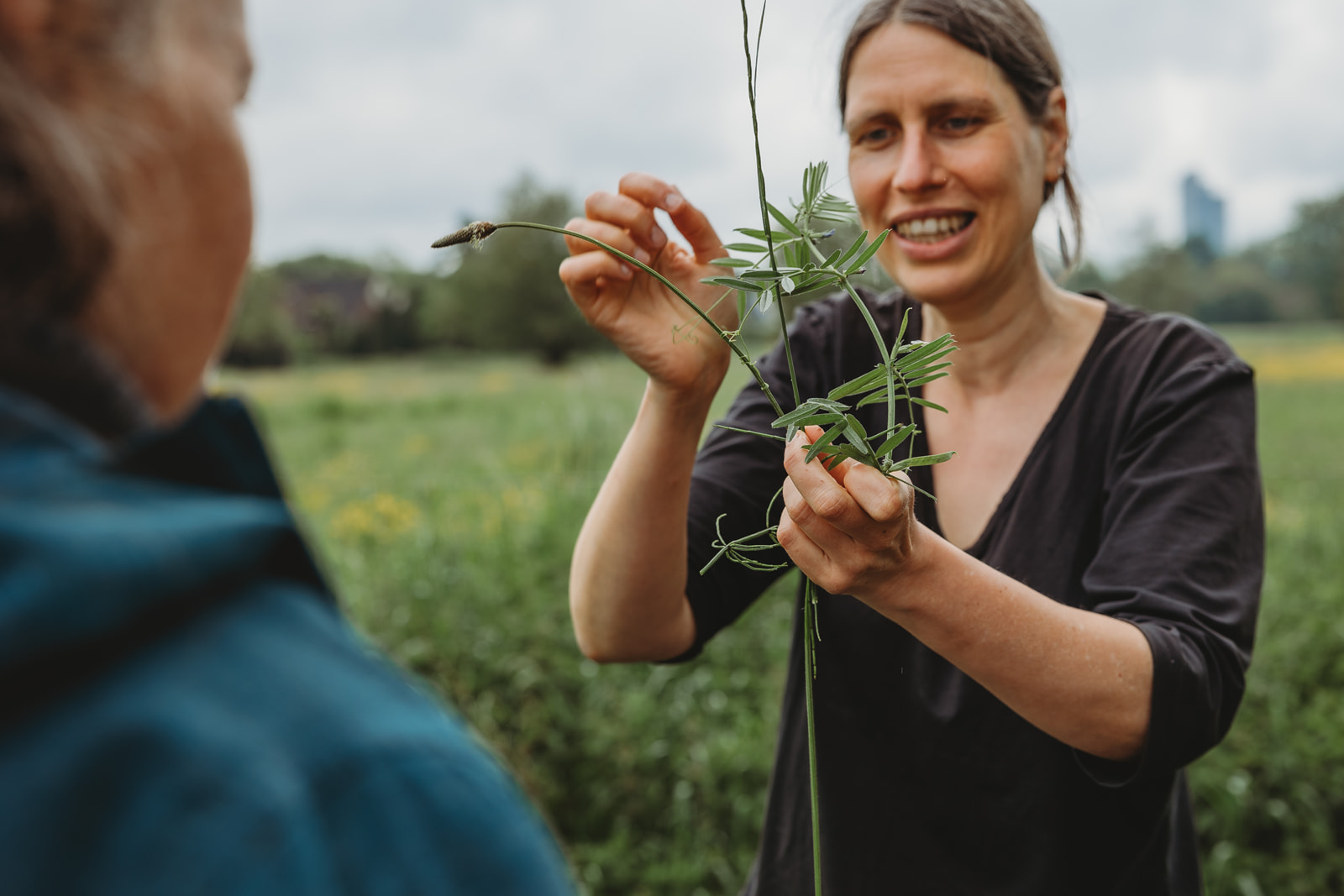
Lieve Galle
When WHO announced its strategy “it was mind-blowing,” says Galle. “It doesn’t get bigger than WHO, and to hear them say that herbal medicine is medicine was a mind shift. It helps so much with credibility.”
WHO’s Collaborating Centre is in Berlin – no surprise as Germany has one of the most progressive policies when it comes to herbal medicine. It is used in Germany hospitals, and herbalists diagnose and treat patients. “Poland also supports cancer patients with medicinal herbs. In the Netherlands, GP know a bit about herbs, and I taught a class there with caretakers in a home for disabled children.
In the Balkan countries, the traditions are still being honoured. In mountainous countries like Austria and Switzerland where small communities are still somewhat isolated, you see that the herbal knowledge is still very alive. These are really beautiful scenarios, but in Belgium, this is unthinkable. When it comes to common knowledge and use of medicinal herbs, we’re one of the worst in Europe.”
It hasn’t always been that way. Like everywhere else, Belgium’s pharmacists sold herbal tinctures and teas until a shift in manufacturing practices in the 19th century put pharmaceuticals front and centre. Herbalists still practiced in their own shops apart from pharmacies up until about World War II. But they dwindled away. While herbalists can write books and teach classes, consulting patients is illegal in Belgium.
“This is one of the things that fills me with sadness,” says Galle, stoic for the first time in our visit. “I have been in countries that pass this down from generation to generation. In two generations in Belgium, we have wiped out our traditional herbal knowledge. I sometimes feel like I’m in a grieving process for something that my great grandparents knew but is now just gone forever.”
Still, every new student gives her hope, and not just the ones she meets in person. She reaches far more via her books and podcasts – also in English. While her classes are in Dutch, she’s happy to teach one in English if there are 10 participants. “I think of myself as a humble interpreter between people and plants. I would love to make myself redundant because that would mean people knew the plants and didn’t need me.”
Four key herbs for every medicine cabinet
There are an incredible abundance of native plants that can be grown or foraged and used medicinally. Here are four that Galle would never go without.
Willow bark: An excellent painkiller, especially as a tincture.
Plantain leaves: As a salve or a tincture, or crush it fresh and use it immediately on cuts, rashes, mosquito bites – anything that itches or stings. Galle puts her plantain tincture in a spray bottle, which can also be used to ease a throat ache.
Dandelion root: An excellent digestive and good for gallbladder and liver problems. It also reduces the number and severity of hot flashes.
Chamomile: This good, old-fashioned herb really does deliver. Use a strong tea or tincture against insomnia and hay fever, as an anti-inflammatory and digestive, and for rheumatic pain and menstrual cramps.
Where do I start?
For those wanting to start, Galle advises to begin with what you already know. “Maybe it’s just dandelion and nettle. That’s fine. Add nettle to minestrone soup. Put dandelion flowers in your pancakes and the leaves in your hummus.”
Then move on to getting a couple of good books – one on plant identification and one on using foraged plants for food or medicine. Lieve Galle’s In het Wild Geplukt (Foraged in the Wild) – an English version is on the way – is one, but there are a wealth of options.
Finding native plants is not difficult – they grow next to waterways, in forests, in fields and in your garden. They grow between cracks in the sidewalk and out of drainpipes. And here’s some good news: Studies show that fine particulates wash off, so urban foraging is absolutely OK.
