
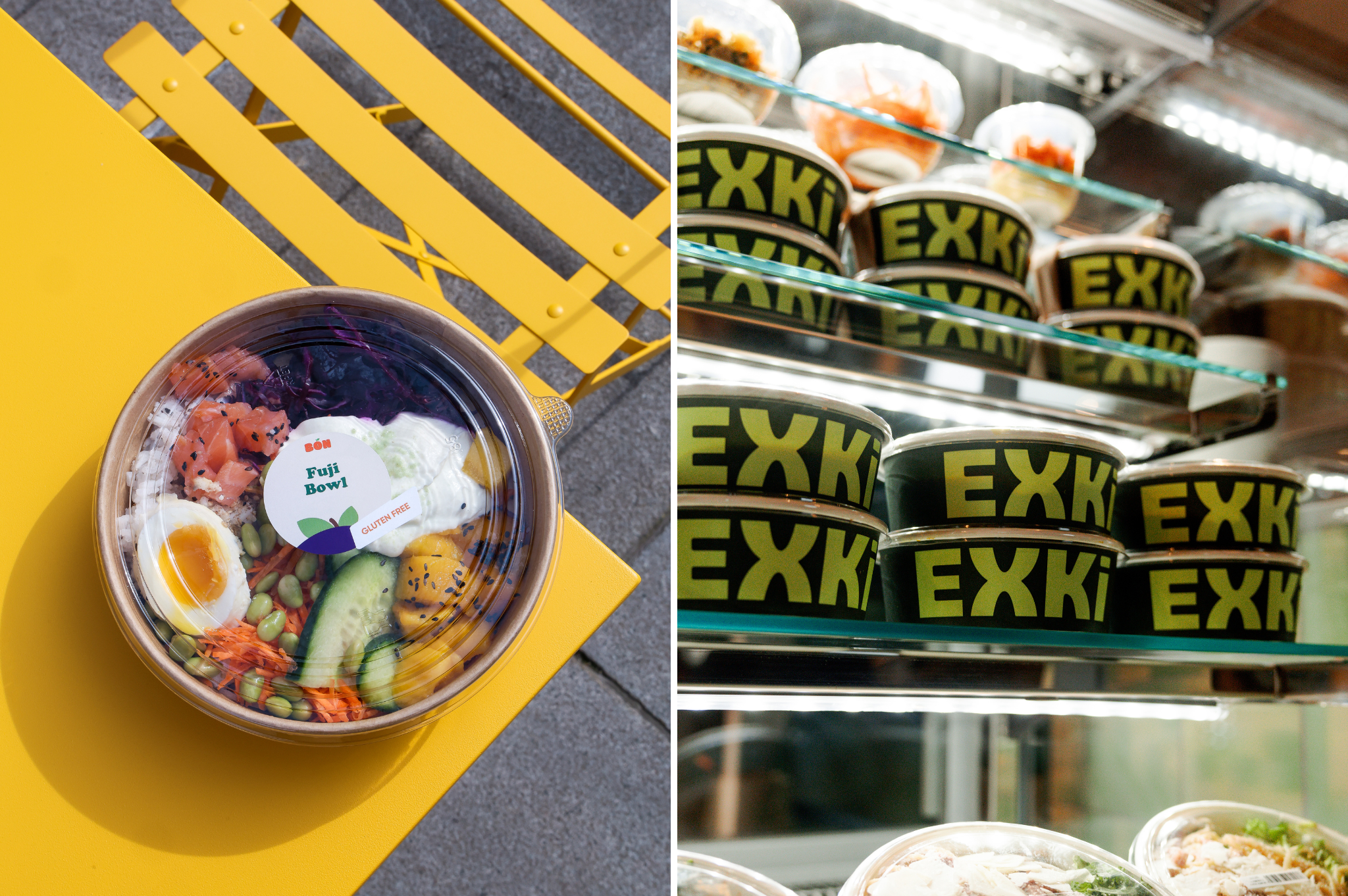
The changing tastes in Brussels are impossible to miss. Almost every week seems to bring news of another long-established restaurant closing its doors, citing everything from the drop in tourism after the 2016 terrorist attacks to the Covid lockdowns and, more recently, the impact of the capital's mobility policies.
Yet at the same time, new food concepts appear to be springing up on every corner, from exotic street-food counters to laptop-friendly cafés serving matcha lattes and grain bowls.
So what is happening?
The answer lies partly in the changing nature of Brussels itself. Services – in practice, mostly office jobs – account for more than 90% of the city's economic activity. Roughly half of the capital's white-collar workforce commutes in from elsewhere, according to Brussels Environment. Together, they create a huge and steady demand for food prepared outside the home.
At the same time, another trend is reshaping that demand: sustainability. Consumers are increasingly seeking food that is not only convenient but also healthier and more environmentally responsible. According to a recent study conducted for ProVeg with the support of French food group Bel, owner of the Boursin brand, more Belgians – particularly in larger cities – are reducing their meat consumption. Environmental concerns are the main driver, though health considerations also play an important role.
Out-of-home, but homemade
The rise of delivery platforms has made it easier than ever for restaurants to reach customers directly. But the real revolution goes much deeper. Across much of the Western world, especially in cities, consumers are moving away from shopping for ingredients and cooking from scratch. Instead, they increasingly rely on meal-box services such as Foodbag and Efarmz, restaurant takeaways, ready-made meals and grab-and-go options picked up on the way to or from work.
The appeal is obvious: time. "We help people save one or two hours a day on shopping and cooking," says Lieven Vanlommel, founder and chief executive of Foodmaker. "And if you bought the ingredients separately, it would often cost more than purchasing our ready-to-eat meals."
Takeaway sales can account for as much as half the turnover of some outlets. Yet another shift has created an even bigger opportunity for a handful of Belgian brands. Companies such as Le Pain Quotidien, Exki, Foodmaker and Bon occupy a sweet spot between fast food and traditional restaurants – a space variously described as healthy, sustainable, clean or simply better food.
"People are increasingly conscious of what they put into their bodies," says Annick Van Overstraeten, chief executive of Le Pain Quotidien. Looking back to the early 1990s, she describes founder Alain Coumont as "a visionary…ahead of all the trends, he created a new narrative: people wanted healthier, cleaner food."
The success of Le Pain Quotidien, which now operates 220 outlets in 24 countries, suggests he was onto something.
Exki tells a similar story. "We've embraced this trend from the very beginning," says chief executive Xavier Royaux. "We were pioneers in putting more vegetables at the heart of our recipes, and that's what people want today."
Vegetables are also central to the philosophy of Foodmaker. Vanlommel opened his first salad and juice bar three decades ago and generated €4 million in turnover within a year.
Frédéric Duqué, chief executive of Bon, began with the juice-bar chain Guapa before launching his own healthy dining concept. "Customers increasingly want food that is as minimally processed as possible," he says. "That doesn't necessarily mean organic, but there is definitely growing demand for sustainability and locally sourced ingredients."
All four brands have enthusiastically embraced the idea of what might be called homemade food away from home.
Of course, they are not the only players in the market. Chains such as Pulp, Panos, JeanBon and a growing number of poke-bowl, sandwich and coffee concepts also compete for the same office workers, commuters and health-conscious consumers. Some remain primarily local operators, while others are better known for bakery products or specific niches rather than a broader philosophy of healthy convenience food. This feature focuses on four brands that, in different ways, helped define and export a distinctly Belgian approach to fast-casual dining, combining convenience, quality and sustainability long before those ideas became mainstream.
Le Pain Quotidien: The pioneer
The philosophy of Le Pain Quotidien is apparent the moment you step inside one of its cafés. Designed as a "home away from home", the spaces feel warm and welcoming, even at their busiest. Customers can linger over breakfast, lunch, afternoon tea or a simple coffee, while healthy, wholesome food remains at the heart of the experience.
That commitment has only deepened over time. Today, the chain aligns its menu with the principles of the Planetary Health Diet developed by the EAT Foundation, which prioritises vegetables, whole grains, fruit, nuts and pulses over meat and dairy. A dedicated nutritionist helps shape the offer.
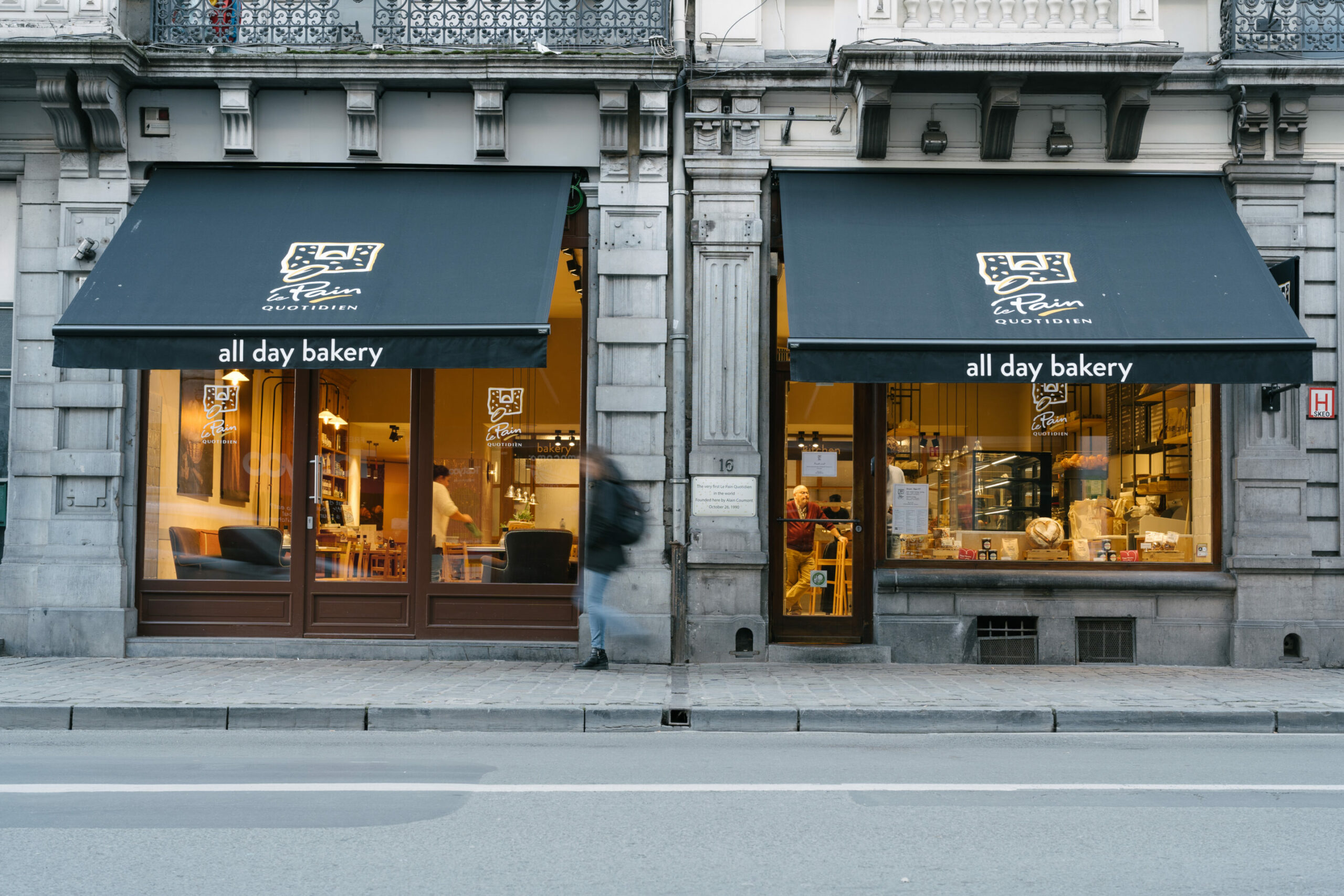
The store in Rue Dansaert
The story began in 1990, when Belgian chef Alain Coumont opened a bakery on Rue Dansaert in central Brussels. At the time, good sourdough bread was difficult to find in the capital. Alongside the bakery counter, Coumont placed a large communal table in a simple wooden-floored room, inviting strangers to share homemade dishes.
The idea struck a chord. Within months, the concept had expanded across Belgium. Seven years later, Le Pain Quotidien arrived on Madison Avenue in New York, marking the beginning of its international journey.
The company has changed since then. Ownership has passed on, although Coumont remains involved as the brand's "concept guardian". Menus are now centrally coordinated, with local operators free to adapt around 20% of their offer to reflect local tastes and traditions. Yet the communal table – the symbol of shared dining that helped define the brand from the beginning – remains a fixture in every restaurant.
The biggest evolution has been the growing importance of food relative to bakery products. While bread and pastries still account for more than a third of turnover, prepared meals now play a much larger role. Eating in remains central to the brand, but takeaway and travel retail are becoming increasingly important. Airport and railway station locations account for around 14% of sales, while Click & Collect and delivery services contribute a further 10% to 12%.
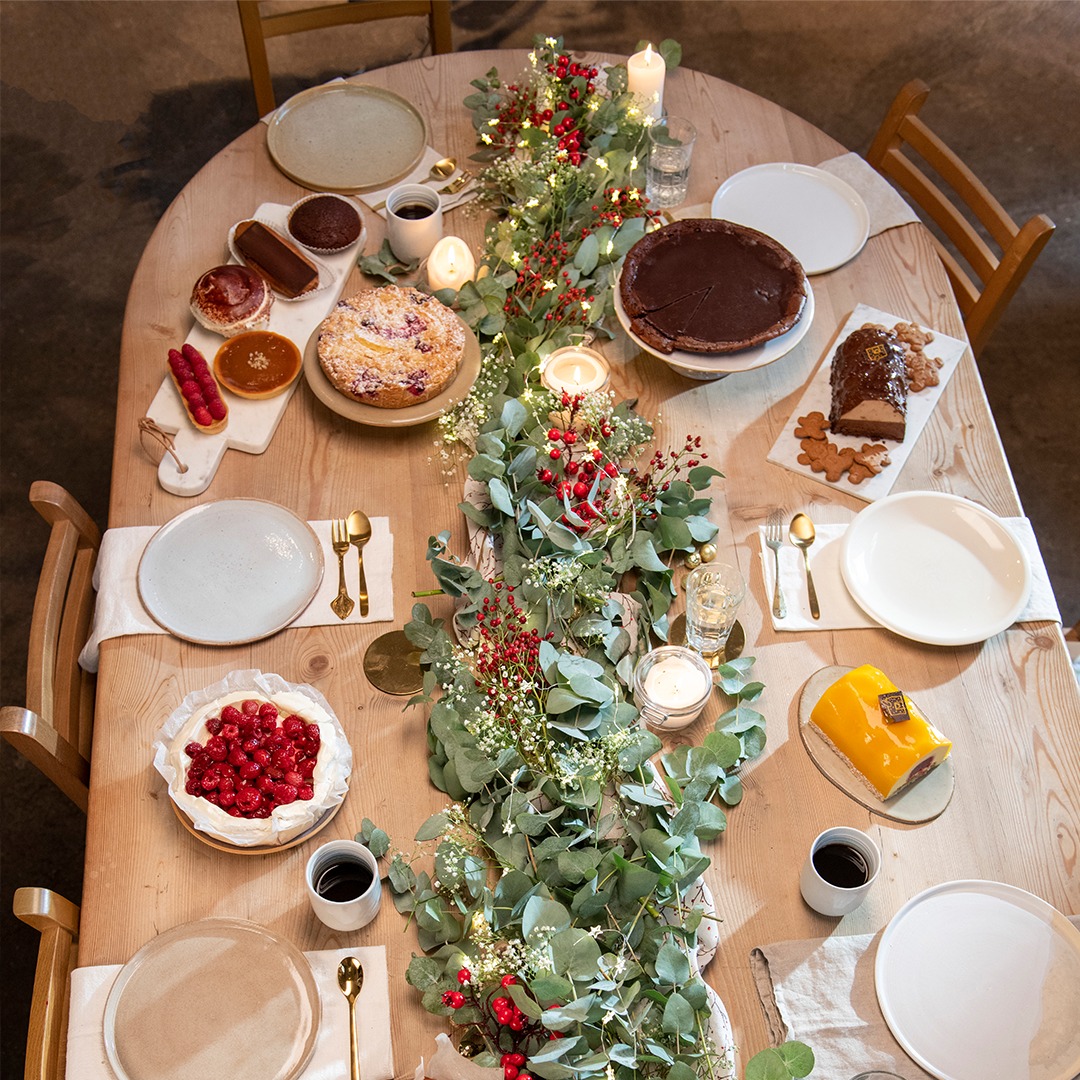
Le Pain Quotidien table
Expansion continues. In May, the company opened a new outlet in Kinshasa, DRC. International growth is driven almost entirely through franchising, while company-owned sites remain more common in Belgium.
Like many hospitality businesses, Le Pain Quotidien has faced a succession of challenges, from the Covid pandemic and the war in Ukraine to rising costs and increased competition from newer food concepts.
Yet chief executive Annick Van Overstraeten remains optimistic. "Markets such as Mexico, Argentina, Brazil and Kazakhstan are performing very well," she says.
Her guiding principle is simple: "Stay true to yourself and be consistent."
Despite its premium image, she argues that Le Pain Quotidien remains accessible. Breakfast starts at around €10, while a full meal is about €14.
"That's an affordable price for the quality we offer," she says.
Foodmaker: Hungry for much more
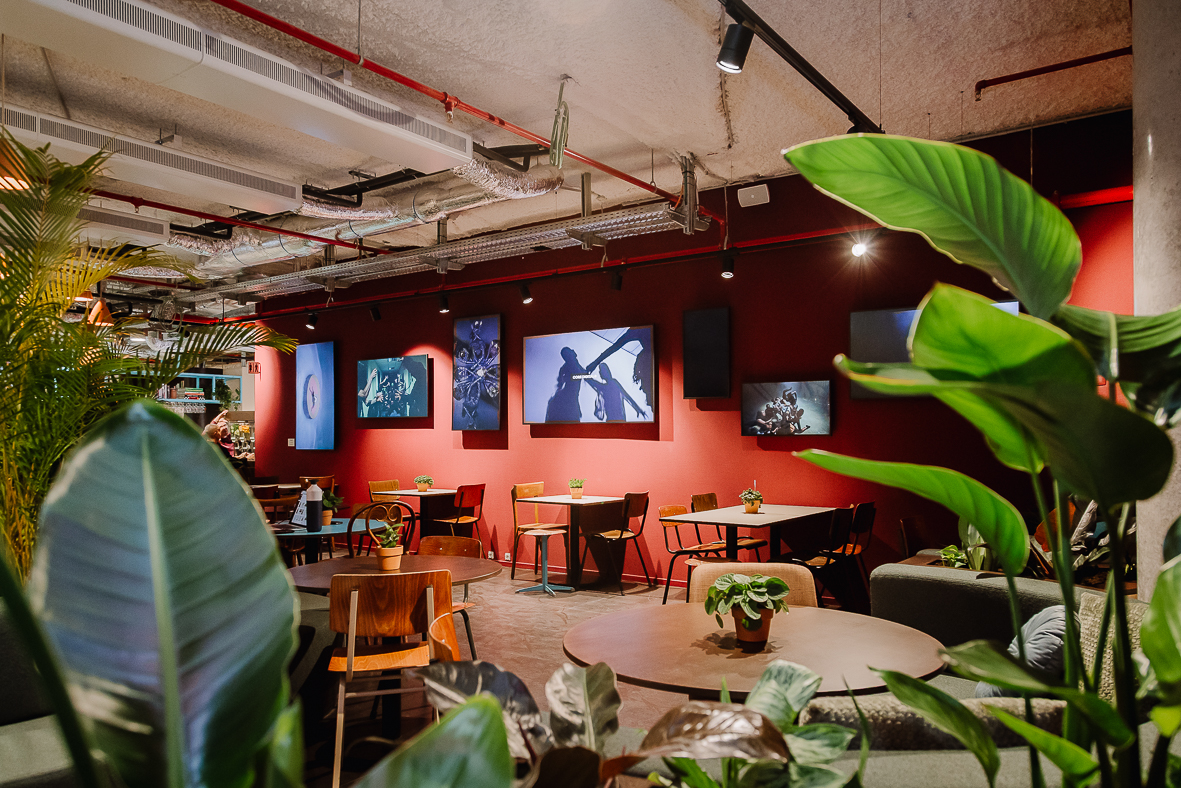
At Foodmaker's Quatuor café, nestled inside the Silversquare North co-working complex in Brussels, healthy eating and office life merge almost seamlessly.
From early-morning coffee drinkers to lunchtime diners and after-work visitors, the café functions as an extension of the workplace. Some customers settle in for meetings; others stop by for a salad from the Farm Buffet, pick up dinner for later, or simply grab a coffee before heading upstairs.
The atmosphere is relaxed and informal, but behind the scenes sits one of the most ambitious food businesses in Europe.
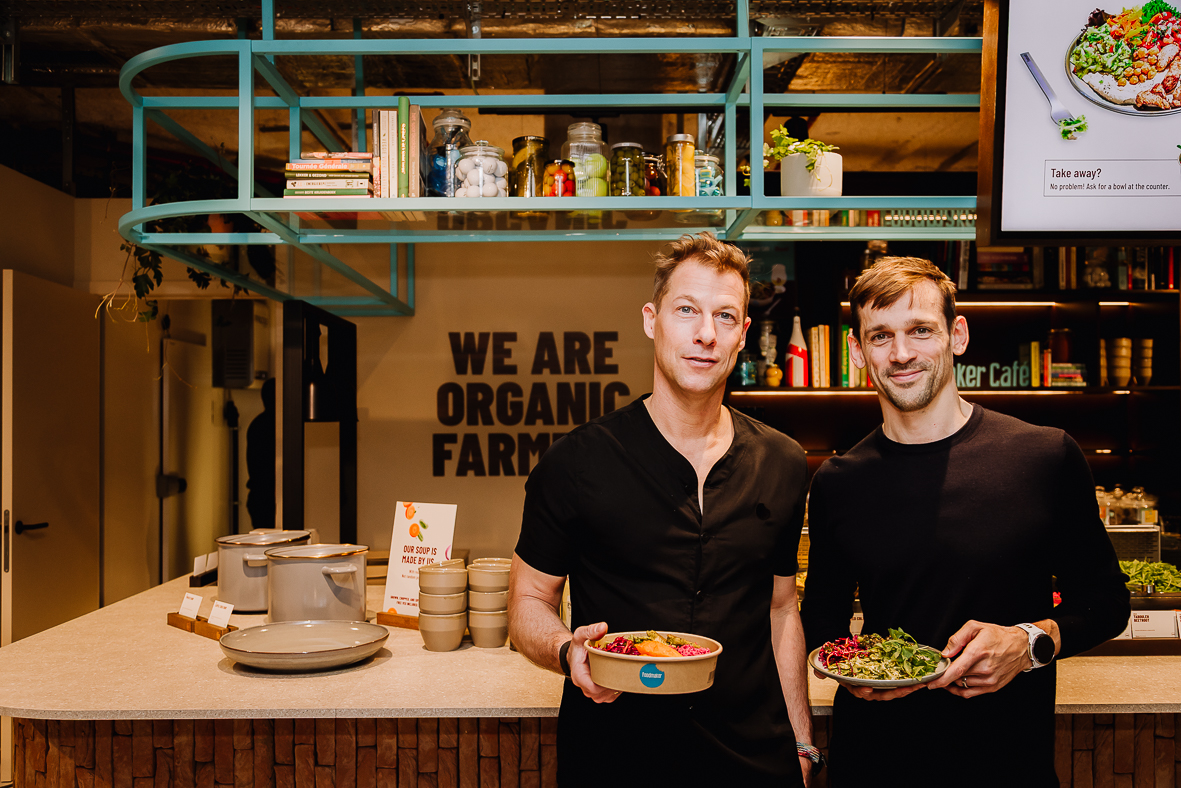
Foodmaker Cafe
After two years of negotiations, founder Lieven Vanlommel even secured a partnership with Duvel-Moortgat, making Quatuor the only café in Belgium where Duvel is available on draught. It neatly encapsulates the company's self-confident slogan: "the healthiest café in the world, with the best beer."
Behind the convivial setting lies an industrial-scale operation. Foodmaker's 20,000-square-metre production hub in Westerlo produces around 130,000 fresh meals every day and has the capacity to nearly double that output. More than 200 products are supplied to restaurants in Belgium, the Netherlands and France.
What makes the model unusual is its emphasis on vertical integration. Many ingredients come directly from Foodmaker's own agricultural operations in Flanders. Even the coffee is sourced from a plantation owned by the company in Brazil. Other ingredients are purchased from local suppliers.
"This short supply chain eliminates intermediaries, reduces food waste and guarantees quality for the consumer," Vanlommel says.
The company's reach extends far beyond its cafés. Foodmaker products are sold through Delhaize in Belgium, Monoprix and Franprix in France, REWE in Germany, Jumbo in the Netherlands and, more recently, BILLA in Austria.
Foodmaker Cafe
Growth remains the overriding objective. "We want to grow as fast as possible," Vanlommel says. "We could open 100 restaurants tomorrow."
The company is backed by investment firm Kharis Capital, alongside long-standing partner Wernsing Food Family. Having grown by 65% last year alone, Foodmaker is positioning itself to capture a share of a healthy-convenience-food market estimated at €90 billion and expanding by around 5% annually.
Vanlommel, who was named Young Entrepreneur of the Year in 2012, has no shortage of ambition.
His goal is straightforward: to make Foodmaker Europe's leading healthy convenience-food company.
Bon: Small is beautiful
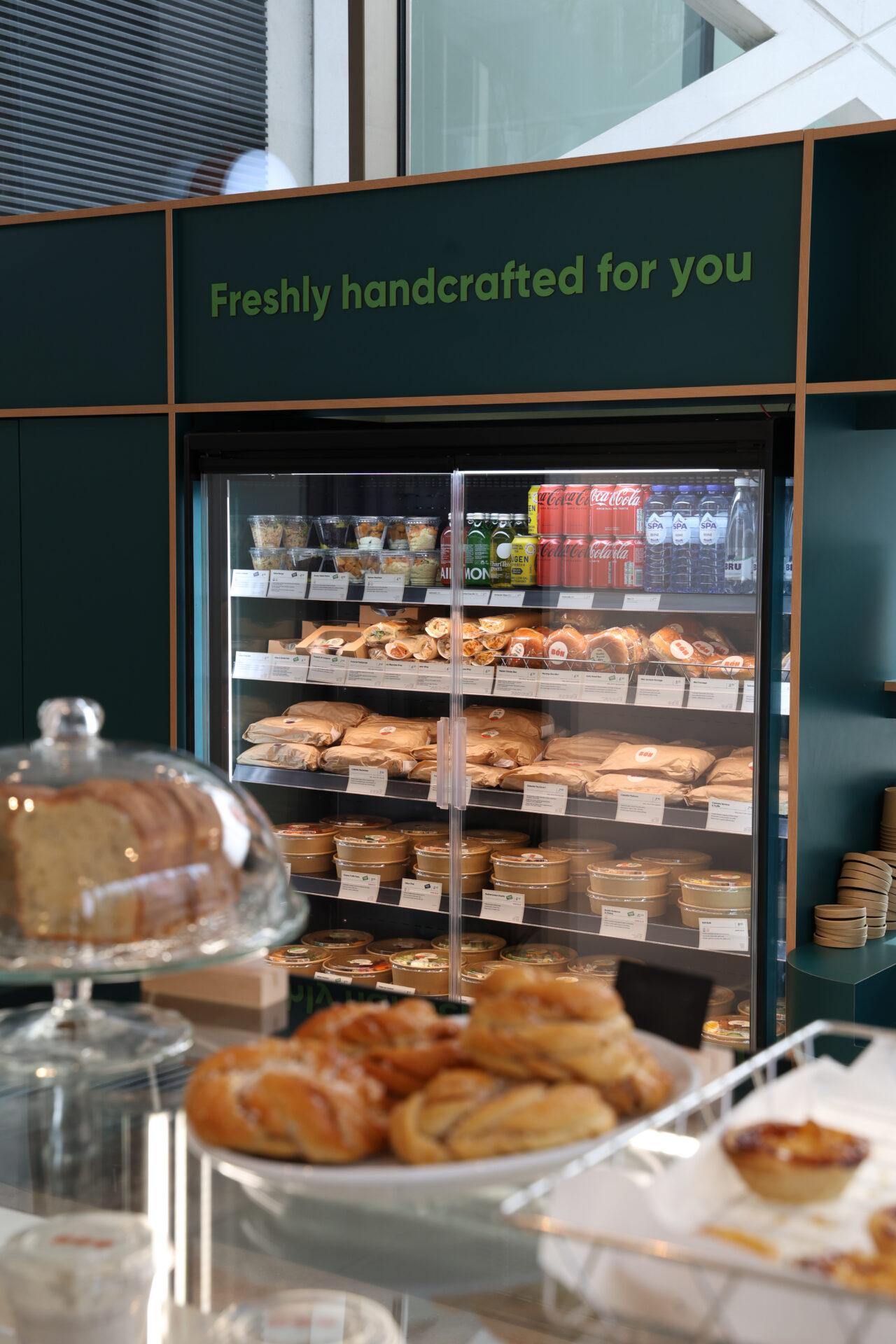
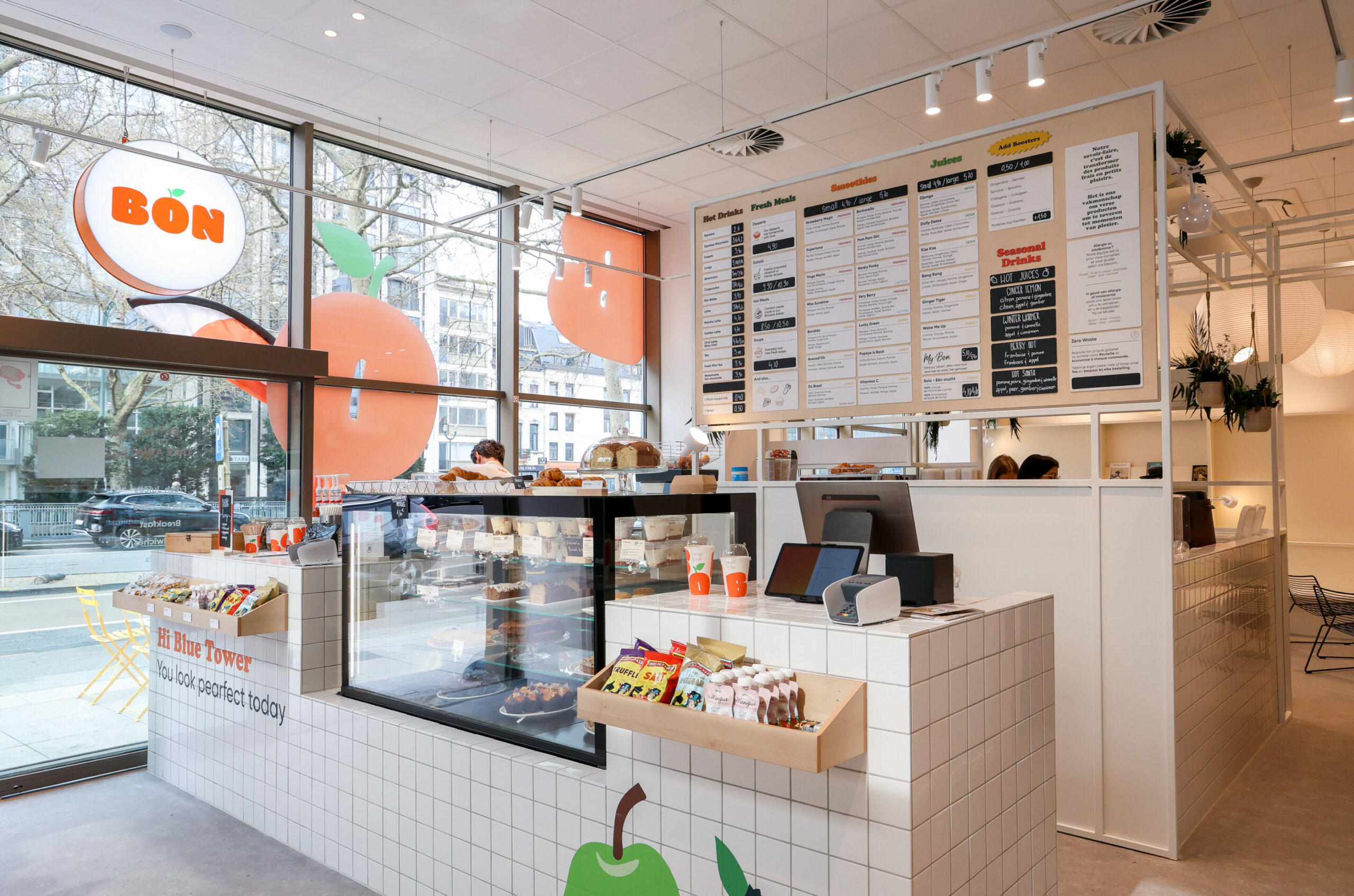
Walk into a Bon café, and the first thing you notice is the welcome. A smiling member of staff greets customers as they enter, while the counters are filled with colourful salads, juices, sandwiches and prepared dishes that look every bit as fresh as they claim to be.
At lunchtime, many customers are in a hurry, grabbing food to take back to the office or on their commute. At quieter times, however, Bon feels more like a neighbourhood café. Fresh juices are served in proper glasses, meals come with metal cutlery and customers are encouraged to stay awhile.
The real attraction, however, is the food itself.
Bon
"Everything is handmade and cooked," says chief executive Frédéric Duqué. "It's not simply assembled like a poke bowl."
The company's 17 outlets, along with its retail partnerships with the Colruyt Group, are supplied from a 1,500-square-metre production kitchen in Woluwe-Saint-Lambert. Convenience is central to the brand's business model, with takeaway accounting for around 70% of sales. Yet Bon has worked hard to ensure that its prepared meals retain the look and feel of home cooking.
"There are still prejudices about pre-packaged food," Duqué says. "We do everything we can to challenge that perception."
Wherever possible, ingredients are locally sourced. That commitment to proximity reflects a broader philosophy. Bon has largely resisted the temptation to chase food fashions or import concepts from abroad.
"We're not an imported concept," Duqué says. "Our food is local, high-quality and accessible. We're not necessarily trying to be trendy. Our focus is on offering good food at a reasonable price."
The chain's expansion strategy is equally pragmatic. New locations are concentrated in city centres, transport hubs, shopping centres and office districts – the environment in which the concept first emerged.
A former banker, Duqué launched Bon in 2019 by acquiring and transforming outlets belonging to Guapa, the juice and smoothie chain he had co-founded four years earlier. Its partnership with the Colruyt Group, which now owns 55% of the company, accelerated growth considerably. The number of outlets more than doubled, while Bon products gained access to Okay supermarkets in urban areas.
 Bon"We had to develop more convenience-food products," Duqué says. "But we retained complete freedom. Keeping our DNA was part of the agreement."
Unlike some of its competitors, Bon has no immediate plans for international expansion.
"It would be pretentious," Duqué says with a smile. "First, we need to consolidate our position in Belgium."
The next goal is more modest, but no less ambitious: around 30 outlets within the next two to three years and the launch of a franchise network from next year. In the longer term, franchised locations could account for as much as 40% of the business.
Exki: The comeback kid?
Exki has long been part of the daily routine for many in Brussels' European quarter. A fair-trade coffee, a vegetarian wrap or a vegan snack from one of its outlets became almost synonymous with working life around the EU institutions.
The company was founded in 2001 near Porte de Namur, at a time when concepts such as organic ingredients, sustainable packaging and plant-forward menus were still relatively niche. Exki's proposition – "nature's kitchen" – combined healthy convenience food with environmental awareness long before such concerns became mainstream.
Exki
The formula proved remarkably successful. Within two decades, the chain had grown to 105 restaurants across Europe. Its only notable setback came in New York, where attempts to establish a foothold ultimately failed.
Then came Covid.
The pandemic exposed vulnerabilities that had been building for some time. Lockdowns devastated footfall, while the rapid adoption of remote working dealt a particularly heavy blow to a business heavily dependent on office workers. Competition intensified as newer, healthier food concepts entered the market.
An experiment involving refrigerated self-service food stations in office buildings failed to gain traction and was eventually abandoned. Despite receiving support from the Walloon and Brussels governments in 2022, Exki came close to collapse by late 2024.
Its fortunes changed the following year. Fresh investment arrived, management was reshuffled, and profitability returned.
Today, Exki is relaunching. Around 70 restaurants remain, roughly half of them in Belgium, and a programme of refurbishment and expansion is underway in both Belgium and France.
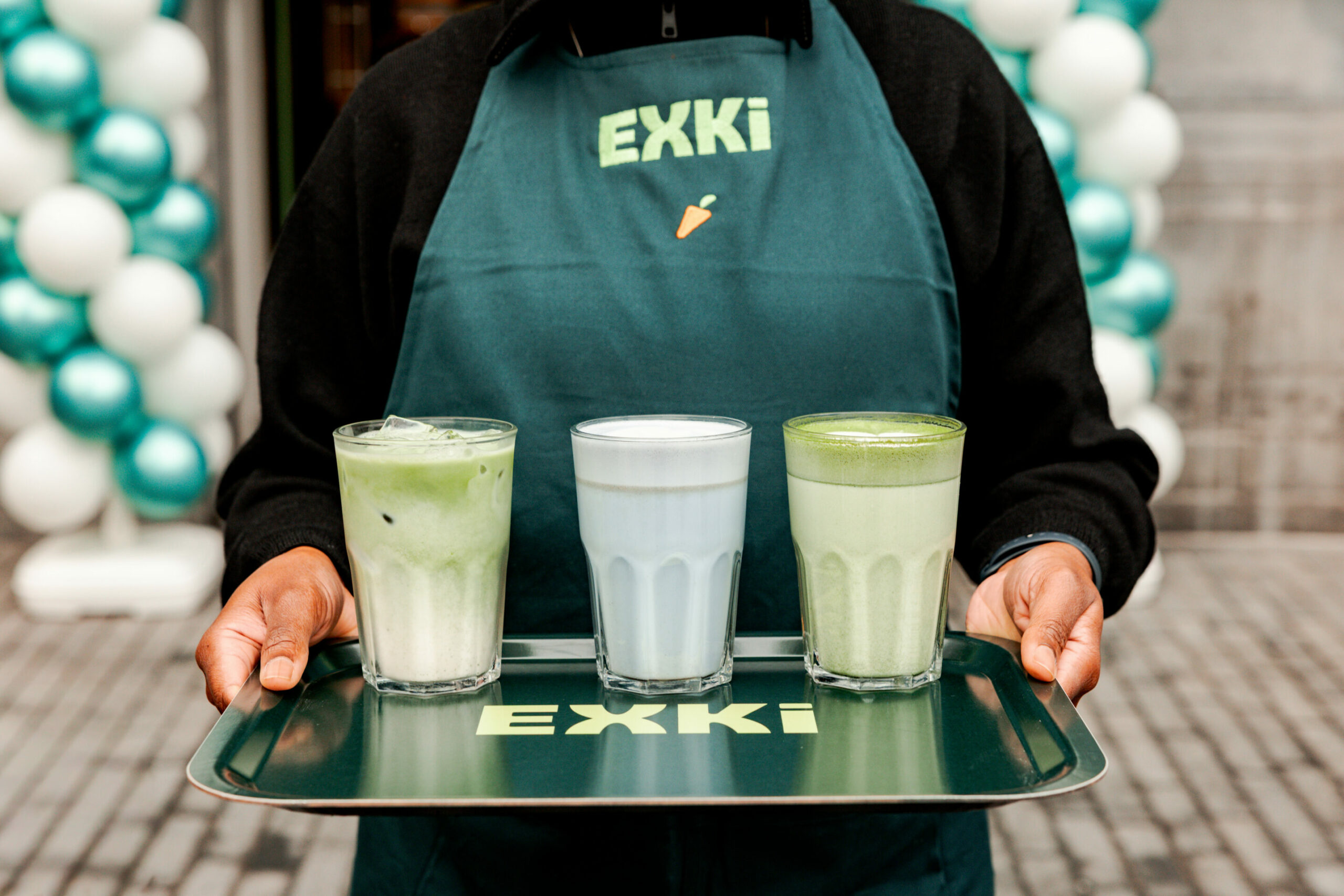
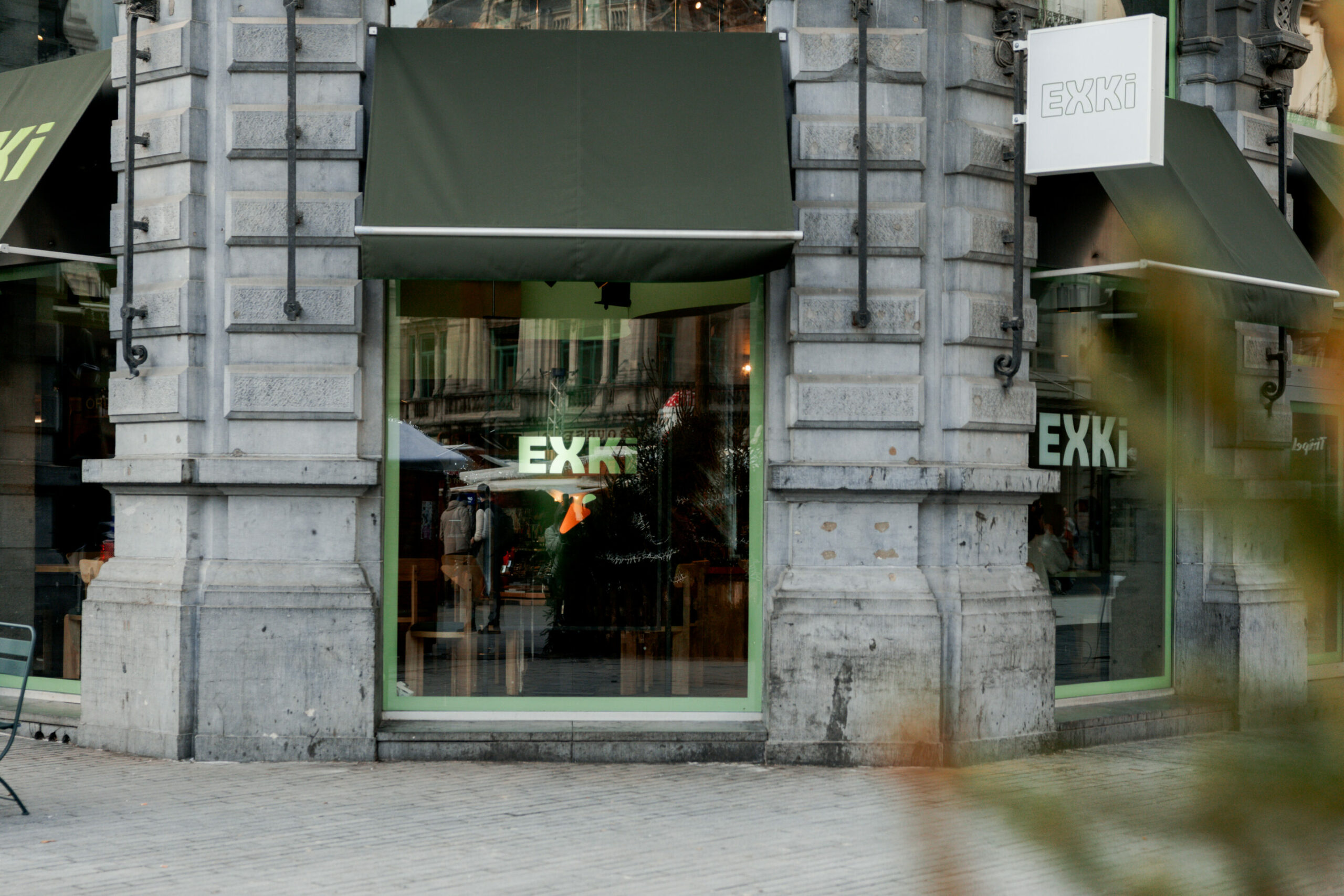
The rebranding is visible immediately. The familiar orange carrot survives, but the typography has been redesigned. The new logo is bolder, more grounded and deliberately confident.
The message, according to management, is simple: Exki is back.
"It's a beautiful brand operating in a very promising market," says chief executive Xavier Royaux.
His strategy focuses relentlessly on the customer experience. New interiors, expanded menus, a broader coffee offer and innovative recipes are all part of the plan. Technology also plays a role, with visual-recognition payment systems being introduced for customers in a hurry, while traditional tills remain available for those who prefer them.
The fundamentals, however, remain unchanged.
Exki
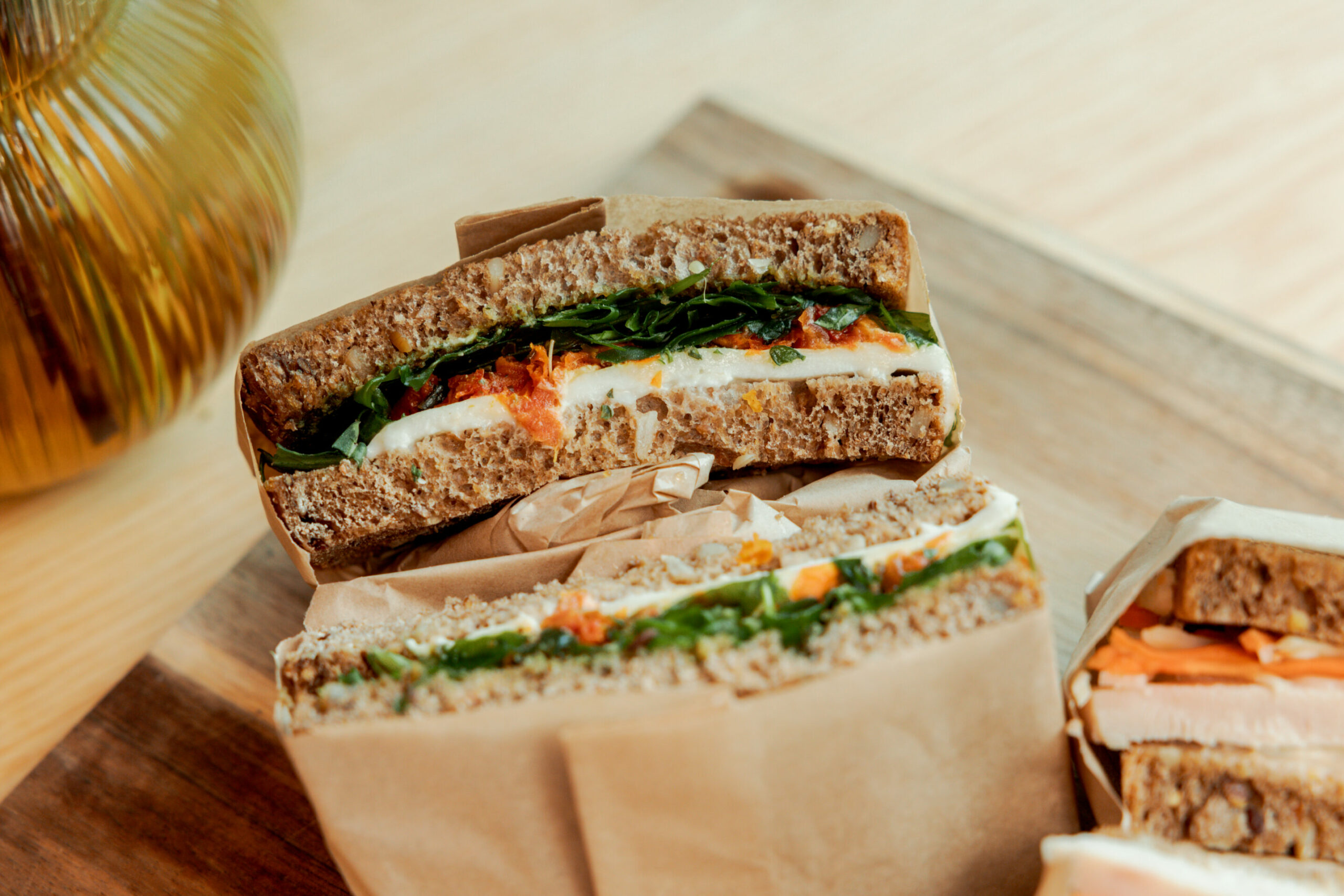
Exki continues to focus on vegetarian and vegan options while adapting its offer to changing lifestyles. Soups, quiches and other dishes designed to be reheated and eaten at home now play a larger role than they once did.
In essence, Royaux says, the company is returning to what made it successful in the first place: "natural fast food, accessible to everyone."
With lunches starting at around €8.90, accessibility remains central to the proposition.
Asked what he most admires about Belgium, the French-born executive answers without hesitation: "Creativity."
A taste of Belgium
The stories of Le Pain Quotidien, Foodmaker, Bon and Exki are all different, yet they share a common thread. Each was conceived, tested and refined in Belgium before peering beyond its borders.
Except Bon, which remains focused on its domestic market, all have successfully exported their concepts abroad while maintaining a strong customer base at home.
What, then, makes these brands distinctly Belgian?
Part of the answer lies in a culture that prizes conviviality, good food and close relationships with customers. There is also a willingness to experiment. Unlike many international chains that later adapted to sustainability trends, these businesses largely built their identities around healthier, more responsible food from the outset.
Belgium's size may also be an advantage. The country's compact market allows entrepreneurs to test new concepts quickly and gather feedback from customers without the scale or complexity faced in larger countries. Strong retail partners such as Colruyt, Delhaize and Carrefour are often willing to support promising local brands, helping them move from niche concepts to national success stories.
Exki
Consumers, meanwhile, have shown themselves unusually receptive to innovation, whether in products, business models or dining formats.
That combination has helped turn Belgium into something of a laboratory for food entrepreneurship – a place where ideas can be tested, refined and in some cases, exported to the world.
Little wonder, then, that four of Europe's most successful, healthy food chains all trace their origins back to a country better known internationally for beer, chocolate and fries.
Together, they offer a reminder that Belgium's culinary influence extends far beyond its traditional specialities – and that some of its most successful exports now come not from the kitchen of the past, but from the changing tastes of the future.
