

From an avant-garde couture piece to a popular – but polarising – fashion statement, tabi shoes underwent a big transformation in recent years. Behind it all is a Belgian designer who shocked the world far more than the tabi ever could.
Tabi shoes, known colloquially as split-toe, ninja or hoof shoes, are a relatively new trend.
In 2023, they were catapulted into popularity by social media algorithms when a TikTok user from New York shared a story of a date stealing her prized $900 shoes from her apartment.
Since then, the tabi has gone from a niche, well-respected fashion item to a fixation for fashion enthusiasts of all sorts, becoming a sought-after status symbol. If you visit a hip neighbourhood in any major European urban area, you will most likely spot at least one pair of tabi shoes.
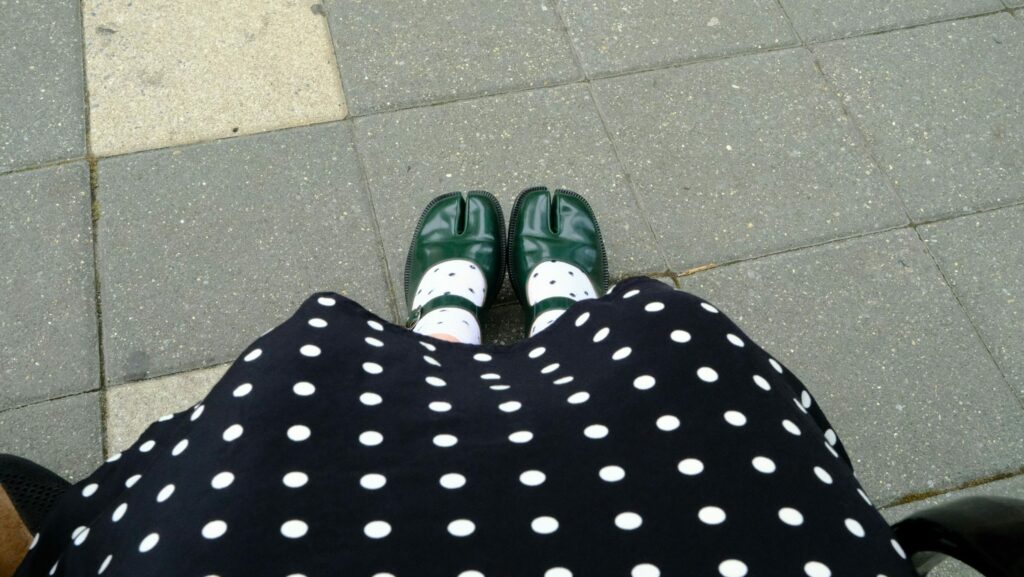
Tabi shoes. Credit: Unsplash
Although its presentation has softened as more people wear the split-toe design, the shoe continues to divide opinions.
Despite any negativity from critics, the history of the tabi proves that its success is not a gimmick. Rather, it is the result of the meticulous work and unfazed creativity of one Belgian man: the elusive mastermind behind the split-toe silhouette, Martin Margiela.
Born in Genk (Limburg province) in 1957, the designer proved to be one of the most influential figures in modern fashion. After graduating from Antwerp's Academy of Fine Arts, the approach Margiela took during his active years was in line with the tradition of Antwerp's renowned avant-garde fashion scene.
He emphasised provocative "anti-fashion" elements, consistently subverting expectations. While this might not sound like much in 2026, imagine the awe of the visitors at his debut 1989 show. The event took place on a derelict children's playground on the outskirts of Paris.
During the show, the designer presented items with ripped sleeves, frayed hems, and experimental silhouettes. On top of it all, the now-iconic tabi shoes left red, blood-like prints on the runway.

This historic image shows first public appearance of Margiela tabi shoes in 1989. The cameraman filming the video apparently zoomed twice when seeing the footwear. Credit: YouTube screenshot
The presentation deeply shocked fashion circles but proved to be a complete game-changer within the industry. Margiela found himself at the forefront of a new fashion era. Yet, he consciously remained underground, denying all face-to-face interviews and press photos.
In fact, his written biographies are scarce, and there are only a handful of images of him online — none of which are in the public domain.
Returning to the tabi shoe, its history lies far outside of Belgium. Margiela was inspired by traditional Japanese footwear originating in the 15th century. Tabi were widely used as split-toe socks worn with sandals. By separating the big toe from the rest of the toes, the design provides space for the strap of outer footwear – a separation that also helps improve grip and stability.
In 1922, two Japanese brothers, founders of the Bridgestone tyre company, produced rubber-soled footwear known as the "jika-tabi" or tabi boot. It soon became the most popular work footwear among Japanese blue-collar workers, who still value it for its superior flexibility and comfort.
It is speculated that Margiela noticed the prominence of the tabi during his visit to the country in the late 1980s.

Japanese fisherman wearing tabi shoes in 1915. Credit: Wikimedia Commons
Still, while Margiela gave a fresh twist to the original Japanese design, it was highly unlikely that such a quirky high-fashion piece (costing over $1,000 on average) would become such a hit.
A few additional factors boosted its popularity: the rising trend of "ugly shoes" after 2020, the popularisation of Chinese marketplaces like Temu, and the growing interest in fashion on social media. Following a 2020 collaboration with Reebok, endorsements by celebrities like Dua Lipa, and the now-famous 2023 TikTok saga, tabi shoes hit their peak.
Outside of the still-expensive original Margiela tabi, many cheaper options started popping up, especially since the split-toe form is not trademarked. These analogues range from handmade Etsy designs to literal knock-offs from China. Haters began complaining about the tabi becoming too popular, while fans were split on whether this new trend meant democratisation or bastardisation.
Regardless, the tabi by Martin Margiela has redefined the footwear fashion landscape, cementing Belgium's impact on world-class fashion. Despite many complaints, the item has proven to be more resilient than a quickly passing micro trend.
