
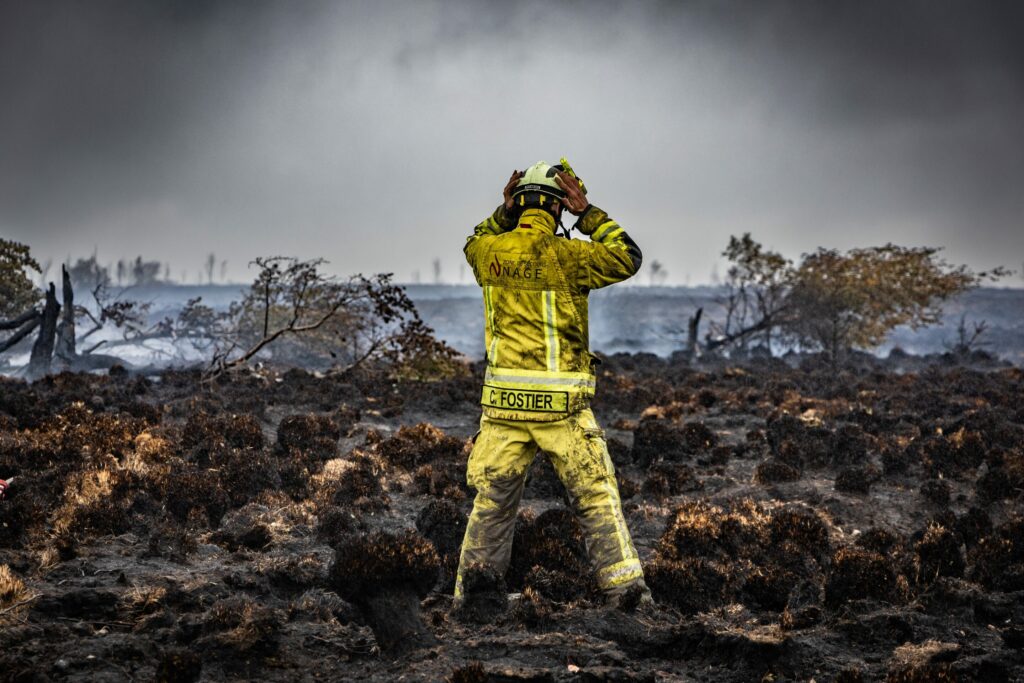
Thousands of hectares in the High Fens nature reserve have gone up in flames in recent weeks, and the fire could continue to smoulder for months. But in such a damp country, how could this have happened?
Out of 5,400 hectares of moorland, more than 3,000 hectares have been consumed by a fire in the large nature reserve located in the province of Liège, in eastern Belgium.
This one fire, which broke out on 14 August, has made 2026 the worst year for forest fires in Belgium in over a century – only the High Fens fire of 1911 was larger (although half of the area lay within what was then Prussia).
"The reason we do not have large-scale wildfires in Belgium is that we only have small patches of nature. The High Fens is one of the only large areas we have," Steven Vermeulen, spokesperson for Belgium's Climate Risk Centre (CERAC), told The Brussels Times.
"Everyone knew this could happen, because something similar already happened before. In 2011, around 1,200 hectares went up in flames there," he said.
Exceptional drought and decades of drainage
Interestingly, the High Fens largely consist of peatland, which is quite marshy and should therefore not catch fire very easily.
The area is a unique ecosystem in Europe, with a special type of landscape: raised bog. This landscape is the result of exceptionally wet conditions. Due to this wetness, dead plants hardly decompose, but have instead accumulated over thousands of years to form peat layers up to eight metres thick in some places.
Usually, the top layer consists of around 90% water and acts like a sponge, but once the peat dries out, it becomes highly flammable.
Over the past few months, the high temperatures – some days nearing 40°C in the area – have caused much of this extra moisture to evaporate from the soil. On top of that, there was hardly a drop of rain: the area recorded the driest July since at least 2000.
What's more, Belgium's mining history also plays a part: from the 18th century, huge numbers of spruce trees were planted in the area for the mines around Liège (spruce timber was used to construct mine shafts). As their roots could not tolerate too much moisture, the area was drained.
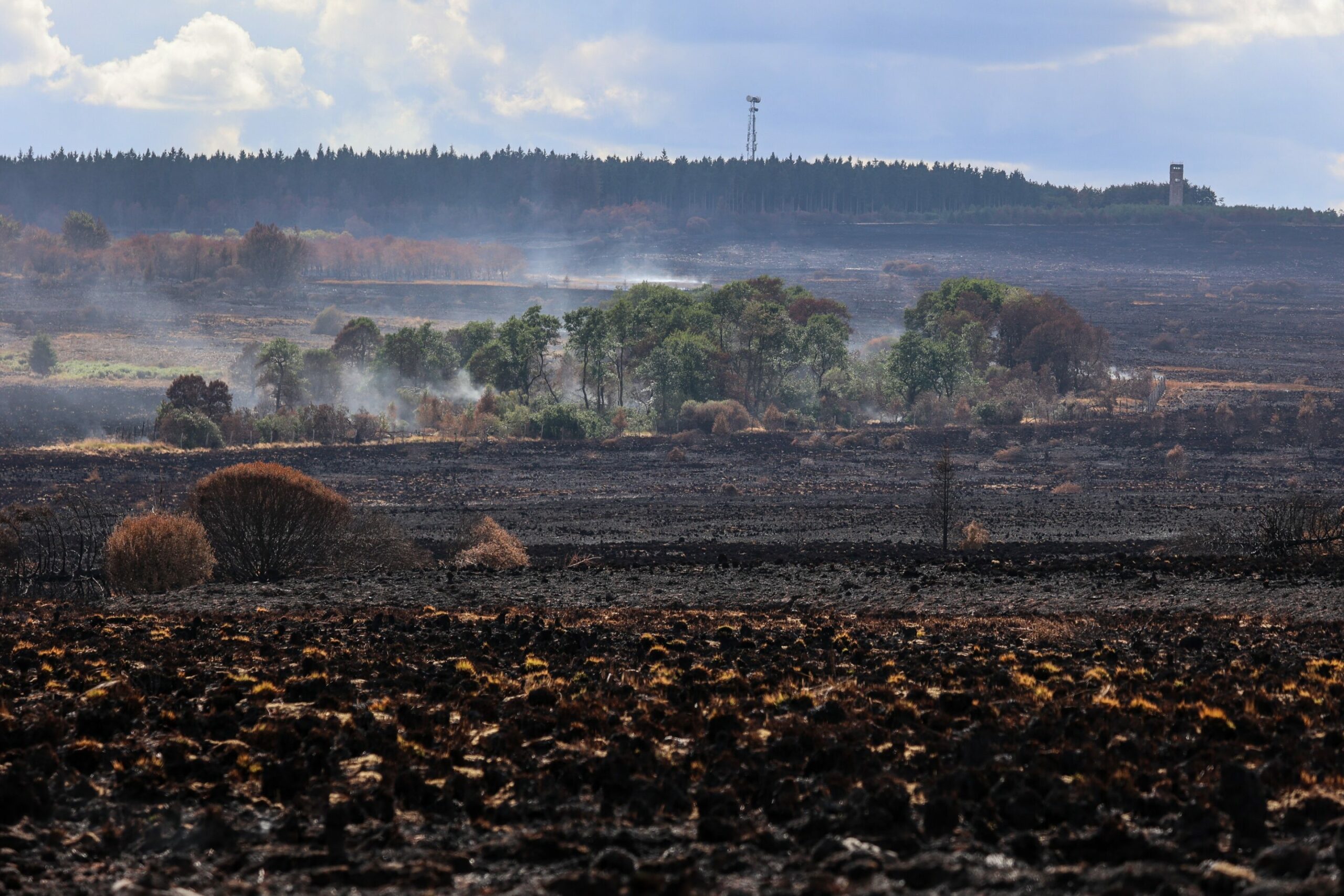
The site of the fires in the Hautes Fagnes (High Fens) nature reserve, on Friday 21 August 2026. Credit: Belga/Julien Warnand
Together, these became perfect conditions for the wildfire, according to Vermeulen.
"We were up against rather unfavourable circumstances as well. We had had that period of drought, and then the wind also played a part, shifting in all directions," he said. "The area is a mix of dried peat and spruce trees, which provide good fuel for that sort of fire."
"But without the climate disruption, the fire would never have grown to such a scale," Vermeulen stressed. "In the majority of cases, wildfires are caused by human activity. But because of the climate, the likelihood of fires reaching such a scale has become bigger."
In a report published early last year, the CERAC had warned that Belgium was not prepared for the increase in the number of forest fires in the coming years.
"At the time, the report said that Belgium was insufficiently prepared. Since then, some initiatives have been taken in both Flanders and Wallonia, but this is not something that can be achieved in a year," Vermeulen said.
'Not waiting around'
On Wednesday, Wallonia's Minister-President Adrien Dolimont (MR) stressed that measures – such as surveillance, maintenance of specific areas, raising public awareness, and the organisation of the emergency services – were in place, but that an assessment of what happened will take place once the fire is completely extinguished.
"We are not waiting for the next climate event to take action. The provincial emergency plan is still in force. We are still in a crisis situation, and the operational teams remain mobilised. The priority is to bring the situation under control, stabilise it and deal with the consequences," Dolimont said.
The Walloon Government will also meet on Thursday to discuss climate challenges and measures to strengthen preparedness on the ground.
"If we want an adaptation strategy that is truly effective and sustainable, we must take the time to analyse the current situation, test the scientific data against the reality on the ground, and select precisely those measures that offer genuine added value," Dolimont said.
The government will approve the strategic objectives of the adaptation plan for Wallonia on Thursday. The action plan will be presented by the end of the year.
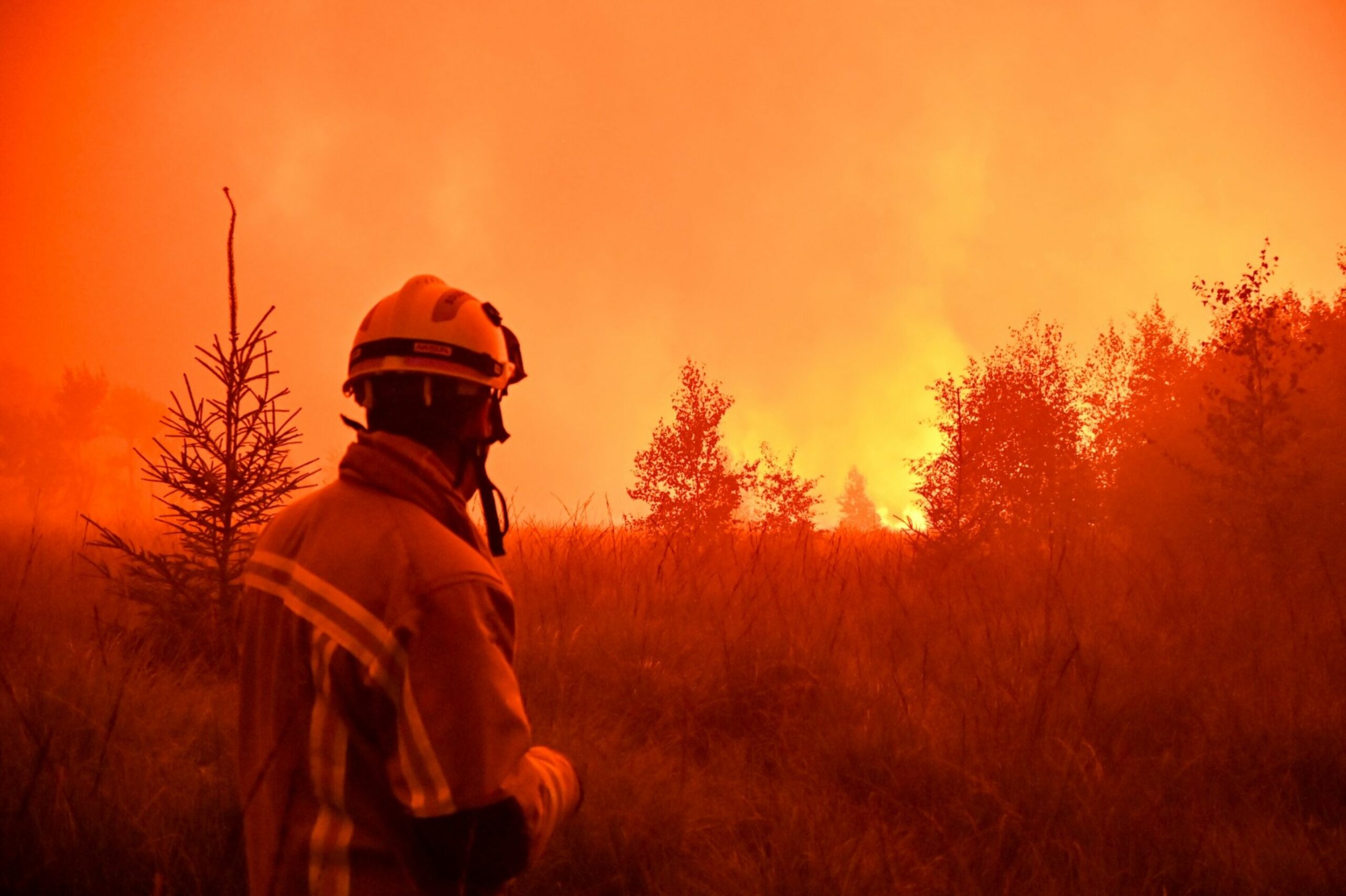
Firemen in action as a fire rages in the Hautes Fagnes (High Fens) nature reserve, on Monday 17 August 2026. Credit: Belga/Images VHP
This, however, does not alter the fact that there is a general "lack of urgency", according to Vermeulen. "This is not unique to wildfires, but also concerns drought and heat stress. We really need to scale up our efforts, and scale them up more quickly. But unfortunately, that process is sometimes very slow."
Despite measures like the Blue Deal in Flanders or the POLLEC (Local Policy, Energy and Climate) plan in Wallonia, funding for numerous general adaptation measures across the country has been scaled back.
"Cutting back these funds is incomprehensible, and detrimental not only to the current problem of wildfires but also to other issues," Vermeulen said. "It comes down to the authorities not grasping the magnitude or scale of the problem."
The Royal Meteorological Institute (KMI) said that while it may well be that the situation next year will not be quite so dramatic, the average temperature is rising nonetheless. "And the likelihood of this happening again within the next three or five years is actually very real."
Human cost
For Vermeulen, the lack of urgency extends beyond decision-makers and into general society.
In the Belgian Climate Risk Assessment, the CERAC identified 28 risks for the country – wildfires being one of them. But a high excess mortality due to the heat, such as the nearly 2,000 extra deaths in June, was among them too. "The cost is impossible to quantify, not just economically, but also in human terms."
Still, following a few days of rain, people are quick to forget all about the fire. "But if it starts pouring with rain now, we will face a different problem. We will start seeing extremes. We might end up in the same situation as [during Wallonia's deadly floods] in 2021."
"Again, the sense of urgency is lacking. It fades away, and will only come back when the next disaster strikes."
He underlined that climate change not only increases the risk of fires or floods, but also affects health-related problems.
Vermeulen pointed to the West Nile virus – of which some cases have recently been reported in Belgium, and which claimed one life in the Netherlands. "Mosquito-borne diseases will become more prevalent as a result of climate change."
The main problem, he said, is that it is always the latest issue that attracts attention. "These events are regarded and treated as separate, as if they have nothing to do with each other. But they are all symptoms of the same problem."
