

While Belgium is raising tuition fees and imposing stricter rules for international students coming to the country, research shows that these students make a significant net positive contribution to the country’s treasury.
As Belgium's various governments are looking to cut costs and crack down on migration, tuition fees for international students in Belgium, particularly those from outside the European Economic Area (non-EEA), are skyrocketing.
“Yet these students generally contribute much more than they cost,” Kristof De Witte, a KU Leuven professor and Vice-Dean at the Research & Impact Faculty of Economics and Business, told The Brussels Times.
According to him, there are two types of direct benefits to international students.
'A net positive effect'
“The first kind becomes clear while the students are studying here,” De Witte said. "International students pay tuition fees, rent a room, buy food and clothing, use public transport, go to cafés and restaurants, and so on. Family and friends who visit them also spend money in Belgium," he said.
However, the greatest economic benefit only arises after graduation, he explained. “If an international student stays here, finds work and pays taxes and social security contributions, that contribution can continue for decades.”
The indirect benefits, meanwhile, are much more difficult to quantify in monetary terms, but this “internationalisation” can contribute to universities’ international network and reputation, trade and investment, contacts and a more diverse learning environment.
In De Witte’s research, called ‘The economic impacts of internationalisation in higher education’ (2020), he also took the cost of these students into account, particularly public funding for higher education and social and health expenditure. Some indirect costs are possible as well, such as pressure on capacity or crowding out when study programmes or accommodation are in short supply.
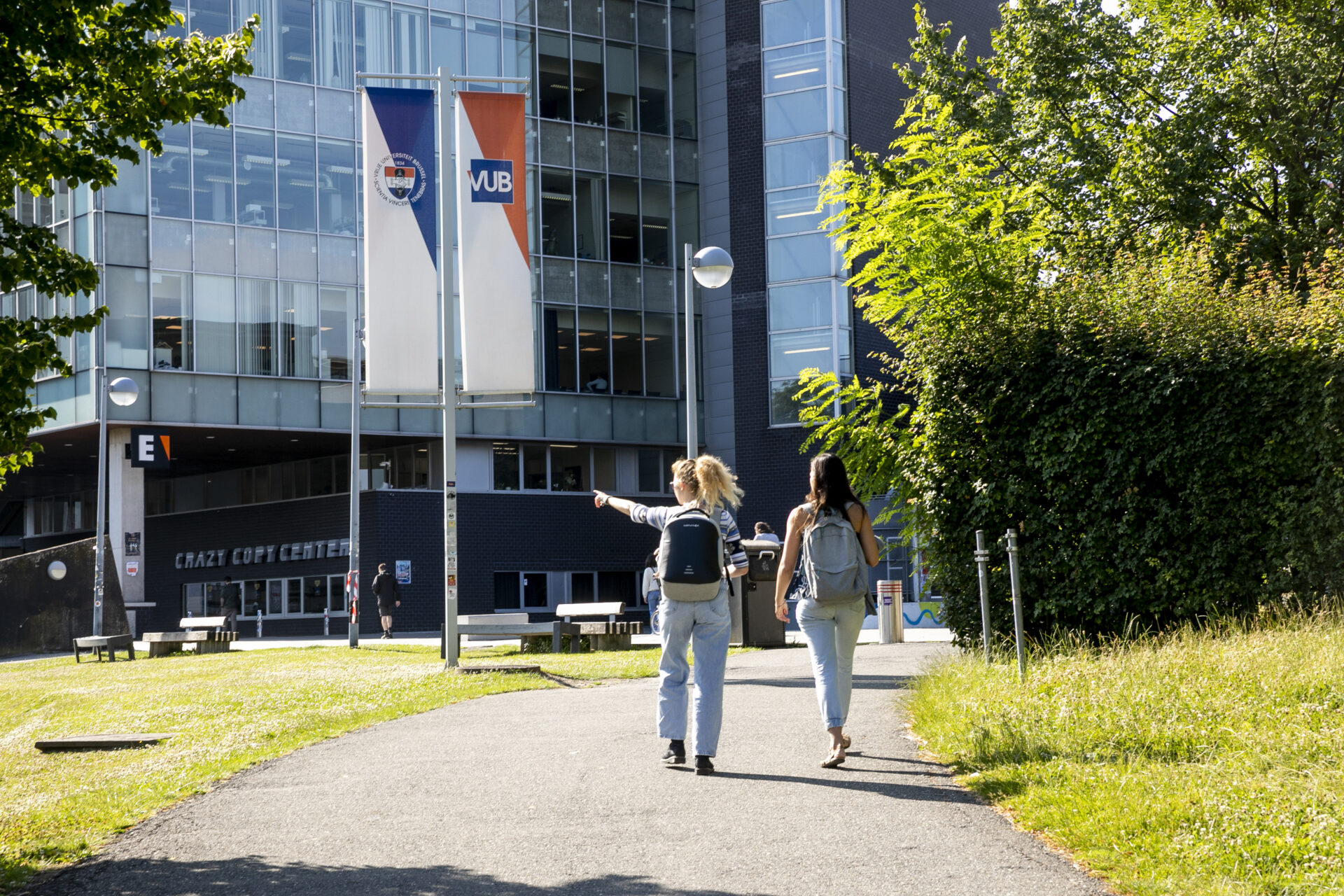
Students at the Vrije Universiteit Brussel (VUB) campus. Credit: Belga/Hatim Kaghat
According to this study, however, there was “a net positive effect of internationalisation”, with direct benefits exceeding the costs by a factor of 2.6 to 3.3.
The researchers found that international students contribute between €3,072 million and €4,408 million to the Belgian economy, which equates to a net contribution of €465 to €613 per inhabitant in Flanders.
However, more international students do not automatically mean more benefits, De Witte stressed. “It is not just about how many international students we attract, but above all about who we attract, whether they graduate and what they do afterwards.”
“A student who graduates here and then works for ten or 20 years has a very different economic impact than someone who leaves after just one year,” he said.
The study clearly shows this: the cost-benefit ratio varied significantly by level of study: approximately 1.2–1.6 for PhD students, 3.7–4.6 for undergraduate students and 5.1–6.3 for postgraduate students.
On the rise
Currently, however, capacity issues also come into play: additional students can put pressure on accommodation, infrastructure and certain degree programmes.
"I would not advocate for ‘as many international students as possible’, but rather for internationalisation that seeks to maximise both the quality of the intake and retention rates after graduation," De Witte said.
However, the number of international students coming to Belgian universities continues to increase. According to figures by the OECD, Belgium hosted approximately 52,100 international students in 2019, compared to approximately 57,000 in 2023.
As a proportion of the total student population, there has hardly been any change: international students accounted for 10.5% of the student population in 2019, and 10.4% in 2023.
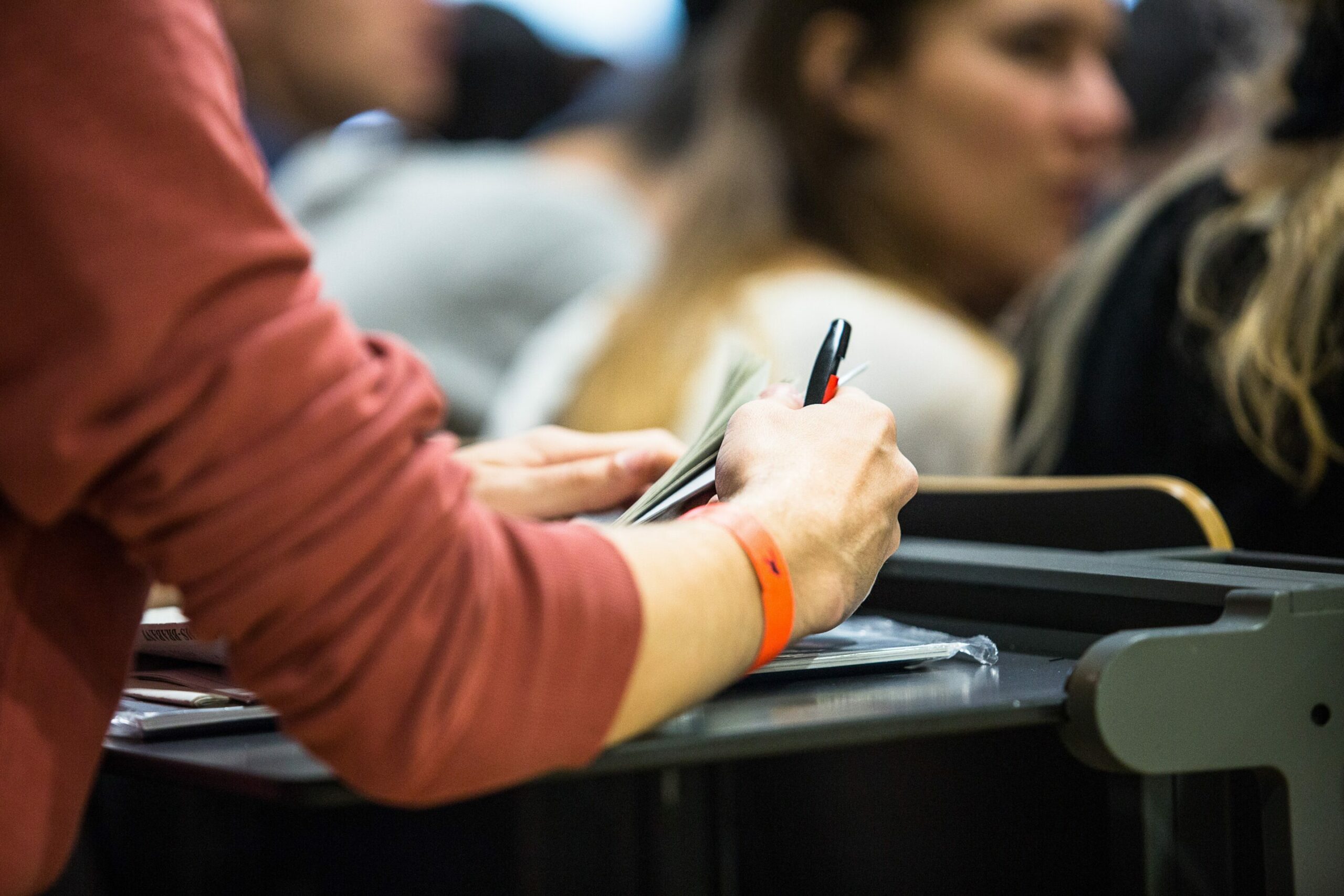
Illustration picture shows students during a lecture at a university college in Brussels. Credit: Belga/Siska Gremmelprez
Despite the recent hike in tuition fees (rising to €17,500 per year in some case) and tightened rules for non-EU students, the most recent intake figures from third countries do not indicate a decline either, according to De Witte.
The risk “certainly” exists that this sharp rise in fees could scare away more international students – to the detriment of the Belgian treasury. “Higher tuition fees make it less attractive for potential students,” he explained.
Indeed, the research shows that tuition fees are a key factor in international students’ choice of university, and higher fees therefore do indeed reduce the appeal for around 55% of students. But this is not always the case: around 45% attach much less importance to tuition fees and focus more on career prospects.
“Both groups attach great importance to the university’s reputation,” De Witte said. “This also explains why higher tuition fees do not necessarily lead to a reduction in student numbers straight away.”
'Simple and swift procedures' needed
Importantly, the research found that the greatest gains lie after graduation.
First and foremost, he said, this means that “simple and swift” procedures for residence and work permits are needed. “In our study, a significant simplification of the visa procedure increases the likelihood that a non-EEA student will choose to remain in Belgium after graduation by up to 23.99 percentage points.”
Currently, however, the Federal Government is doing the opposite, by tightening rules for non-EU students. As of this academic year, students will need to achieve certain grades to keep their visas or risk being deported.
The authorities are aiming to combat the "abuse of student status without closing the door to international talent”, they said before the summer.
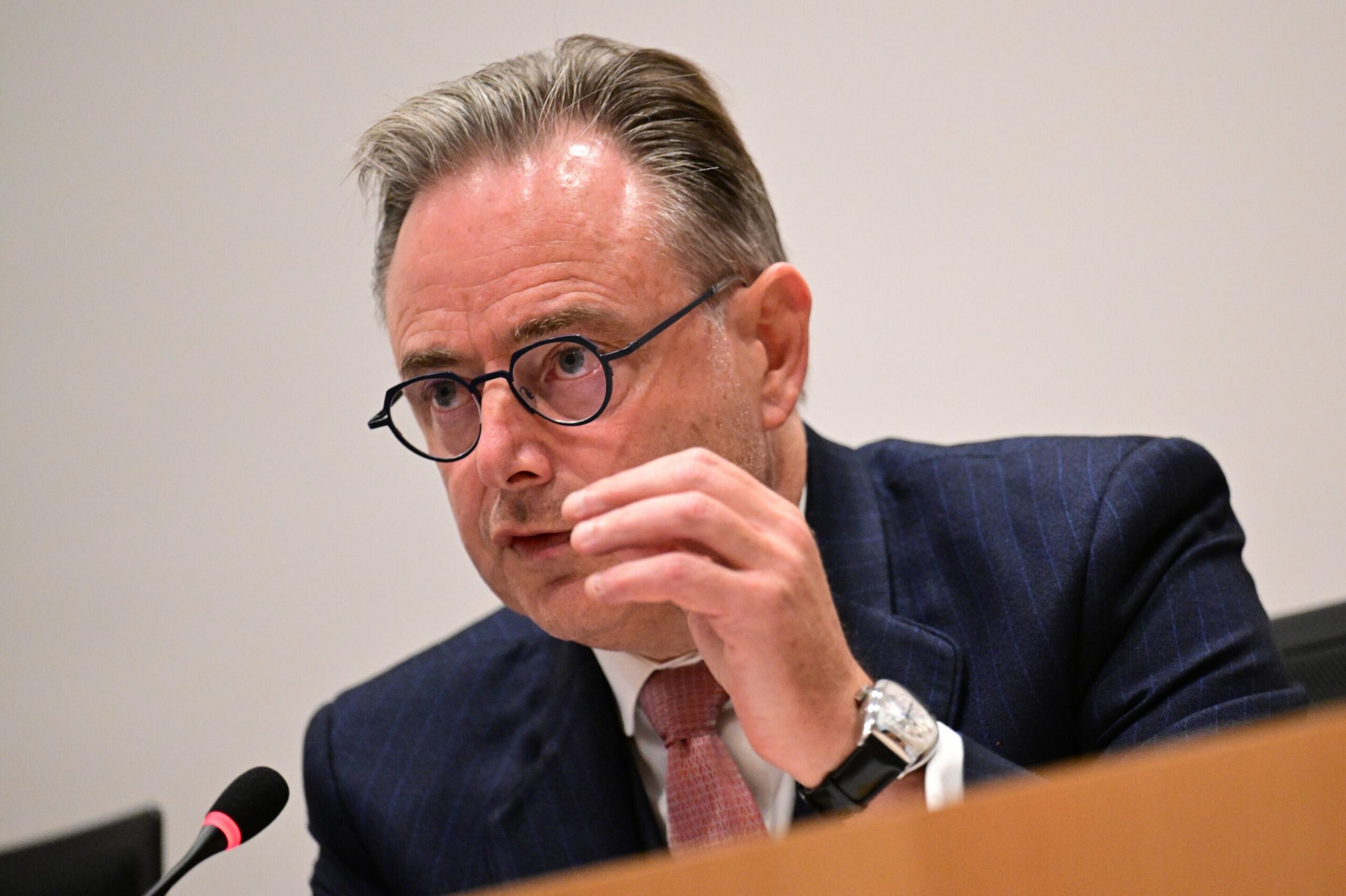
Prime Minister Bart De Wever. Credit: Belga/Dirk Waem
According to De Witte, the Belgian government could improve international students’ transition from university to the labour market in several ways: through work placements, matching with employers, career guidance and the removal of language and administrative barriers.
“Our simulations suggest that better labour market opportunities alone, via higher retention rates, could generate tens of millions of euros in additional annual benefits,” he explained.
To ensure that Belgium does not miss out on new international students who are scared off by the high tuition fees, De Witte advocates for targeted financial support rather than a purely uniform pricing strategy.
“If you increase tuition fees, you should also use scholarships or waivers to ensure you do not lose high-achieving but price-sensitive students,” he said. “And continue to invest in quality and reputation: it is precisely this quality that makes international students willing to pay more.”
