
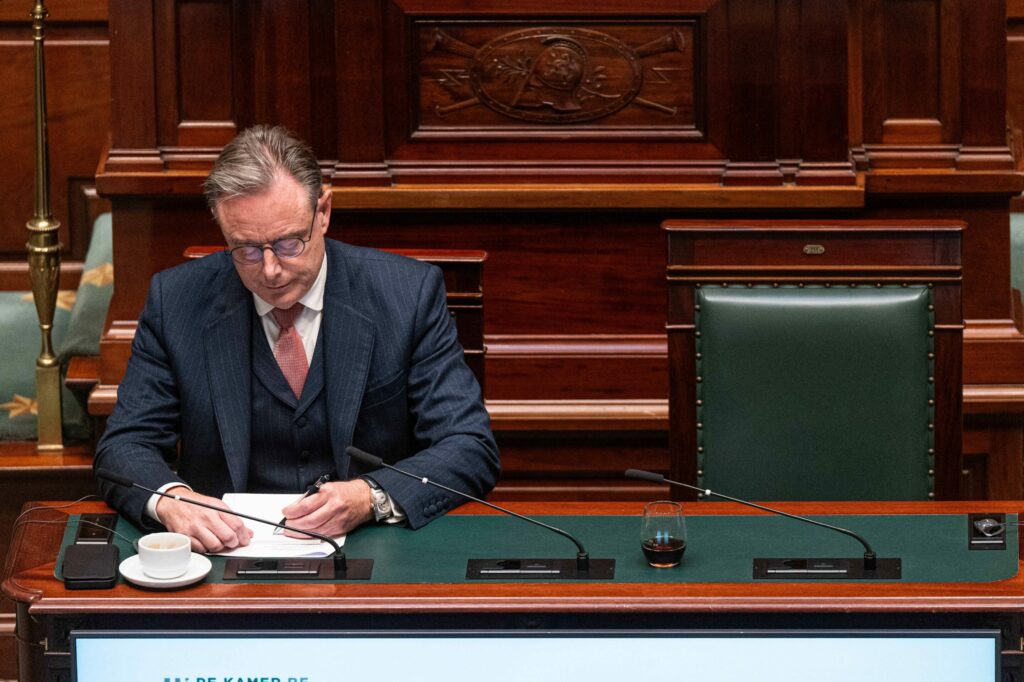
After weeks of stalled talks over a new budget for 2027, Belgium's Prime Minister Bart De Wever (N-VA) has changed course, proposing a smaller deficit reduction and no VAT reform, a topic of intense debate within the coalition.
De Wever submitted the new budget proposal to his deputies on Wednesday, according to the Belga News Agency. While the initial objective of the talks was to reduce the budget deficit by €10 billion by next year, De Wever now only wants to find around €4 billion in cuts.
Details of his proposal remain unclear, but various Flemish media outlets cite sources within the coalition parties saying the reform of Belgium's VAT system is no longer being discussed.
Related News
- Deputy prime minister blames liberals for budget talk deadlock
- From 'racehorse' to 'ugly camel': What is happening with Belgium's VAT reform?
- Belgian government absent from parliament as budget negotiations remain deadlocked
- Belgium's 2027 budget statement indefinitely delayed as parties fail to find deal
De Wever's proposed VAT reform, which would raise the upper cap of VAT and unify lower rates, had been a bone of contention between De Wever and MR's (Francophone liberals) party leader Georges-Louis Bouchez.
De Wever spent much of the talks trying to convince MR's Deputy Prime Minister David Clarinval to agree to the measure, sweetening the offer by including an acceleration of the tax break now set for 2029.
Without the contentious measure, De Wever hopes to find an agreement in the upcoming days, as Parliament would need two months to put a budget into law. If an agreement is not found by the end of October, De Wever will have to govern the first months of 2027 with provisional twelfths (allowing monthly expenditure of up to one twelfth of the last approved budget for 2026).
As things stand now, Belgium will be hit by a so-called "snowball of compounding interest" in 2029, as the country will have to borrow money to pay interest on its debt.
Belgium's National Bank and Debt Agency expects the amount Belgium will be spending on interest repayments to rise to €20.4 billion by 2029, up from a previous estimate of €18.6 billion in June.
