
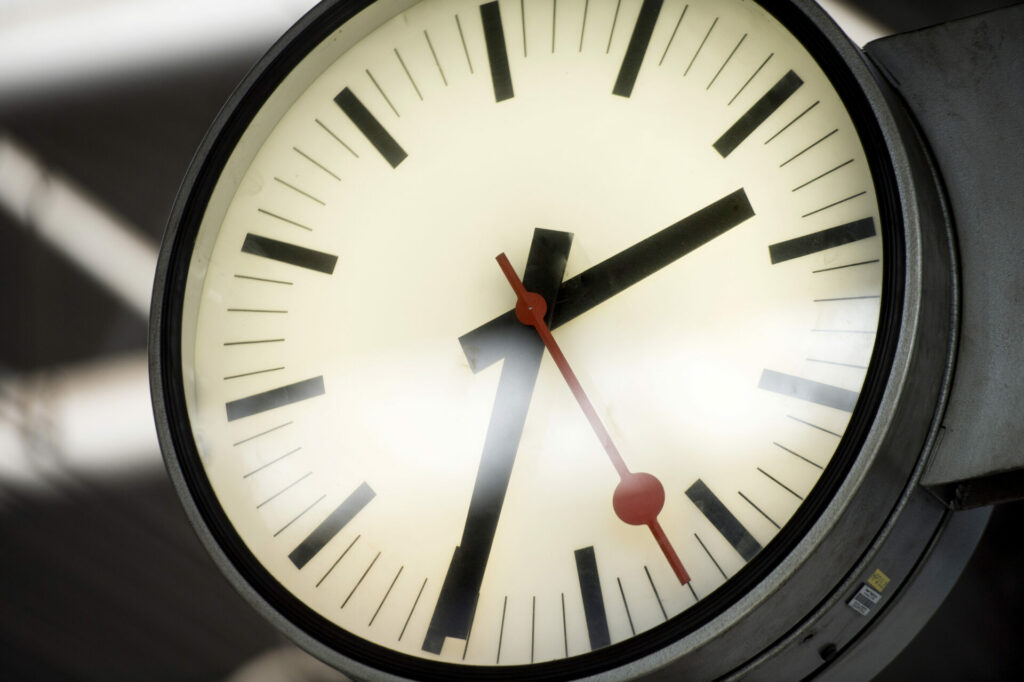
Belgians will gain an extra hour of sleep this weekend as the country switches to winter time in the early hours of Sunday 25 October.
In the night from Saturday 24 October to Sunday 25 October, Belgium will officially switch from summer time to winter time. At 3:00, clocks will be turned back one hour to 2:00, giving people an extra hour of sleep.
While most smartphones, computers and other connected devices will adjust automatically, traditional clocks and watches will need to be changed manually.
The switch also means that the sun will rise earlier in the morning, but darkness will fall earlier in the evening.
Winter time will remain in place until Sunday 28 March 2027, when clocks will move forward again.
Why are we still changing the clocks?
The seasonal clock change was reintroduced in Belgium in 1977, primarily as a way to reduce energy consumption following the oil crisis of the 1970s. However, the effectiveness of the measure has since been questioned.
In 2018, the European Commission proposed abolishing the twice-yearly clock change following a public consultation in which 84% of respondents supported ending the practice.
Under the plan, EU Member States wishing to remain permanently on summer time would have changed their clocks for the last time in March 2021. Those preferring standard time, also known as winter time, would have made their final adjustment in October of that year.
The European Parliament subsequently approved the proposal in March 2019. However, the plan never came into effect.
No agreement among EU countries
More than seven years later, EU Member States have still not reached an agreement on how to implement the reform.
One of the main obstacles is the need for coordination between neighbouring countries, as different time arrangements could create difficulties for transport, businesses and cross-border activities.
The European Commission has since launched a new study to assess the consequences of abolishing seasonal clock changes, with results expected before the end of 2026.
In the meantime, the current system remains in place under a European directive adopted in 2001, which requires Member States to switch to summer time on the last Sunday of March and return to winter time on the last Sunday of October.
