
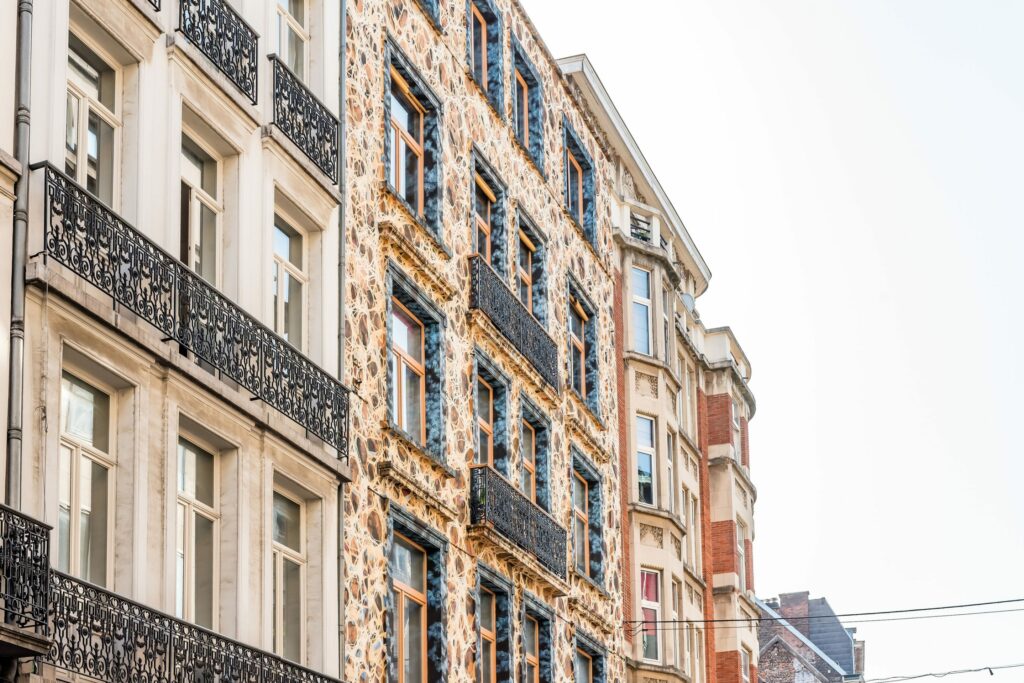
While many young Belgians struggle to buy a single home, a small group is buying more than ten. Experts say the explanation may lie less in the numbers than in the deep belief that bricks and mortar is the safest bet.
Almost 11,000 Belgians own at least ten properties, according to figures from the Finance Ministry obtained by the Flemish social-democratic Vooruit party. The number of private individuals with exactly ten homes has risen by 29% since 2022, and those with more than ten has risen by 23%.
Around 6,000 companies and organisations in Belgium also hold ten properties or more – an increase of more than 20%.
The number of people with a single home, meanwhile, grew by only 3%.
As mortgage rates have climbed significantly since the summer of 2022, with only a brief lull in 2024 and 2025, the trend is surprising. Fixed rates now sit at around 3-3.5%, well above the lows of the previous decade, yet the number of large property owners keeps growing.
The search for certainty
"In a way this is indeed surprising," Nico Harboort, real estate expert at KBC Private Banking & Wealth, told The Brussels Times. The figures do not show whether the rise was gradual or concentrated in a particular period.
"The search for certainty may be one explanation," he said. "Geopolitically, a lot has happened in recent years: the war in Ukraine continues, as do the tensions around the Strait of Hormuz. Think also of trade tariffs and rising public debt. People are looking for a safe haven.”
Returns, however, are under pressure.
Higher interest rates have so far had only a limited effect on prices, according to Harboort. Buyers now spend a larger share of their income on repaying a loan, while loans are also spread over longer terms. Wages are generally indexed, rising along with strong inflation.
“As a result, property prices kept rising, while yields, especially on new builds, fell even further," he said.
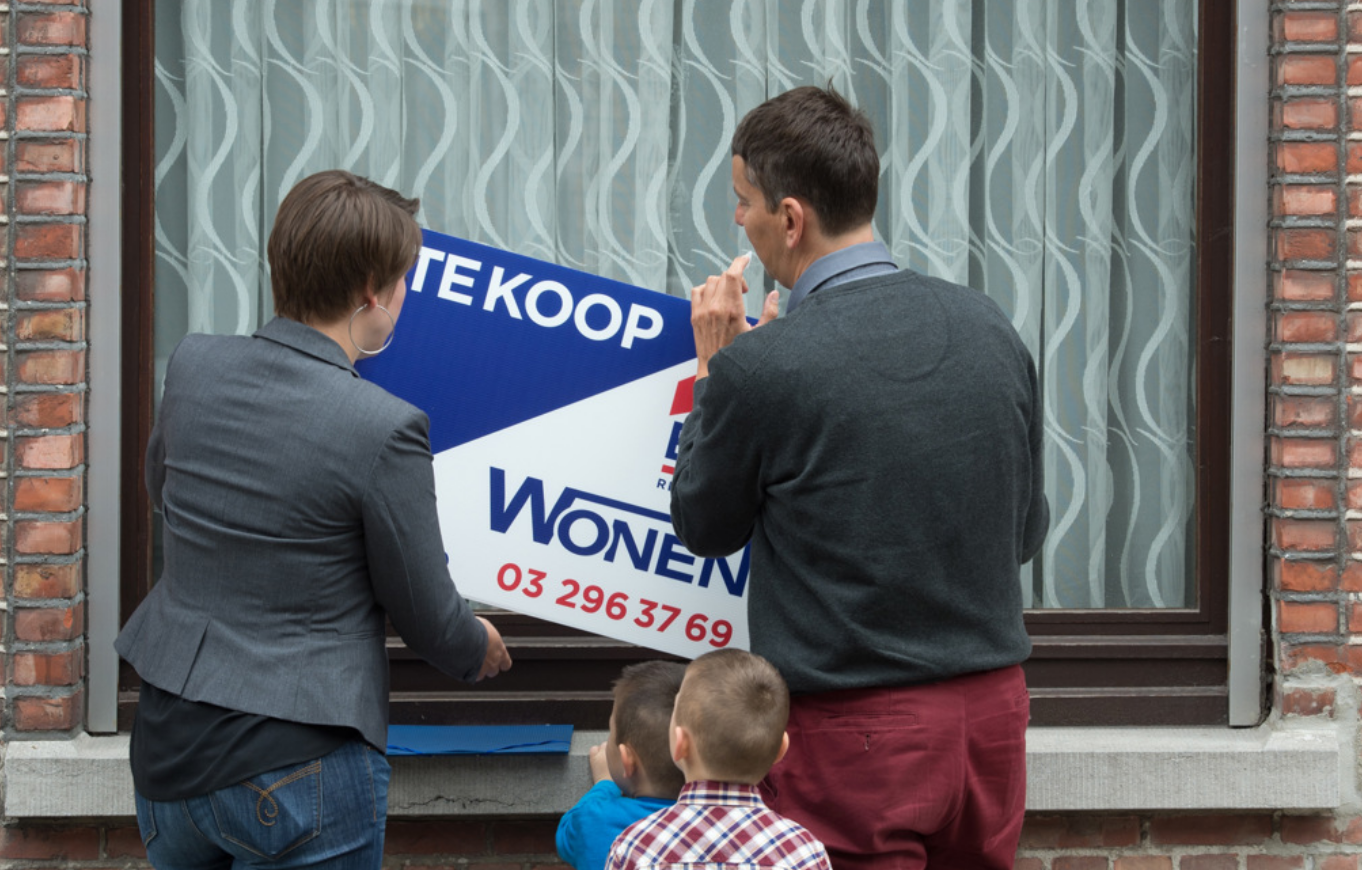
Credit: Belga/Benoit Doppagne
That means investors are accepting a low return for the risk they take.
Still, the appeal remains: rents can be indexed and there is the possibility of capital gains on resale. "Alternatives have become more attractive, but for many investors, property retains a special pull," he said.
For the market, however, Harboort explained that this means rather little. "This group seems too small to have a noticeable influence." Additionally, it is unclear how many of these properties are holiday homes and how many are actually let.
“There are no signs that the supply of rental homes is rising sharply," he said. "On the contrary, the feeling in the sector is that investors are selling, so properties are disappearing from the rental market. Combined with population growth, many more homes still need to be built.”
Inequality
For Vooruit, the figures prove that inequality is "still far too great." The party has not proposed any concrete measures, but budget talks are still under way. Flanders already charges a 12% registration duty on second homes, against 2% for a sole residence. In Brussels and Wallonia, it’s 12,5%.
The figures come shortly after a National Bank report put Belgium's households' net wealth at €3.1 trillion. More than half of it (nearly 55%) is held by the richest 10%.
According to Ive Marx, professor socio-economic policy at the University of Antwerp, wealth inequality in Belgium, as in every country, is very large, with the only component of wealth that is relatively equally distributed in Belgium is the home people live in.
Everything beyond that, second and further properties, is a different matter, he told The Brussels Times. "People with multiple properties are following an investment strategy. House prices in Belgium are remarkably stable, unlike in countries that have seen boom and bust."
Illustrative image of a person with keys. Credit: Belga/Jonas Hamers/ImageGlobe.
"For someone who wants a predictable investment, not necessarily very profitable but offering a degree of security and growth, that is a good investment," Marx said.
He sees the tax system as part of the explanation. "Real rental income isn’t taxed, and that pushes a lot of people in Belgium towards this kind of investment.”
On the registration duty, he is careful: “Whether it’s a good instrument is a political judgement.” However, he argues that it does not help the market. "People stay where they are for longer because of the transaction costs. A tax on real income would make much more sense.”
Among economists, he added, there is quite a lot of consensus that “you should tax income and capital gains rather than the assets themselves.”
The phenomenon is not typically Belgian, according to Marx: holding wealth in property beyond the family home is far more common in Europe than in the United States, according to him. "It is mainly a southern and almost eastern European phenomenon."
"Belgium is somewhat in line with that. Bricks and mortar are seen as safe, certainly compared with what happens on the financial markets.”
