

Au pairs coming to Flanders will now have to be paid at least €1,000 a month – up from €450 previously, announced Flemish Employment Minister Zuhal Demir (N-VA).
The potential exploitation of live-in au pairs and domestic helpers was highlighted following an episode of ‘The Real Housewives of Antwerp’, where the scheme was touted as a cheaper alternative to regular childcare.
“Anyone who takes an au pair into their home is not bringing in a cheap nanny. These are young people who come to Flanders to learn our language and discover our culture,” Demir said. “In return, they lend a helping hand to a family.”
That, however, must never be an excuse for cheap labour or exploitation, she stressed.
Flanders’ au pair scheme currently only applies to au pairs from outside the EEA (European Economic Area). As European au pairs do not require a work permit under the European right to free movement, they fall entirely outside this regulatory framework.
No framework for European au pairs
Until action is taken to draw up an employment status applicable to both European and non-European au pairs, there is no legal framework whatsoever for European au pairs.
Demir’s office highlighted that this requires an initiative by the Federal Minister for Labour and Economy, David Clarinval (MR).
This is the case because of Belgium’s many layers of government; following Belgium’s sixth state reform, the matter of the employment of foreign workers was split in 2014.
As a result, responsibility for economic migrants was transferred to the regions, while responsibility for the employment of foreign nationals residing in Belgium for reasons other than work remained at the federal level.
During consultations, however, Clarinval’s office indicated that, in their view, there was no need for a specific status, according to Demir.
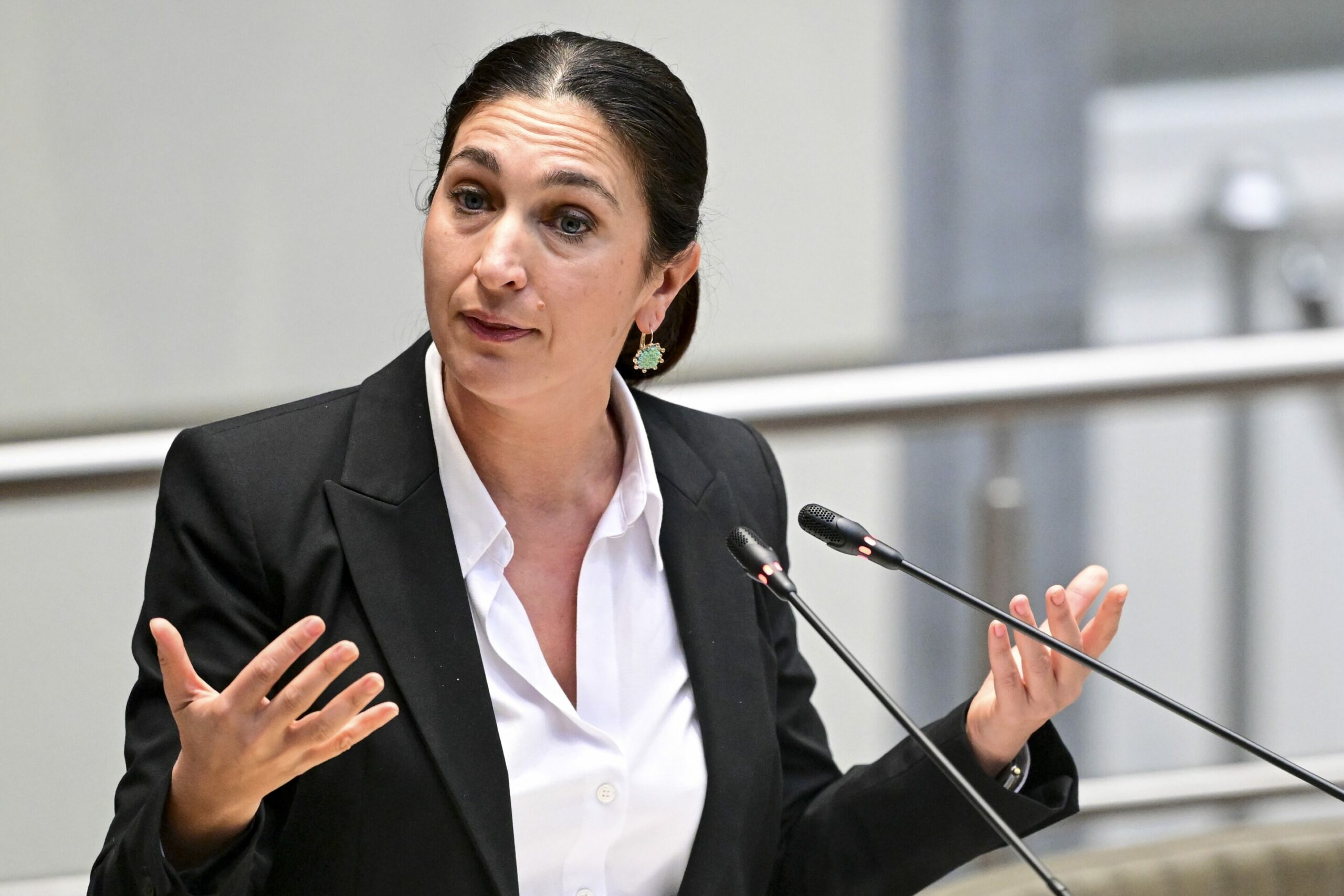
Flemish Minister for Education and Work Zuhal Demir (N-VA). Credit: Belga
In 2025, Flanders issued around 600 work permits to au pairs from outside the European Economic Area.
Since the start of this year, 80 investigations have been carried out by the Flemish Social Inspectorate. Breaches were identified in 34 of these cases, and an official report was drawn up for 19 of them.
Demir stressed that the Flemish government is now “drawing a clear line” on the exploitation of au pairs by approving an amending decree that brings them within the scope of legislation on economic migration.
As the decree tightens and clarifies the conditions for au pair placements, she said that the Flemish authorities can combat fraud and abuse.
Clearer rules
From now on, au pairs must be aged between 18 and 26 and must attend Dutch language lessons.
They may be employed for a maximum of 25 hours per week, and eight hours per day and must get paid at least €1,000 per month (to be indexed annually). Au pairs will also receive ten additional days off per year.
Additionally, host families must meet stricter conditions regarding childcare, medical costs, language lessons and working hours. Placements in co-parenting and foster families, as well as multiple re-placements during the au pair year, will be permitted.
Protection in the event of early termination of the placement is also being strengthened.
The Advisory Committee on Economic Migration of the Social and Economic Council of Flanders is currently being consulted on the amendment.
The Brussels Times contacted the Clarinval’s office for more information about a possible legal framework for European au pairs.
