
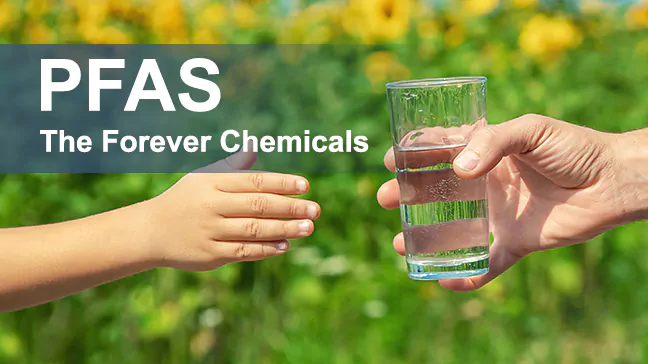
The European Union is struggling to protect its citizens from potentially harmful PFAS chemicals, commonly known as “forever chemicals," according to a new report by the European Court of Auditors (ECA).
PFAS (per- and polyfluoroalkyl substances) are a group of thousands of synthetic chemicals widely used in everyday products, including waterproof clothing, non-stick cookware, cosmetics, food packaging and furniture.
Their ability to resist water, grease and heat makes them particularly useful, but also extremely persistent. Once released into the environment, they can remain in soil and water for decades and accumulate in the human body.
Studies have linked exposure to certain PFAS to cancer, infertility and hormonal disorders, with the associated healthcare costs in Europe estimated at between €52 billion and €84 billion annually.
“These chemicals may last forever, but there are ways to limit their harmful effects on people and the environment,” said Joëlle Elvinger, the ECA member responsible for the audit. “The EU must tackle this problem firmly and without delay to defuse this ticking time bomb before it is too late.”
Food limits do not guarantee safety
One of the report’s most concerning findings relates to the presence of PFAS in food and drinking water, the main sources of human exposure.
Although the EU has established maximum permitted levels of PFAS in certain food products, auditors warn that these thresholds do not necessarily guarantee that regular consumption is safe.
According to their calculations, a person could exceed the tolerable weekly intake of PFAS by consuming just 7 grams of anchovies, 39 grams of wild salmon, 181 grams of eggs or 237 grams of beef, if these products contained the maximum legally permitted concentrations.
Drinking water is another area of concern. While EU limits have generally been respected in recent years, the auditors note that they are based on scientific evidence dating back to 2017.
With PFAS continuing to accumulate in the environment, the report warns that contamination could increasingly exceed these thresholds, potentially exposing consumers to greater health risks and increasing water treatment costs.
Almost one-third of EU Member States have already introduced additional national limits for PFAS in drinking water.
Thousands of chemicals escape EU scrutiny
The auditors also identified significant shortcomings in the EU’s regulatory framework. Although the EU began restricting certain PFAS as early as 2006, most substances in this chemical family remain unregistered under REACH, the bloc’s main chemicals regulation.
As a result, European authorities have limited information about their potential risks, while manufacturers are not always required to conduct safety tests. This includes PTFE, a substance commonly used in non-stick cookware and waterproof clothing.
The auditors warn that the EU’s “no data, no market” principle is therefore largely ineffective when it comes to PFAS, allowing chemicals to remain on the market despite insufficient safety information.
Even when restrictions are introduced, the process takes approximately five years on average. This gives manufacturers time to replace banned substances with chemically similar alternatives that may be equally harmful, a practice known as "regrettable substitution."
Enforcement also varies considerably between Member States. According to the report, one in three EU countries does not carry out checks to ensure compliance with existing PFAS restrictions, leaving much of the responsibility to manufacturers themselves.
EU-wide ban still far from reality
Despite growing evidence of the risks associated with PFAS, progress towards comprehensive European restrictions remains slow. In 2021, five European countries proposed an EU-wide restriction covering the entire PFAS family.
However, the complexity and scale of the proposal have delayed its implementation.
At least two Member States have already introduced stricter restrictions on consumer products than those currently required at EU level. Meanwhile, no new PFAS restriction procedures have been launched at EU level since the broader proposal was submitted, according to the auditors.
The EU has committed to phasing out PFAS except where their use is considered essential, but the report suggests that comprehensive restrictions are unlikely to be implemented in the near future.
Until then, most forever chemicals can continue to be manufactured, sold and used across the bloc, despite their long-term environmental and health implications.
