
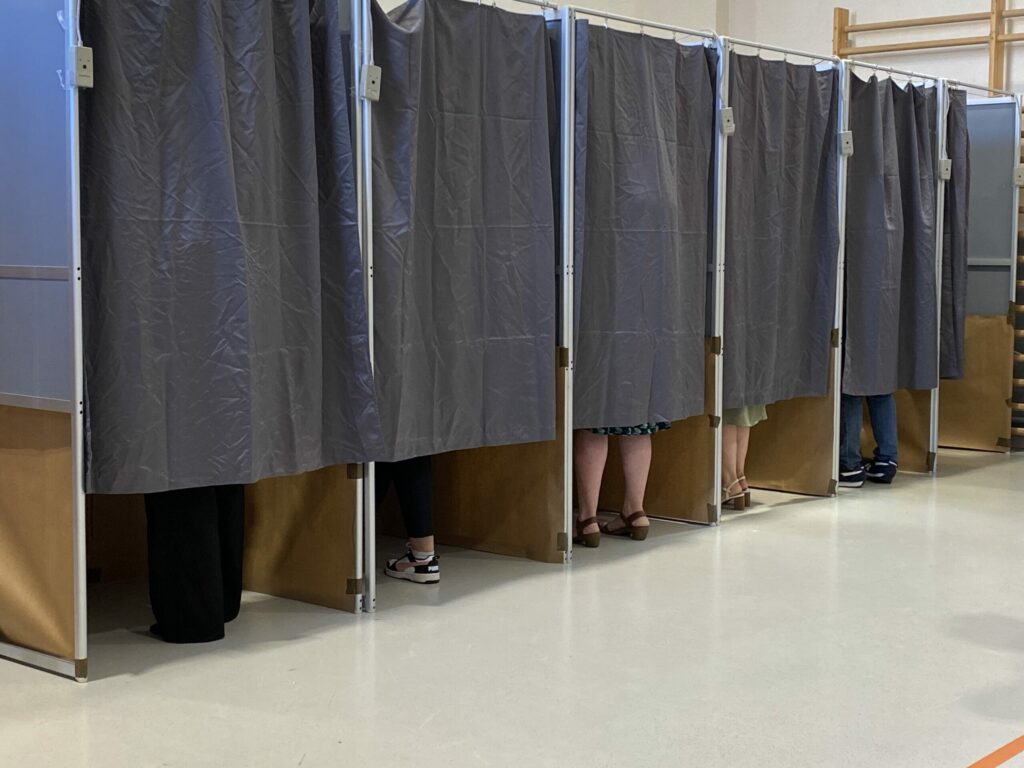
The Belgian Ministry of the Interior has sent a letter to the country's municipalities urging them to prepare for potential early elections.
The office of Interior Minister Bernard Quintin (MR) emphasised that the letter is entirely unrelated to current political events.
"Both the Interior Ministry and the local authorities must always be ready to organise elections," they said in response to Belgian press agency Belga.
The letter, titled 'Preparations for early elections and paper-based voting,' warns that the contract with the current supplier of the electronic voting system will expire in January 2027, with some municipalities being forced to fall back on paper-based voting in case of early elections.
Belgium is currently phasing in a second-generation electronic voting system, but not every municipality has been able to transition yet. With the contract for the first generation running out in January 2027, municipalities that have not been able to make the transition will have to rely on pen and paper.
"We understand that implementing all these measures for a possible paper-based vote between January 2027 and spring 2029 will involve a great deal of work and expense," the letter said. "Nevertheless, we have no choice but to make these preparations proactively now. After all, we must always be prepared to organise any early federal elections, and the associated 40-day deadline is very short."
Related News
- Management companies: The tax fight inside Belgium's budget crisis
- On PM De Wever's chopping block to fix Belgium's budget: Non-profits, VAT and health care
- How PM De Wever arrived on King's doorstep without a budget agreement
Quintin's office argued that the timetable has been known since April 2025 and was included in its policy document. “The aim remains to introduce electronic voting by 2029, provided that the current government runs until the end of its term.”
Federal Prime Minister Bart De Wever (N-VA) offered to hand in his resignation at the start of November, but King Philippe tasked him with continuing the ongoing budget talks.
On Monday, De Wever returned to the King without an agreement, after negotiations collapsed on Sunday. King Philippe extended the deadline to find a budget agreement with one week.
Importantly, even if no budget agreement is found and the government resigns, this does not automatically lead to early elections. In Belgium, citizens elect a parliament, not the ministers who govern the country.
If new parliamentary elections are to be held, the old parliament must first be dissolved. This can be done in two ways: by royal decree or by a declaration amending the Constitution – in both cases, a majority in parliament is required.
Between such a dissolution of parliament and new elections can be no more than 40 days.
