
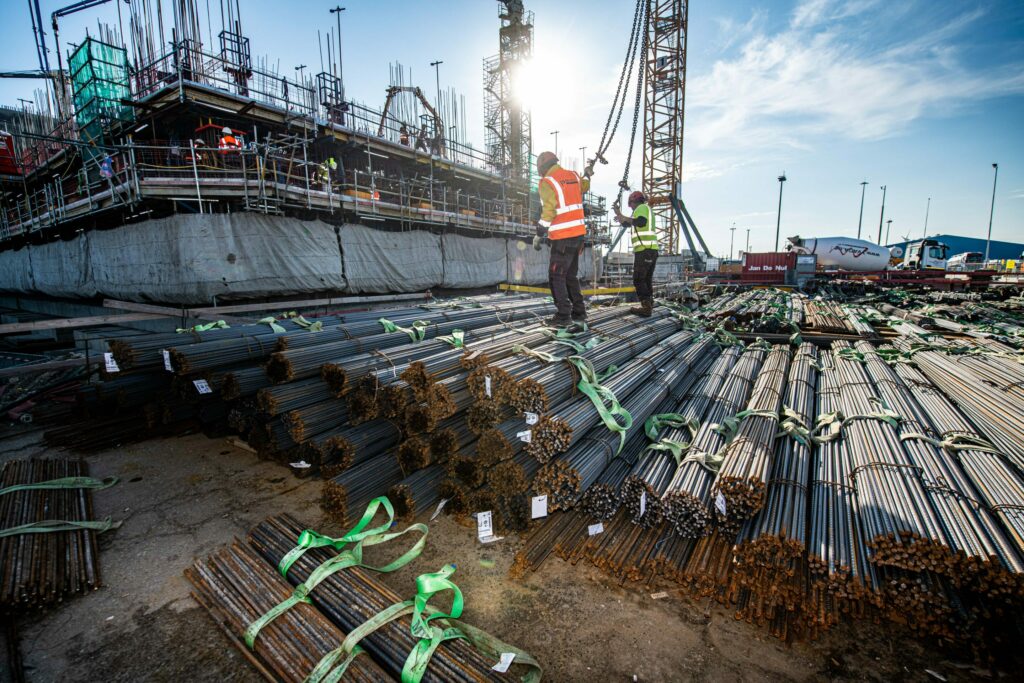
Belgium's construction sector is facing its worst October for bankruptcies in nearly a decade, with 267 firms going bankrupt last month, taking 668 jobs with them as inflation and energy costs continue to squeeze already thin profit margins.
The bankruptcies in October were not a blip, according to Het Laatste Nieuws analysis, as an average of seven construction companies went bankrupt a day in the first half of 2026.
Construction has always been prone to bankruptcies due to its low start-up costs and narrow profit margins, Sven Nouten, a spokesperson for the Belgian Construction Association Embuild, told The Brussels Times.
"As a result, the number of bankruptcies has traditionally been relatively high, but the current figures are structurally higher than in the past," he said.
Nouten notes that of particular concern is the sharp increase in business closures in the first half of the year, which he calculates has increased by 14.6% compared with the same period last year. Embuild attributed last year's decline to higher costs and uncertainty in building permits.
Cost concerns have remained the main driver of recent bankruptcies. High inflation has persisted, and was pushed higher by the closure of the Strait of Hormuz following US and Israeli air strikes on Iran.
The closure has pushed oil prices to sustained higher levels, feeding through to higher energy prices and raising costs for manufactured construction products such as steel and bricks. Both are energy-intensive products that require significant energy to produce.
Higher oil prices have also driven up costs for a range of materials used by the construction industry that are byproducts of oil, such as plastics and bitumen used in roofing and road construction.
Embuild's calculations show that between August 2025 and 2026, the price of plastics has increased by 21.5%, bricks by 11%, and products such as aluminium, copper, and zinc by 32.6%.
As a result of the price increases, construction firms are using new contract clauses to automatically pass costs on to clients.
"Currently, 72% of these companies include a price adjustment clause in their contracts. Under normal circumstances, fewer than half of them use such a clause," Nouten told The Brussels Times.
Embuild encourages all construction firms to adopt these new clauses so they don't have to bear the full costs of rising prices alone.
While these clauses may stem financial losses for firms contracting for new projects, those without them will have to bear the weight of the increases, contributing to the sector's growing share of bankruptcies.
However, given the low start-up costs for firms, the sector could bounce back quickly if costs begin to stabilise.
