
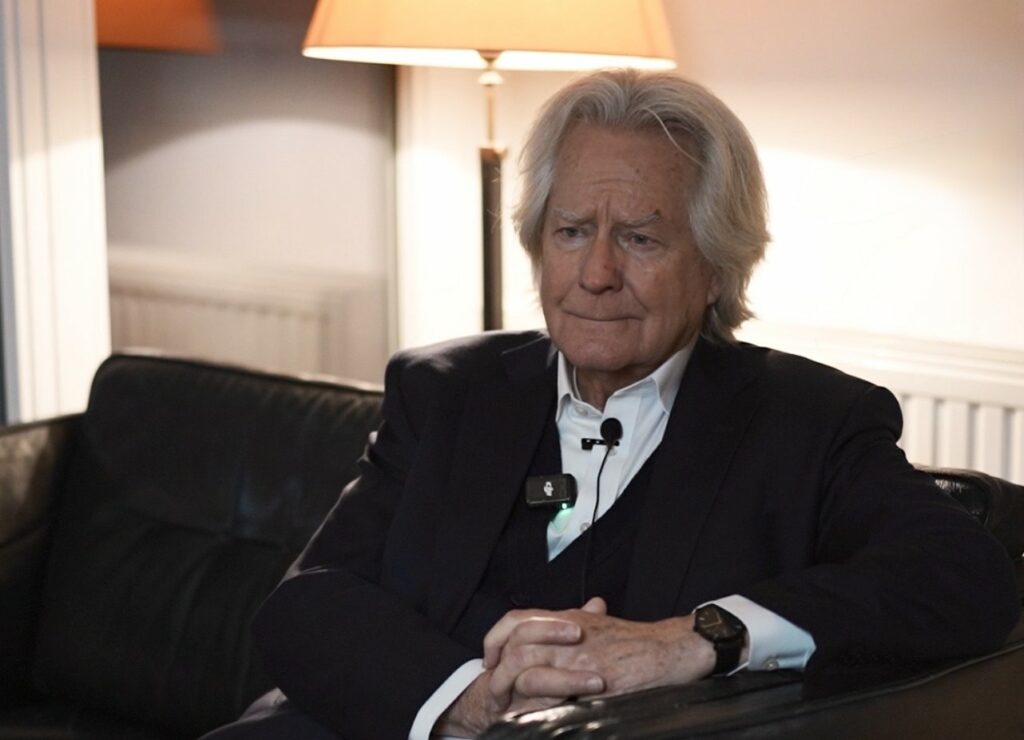
The philosopher A.C. Grayling has never been one to shy away from debating controversial subjects.
Over the years, Grayling, 76, has put forth his views on all manner of complex moral issues, from the ethics of allied bombing during the Second World War to the euthanasia debate in the UK.
A fervent critic of Brexit, he became a prominent figure in the Twittersphere post-2016 thanks to his frequent and vigorous attacks on the British government for its approach to the Brexit negotiations.
In a conversation with The Brussels Times this week from the Full Circle cultural centre in Ixelles, it was clear Grayling had not lost any of his anger about Brexit (he says Brexit has been “degrading of UK society, making it more insular, more fragmented, less cogent and less coherent”).
Of late, however, he has turned his attention to an issue which has obvious resonance for anyone interested in open debate and freedom of expression: cancel culture.
Cancellation 'is the story of history'
Over the past few years, countless think-pieces have been written on the ascent of cancel culture in the 21st century. At the peak of the phenomenon during the late-Covid era, livelihoods were ruined and reputations shredded as individuals and organisations were collectively boycotted for committing perceived wrongdoings.
Grayling’s latest book offers an unusual take on the subject: a critical analysis of cancel culture from a ‘woke’ perspective.
“I'm very much on the woke side of the argument,” he says, “because I see wokeism in general as just another chapter in a story that began after the mid-20th century - a story of fighting against discrimination, so against racism and sexism and homophobia.”
Grayling says he shares the same aims as the “more vigorous activists on the woke wing”, but questions the methods they have used to further their cause.
“The people who were very vigorously on the activist wing, out of frustration, out of the feeling that Utopia had not been reached yet - despite the amount of progress that these anti-discrimination endeavours have made - looked for more radical ways of pushing the agenda,” he argues. “And so cancel culture is one of them.”
In his book, Grayling suggests that cancellation is a tool which has been used throughout history, from the "ostracism" of the Ancient Greeks to the witch trials of the early modern era. Sometimes, he argues, its use is justified – though it must be done in the right way.
“It is the story of history,” he says. “But it is one that we should try to transcend because using it as a tool in a battle has to be incredibly well justified. There are certainly cases of people who need to be cancelled. Society does it. We lock people up in prison. That's cancellation.
“But we have to have justifications for doing it. And we do it with due process. The trouble with cancelling, ‘no-platforming’...is that this new and in many ways, unhelpful, medium, of social media, allows for these mob pile-ons and that is retrogressive.”
He understands the impulse to engage in cancel culture. “It's a very natural thing to understand,” he argues. “You so bitterly disagree with somebody you want them to shut up and go away. You want to put them out of an opportunity to say the horrible things that you don't like to hear. It's natural."
He adds: “But I'd argue that it's an impulse which, if it is going to be acted on, has to be acted on in a very rational way, by due process, and with very, very good justification.”
Self-censorship in the era of cancel culture
Has Grayling ever had to self-censor to avoid being pilloried online?
“No,” he says, while admitting there are “plenty of people who do self-censor” and who “do refuse to engage with certain things precisely because of these anxieties”.
Although he stopped teaching six years ago, Grayling still engages with students and has noticed changes in the way they approach difficult subjects compared to previous generations – noting greater sensitivities on certain issues and “allergies to certain things”.
He claims he sometimes had to warn students in advance if ‘triggering’ issues were to be debated: “If you were talking about a subject that would be ‘triggering’...you would have to flag it up - not that you wouldn't say it or discuss it - but you always have to prep it by saying, ‘look, you are university students - you've got to be able to confront discuss these things - you're not going to agree with everything’.
“And in all our personal experiences, all of us had positive experiences and negative experiences. But the point is that intellectual and emotional maturation requires being able to transcend the inability to deal with them.”
Right-wing cancel culture
Grayling does not believe that cancel culture is a uniquely left-wing phenomenon – far from it. “Who is the biggest ‘canceller’ in the world today? It's Mr. Donald Trump,” he says. In fact, Grayling believes himself to have been the victim of cancellation from the right, having been banned from Twitter/X by Elon Musk, the company’s owner.
He criticises extremism on both sides of the debate. “People tend to forget that on the extreme wings of both the woke causes and the anti-woke causes, that there are things to deprecate.
“So on the extreme wing of the woke cause, things like denying other people their rights of freedom for expression, denying other people an opportunity to be out there in the same space as you if you disagree with them, failing to realise that the way to deal with bad actors and bad speeches is with better action and better speech.
“That's what happens on the sort of extreme wing of the woke thing. But on the other wing of the anti-woke, you've got appalling stuff. You've got neo-Nazis and white supremacists and misogynists and masculinists and all that kind of rubbish, which is vastly worse, and yet gets nothing like the attention that the woke causes do.”
Looking to the future
Although he admits he has spent a lot of time “attacking Trump personally” on Substack (a blogging platform), Grayling believes this is justified because the US president "is in a public position which exposes him to [criticism]”.
Otherwise, his advice for anyone attempting to engage in debates online is to avoid being “gratuitously provocative”.
“I think in general, it's not so much what you say, but how you say it, that really matters. So if you can, be very thoughtful about how you put something,” he says. “And on the other hand, except in a very few and very well justified cases, don't be ad hominem - don't attack individuals; attack ideas and institutions.”
Grayling does not believe that the era of wokeism and social justice activism is over yet, despite the challenges the movement is facing at present.
The cause in general has "taken a punch in the stomach" by the election of Trump and "its incredibly rapid moves against it," he says. But the movement will not be easily swept aside: "It is going to be very, very difficult to put back into the bottle what's been let out over the last several decades in the way of greater access to all the social spaces, and all the workplace education spaces, all the social goods that the anti-discrimination endeavour has achieved."
A.C. Grayling’s latest book, Discriminations: Making Peace in the Culture Wars is available now from all good bookshops.
From Friday 28 November to Sunday 30 November, the Full Circle cultural centre in Ixelles will be hosting a Festival of Ideas, bringing together great minds and original thinkers to explore fresh thinking and new ways of seeing old problems. For more information, visit the Full Circle website.
