
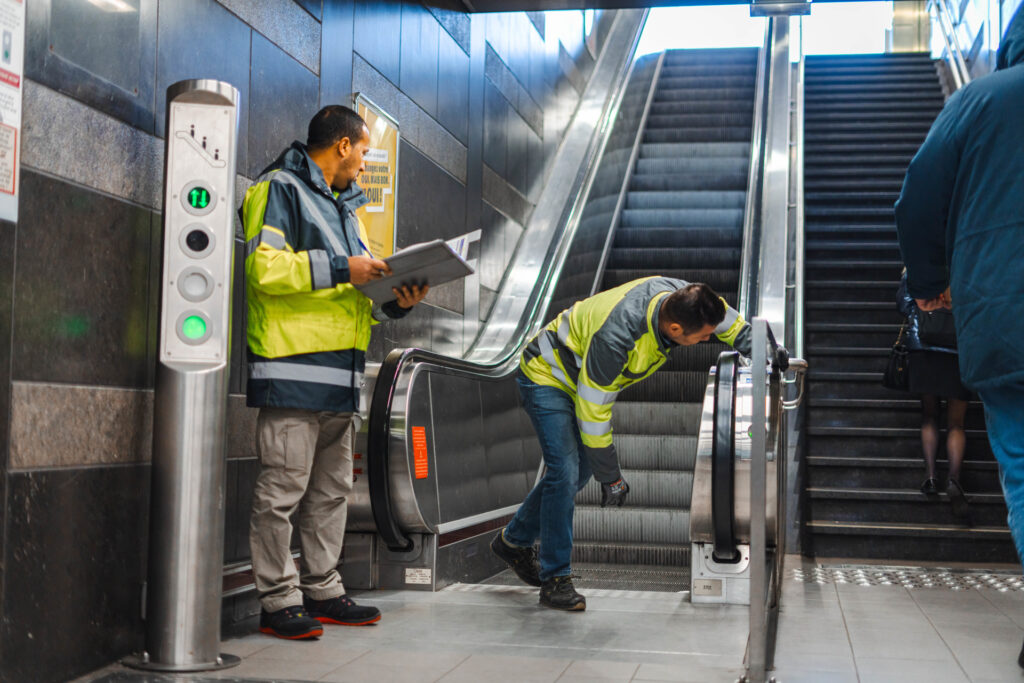
If you want to bulk up your thigh muscles, come to Brussels. Because chances are, when spending a day out in the city and using public transport, you will no doubt encounter a broken escalator. Why are these breakdowns so common, and what is transport operator STIB/MIVB doing to rectify the situation?
There are currently 565 escalators on the region's transport network, according to STIB spokesperson Laurent Vermeersch, down significantly from 597 in February 2025. Of these 565, around 95% are functioning, but they also stop working a staggering 200 times a day, on average.
"We are aware that this can be very frustrating if it happens to be an escalator somebody [needs] on a daily basis," Vermeersch told The Brussels Times.
In 2025, Herrmann-Debroux, Jacques Brel, Albert, Schuman and Merode were the stations where escalators were out of order most often.
Currently, there are issues with escalators at Brussels-North station (related to ongoing works on top of the premetro station), Jacques Brel, Delta and Botanique. Regional agency Brussels Mobility recently announced that Delta and Herrmann-Debroux would get a makeover this year.
"There are situations where an escalator is unavailable for some time because the repair team is waiting for spare parts, for example," Vermeersch said.
"If the escalator needs to be replaced, it takes time because there is no standard model. Every escalator is made to fit its particular setting, so it has to be built from scratch."
Vermeersch cites several reasons for these breakdowns. Firstly, a safety mechanism stops them if there is a potential risk of something or someone getting stuck. Secondly, many of the city's escalators are older models, which remain out of service for a long time and need serious repair or need to be replaced.
People also use them to transport heavy objects, causing the stairs to break or weakening parts of the machine. Weather conditions can be an aggravating factor over time, but are usually not a direct cause of malfunctions, the spokesperson said.
"We can choose to heat escalators to avoid freezing when temperatures are low, or we can [leave] them running even when the station is closed during cold spells."
One step at a time
Broken escalators are a source of intense irritation for many residents, but, more importantly, they cause immense difficulties for people of reduced mobility. How is STIB solving the issue on its network?
Vermeersch says that despite over 200 breakdowns a day, most can be restarted remotely when there are no safety issues, such as an object being stuck. In these cases, the machines can restart within minutes.
However, around 50 cases a day require human intervention. "Teams can be dispatched to the station in between one and two hours, but in some cases it can take longer to repair, for example, because we have to order a specific piece to make it work again."
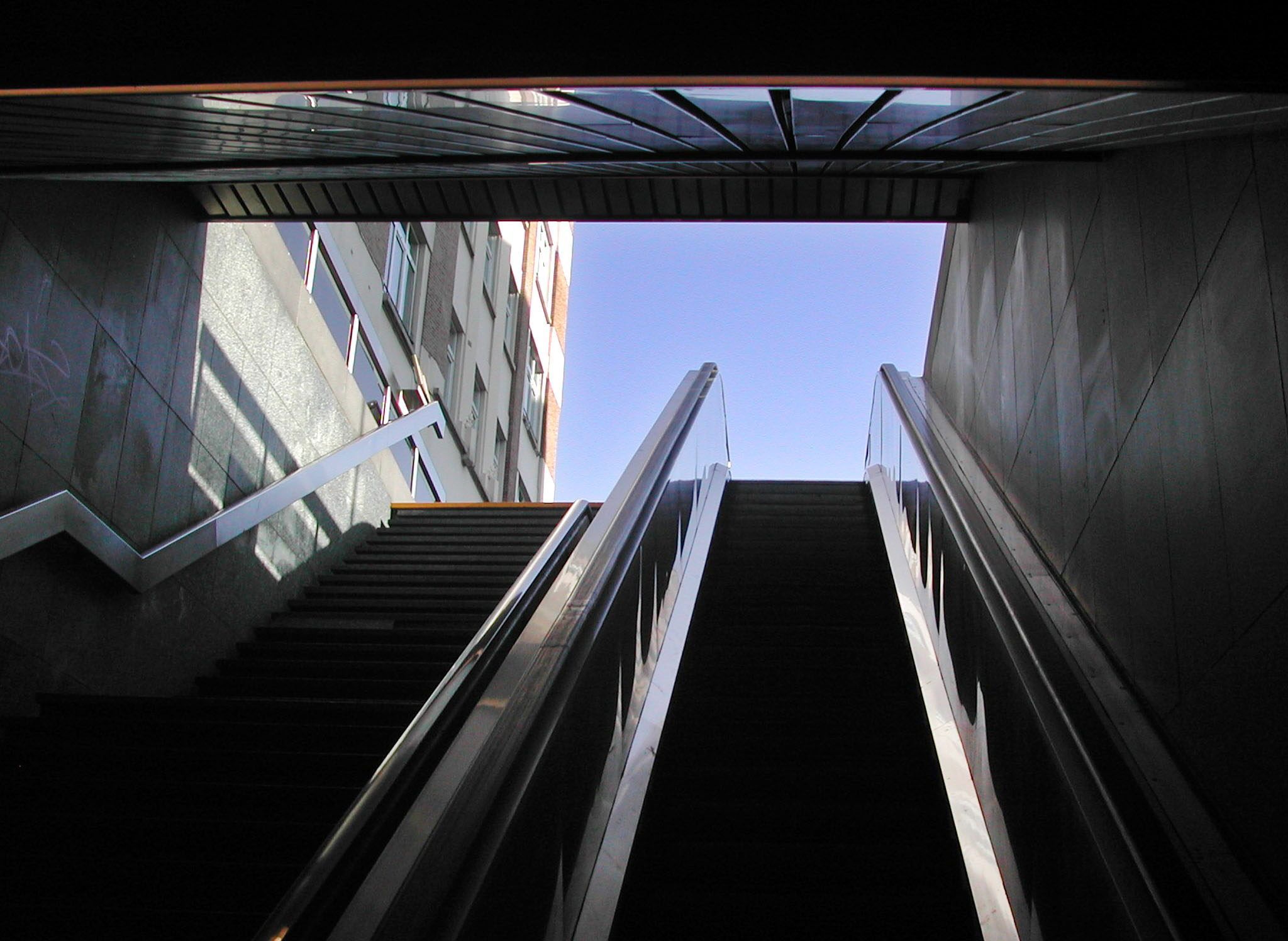
Credit: Belga / Bertrand Vandeloise
Brussels Mobility owns the metro stations and is responsible for replacements, while maintenance and repairs fall to STIB, which runs the metro. Both work together to improve the network and its accessibility and have planned an extensive, ongoing renovation programme.
"Brussels Mobility is the owner of the metro and premetro stations, meaning that everything that has to be replaced is their responsibility," STIB spokesperson An Van Hamme previously told The Brussels Times. Ensuring a lift or escalator stays fixed can therefore be difficult with this shared responsibility.
Escalators are also made to measure and cannot be ordered in batches, which slows down renewal projects. "Everything must be measured to fit, so every project demands extra study time followed by the time needed for construction."
Heavy lifting
Since 2022, they have intensified escalator maintenance, Vermeersch confirmed, with up to 12 services per year for older models compared to six before. In 2025, seven escalators were also replaced, as well as eight lifts.
"20 to 25 escalators are replaced every year," Vermeersch said. Almost all of the older escalator models, first installed in 1969, have now been replaced. Recent examples include Parc, Porte de Namur, and Diamant, in the context of wider renovation works.
The proportion of metro stations accessible with lifts has also increased to 84% (up from 80% in February 2025, and just 58% ten years ago), thanks to the opening of lifts in Simonis, Parc and Horta on 5 January. The ultimate aim is to install lifts in every station in Brussels.

The entrance of Brussels' metro station Horta, Monday 23 January 2012. Credit: Belga / Dirk Waem
But ongoing acts of vandalism, and the deliberate overuse of the emergency stop button, are on the rise and are hindering the operator's efforts.
On a more uplifting note, the STIB app makes it possible to see in real time if lifts are available at a certain station. "It is also possible to check the box 'itinerary without stairs' when looking for the best way to move about Brussels on our website or in the app."
