
The Eurovision Song Contest's first 2026 semi-final is taking place tonight (12 May). But amid heated debate over Israel's participation and several countries boycotting as a result, various Belgian non-profits are responding with an alternative concert in Brussels on Tuesday.
The 70th edition of the renowned Eurovision Song Contest kicked off on Sunday. Thousands of fans from around the world have descended on the Austrian capital of Vienna, and over 170 million viewers are expected worldwide. However, the global music competition has been at the centre of controversy in recent years due to Israel's participation, and it is now facing the biggest boycott in its 70-year history.
Broadcasters in Spain, Ireland, Iceland, the Netherlands and Slovenia have withdrawn from the event, protesting against Israel's war in Gaza following the 7 October 2023 attack by Hamas.
Spain, Slovenia and Ireland also announced on Monday that they would not be broadcasting Saturday's final at all. More than 1,000 artists and groups, as well as Amnesty International, have reportedly called for a boycott of this year's competition.
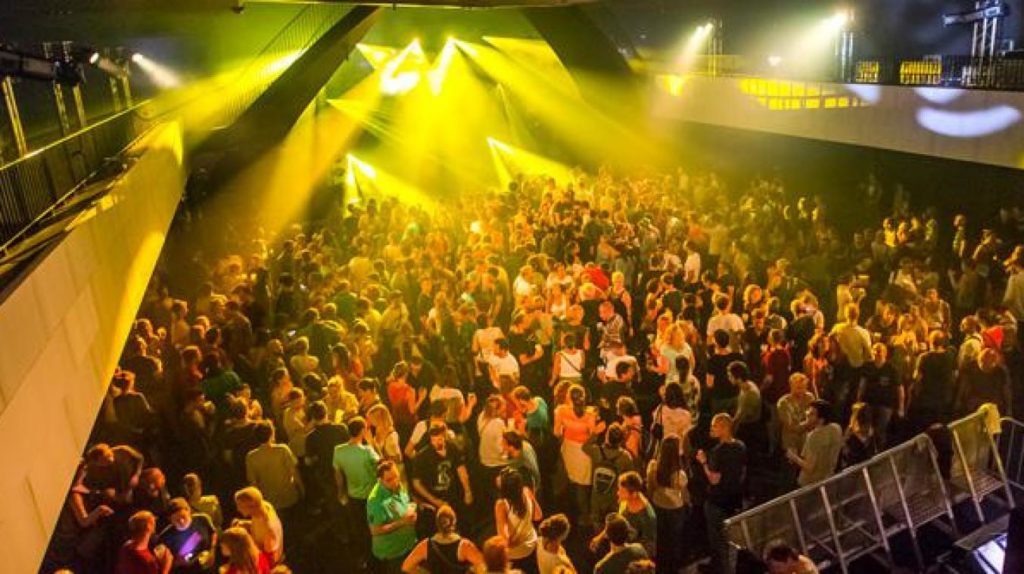
In response to the calls to boycott, several NGOs (11.11.11, ABVV-FGTB, ACV-CSC, Intal, SOS Gaza, and Vrede vzw) are organising an alternative concert, 'United for Palestine', at La Madeleine in Brussels on Tuesday 12 May – on the very evening that Belgium is competing in the Eurovision semi-final alongside Israel.

Credit: EBU / Corinne Cumming
The organisations point to the competition's "double standards", as Russia was banned following its full-scale invasion of Ukraine in February 2022.
"We know that exclusion is indeed possible. Following the Russian invasion of Ukraine, Russia was immediately excluded to protect the competition’s reputation. Belarus was also excluded from the song contest due to the political and propaganda messages in its entry. Why does that red line not apply when Palestinian civilians are being killed en masse?" they said.
"We refuse to accept double standards. We refuse to accept business as usual."
Despite the boycott, Belgium confirmed in December that it would be participating, following a vote by members of the European Broadcasting Union (EBU). This year, it is up to the Francophone public broadcaster, RTBF, to send a candidate, but Flemish public broadcaster VRT will still broadcast the contest.
RTBF General Director, Jean-Paul Philippot, said in a statement at the time that the Belgian broadcaster's participation is "accompanied by a clear stance denouncing restrictions on freedom of information, calling for the protection of all citizens and journalists, and guaranteeing their safety in the field".
What's in store?
Several former Belgian representatives at the Eurovision Song Contest are on the programme. The 'United for Palestine' line-up includes previous Belgian Eurovision candidates Laura Tesoro (2016), Gustaph (2023) and Geike Arnaert (2021). They will be joined by Daan, Zap Mama, Nai Barghouti, Noé Preszow, Lennert Coorevits and Stef Kamil Carlens.
The Palestinian contingent will be represented by the artist Bashar Murad and the Brussels-based dance group of Palestinian origin, the Rajeen Dabkeh Group. The evening will be presented by Dalila Hermans and Vinz Kanté.
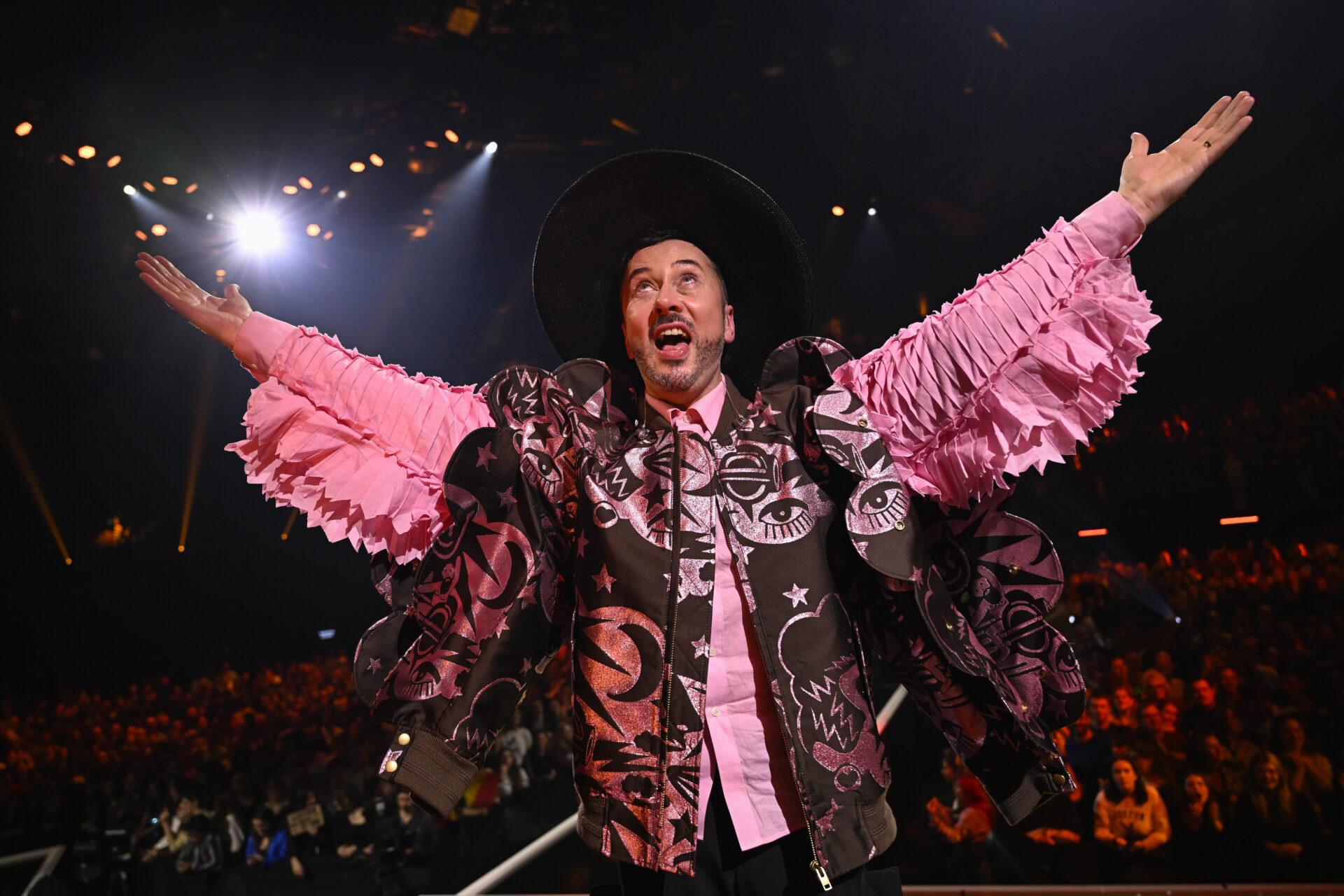
Gustaph, who was the Belgian entry for Eurovision 2023. Credit: Belga / Laurie Dieffembacq
'United for Palestine' is part of a broader European movement: similar initiatives are being organised in various cities and countries, including Vienna and Slovenia, according to the NGOs.
"Since October 2023, Israel has killed more than 75,000 Palestinians in Gaza. That figure continues to rise every day. The country systematically blocks humanitarian aid and uses hunger as a weapon. Hospitals, schools and residential areas lie in ruins. International law has been torn to shreds. [...] And yet Israel is being given an international platform," the non-profits said.
Israeli Minister of Culture and Sports, Miki Zohar, meanwhile, has described the calls for a boycott as "shameful and hypocritical".
"The Eurovision Song Contest is a celebration of music, culture and brotherhood between nations, not a platform for scoring political points," Zohar said.
