
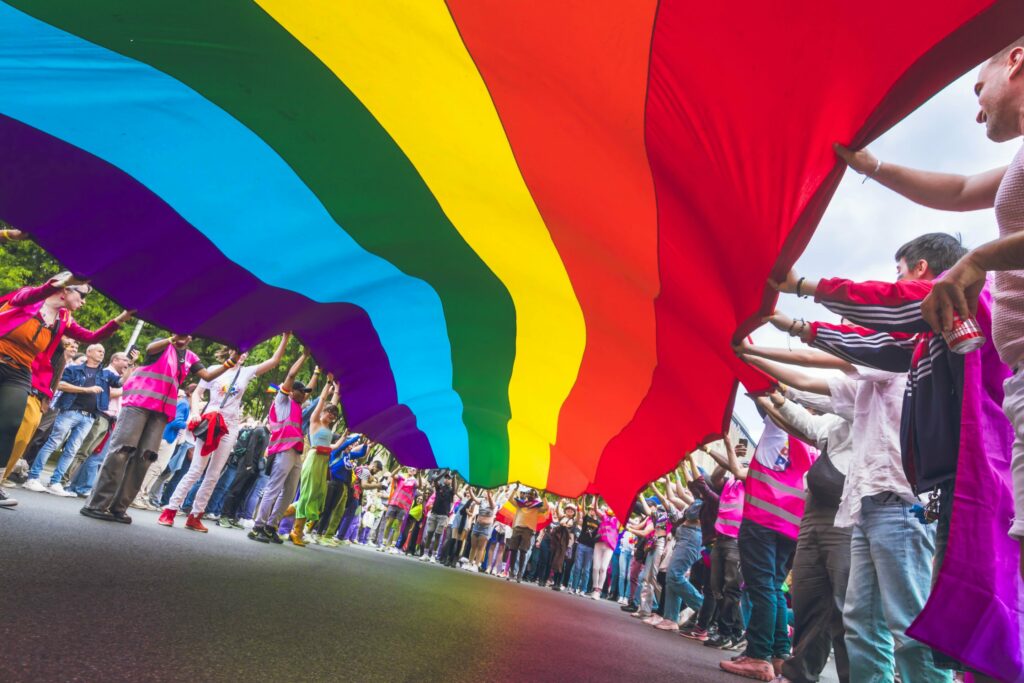
One of the highlights on Brussels' cultural calendar is taking place across the city this weekend. This year's festivities are set to be bigger and better than ever, as Brussels Pride celebrates its 30th anniversary.
It will not have gone unnoticed that the city centre is currently decked in all the colours of the rainbow for Pride, with 180 flags lining the streets, garlands adorning Rue du Marché au Charbon, a giant 'Pride 30' installation at Mont des Arts, and the façades of the Bourse building and La Monnaie theatre illuminated – all in celebration of Brussels Pride.
Pride is a global event which commemorates the Stonewall riots on 28 June 1969 in New York City's Greenwich Village. It brings people together to take to the streets to champion the rights of the LGBTQ+ community and celebrate diversity.
While many countries celebrate in June, the week-long festivities in the Belgian capital always coincide with the International Day Against Homophobia, Transphobia and Biphobia on 17 May.
Brussels Pride saw 220,000 people attend last year, and organisers confirmed to The Brussels Times they are expecting similar numbers this year for the event's 30th anniversary.
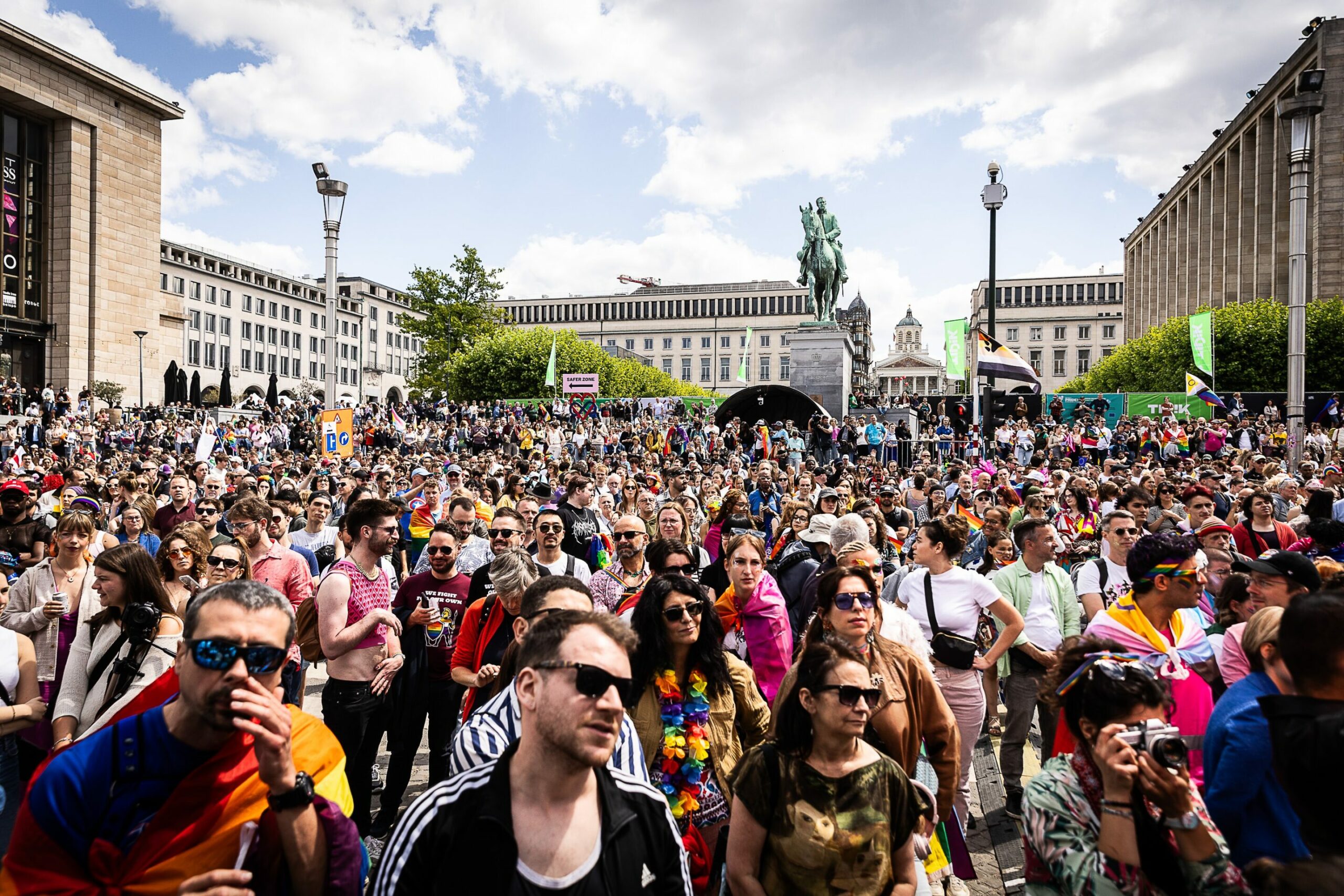
People gather for the Brussels Pride parade through the streets of Brussels on Saturday 17 May 2025. Credit: Belga / James Arthur Gekiere
The theme for the landmark 2026 edition is 'When Times Get Darker, We Shine Brighter', which aims to address increasing online and public hate speech against women and the LGBTQ+ community.
"As the capital of Belgium and Europe, Brussels has a responsibility to continue moving towards greater equality. It must combat multiple and intersectional discrimination. Our Constitution and our laws must be adapted to combat hate speech online and across all media (hate is not an opinion)," the organisers stated in a press release.
"Brussels must clearly reaffirm the need to protect all LGBTQ+ people, whether they are visible or invisible. It must finally support, develop and enforce international human rights conventions."
What's on the programme?
As every year, the City of Brussels and LGBTQ+ umbrella organisation RainbowHouse have organised a packed programme of concerts, screenings, performances and workshops across a dozen venues over ten days.
There was a themed guided tour at the City Museum on 8 May, exploring Brussels' LGBTQ+ history, and Cabaret Mademoiselle's 'Queer Echoes – Tales of Brussels City Hall' on 13 and 14 May. The Mini-Pride parade also returned on Thursday, weaving through the Saint-Jacques district and paying tribute to Manneken-Pis, who is dressed for the occasion.
For the first time ever, the municipality of Ixelles also launched 'Pride in XL' to kick off the weekend festivities. VTT, Rokia Bamba, Legolane and Azo performed DJ sets from 17:00 to 23:00 on Friday on Place du Luxembourg, opposite the European Parliament. Several organisations also took the floor to highlight the community's ongoing struggles.
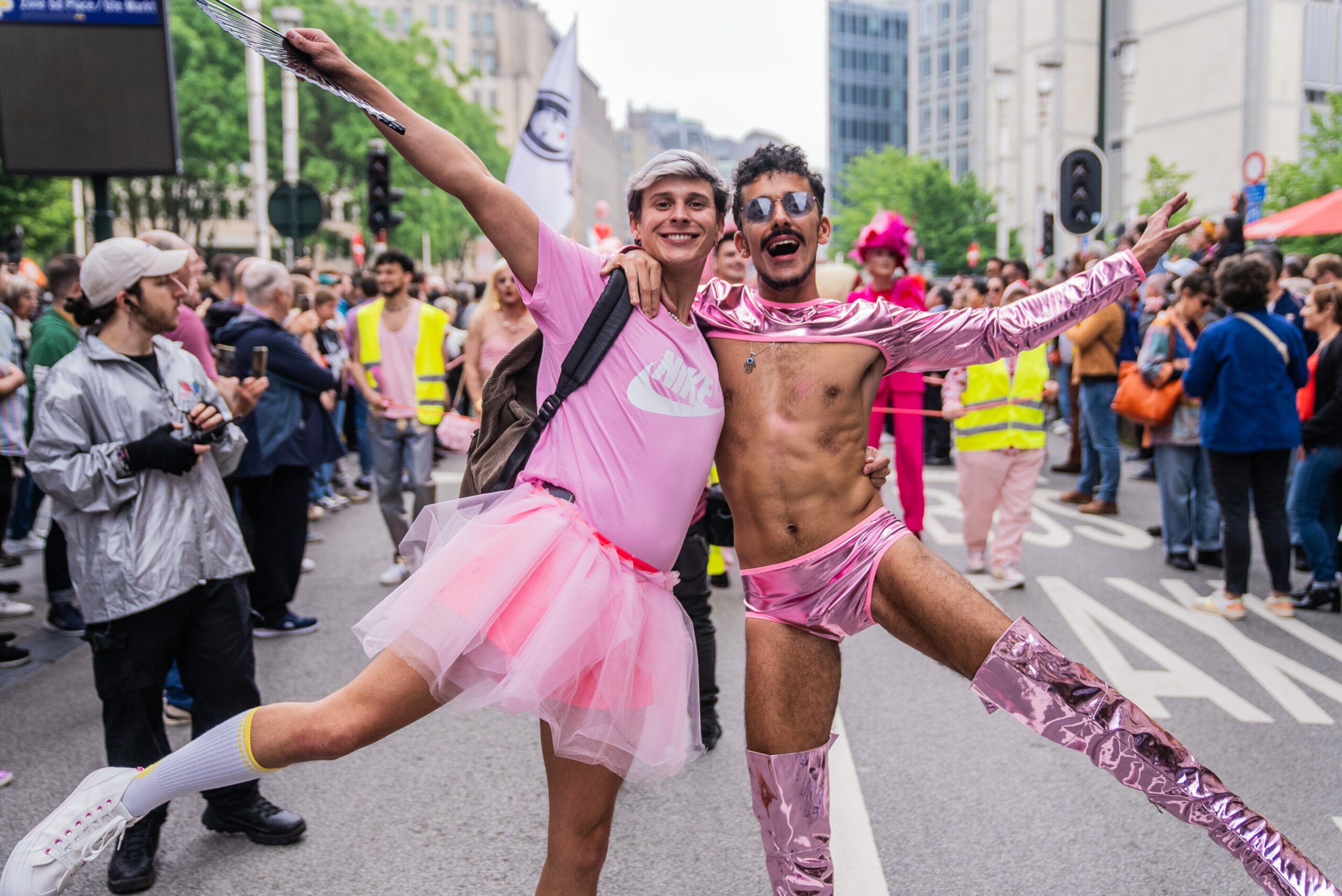
Belgian Pride Festival 2024. Credit: visit.brussels/Mathieu Golinvaux
The main event, however, is scheduled for Saturday 16 May, when the famous Pride March will set off from Mont des Arts at 14:30. It will fill the streets of the city centre, before looping back to the starting point at 16:30-17:00.
An array of Belgian LGBTQ+ artists and allies will take to the Mont des Arts stage from 12:00 on Saturday, including the queer choir Sing Out Brussels!, Andrei Stan, Blacksapho, RaQL and Chose.
A Safer Pride scheme will be in place throughout the day to ensure everyone's safety. There will be a 'Safer Zone' set up at Mont des Arts, where volunteers and trained professionals will offer a listening ear as well as psychosocial and medical support where needed. A mobile Care Team will also patrol the entire area and intervene when necessary.
Homophobia on the rise
Amid the festivities, however, is a stark reminder that in the turbulent political climate, LGBTQ+ rights are being rolled back across the continent.
In Belgium, reports linked to sexual orientation discrimination or violence were recorded nearly every day last year, according to new figures published by inter-federal equality body Unia.
In total, Unia recorded 311 reports related to sexual orientation in 2025, while the Institute for the Equality of Women and Men noted 454 reports involving transphobic hate speech or behaviour. However, the institute stressed that official figures represent only "a tiny fraction" of the discrimination experienced by LGBTQ+ people in daily life.
The Rainbow Map, which ranks 49 European countries on their respective legal and policy practices for lesbian, gay, bisexual, transgender and intersex people from 0-100%, also published its 2026 edition on 12 May and revealed that Belgium had slipped off the podium – dropping from third to fourth place.
Spain, Malta and Iceland now complete the top three, while Turkey, Azerbaijan and Russia remain at the bottom of the scale.
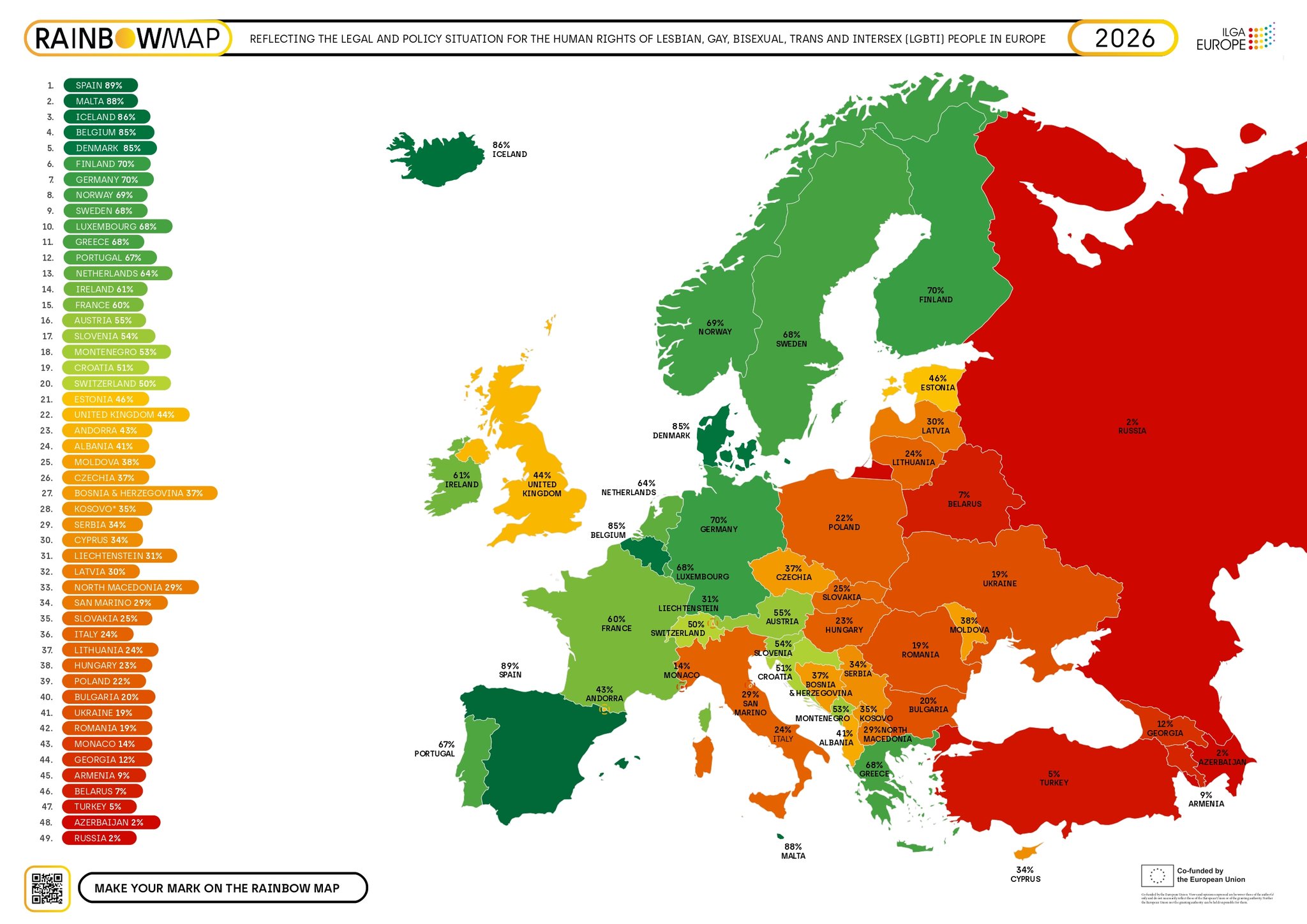
The Rainbow Map for 2026
Despite scoring highly in several areas, including 'Space for civil society', 'Family' rights, including same-sex marriage, adoption and trans parenthood, and policies against 'Hate crimes and statements', Belgium's progress has stalled elsewhere, and it is therefore being overtaken by other countries.
Furthermore, online hate speech in Belgium largely goes unpunished, according to Belgian umbrella organisation çavaria. "The insecurity for the LGBTQ+ community is peaking on social media," resulting in "total impunity for online hate mongers," çavaria said.
The organisation also criticised the lack of legal recognition for non-binary people, who are still required to register officially as either male or female in Belgium, as well as the lack of legal protection for intersex minors against unnecessary medical interventions. "Unnecessary, invasive surgeries can still be performed on children simply to make their bodies fit within a social norm," çavaria said.
In response to the ranking, Flemish Minister for Equal Opportunities Caroline Gennez (Vooruit) acknowledged that Belgium risks falling behind if reforms stall. "Ideas and concepts that we have long considered established are declining," she said, calling for "international solidarity".
Meanwhile, Federal Minister for Equal Opportunities Rob Beenders (Vooruit) described the Rainbow Map ranking as "a clear warning", adding that a stronger approach to online hate speech and greater awareness around diversity and respect were needed.
"Progress is never a given, and acquired rights only remain strong if we continue to protect, strengthen and anchor them."
