
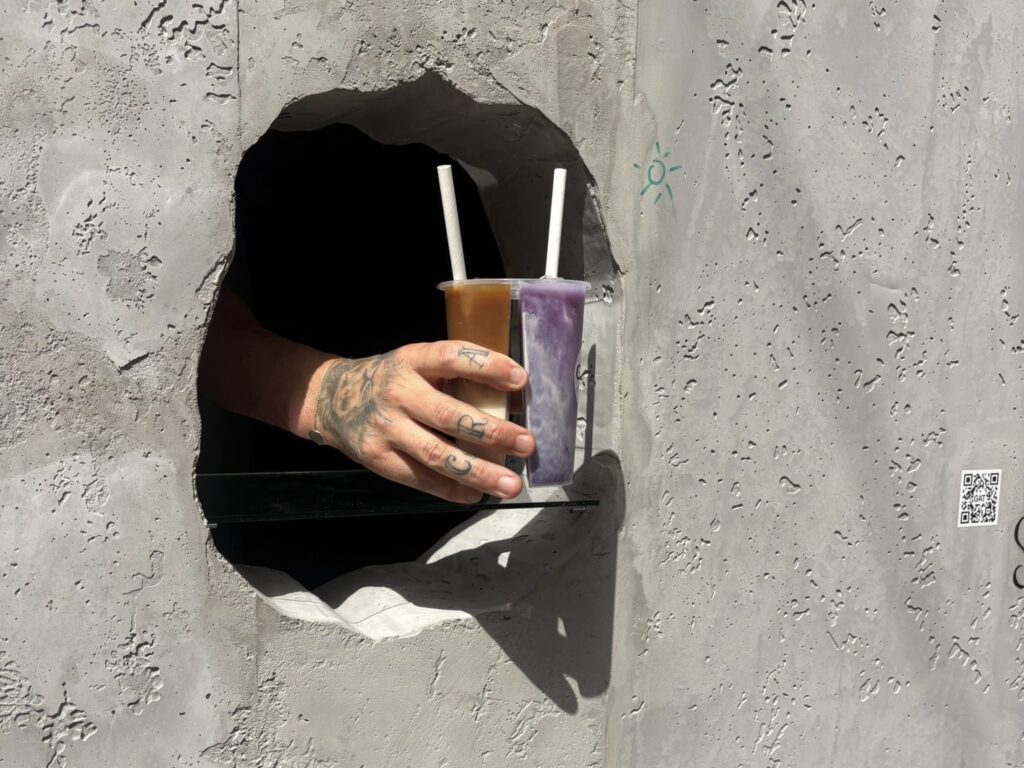
A few metres from Place Flagey in Ixelles, a man is serving coffee anonymously through a hole in a wall. There are no tables, no baristas and no cosy interiors. Just one man and a QR code.
The new café spot, dubbed GAT and located at 67 rue Lesbroussart, is gaining attention across Brussels. The man behind the idea is the one behind the wall. For the moment, he works on his own and prefers to remain anonymous.
Intrigued, The Brussels Times reached out to him to learn about the project.
"I've had several businesses before," he said. "Every time, people identify the place with the owner. If you're not there one day, people tell you it wasn't the same. I wanted something different."
The man is no newbie to the Brussels hospitality business. After leaving school, he moved abroad and began working in hotels, bars, and restaurants in the Canary Islands, Barcelona, and Ibiza.
"I started in entertainment and hospitality, then behind bars, making cocktails. I've always liked creating things, and I've always liked contact with people," he told us. Years later, he opened his own venues in Brussels. Despite some success, he says the industry has changed dramatically.
"Horeca [Brussels hospitality sector] isn't what it used to be," he says. "Everything costs more. Margins are tighter. Before, people did it out of passion, and it was profitable. Today, many operators are working incredibly hard, and at the end of the year, there's very little money left for them."
GAT was born out of that frustration. He teamed up with an American friend who now handles the company's branding. Together, they began developing a concept that was simple and easily replicable.
Credit : Handout
'Coffee dealer'
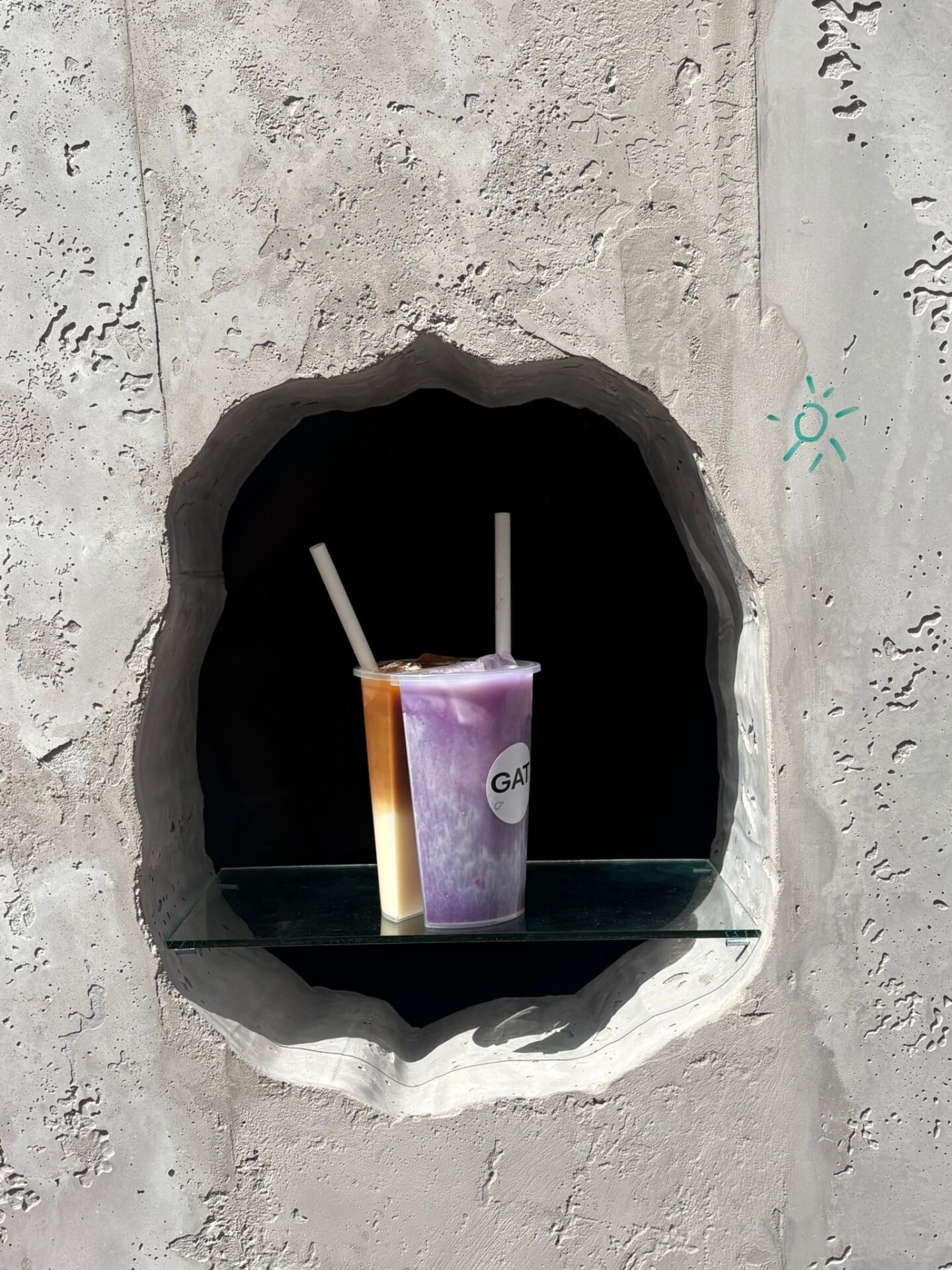
Customers order online and collect their drinks through a small opening in the wall. The business operates from a space of barely 10 square metres. There is almost no decoration, no staff and very little equipment compared to your local traditional café.
Customers can place an order before leaving the office and collect it within minutes. During busy periods, most people wait less than 40 seconds for their drink.
"It looks like a simple hole in a concrete wall, but it's actually very carefully thought through," the owner explained.
The idea was inspired by concepts he encountered abroad, including Italy's famous wine windows, where drinks are served directly through small openings in historic buildings. His version reflects what he sees as a broader shift in the capital's urban life.
"Brussels today isn't the Brussels of 20 years ago. Everything moves faster," he said.
'What about human contact?'
The owner is unfazed by criticism that the concept creates social distance. "People say, 'What about human contact?' Human contact exists everywhere else," he told us.
"I love talking to people. If someone wants to chat, I'm happy to. But here the idea is efficiency. You grab your coffee and go about your day. The coffee has to be good. That's the starting point. But today, in the social media epoch. It also needs to look good. It needs to be Instagrammable."
GAT serves traditional drinks like espresso and matcha, as well as refreshing coconut-based drinks, Brazilian-style lemonade, and unusual flavour combinations such as mango-jalapeño and yuzu-mint.
Besides the drinks, encountering the mysterious person serving coffee behind the wall is an experience in itself. "People want to know who's behind the wall," the owner explained.
The man behind the wall wants customers to remember the concept, not the individual, and is keen to expand to Antwerp, Ghent, or even beyond Belgium's borders.
Credit : Handout.
View this post on Instagram
