
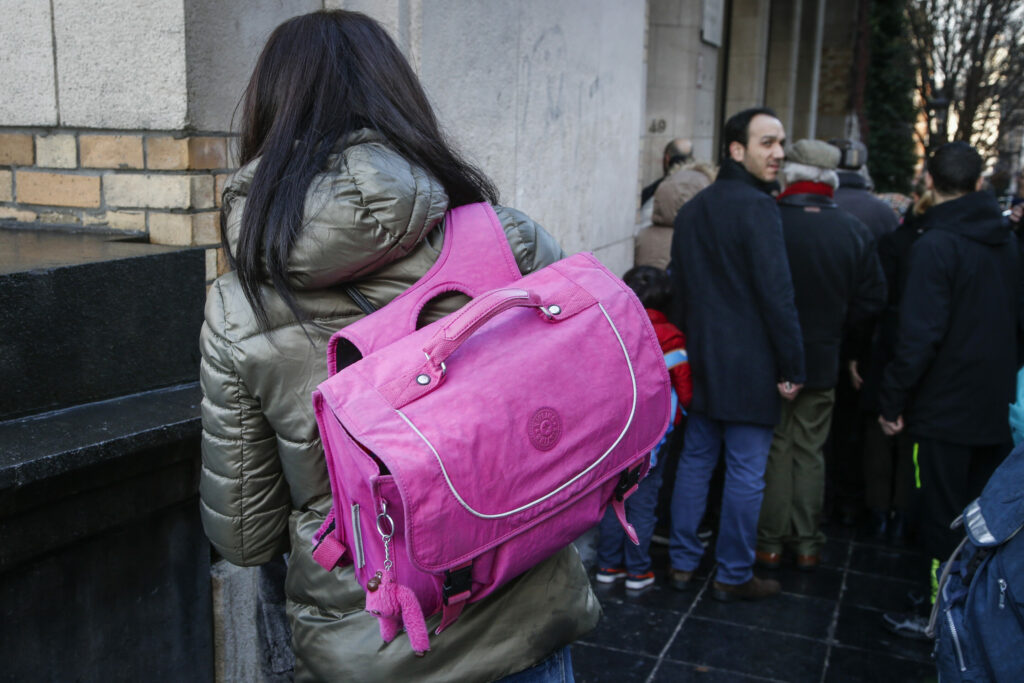
The teacher shortage in Brussels is acute, with recent figures (again) showing that Dutch-language education is leading the way in terms of unfilled vacancies in the Capital Region. Now, the Flemish Parliament has approved an important emergency measure.
As of this school year, Dutch-language schools in Brussels can convert all unfilled teaching hours into "points". This will enable them to immediately recruit additional staff for non-teaching tasks and relieve the burden on teachers.
"We must do everything we can to retain the teachers we have, and give them extra support," said Flemish MP Hannelore Goeman (Vooruit), who put forward the proposal.
The consequences of the teacher shortage in Brussels are far-reaching: for months, hundreds of children go without a Dutch or mathematics teacher, and spend hours keeping themselves busy in "free" study periods.
Acute shortage
As a result, some schools have switched to a four-day school week. In the most dramatic cases, however, schools are closing entire classes. This was recently the case at Balder primary school in Saint-Gilles, leading to parents and children suddenly having to start looking for another school in the middle of the school year.
But finding a place in Dutch-language education in Brussels is often extremely difficult, even without the issues of shortages.
"I really lose sleep over how our Brussels children's opportunities are being squandered. Brussels is the youngest region. Our youth is our strength, but today we are squandering their talent," Goeman said. "If we want our young people to make something of their lives, they need teachers. And today, there are not enough of them. That is an absolute tragedy for our city."
Goeman pointed out that the teacher shortage in Brussels is even more acute than in the rest of Flanders: twice as high as in Antwerp or Ghent. Unlike in Flanders, the threat of class closures is unfortunately very real here.

Flemish MP Hannelore Goeman. Credit: Vooruit
Therefore, she has been advocating emergency measures for some time, specifically for Brussels. These measures must first and foremost keep schools afloat by retaining the teachers who are already there.
"During my school visits, I often hear how schools where a few teachers leave quickly end up in a negative spiral: those who remain must take on a lot of extra work and end up dropping out," she said. This is especially true now that many Brussels teachers who live in Flanders also have job opportunities closer to home.
"As a result, Brussels schools sometimes quickly find themselves on the brink of collapse," Goeman stressed. "Therefore, we must first and foremost do everything we can to keep the teachers we already have, by treating them well and giving them extra support."
This, she explained, is the aim of the emergency measure that was approved.
What does this emergency measure mean?
In concrete terms, all Dutch-speaking schools in the Brussels Region will now be able to convert 100% of unfilled teaching hours into so-called "points". Schools can use these points to recruit additional support staff, which can help with non-teaching tasks, such as classroom management, educational tasks, administration, supervision, etc.
"There is an urgent need for extra hands in the classroom. It also sends a signal that we absolutely want to avoid our teachers being left to cope on their own – literally," she said.
This system of converting unfilled hours also exists in Flanders, but only for 20% of those unfilled hours. Given the acute situation in Brussels, that ceiling is now being raised to 100%. Additionally, in Flanders, this conversion is only possible from 1 October. In Brussels, has been possible since the first day of the school year (1 September).
"Normally, management must first try for a month to fill the vacant positions before they are allowed to convert them, but in Brussels, that is a hopeless task today," Goeman said. "Many Brussels schools are starting the school year with an incomplete team, with no prospect of improvement."
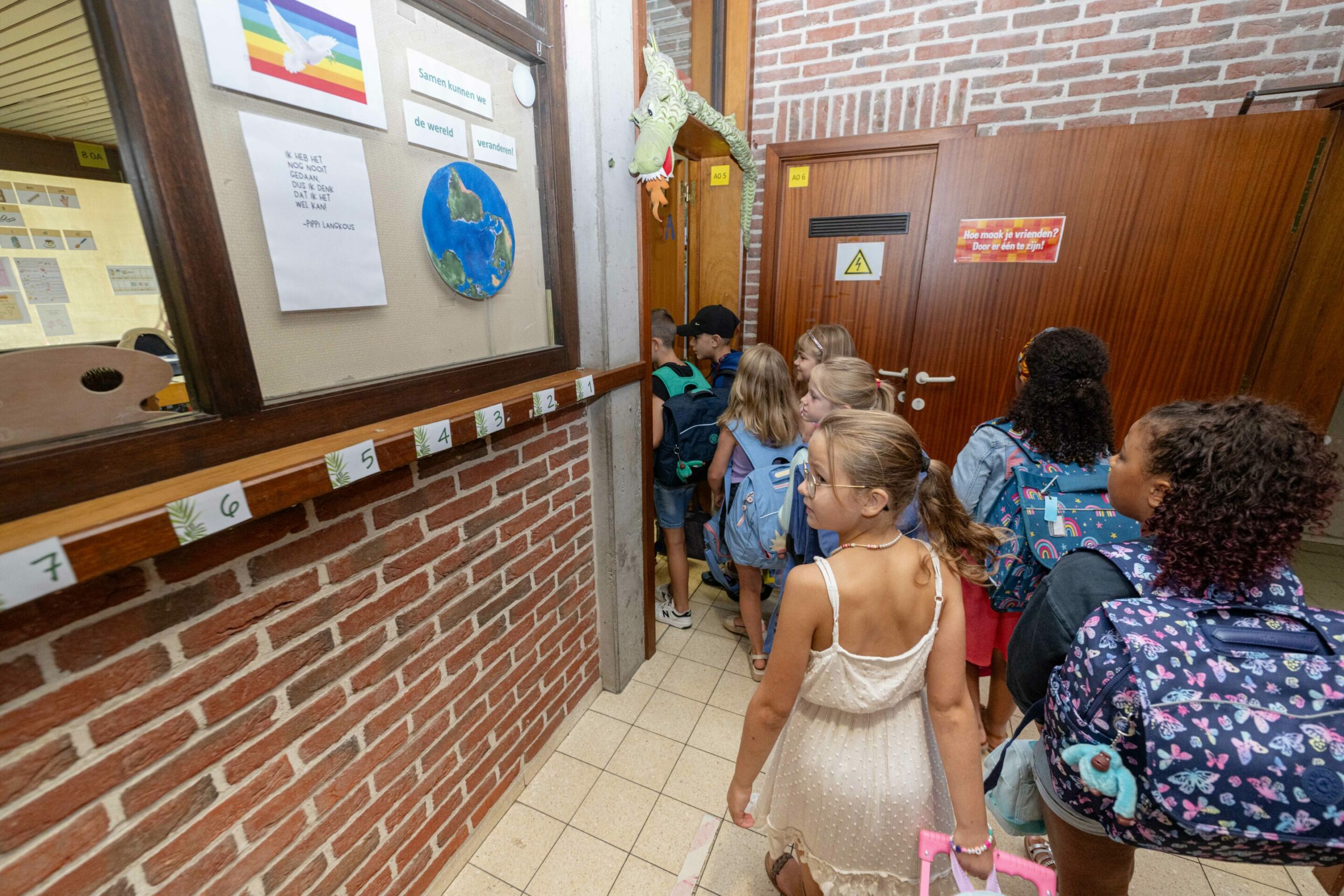
Pupils entering a classroom. Credit: Belga / Jonas Roosens
According to her, there is no point in letting the school struggle for a month. "Now we are giving the management the opportunity to put a team together as quickly as possible."
Yet, Goeman realises that this is just an emergency fix: in the long run, more teachers will still be needed. She said she is "really hopeful" about the long-term plans of Flemish Education Minister Zuhal Demir (N-VA) to attract and retain more teachers.
"And we also need to improve teacher training programs, including in Brussels," she said. "The big challenge here is to get more Brussels residents in front of the classroom. That starts by getting young people interested in the job, by means of scouting and coaching programmes."
Investing in Dutch
It also means investing in opportunities to learn and practice Dutch – as the Flemish Government is currently doing – so that the Brussels youth is strong enough at the end of secondary school to educate the next generation.
Some time ago, hundreds of Dutch-speaking schools in Brussels campaigned with the message "Don't forget Brussels." For Goeman, this measure proves that the Flemish Parliament have by no means forgotten the capital.
"That is also my duty as a Flemish member of parliament from Brussels: to work on concrete short-term emergency solutions and to continue to focus on more structural long-term solutions that will help our city move forward," she said. "Always based on the same conviction: that Flanders and Brussels not only need each other but can also strengthen each other."
