
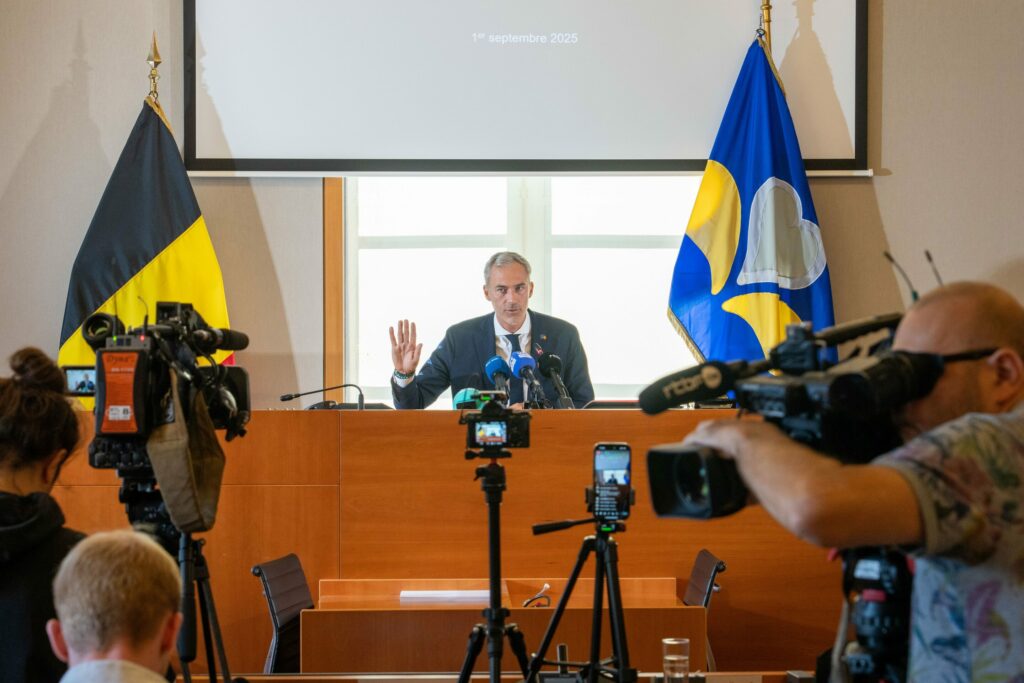
More than 15 months after the Brussels elections, the Capital Region is no closer to forming a new government. After over a year of gridlocked negotiations, some parties are floating the idea of new elections, while others continue to point the finger at each other.
Throughout the impasse, short-lived glimmers of hope have alternated with disappointments as the political situation has become increasingly polarised.
All this comes at a time when Brussels is in desperate need of leadership. The city faces serious political, economic and social challenges, including major security threats and ongoing concerns about the dire state of the capital's finances. A budget for next year still needs to be approved.
What is the problem?
The Brussels Parliament is made up of 89 seats. Of those, 17 are reserved for the Dutch-speaking parties, while the other 72 are occupied by the French-speaking side.
After elections take place, both language groups first need to find a majority on their own side: a Flemish coalition with at least nine seats in the Parliament, and a Francophone one with at least 37.
Once that has happened, these two groups can (in theory) then form one unified government for the entire Brussels-Capital Region.
All this sounds simple enough on paper, but the last election results made the government formation process in Brussels exceptionally difficult this time round, political analysts have told The Brussels Times.
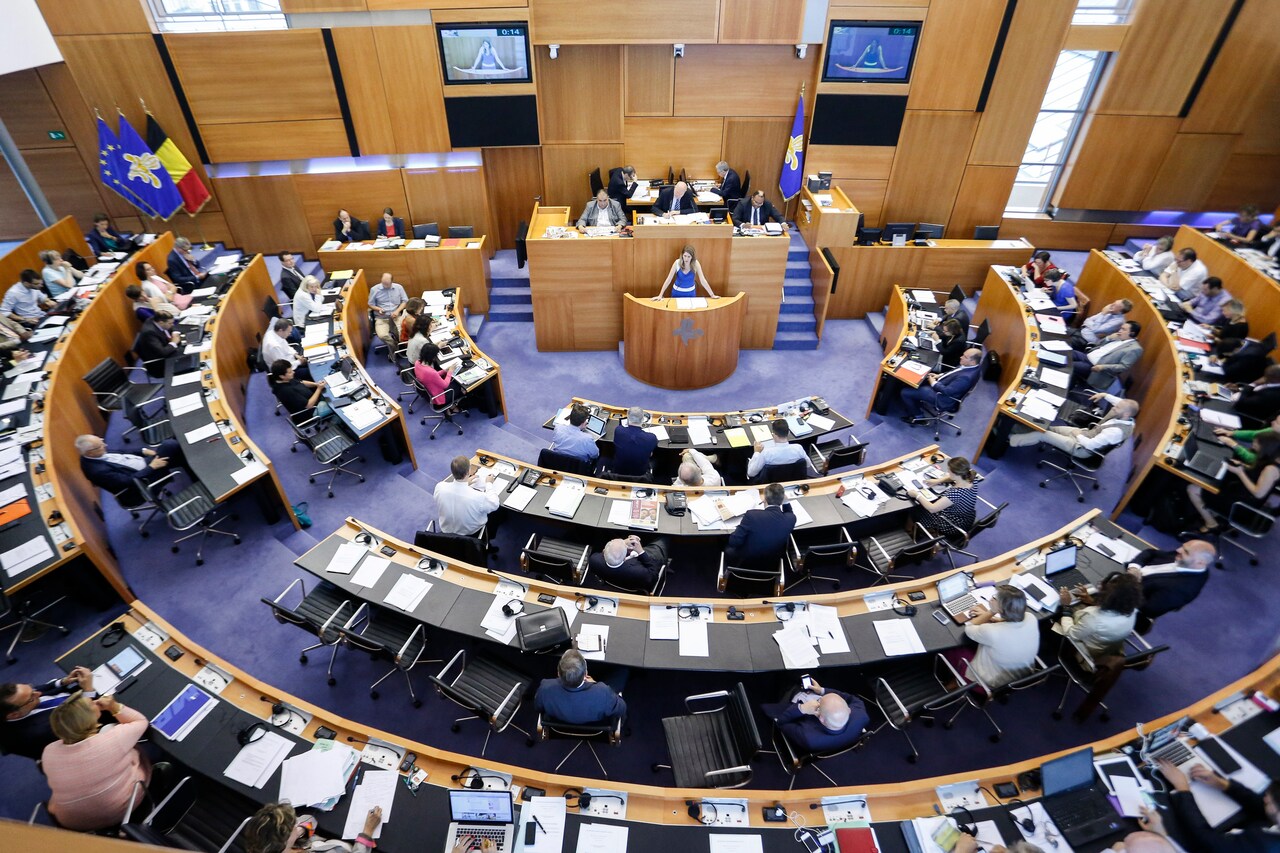
Brussels Parliament. Credit: Belga
In the last elections, the results in the Dutch- and French-speaking electoral colleges were unusual: while right-wing liberal MR became the largest party on the French-speaking side, the progressive green Groen party – MR's polar opposite – won convincingly on the Flemish side.
Last summer, the French-speaking parties were quick to find a coalition in their linguistic group: MR (liberals), Les Engagés (centrists) and PS (socialists) agreed to stick together – giving them the required majority of 44 seats of the 72 in Parliament reserved for French speakers.
This alliance lasted until an agreement was finally reached on the Dutch-speaking side at the end of November. After months of difficult talks and changing coalition partners, Groen, N-VA (Flemish nationalists), Open VLD (liberals) and Vooruit (socialists) came together – holding ten of the 17 seats for reserved Dutch speakers in the Brussels Parliament.
However, the presence of N-VA is a thorn in the side of PS, as they believe the Flemish nationalist party to be racist and anti-Brussels and are against the party's reform plans. The party blew up talks in early December, and has refused to continue negotiating as long as N-VA has a seat at the table.
Now, many months, proposals, side tracks and vetoes later, the issue has still not been solved.
What is the latest?
In early September, the Brussels leader of MR David Leisterh suggested that new elections in the Capital Region be called through the Federal Parliament to break the impasse in the negotiations. "After a year and a half," he said, "all options must be put on the table."
Leisterh pointed out that the Brussels Parliament cannot simply dissolve itself, but proposes an alternative approach. "We could turn to the Federal Parliament and ask for a two-thirds majority to call new regional elections in Brussels."
This requires an amendment to the Special Brussels Act, which held the 1989 state reform that created the Brussels-Capital Region. This law could be reopened at the federal level, although he admits that this is "technically and politically complex."
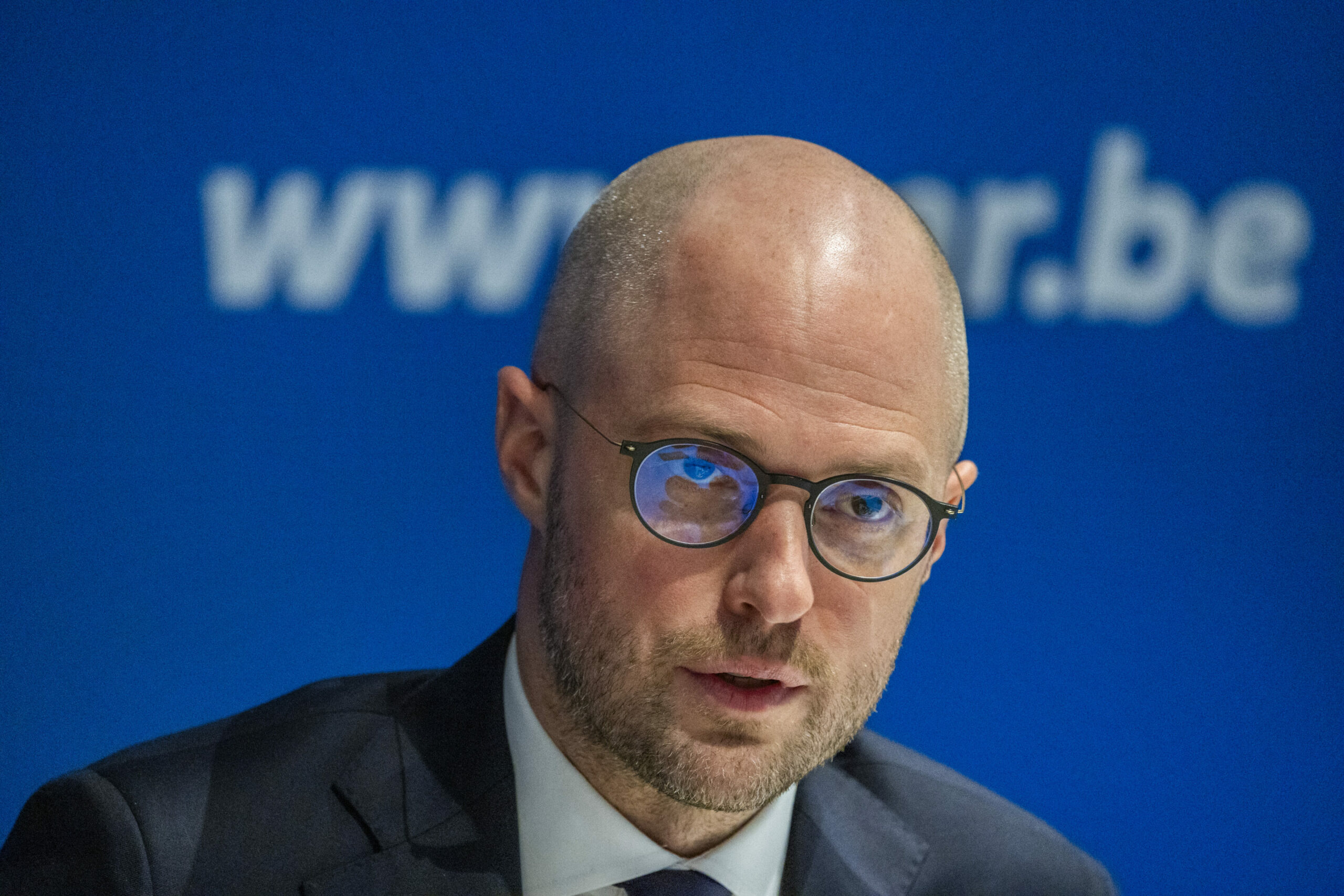
David Leisterh (MR) during a press conference on the negotiations for a new government for the Brussels Capital Region. Credit: Belga/Nicolas Maeterlinck
While he acknowledged that finding the needed two-thirds majority would be difficult, he also suggested that the opportunity could be used to reform the Brussels electoral system. Among other things, he pointed to the requirement to have a majority in both language groups within the government.
"Let me be clear: I am not calling for new elections. But we should at least consider the option," Leisterh said. He also suggested that just the concrete threat of new elections could "force a breakthrough" in the current negotiations.
Not everyone was in favour, however. Les Engagés said they were not against the principle of new elections, but leader Yvan Verougstraete stressed that "it would not be easy. While CD&V was not in favour of the idea and PS was adamantly against it, N-VA said it could be "a last resort."
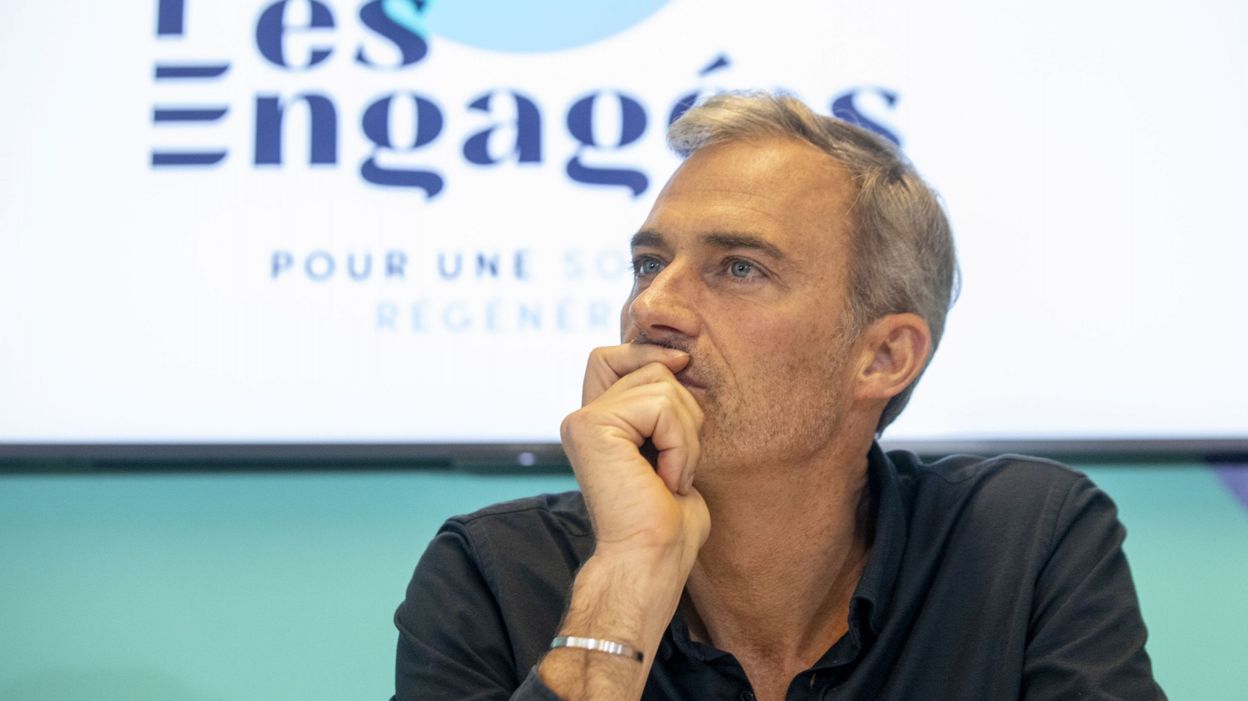
Yvan Verougstraete. Credit: Belga
Pouring oil onto the already blazing fire, Brussels N-VA leader Cieltje Van Achter then called Brussels PS leader Ahmed Laaouej "the Donald Trump of Brussels" in an interview with La Libre. She added that his "contempt for the laws, the institutions, is unprecedented".
For her, Laaouej's refusal to discuss the substance of an agreement with N-VA and his "contempt" for the existing Flemish majority is "a profound democratic failure". She also pointed out that N-VA is the third largest Dutch-speaking party, after Groen and regionalist newcomer Team Fouad Ahidar.
Talking about the potential of new elections, she said it could be an option – albeit a very complicated one. "If some people do not respect the election results, we should not be afraid to go back to the polls. Continuing in caretaker mode for four years is impossible."
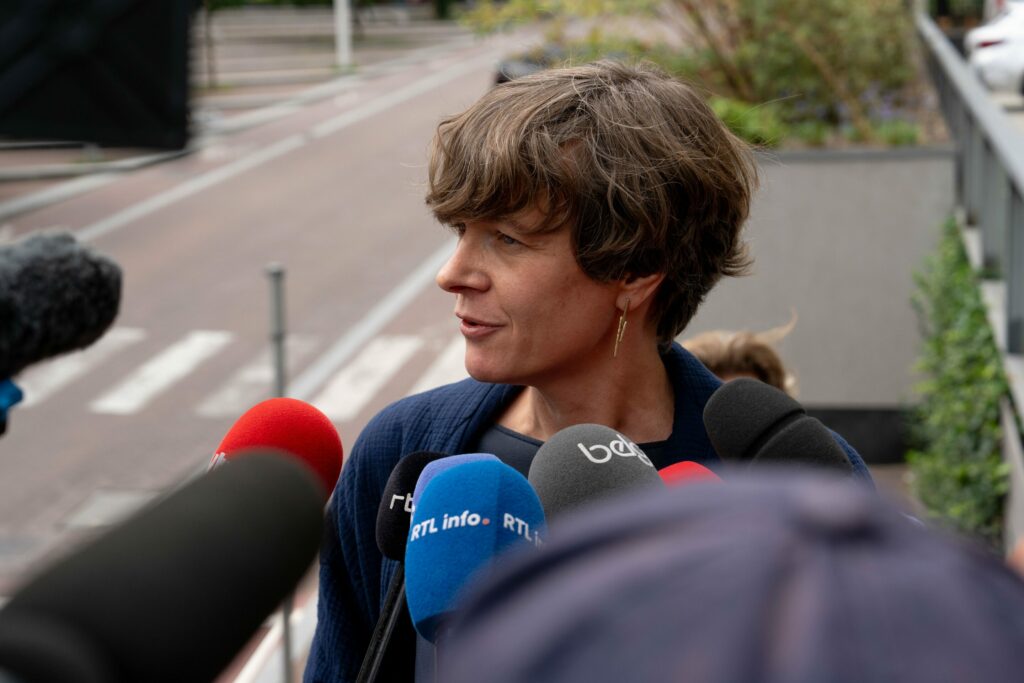
N-VA's Cieltje Van Achter in Brussels, Monday 14 July 2025. Credit: Belga
Meanwhile, Open VLD negotiator Frédéric De Gucht proposed a roundtable discussion with all parties "willing to commit" to a government.
However, he later cancelled the discussion. Of the ten invited parties, only MR, N-VA and Francophone regionalist DéFI were willing to attend the meeting. Now, Open VLD will reportedly look for a new time to reschedule the meeting.
In the meantime, Les Engagés' leader Yvan Verougstraete announced that he himself would table a concrete proposal on how to proceed. "Fifteen months after the elections, Brussels should not restart informal and non-binding discussions, but should start drafting a budget that can be supported by a majority in Parliament." He is working on a draft agreement, which he will propose to the other parties this week.
However, with more talks unlikely to go anywhere new, Team Fouad Ahidar (TFA) stated that they would be "willing to contribute two or more votes to form a majority in both language groups" if a good, concrete project was put forward.
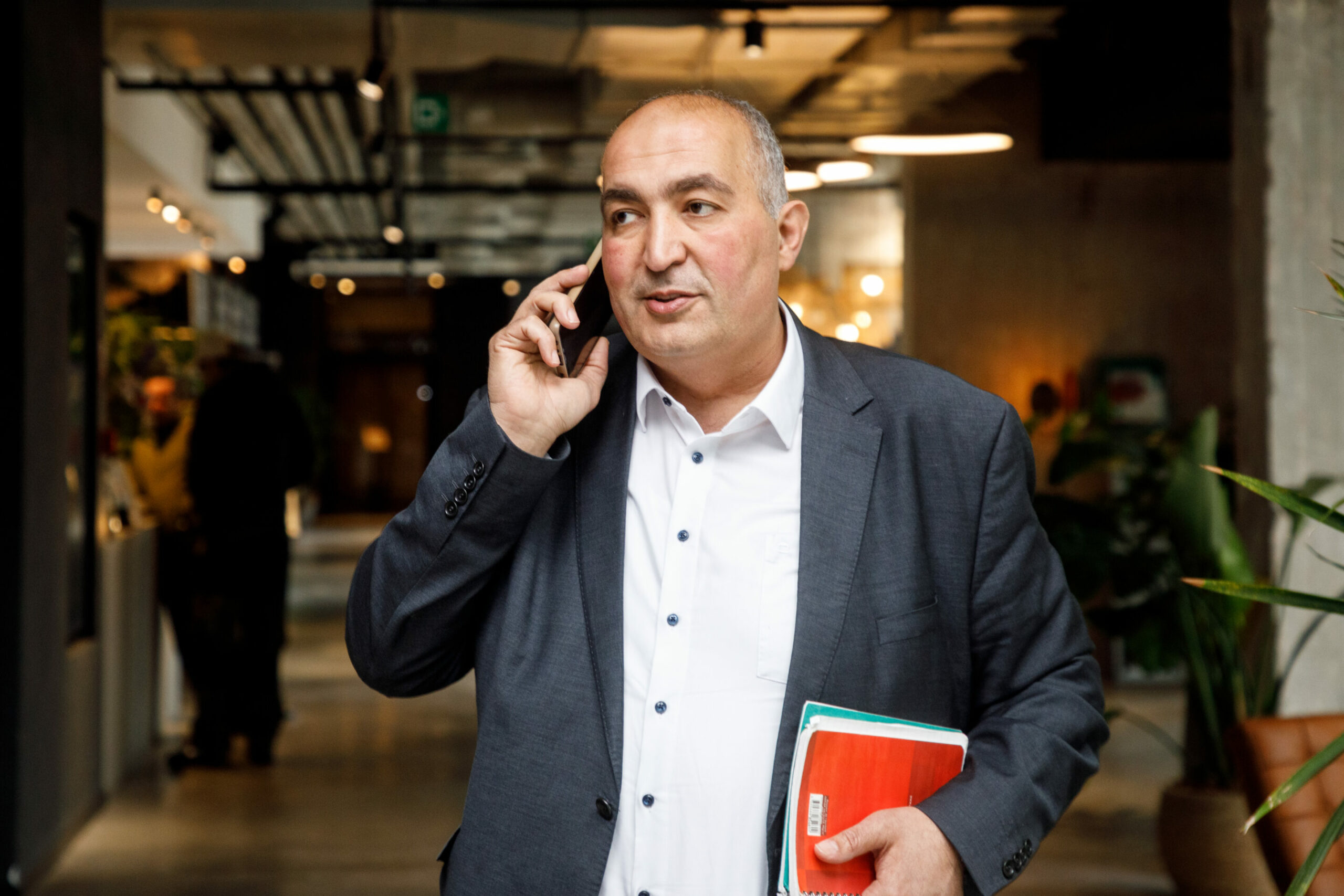
Fouad Ahidar. Credit: Belga/Hatim Kaghat
TFA unexpectedly won three seats in the Brussels elections, becoming the second-largest party in the Dutch-language group in the Brussels Parliament. However, MR, Les Engagés, and Open VLD have vetoed working with the new party, citing concerns over his allegedly Islamist views. Ahidar denies these allegations.
Without TFA, at least four parties are needed to form a Dutch-speaking majority, while there are only three government positions to be filled.
On Tuesday, he stated that he is prepared to provide support for a specific project "that makes sense" and "can improve instead of worsen the situation," adding that his party does not need to be part of the coalition for this, but can easily remain in opposition.
In an interview with Belga News Agency, Ahidar said he is prepared to provide support for a coalition with Groen, Vooruit, and CD&V. These three parties together have seven seats – two short of a majority. "If we provide support for a coalition (with TFA's three seats, there is a majority of 10 out of 17) there will be a majority, and no additional ministerial positions will need to be created. And then we can finally get started," he said.
Meanwhile, Les Engagés' Verougstraete is continuing his work on his proposal in all discretion.
And what about the budget?
On Monday, Laaouej suggested that a budget be drawn up that would be implemented by the current outgoing government. This document could then serve as a starting point for forming a new government, he said.
He is counting on MR and Les Engagés on the French-speaking side and Groen, Vooruit, and CD&V on the Dutch-speaking side. However, MR and Open VLD made it very clear that they are not on board.
"They are essentially asking us to approve a budget and then quietly remain in opposition while the current (outgoing) Brussels Government continues in caretaker mode," Leisterh said. "No, that is going too far. We are not going to bail out the current government."
Still, a breakthrough might be on the horizon after all. Open VLD, which previously made it very clear that they would not join a government with N-VA's participation, has now opened the door to a coalition without the Flemish nationalists.
According to De Gucht, this would only be possible if the Brussels Government were made dependent on the approval of the Federal Government, Flanders, and Wallonia. "The situation is so serious and urgent that it would not be a bad idea to request reinforced guarantees from the Federal Government beforehand."
