
Brussels residents are increasingly choosing to buy houses outside of the capital, according to the latest Real Estate Barometer of the Federation of Notaries (Fednot).
According to the study, almost 37% of Brussels residents who bought a house last year bought the property elsewhere in Belgium – up from 33% in 2019. Among Brussels house buyers, 29.7% opted for a place in the suburbs surrounding the city, particularly in the Flemish suburbs (19.3%).
"Brussels residents are moving a little further away from the city to buy a house," notary Bart van Opstal told The Brussels Times. Those who bought an apartment, meanwhile, overwhelmingly stayed within the Capital Region.
"This is not illogical, as houses outside Brussels are often more spacious and affordable. For apartments, only 5.4% moved to the suburbs around Brussels, while 7.5% bought somewhere else in Belgium," Van Opstal said.
Expensive Brussels
For apartments, the percentage of Brussels residents buying in Brussels rose to just over 87% last year – meaning that nearly nine in ten flats sold in Brussels are bought by someone who already lives in the city. "A quite impressive figure," said Van Opstal.
When it comes to houses, it is a completely different story, he said. "Only about a third of homes bought in Brussels are bought by people already living in the Region."
The difference is mainly due to prices, he explained. "While the price of a house in Brussels is quite low when compared to other European capitals, it is actually very high when compared to the rest of Belgium – making it a little more difficult for Brussels residents to buy a home."
The Real Estate Barometer reflects this trend: many Brussels residents looking for a house tend to move to the outskirts of Brussels, where properties are a little cheaper than in the centre.
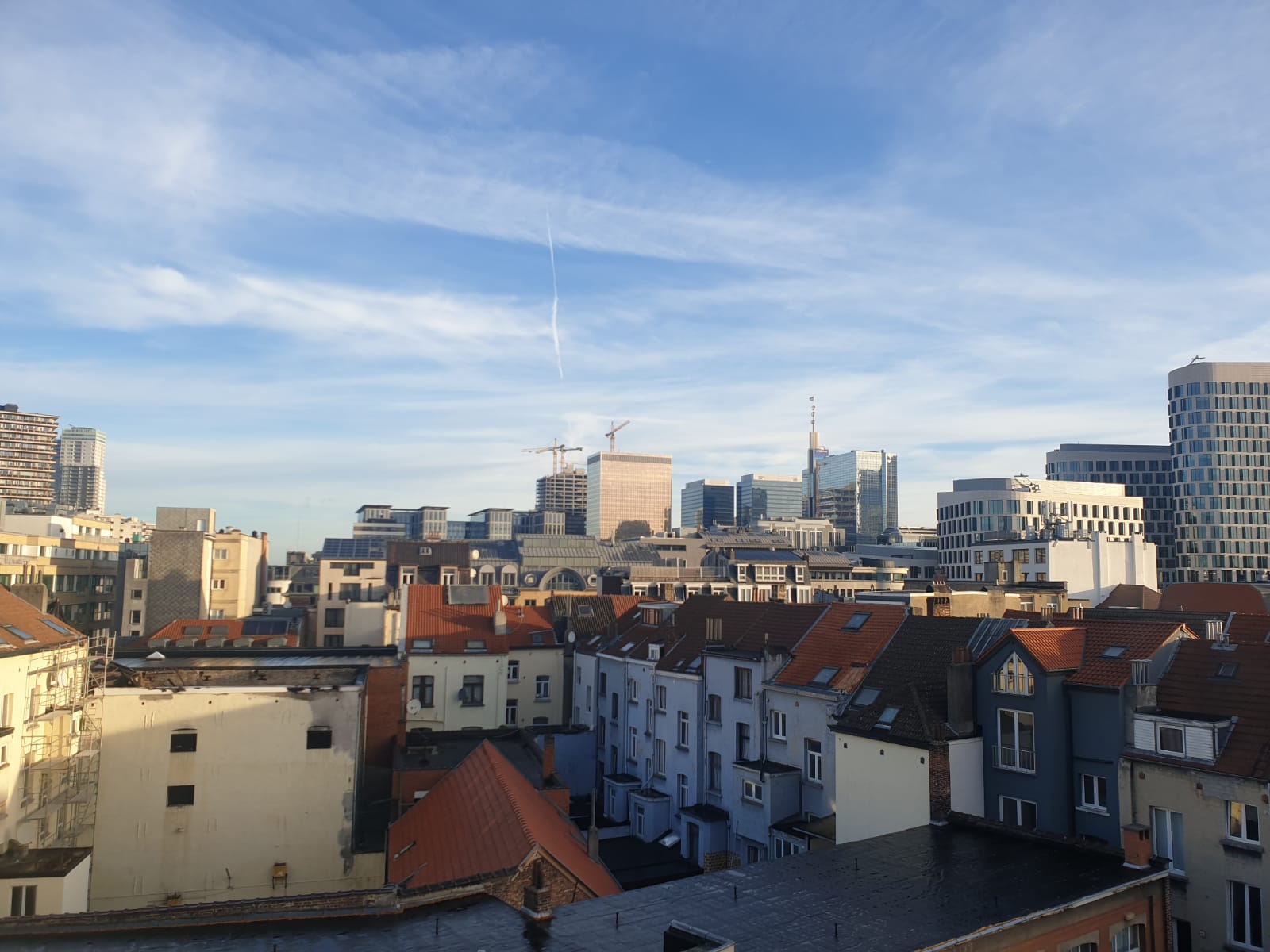
Skyline over Brussels. Credit: Lauren Walker/ The Brussels Times
In some municipalities outside Brussels, more than half of the sold houses and flats were bought by Brussels residents last year. This was the case in Drogenbos (69.4%), Linkebeek (64.4%), Kraainem (56.9%) and Wezembeek-Oppem (52.7%).
In Walloon municipalities close to the capitals, Brussels residents were particularly active in Tubize (35%), followed by Waterloo (34.5%) and Rixensart (32.4%). Their share was lowest in Rebecq (22.3%).
Secondly, the budget of non-Brussels residents looking to buy in Brussels is higher than that of Brussels residents, Van Opstal said. "This has to do with the competition between Brussels residents who want to buy in Brussels – which is usually their own home – and investors who want to buy in Brussels to let."
High rent, high return on investment
This latter group usually has a larger budget, explained Van Opstal. "They are entering a market in which rents have risen sharply recently because there is not much supply, especially not in Brussels. This means that rents are going up."
As investors usually look at things from a return perspective, these sharply rising rents mean that they can pay a higher purchase price for the same return, according to Van Opstal.
"They also want to avoid incurring unexpected costs. This means buying property that is in very good condition – usually a new or a recently renovated one," Van Opstal said. "And these are precisely the kinds of properties in a higher price category."
