
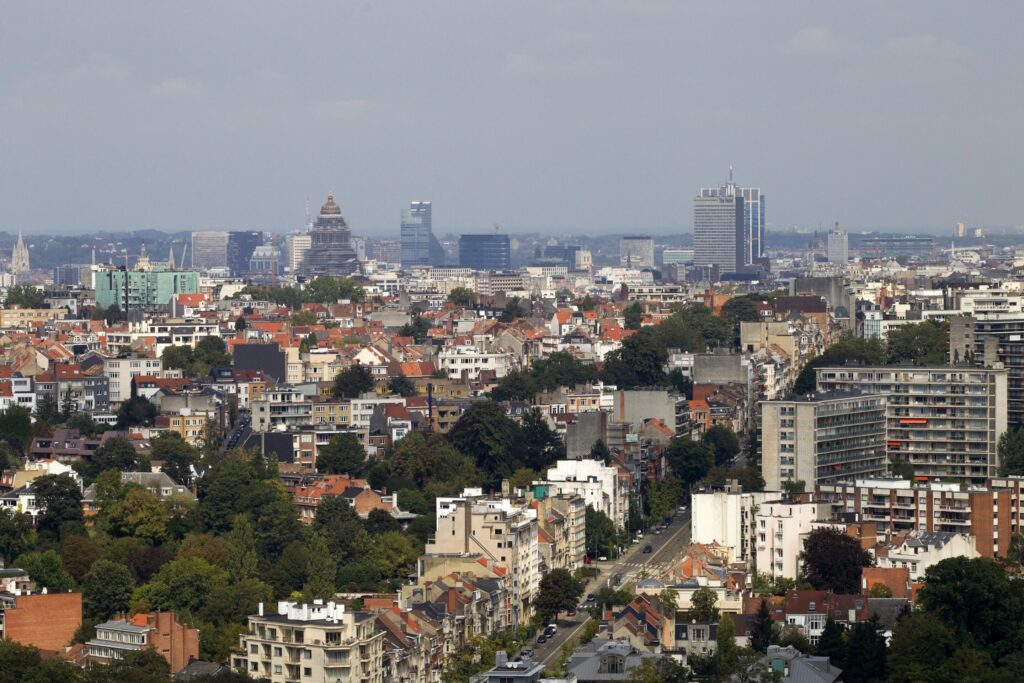
The share of owner-occupiers in Brussels is significantly lower than in other cities and regions of Belgium, according to recent data from the Federal Public Service of Finance reported by L’Echo on Saturday.
As of 1 January, only 21.4% of Brussels residents lived in homes they owned, compared to 45% in Flanders and 38% in Wallonia.
Unlike the mixed urban and rural areas in Wallonia and Flanders, Brussels is predominantly urban, but its owner-occupier rate remains notably lower even when compared to other major Belgian cities. For instance, owner-occupancy stands at 27% in Liège, 32% in Antwerp, Namur, and Charleroi, and 33% in Ghent.
This disparity is largely due to the housing market in Brussels, where 70% of residential properties are flats and only 30% are houses–virtually the inverse of the situation in Flanders and Wallonia. Moreover, the price of an apartment in Brussels is roughly equivalent to that of a house in Wallonia.
Certain more affluent areas of Brussels record slightly higher owner-occupancy rates, including Uccle (28%), Auderghem (28.3%), Watermael-Boitsfort (28.6%), and Woluwe-Saint-Pierre (30%). In poorer neighbourhoods, the rates are significantly lower, with Saint-Josse-ten-Noode at just 14%, Saint-Gilles at 15.9%, and Ixelles at 16%.
Many young households in Brussels purchase their first property in the city but move to the surrounding suburban areas when seeking larger homes. Rising property prices and limited availability of houses in Brussels push them to relocate, and they often keep their initial flats to rent out. This phenomenon boosts owner-occupancy rates in the other regions, since departing Brussels residents add to the numbers while local households tend to stay within their respective regions.
