
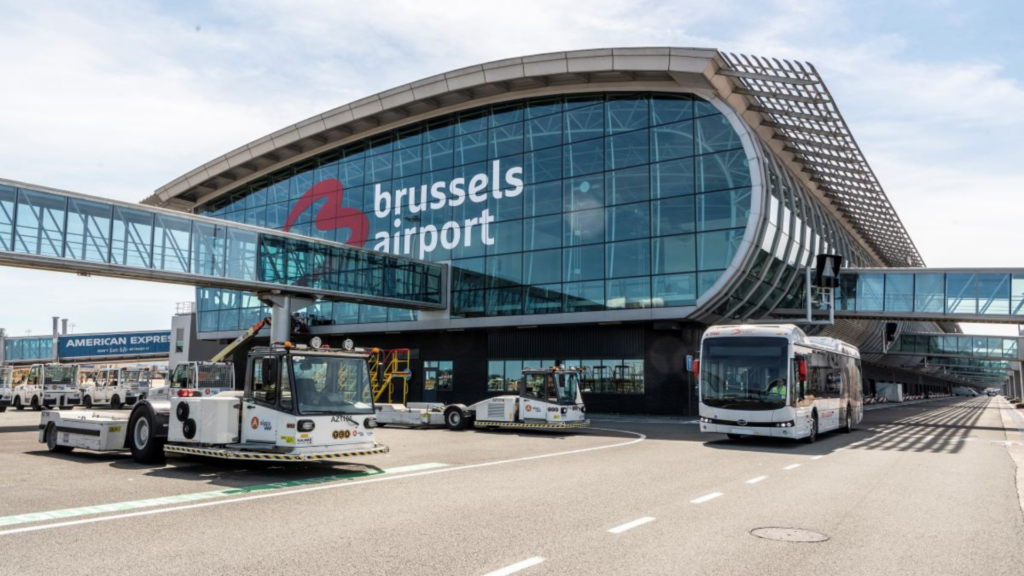
A trial is underway at Brussels Airport to develop a global standard for transporting human cells and blood for use in precision therapies, it was announced during a press conference on Monday.
Precision therapies, such as cell and gene therapies, are tailored treatments designed for individual patients, often to combat several conditions, including certain types of cancers. These therapies involve collecting a patient’s own cells, modifying them in a laboratory, and reintroducing them into the patient’s body.
"This is life-saving but also very expensive treatment, often used as a last resort," said Isabelle François, coordinator of the Precision Therapy Logistics Gateway (PTLG) project. She emphasised that the timing and temperature of transport are critical to prevent the cells from dying.
From Brussels to the US
Since November, 10 trial shipments have been sent from Brussels Airport to Dallas, United States, with human cells and blood material provided by Antwerp University Hospital (UZA). Although the cells are real, they are not yet being used for therapies.
The trial aims to identify bottlenecks and risks in the transportation process, including feasible timing, potential delays, customs handling, and whether the temperature remains consistent.
"We’re measuring how we can transport precision therapies safely and quickly to patients worldwide," explained Dimitri Bettoni, head of the cargo division at Brussels Airport. "This way, patients won’t need to travel long distances, especially severely ill ones, as the therapy is delivered directly to them."
Brussels Airport as a pharmaceutical hub
The project, partially funded by the provinces of Antwerp and Flemish Brabant, is expected to yield its first results in the first half of the year. The ultimate goal is the development of an internationally recognised standard protocol for transporting precision therapies.
"Transport like this already happens, but there is no established standard procedure," said Bert Elsen, managing director of the Pharma Logistics Excellence Centre.
In addition, discussions are being held about setting up a dedicated logistics centre at Brussels Airport for these shipments. Freek De Witte, director of Air Cargo Belgium, noted that this type of transport differs significantly from traditional cargo, which usually involves larger volumes. These precision therapy shipments are small and require refrigeration.
De Witte anticipates that 10 to 15 airports globally will specialise in such transport in the future, with Brussels Airport aiming to lead the way. Already established as a major pharmaceutical hub in Europe, the airport features 45,000 square metres of temperature-controlled storage in its cargo zone.
