
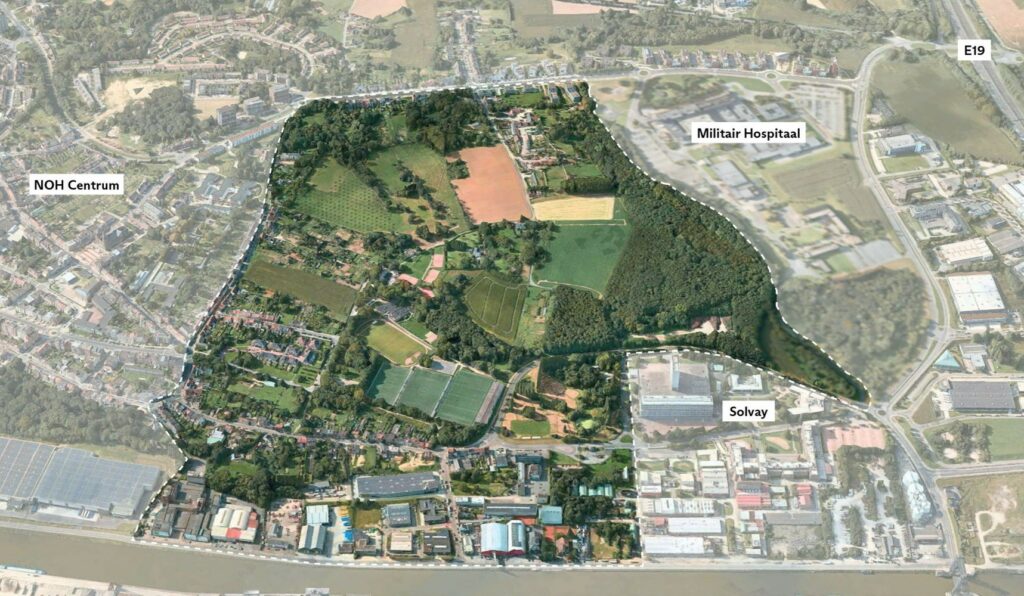
The City of Brussels will start shaping the future of one of the last large open green spaces in the Capital Region – the 'Petit Chemin Vert' in Neder-Over-Heembeek.
The city council has approved a masterplan for its redevelopment, which defines a framework that will guide future projects – focusing on landscape, environment, mobility, use and social dynamics.
"The master plan for 'Petit Chemin Vert' starts from the area as it is: from the soil, the landscape and existing uses," said Anaïs Maes (Vooruit), Brussels city councillor for Urban Planning.
"With this approval, the City now has a clear vision to guide the evolution of this large open space in Neder-Over-Heembeek," she explained.
Countryside in the city
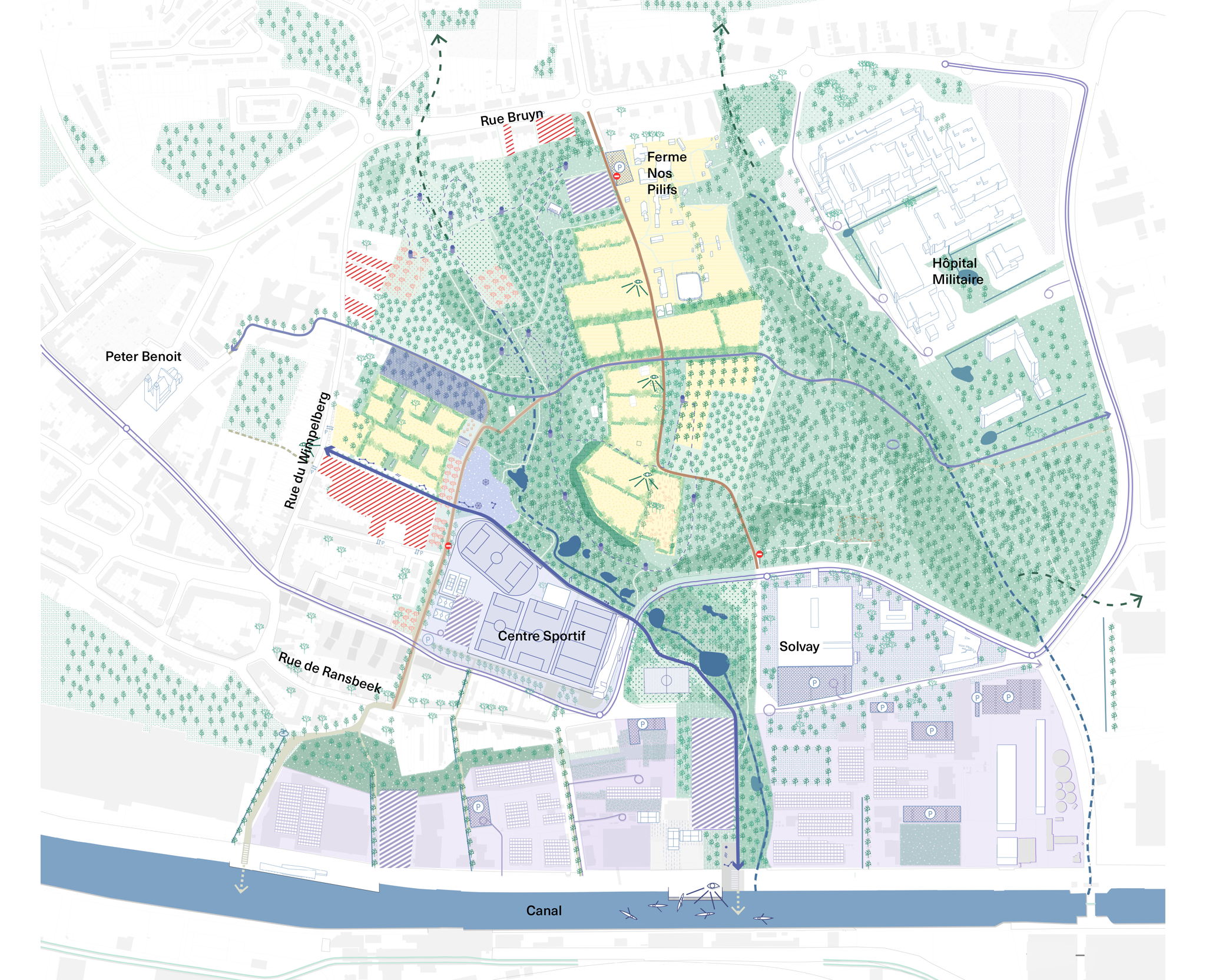
The plan covers an area of approximately 100 hectares around Petit Chemin Vert and the Trassersweg. It includes a diversity of landscapes: fertile agricultural land, wet valleys, wooded areas, sports grounds and infrastructure, activity zones and open views of the Senne Valley.
While the area is located on the territory of the City of Brussels, it retains a rare open and scenic character in the Capital Region. "It feels like you are in the countryside."
As one of the last large non-urbanised areas with fertile soils (which have important ecological, scenic and productive functions), Maes stressed that it "offers a response to today's urban challenges, while preserving the soul of the landscape: a green lung for the City of Brussels."
With this plan, the city aims to preserve and enhance the blue-green landscape by valorising soils, biodiversity and sustainable water management, with a view to resilience to climate change.
Credit: Office of Anaïs Maes
The area's productive function will also be supported, not through large-scale exploitation, but on a zone-wide scale and "in symbiosis with the natural environment."
Additionally, a high-quality residential and living environment will be created by preserving and strengthening sports infrastructure, and by harmoniously combining sports, recreation, housing and landscape areas.
Pedestrian and cycle routes to surrounding neighbourhoods and adjacent areas (such as towards Koningslo and Vilvoorde) will be strengthened, with strong involvement of local partners and residents. The area will also improve connectivity.
"Consultation with local actors was essential. We learned a great deal from their thorough knowledge of the terrain. Their experiences and the transfer of their knowledge have profoundly nourished the project," Maes said.
Working with the soil
To ensure the master plan's effective implementation, the College will draw up a Special Zoning Plan (BBP), aiming to adjust the zoning in favour of undeveloped areas and nature.
"This co-creation, far removed from a top-down approach, has led to a shared vision that has now been translated into concrete fiches," she stressed. "Now it is time to take action."
These ambitions are part of an approach that bases the urban project on the soil and the landscape; the Petit Chemin Vert site rests on rich soil, originating from the old so-called Brabant kouters.
These are traditional open agricultural fields formed over very long periods of time – making them a non-renewable resource, which is why the city wants to work with the soil rather than cover it.
The plan was drawn up by the City of Brussels in collaboration with the Plusoffice-Fallow-Arcadis design team. Ferme Nos Pilifs, Sortilège, vzw Promenade Verte van NOH, Terre-en-vue and the NOH Neighbourhood Council are also closely involved in the project, as are the regional administrations Leefmilieu Brussel and Perspective.brussels.
