
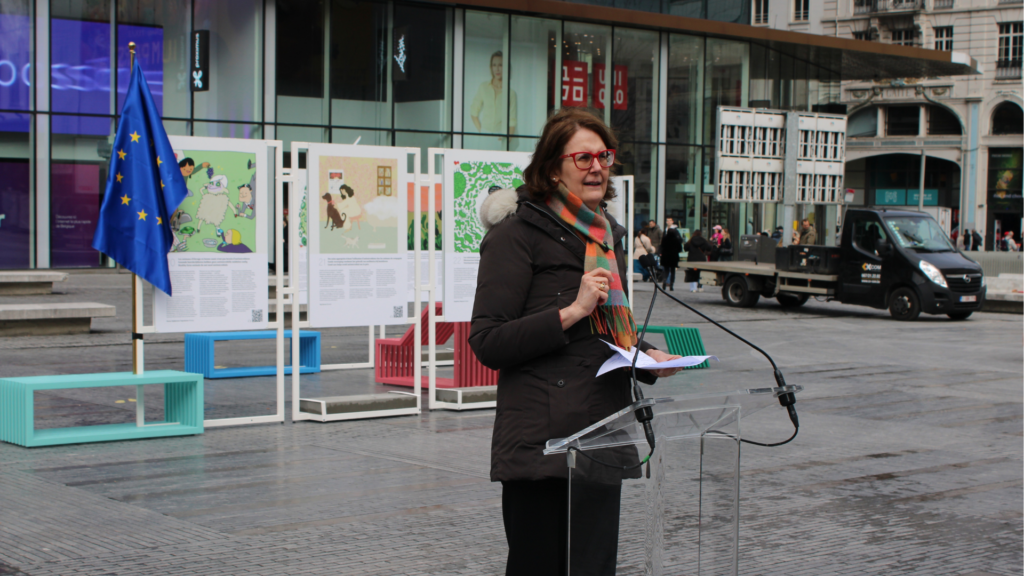
An exhibition was unveiled in the centre of Brussels earlier this week to raise awareness for drug-resistant microbes, which kill thousands in Belgium every year.
Commonly dubbed the "silent pandemic”, antimicrobial resistance (AMR) refers to the ability of microbes, like bacteria, viruses, or fungi, to survive medicines designed to kill them or stop their growth, such as antibiotics.
While resistance can naturally develop, the overconsumption and misuse of antibiotics are major drivers of AMR.
Over 33,000 deaths across the European Union are linked to AMR, with 1,300 people dying every year in Belgium due to infections caused by resistant microbes, according to the Belgian Health Ministry.
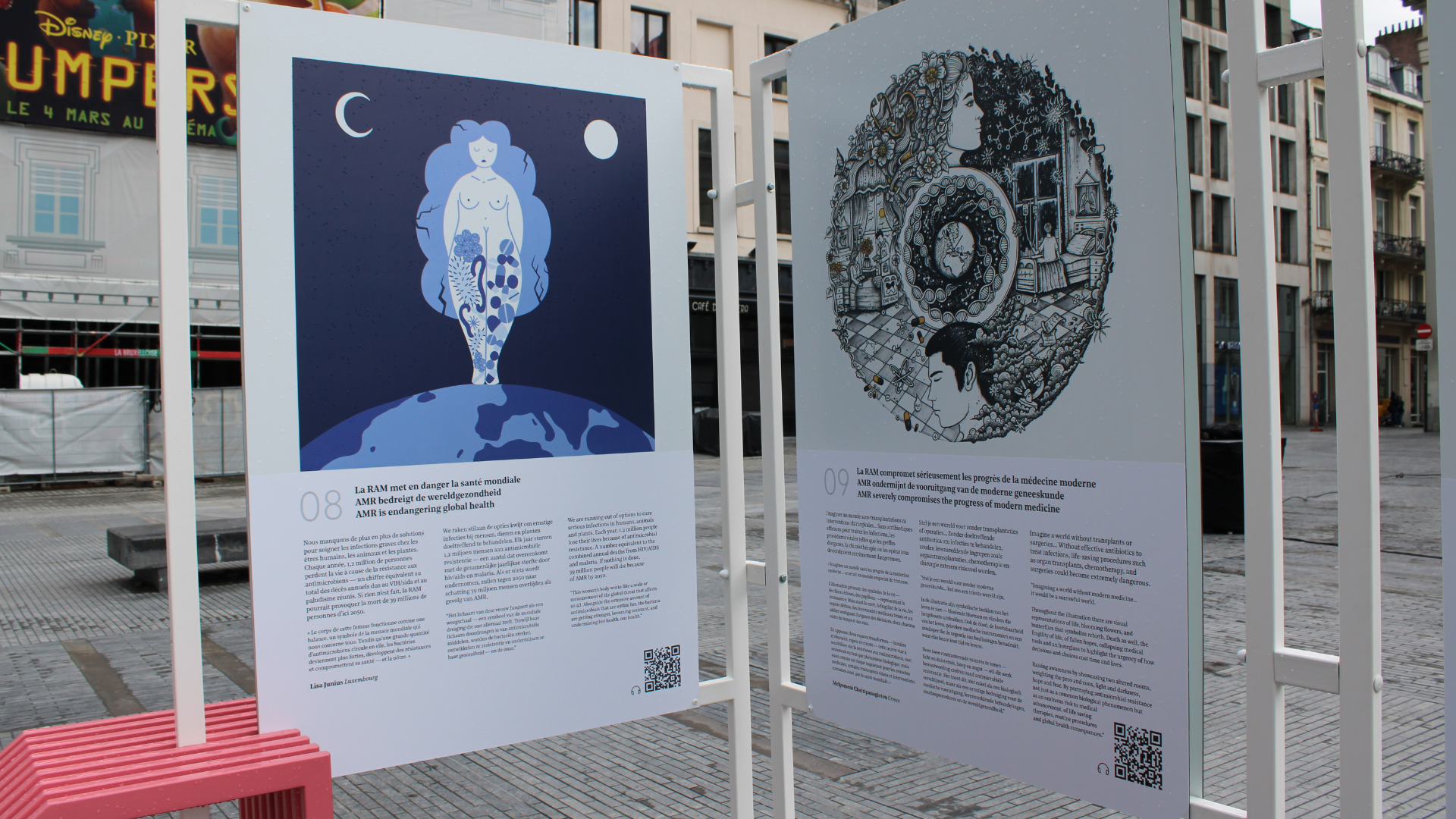
The 'Sketching Antimicrobial Resistance: Illustrators' exhibit in Brussels on 10 March 2026. Credit: Rita Alves/The Brussels Times
Until 24 March, the issue will be explained through illustrations displayed at Place de la Monnaie, as part of a travelling awareness campaign for the second European joint initiative to combat AMR, EU-JAMRAI 2.
Each illustration, designed by 30 different European artists, tackles a different aspect of AMR, to make the complex issue “more understandable and visible,” explained EU-JAMRAI 2 Communication Coordinator Laura Alonso Irujo, at the opening of the exhibit in Brussels.
Resistant microbes as secret troops
Among the featured artists is the Belgian illustrator Laura Janssens.
The Antwerp-based artist, known for her autobiographical comic 'Niet Nu Laura’, was selected for her style of illustration, which can speak to both the French-speaking and Dutch-speaking sides of Belgium, according to the spokesperson for the Belgian Health Ministry.
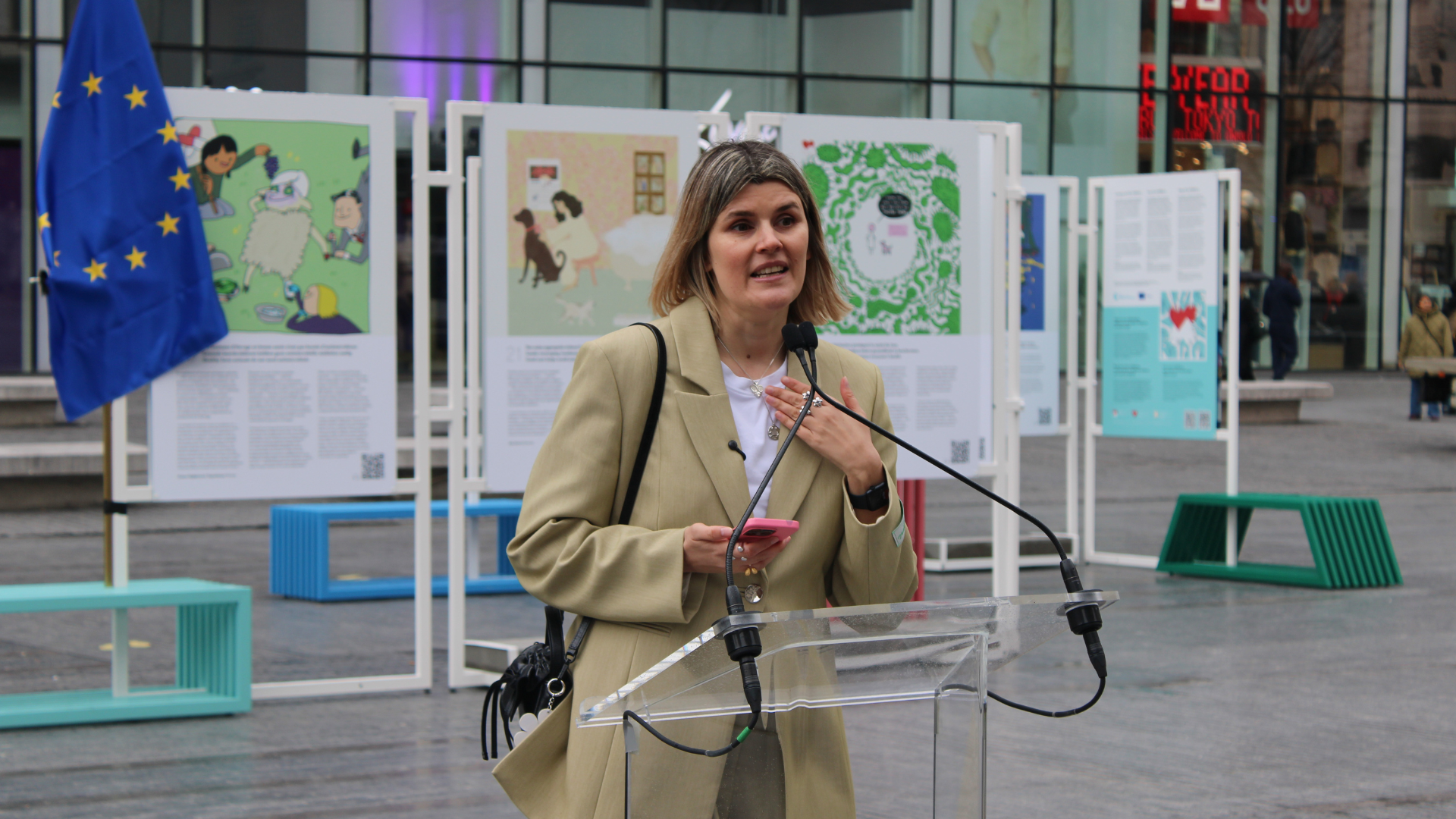
Belgian illustrator featured in Sketching Antimicrobial Resistance, Laura Janssens. Credit: Rita Alves/The Brussels Times
Janssens’ illustration for the AMR project embraces the style of a comic, a nod to the popular art form of Belgium. It focuses on depicting how resistant microbes can easily "infiltrate" daily life.
“I tried to draw them as a sort of secret commando troop travelling through the sewers, through animals, through air, through water, of course, through people, also, because the microbes don't know borders,” she explained at the opening of the exhibit.
‘It's much worse than Covid’
The impact of AMR goes beyond public health, with an estimated yearly social cost of €1.5 billion across the EU, according to the Belgian Health Ministry.
But the progress in tackling AMR in Europe still varies per country, the European Commission’s Director-General for Health and Food Safety (DG SANTE), Sandra Gallina, emphasised at the exhibit.
According to Gallina, after the Covid-19 pandemic, several Member States have shown an increase in antibiotic use, with many also lacking tools for AMR surveillance.
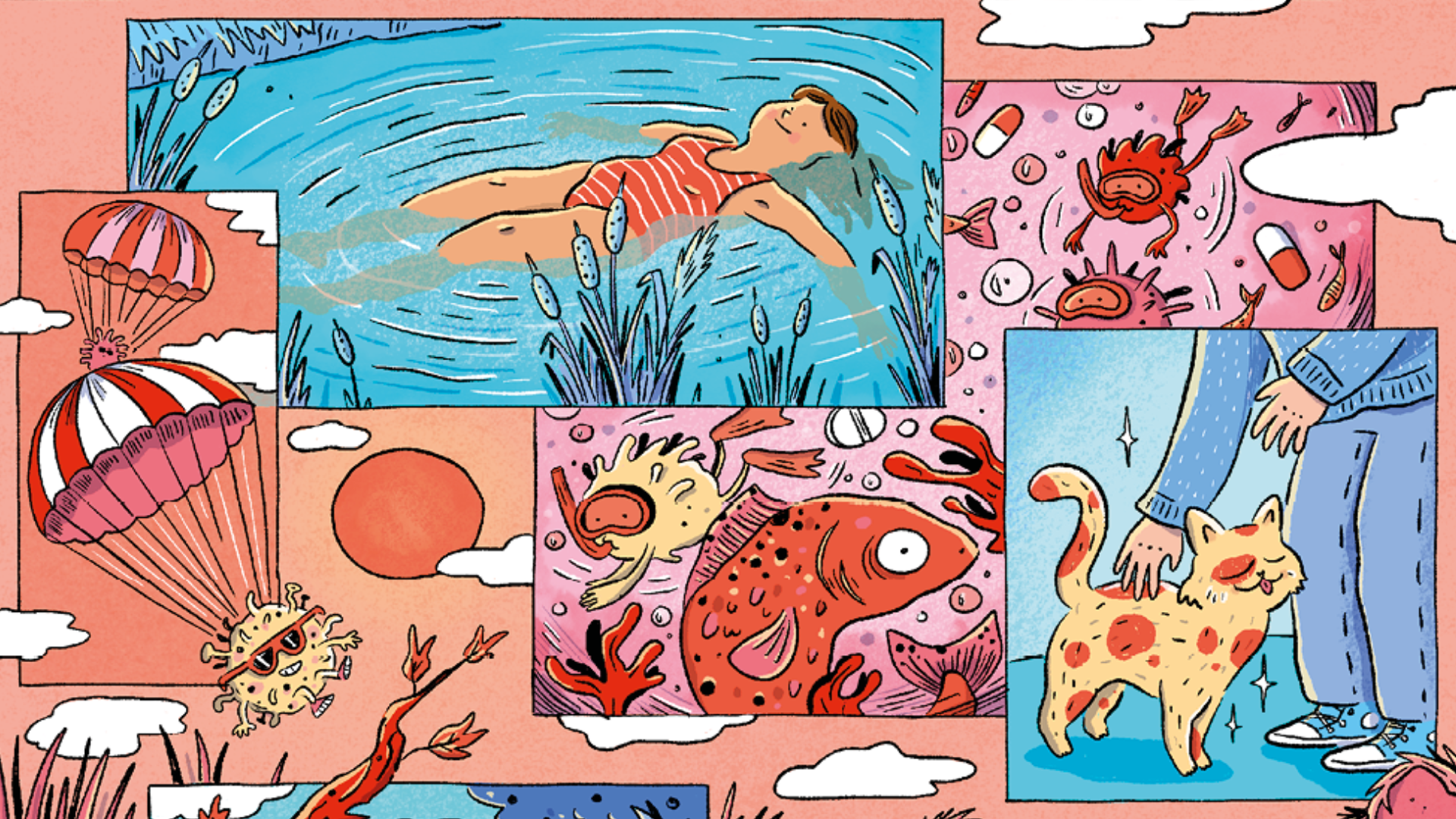
Part of the artwork by Belgian artist Laura Janssens, part of the campaign Sketching Antimicrobial Resistance led by EU-JAMRAI 2. Credit: Laura Janssens
The head of DG Sante sees the exhibit as a way to call for more action and emphasise the "urgency" of the situation, which she believes many still don't understand.
“If we don't do anything, by 2050, 10 million people will die [annually] because of AMR,” said Gallina, citing global estimates by the WHO. "It's much worse than Covid."
Belgian commitment to 'difficult battles’
During her speech in Brussels, Gallina highlighted the commitment of the Federal Health Minister Frank Vandenbroucke (Vooruit) to challenges in public health. “He is fully committed to some of the most difficult battles,” she said.
She specifically complimented Belgium's current efforts against resistant microbes, including its new national action plan to tackle AMR, unveiled earlier this year.
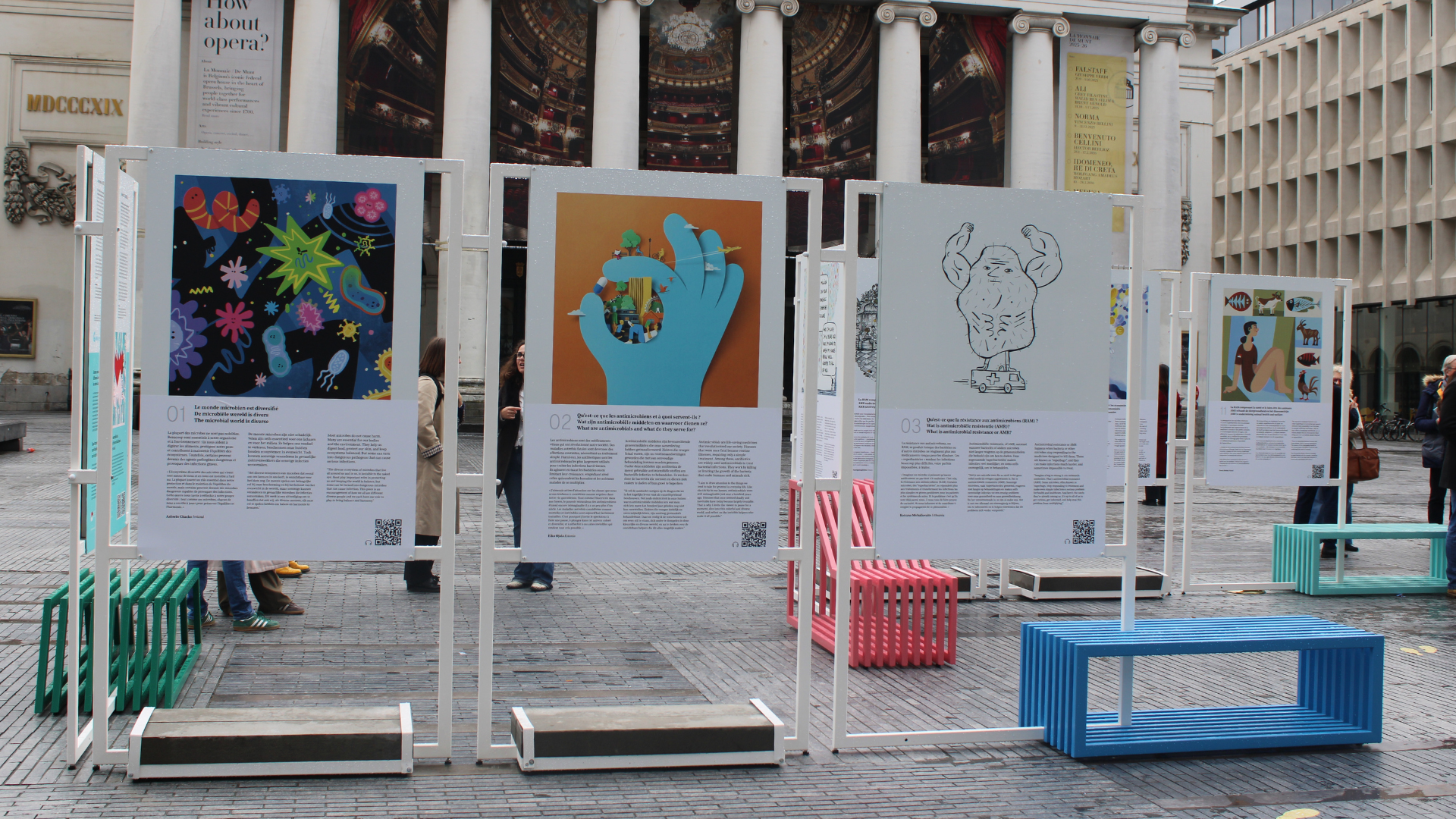
The 'Sketching Antimicrobial Resistance: Illustrators' exhibit in Brussels on 10 March 2026. Credit: Rita Alves/The Brussels Times
Among the plan's measures is the change from antibiotics being sold in boxes to being sold per unit based on the prescribed medical needs.
“It's not only a reduction of use and misuse of leftover [antibiotics], but this will create a lot of awareness,” said Dr Herman Goosens, Chair of the Governance Platform for the Belgian National Action Plan on AMR.
The new plan will also see a greater focus on approaches to prescriptions in primary care, with specific funding earmarked for this, as well as more accountability to better determine where issues lie and which AMR initiatives are worth investing in.
‘Antibiotics are a common good’
In Belgium, the challenges in combating AMR are raising public awareness while convincing people "that antibiotics are a common good,” according to Goossens.
During the opening of the Brussels exhibition, Belgian Federal Policy Advisor Thomas Janssens emphasised the importance of efficient antibiotics, sharing his experience with seeing his baby daughter spend most of the first year of her life fighting resistant infections.
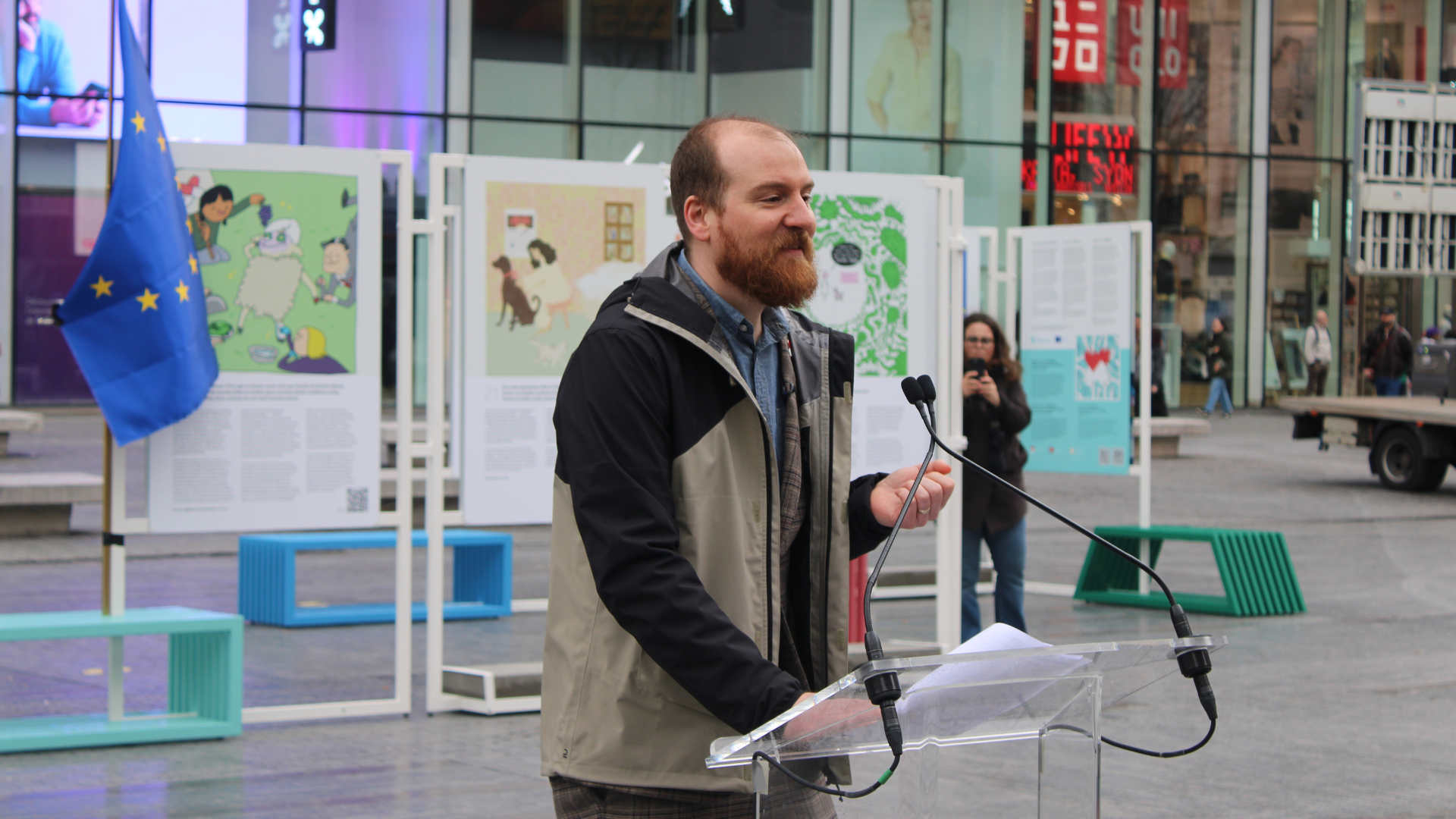
Policy advisor at the Belgian Federal Public Service on Health, Food Chain Safety, Environment Thomas Janssens. Credit: Rita Alves/The Brussels Times
“Unlike other medical drugs, antibiotics are a shared, limited resource. And each time they are used, they risk losing some of their effectiveness,” he said.
The policy advisor hopes the exhibition serves to raise awareness that while “individual impact is small”, everyone has a role to play in tackling AMR and encouraging action.
“Protecting antibiotics is not only a responsibility of doctors, it is a choice for the whole society,” he added.
